
Hidden Messages in Famous Art
Exploring enigmatic codes and symbols embedded by master artists
Key Takeaways
- Subtle Symbolism: Artists have embedded layers of meaning using symbols, codes, and details subtly integrated into their compositions.
- Historical Context: Understanding the time, culture, and technology used by artists is key to deciphering these hidden messages.
- Interdisciplinary Interpretations: Techniques from art history, science, and literature converge to reveal complex allegories and critiques woven into art.
Introduction to Hidden Art Messages
Throughout history, a fascinating element of artistic expression has been the incorporation of hidden messages within paintings and other visual works. These secret layers, embedded by visionary artists, invite viewers to engage in a deeper exploration beyond the immediate visual appeal. Hidden messages can include coded signals, symbolic representations, or even personal signatures and allegories that hint at the artist's inner world. This concept has long intrigued scholars, art historians, and enthusiasts, leading to ongoing debates and discoveries that continuously reshape our understanding of art.
By studying the hidden aspects of famous artworks, one can unravel layers of historical, religious, political, and personal significance. Often, what appears as a simple image at first glance reveals profound meanings when examined under accelerated scrutiny or with modern technological methods. Over time, various studies have highlighted that these messages may be deliberate cryptic inclusions, profoundly or subtly reflecting the artist’s beliefs, commentaries on contemporary society, or secret codes meant only for the initiated.
Historical Context and Motives Behind Hidden Messages
The practice of embedding hidden messages in artworks has its roots in the cultural and political atmospheres of the artists’ times. For many Renaissance and Baroque artists, incorporating secret symbols was not merely an intellectual exercise, but a necessity. Often, direct criticism of powerful institutions such as the Church or political entities could be dangerous. As a result, artists resorted to allegory and symbolic language to comment on societal issues or express dissent subtly.
Religious and Mystical Themes
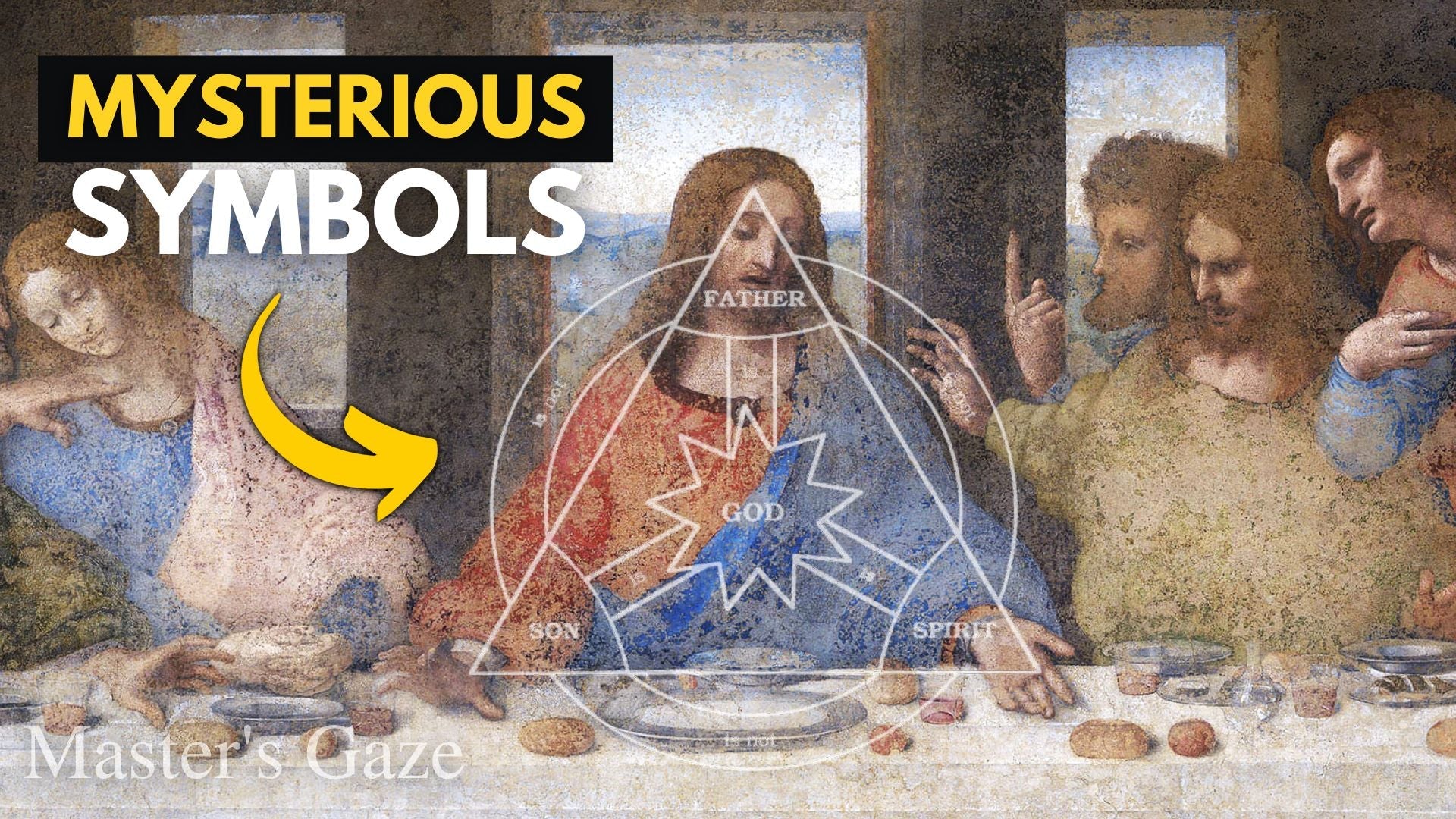
During eras when religious and mystical doctrines dominated cultural and everyday life, numerous artworks carried an undercurrent of esoteric messages. Artists embedded symbols that referenced theological concepts, philosophical ideas, or even biblical narratives. For instance, compositions with groups of thirteen figures or arrangements that echo the structure of the Holy Trinity were common. Such imagery acted as a visual commentary to reinforce, question, or interpret existing religious ideologies.
Case Study: The Last Supper
One of the most compelling examples comes from the renowned depiction of the Last Supper. Beyond its overt narrative, some analyses suggest that there are subtle encodings in the positioning of bread rolls on the table, which some researchers argue form a series of musical notes when decoded properly. While some interpretations lean towards numerology and geometry, these details contribute to the multifaceted reading of the scene, weaving together religious symbolism with hints of secret knowledge.
Notable Examples of Hidden Messages in Art
Several celebrated works of art are renowned for their hidden messages. Each piece, through its embedded details, offers rich ground for analysis. Below are detailed examinations of some iconic artworks with concealed layers of meaning.
Leonardo da Vinci
Mona Lisa
Leonardo da Vinci’s "Mona Lisa" is a focal point of numerous hidden message theories. Researchers point out that the enigmatic expression and the subtle nuances of the eyes could be laden with clues. Advanced imaging techniques have revealed what appear to be faint letters and numbers integrated into the facial features, suggesting that da Vinci may have intended for personal or esoteric messages to be perceived by observant viewers.
The Last Supper
Another masterpiece by da Vinci, "The Last Supper," has been extensively scrutinized for its alleged hidden symbology. This painting is celebrated not solely for its dramatic composition and the depiction of human emotion but also for its potential secret codes. Certain arrangements – such as the placement of objects on the table – have been interpreted by some as musical sequences or codes reflecting Renaissance ideals. While some interpretations remain contentious, the blend of overt narrative and hidden symbolism speaks to a deliberate layering of meaning.
Hieronymus Bosch
Bosch’s work is synonymous with elaborate and often surreal imagery. His triptych known as "The Garden of Earthly Delights" is replete with bizarre, multi-layered compositions that invite interpretations on moral and existential themes. Scholars argue that Bosch’s imagery is intentionally ambiguous, designed to provoke thought about human nature, sin, and the inevitability of judgment. His use of allegory compels viewers to decipher a multitude of symbolic cues, thus embedding a form of narrative that extends beyond the visible canvas.
Vincent van Gogh
While van Gogh’s oeuvre is often celebrated for its innovative use of color and expressive brushstrokes, some of his works also contain hidden layers of meaning. For instance, "Café Terrace at Night" has drawn interpretations that liken the convivial scene to a retelling of "The Last Supper," with figures arranged in a religious tableau. Additionally, subtle iconographic elements, such as the careful placement of crucifixes or other religious symbols, add another dimension to the painting. These elements have been viewed as reflective of the artist’s inner conflicts and subconscious engagement with spiritual themes.
Michelangelo
The Creation of Adam
Michelangelo’s iconic fresco in the Sistine Chapel, "The Creation of Adam," goes beyond its immediate biblical narrative. Observers have noted that the positioning of God’s cloak, which in some studies resembles the form of a human brain, might represent a subtle advocacy for the embrace of scientific inquiry. This anatomical reference is believed by many to act as a subtle critique of the Church’s hesitancy towards scientific advancements, thereby embedding a dual narrative that combines art, faith, and modern knowledge.
Jan van Eyck
In the Northern Renaissance, Jan van Eyck was known for his attention to detail and the incorporation of symbolic elements. "The Arnolfini Portrait" is one such work where hidden messages abound. Beyond the meticulous rendering of textures and light, the painting is rich with allegories related to marriage, fidelity, and wealth. Van Eyck’s use of reflective surfaces, such as the convex mirror that captures additional figures in the background, further indicates a deliberate layering of narrative and symbolism. Some art historians speculate that these details serve as a form of personal signature or commentary on the nature of the depicted social agreements.
Caravaggio
The dramatic chiaroscuro and intense realism of Caravaggio’s paintings have long fascinated scholars, with several of his works allegedly containing hidden imagery. In the painting "Bacchus," for example, modern analysis techniques using reflectography have uncovered subtle details, including the hidden suggestion of a figure within a reflective surface. Such discoveries not only reveal the technical mastery of Caravaggio’s painting methods but also hint at the possibility of deliberate insertion of secondary motifs aimed at encouraging deeper viewer engagement.
Techniques for Uncovering Hidden Messages
Over centuries, innovations in scientific and imaging technologies have played a critical role in uncovering hidden messages in famed artworks. Various methods have emerged as invaluable tools for art historians aiming to peel back the layers of paint and varnish to reveal obscured details:
Reflectography
Reflectography involves the use of infrared radiation to create images that reveal underdrawings or hidden sketches beneath the visible surface of a painting. This technique has proven instrumental in uncovering preliminary drawings or alterations made by artists before finalizing their works, offering clues about their creative processes along with any hidden numerical or symbolic codes.
X-Ray Fluorescence Spectroscopy
This non-invasive scientific technique helps identify the elemental composition of pigments used in paintings. By analyzing the chemical makeup, researchers are able to deduce modifications, hidden layers, and even corrections made during the painting process. Such detailed information can suggest whether underlying elements were included intentionally to impart a deeper message.
Digital Imaging and Analysis
Modern digital imaging techniques, including multispectral and hyperspectral imaging, provide high-resolution maps of artworks. This allows art historians to examine minute details that could indicate the presence of hidden codes or inscriptions. Through close inspection, elements such as repeating patterns, geometrical arrangements, or discrete inscriptions can be digitally enhanced and analyzed, forging connections to possible symbolic meanings.
Cultural and Interpretative Theories
Delving into the symbolism of hidden messages in art often extends into broader cultural and interpretative theories. Art is not created in isolation; it reflects the social, political, and religious contexts in which it was made. The following points elaborate on how context influences the decoding of hidden art messages:
Interdisciplinary Approaches
The interpretation of hidden messages inherently benefits from interdisciplinary studies. Art historians, theologians, scientists, and literary scholars alike contribute to unraveling these artistic enigmas. Each discipline brings a unique perspective that enriches the overall understanding of the artwork. For example, insights from physics and chemistry may explain the methods used by an artist to conceal details, while insights from religious history might clarify the symbolic significance of certain motifs.
Influence of Popular Culture
Contemporary literature and cinema have added an extra layer of allure to the idea of hidden messages in art. Works of fiction, particularly those popularized by bestselling novels and blockbuster movies, have promoted the notion that masterpieces conceal secret codes, conspiracies, or even clues pointing to historical mysteries. Although these popular narratives often blend fact and conjecture, they have undoubtedly spurred public interest, leading to further scholarly inquiry and technological advancements aimed at deciphering hidden meanings.
The Artist’s Intent vs. Viewer Interpretation
A critical point in analyzing hidden messages in art is distinguishing between deliberate concealment by the artist and later interpretations imposed by viewers. In many cases, what appears to be a hidden message may simply be a product of the artist’s complex style or the layered symbolic language prevalent at the time. Authentic conclusions are ideally reached through a careful analysis of historical documentation, technical studies, and, where available, the artist’s own commented opinions. This approach upholds a grounded understanding of the artwork’s origins while acknowledging that interpretations might evolve over time.
Comparative Analysis Table
The following table summarizes several key artworks along with the proposed hidden messages and methods used to uncover them, providing a comparative overview of different artistic techniques and historical contexts.
| Artwork | Hidden Element | Interpretation | Uncovering Technique |
|---|---|---|---|
| Mona Lisa | Hidden inscriptions in the eyes | Possible personal signature or esoteric message | High-resolution imaging |
| The Last Supper | Alleged musical notes in table arrangements | Secret code or symbolic religious narrative | Reflectography and pattern analysis |
| The Garden of Earthly Delights | Complex allegories and surreal imagery | Commentary on human sin and fate | Iconographic and symbolic analysis |
| The Creation of Adam | Hidden brain-like form in God's cloak | Critique of religious institutions & advocacy of scientific inquiry | Visual examination and comparative anatomy |
| Arnolfini Portrait | Mirror reflections and self-signatures | Allegorical references to marriage, wealth, and fidelity | Historical document analysis |
Modern Implications and Continuing Discoveries
The exploration of hidden messages in art is not merely a historical curiosity—it actively influences modern artistic practices and digital authentication methods. Contemporary artists sometimes incorporate subtle motifs that nod to these historical traditions. Additionally, advancements in art conservation, digital imaging, and even artificial intelligence now enable researchers to detect and analyze previously overlooked details in artworks.
Modern art historians remain cautious in their interpretations, emphasizing the importance of verified techniques and historical documentation. While popular media may sensationalize the idea of hidden conspiracies, rigorous academic research continues to stress the need for systematic evidence when claiming that these messages weren’t just unintentional byproducts of an artist’s complex style.
This pursuit often leads to fresh insights into an artwork’s creation process. New discoveries can provide context on the artist’s preparatory techniques (for example, underdrawings or pentimenti) that reveal initial concepts or corrections. In doing so, these technologies not only uncover hidden messages but also enrich our understanding of artistic evolution.
Conclusion and Final Thoughts
The phenomenon of hidden messages in famous artworks is a rich subject that intertwines art, history, science, and cultural analysis. Master artists like Leonardo da Vinci, Michelangelo, and others embedded subtle symbols and complex codes into their work, inviting the audience to engage in an intricate dance of interpretation that spans centuries. Whether these hidden elements serve as personal autographs, critiques of societal institutions, or allegorical narratives reflecting theological dilemmas, they have significantly contributed to the allure and mystery surrounding these masterpieces.
As our capabilities in scientific imaging and digital analysis continue to evolve, so too does our ability to decipher these layers of meaning. Interdisciplinary approaches allow us to balance historical insight with modern technology, ensuring that interpretations remain grounded in evidenced analysis while satisfying our inherent curiosity for secret messages. Ultimately, these hidden messages challenge us to view art not only as an aesthetic experience but also as a repository of deep, multifaceted cultural dialogue.
In embracing both the visible and the hidden, we come closer to understanding how art reflects the complexity of human thought and society. The continued investigation into these enigmas promises not only to enhance our appreciation of famous works but to bridge connections between past, present, and future interpretations of artistic excellence.
References
- Art's Greatest Hidden Meanings - Google Arts & Culture
- 15 Hidden Messages in Works of Art You've Probably Missed - go2tutors
- Hidden Messages in Famous Artworks - STEM Education Guide
- 6 Famous Paintings That Hold Hidden Messages - HowStuffWorks
- Hidden Messages in Famous Works of Art - History Collection
- Incredible Secrets Hidden in Art Masterpieces - Spyscape
- Sleuthing the Secrets in Six Famous Paintings - Invaluable
Related Queries for Further Exploration
Last updated February 20, 2025