
Unlock Your Hips: Master Static, Dynamic, and PNF Stretches for Optimal Flexion
Discover specific techniques to enhance hip mobility and understand the science behind how stretching increases your range of motion.
Improving hip flexion—the ability to bring your thigh towards your torso—is crucial for daily activities, athletic performance, and injury prevention. Tight hip flexors can lead to discomfort, poor posture, and limited mobility. Fortunately, targeted stretching can significantly enhance flexibility. This guide explores three primary types of stretching—Static, Dynamic, and Proprioceptive Neuromuscular Facilitation (PNF)—providing specific examples for each and explaining the physiological mechanisms that allow stretching to increase your range of motion (ROM).
Key Insights on Hip Flexion Stretching
- Static Stretches: Best for post-workout or dedicated flexibility sessions, involving holding a stretch (e.g., Kneeling Hip Flexor Stretch) for 15-30 seconds to gradually lengthen muscles.
- Dynamic Stretches: Ideal for warm-ups, using controlled movements (e.g., Standing Leg Swings) to prepare muscles for activity and improve active ROM.
- PNF Stretches: Highly effective for significant ROM gains, utilizing muscle contractions and relaxations (e.g., Contract-Relax method) to leverage neurological reflexes for deeper stretches.
Exploring Stretch Types for Enhanced Hip Flexion
Understanding the different approaches to stretching allows you to tailor your routine for maximum benefit. Each type targets the hip flexor muscles (like the iliopsoas and rectus femoris) in unique ways.
1. Static Stretching: The Classic Hold
Static stretching involves moving a joint to its end range of motion and holding that position for a specific duration, typically 15-30 seconds or longer. This method promotes muscle relaxation and gradual lengthening of muscle fibers and connective tissues. It's often recommended for improving passive flexibility, usually performed after a workout or as part of a separate flexibility routine.
Example: Kneeling Hip Flexor Stretch
This is a widely used static stretch targeting the hip flexors of the back leg.
- How to Perform: Begin in a half-kneeling position. Place your right knee on a soft surface (like a mat) directly under your hip, and position your left foot flat on the floor in front of you, with your left knee bent at a 90-degree angle. Keep your torso upright and engage your core. Gently tuck your pelvis slightly (posterior pelvic tilt) to increase the stretch sensation. Shift your hips forward slowly until you feel a comfortable stretch along the front of your right hip and thigh. Avoid arching your lower back.
- Hold: Maintain the stretch for 20-30 seconds, breathing deeply.
- Repeat: Switch legs and repeat on the other side. Aim for 2-3 repetitions per side.
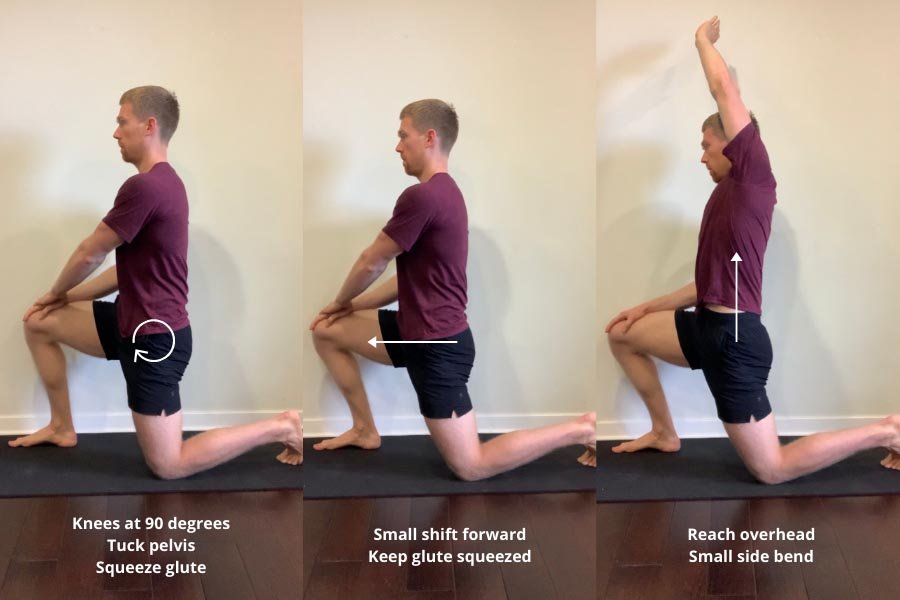
Visual guide demonstrating the proper form for a static kneeling hip flexor stretch.
Relevance: This stretch effectively isolates and elongates the iliopsoas and rectus femoris muscles, primary contributors to hip flexion. Consistent practice can help alleviate tightness often caused by prolonged sitting.
2. Dynamic Stretching: Movement-Based Mobility
Dynamic stretching uses controlled, rhythmic movements through a joint's full range of motion. Unlike static stretches, positions are not held. This type of stretching is excellent for warming up before exercise as it increases blood flow, raises muscle temperature, and improves neuromuscular activation, preparing the body for activity.
Example: Standing Leg Swings (Forward-Backward)
This dynamic movement actively takes the hip through flexion and extension.
- How to Perform: Stand tall next to a wall or sturdy object for balance, placing one hand on it for support. Keeping your core engaged and torso upright, swing one leg forward (hip flexion) and then backward (hip extension) in a smooth, controlled arc. Avoid excessive arching of the back during the backward swing.
- Movement: Focus on the motion originating from the hip joint. Gradually increase the height and range of the swing as you warm up, but stay within a comfortable range without forcing it.
- Repetitions: Perform 10-15 swings per leg.
- Repeat: Switch legs and repeat. Aim for 1-2 sets per leg.
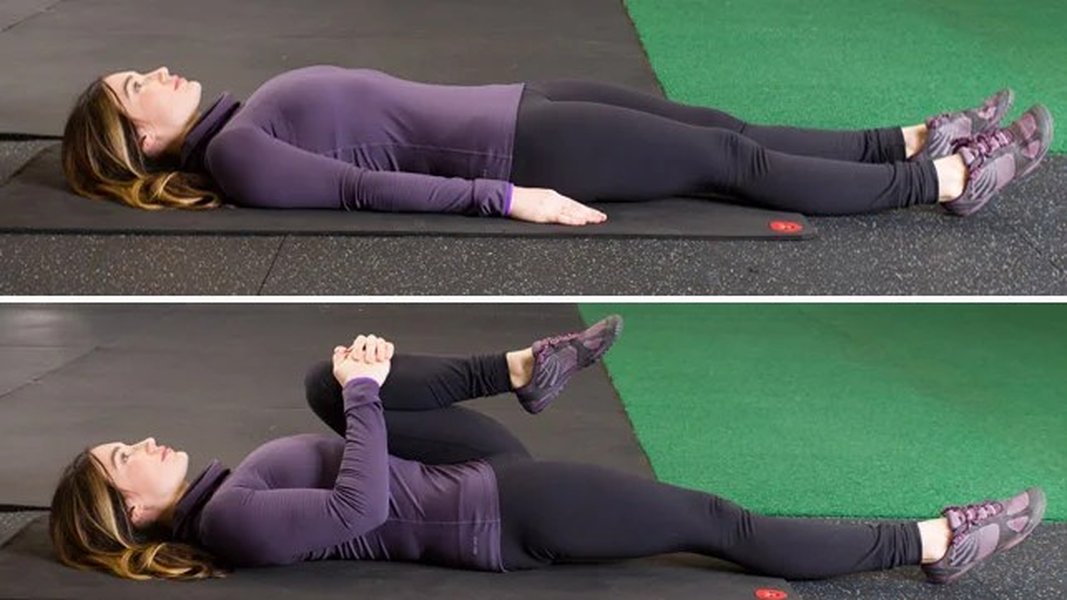
Illustration showing dynamic hip flexion exercise, similar in principle to leg swings.
Relevance: Leg swings dynamically stretch the hip flexors (during the backward swing) and the hip extensors/hamstrings (during the forward swing), improving active mobility and preparing the hip joint for complex movements required in sports or daily life.
3. PNF Stretching: Advanced Flexibility Technique
Proprioceptive Neuromuscular Facilitation (PNF) stretching is a more advanced technique often involving a partner (though self-PNF is possible) that uses muscular contractions to facilitate a deeper stretch. The most common method is "contract-relax," which leverages neurological reflexes.
Example: Contract-Relax (CR) PNF for Hip Flexors (Kneeling)
This technique targets the hip flexors (agonist muscles for hip flexion) using their own contraction followed by relaxation to deepen the stretch.
- Setup: Assume the Kneeling Hip Flexor Stretch position (right knee down, left foot forward). Gently lean forward into the stretch until you feel mild tension.
- Contract (Agonist): Actively contract the hip flexors of the back leg (right hip) by trying to pull your right knee forward against an immovable object (like the floor or a partner's resistance, but without actual movement). This is an isometric contraction. Hold this contraction for 5-10 seconds.
- Relax: Consciously relax the contracted hip flexor.
- Stretch Deeper: As you relax, gently move deeper into the hip flexor stretch by shifting your hips further forward. Hold this deepened passive stretch for 20-30 seconds.
- Repeat: Perform this contract-relax cycle 2-3 times on one side before switching legs.
Agonist/Antagonist Role: In this specific PNF technique for improving hip flexion range by stretching the hip *flexors*, the hip flexors act as the *agonists* during the contraction phase. The subsequent relaxation allows for a greater stretch. Antagonist muscles (like the glutes/hip extensors) might be implicitly involved in stabilizing or facilitating the deeper stretch through reciprocal inhibition, although the primary focus here is on the autogenic inhibition triggered within the hip flexors themselves by the contraction-relaxation cycle.
Relevance: PNF stretching can produce significant and relatively quick improvements in passive range of motion compared to static stretching alone. It utilizes the body's neuromuscular reflexes (specifically activating the Golgi tendon organ) to achieve greater muscle relaxation and elongation.
Comparing Hip Flexion Stretch Types
Each stretching method offers unique benefits and is suited for different purposes. Understanding their characteristics helps in choosing the right technique for your goals, whether it's preparing for a run, cooling down, or specifically working on increasing hip flexibility.
| Feature | Static Stretching | Dynamic Stretching | PNF Stretching |
|---|---|---|---|
| Primary Goal | Increase passive flexibility, muscle length | Warm-up, improve active mobility, neuromuscular activation | Maximize passive flexibility gains rapidly |
| Execution | Hold end-range position | Controlled movement through ROM | Cycle of contraction, relaxation, and deeper stretch |
| Typical Duration | 15-60 second holds | 10-15 repetitions per movement | 5-10 sec contraction, 20-30 sec stretch hold; repeat 2-3 times |
| Best Time to Use | Post-workout cool-down, dedicated flexibility sessions | Pre-workout warm-up | Dedicated flexibility sessions (often post-warm-up) |
| Mechanism Focus | Viscoelastic changes, slow adaptation of muscle spindle | Increased blood flow, reduced stiffness, improved coordination | Neuromuscular reflexes (GTO activation, autogenic/reciprocal inhibition) |
| Complexity | Low | Moderate (requires control) | High (often needs knowledge or partner) |
Effectiveness Profile of Hip Flexion Stretches
This chart provides a visual comparison of the perceived effectiveness of Static, Dynamic, and PNF stretching techniques across several key dimensions related to improving hip flexion and overall mobility. Note that effectiveness can vary based on individual factors and proper execution.
As illustrated, PNF often yields the highest immediate ROM gains and contributes significantly to long-term flexibility but is less suitable for warm-ups and carries a higher risk if performed incorrectly. Dynamic stretching excels as a warm-up method, while static stretching is a staple for cool-downs and general flexibility maintenance, being relatively safe and easy to perform.
Mindmap: Understanding Hip Flexion Stretching
This mindmap provides a structured overview of the concepts discussed, connecting the types of stretches, their examples, and the underlying physiological mechanism responsible for increasing range of motion.
This visual map helps consolidate the key elements: the three main stretch types with examples and best use cases, the physiological roles of the muscle spindle and Golgi tendon organ in increasing ROM, and the overall benefits of incorporating these stretches into your routine.
The Science Behind Increased Range of Motion (ROM)
How Does Stretching Increase ROM?
Stretching increases range of motion primarily through neuromuscular adaptations: the Golgi tendon organ (GTO), sensing high tension during a stretch or contraction, triggers a reflex relaxation (autogenic inhibition) in the muscle, while the muscle spindle, which initially resists length changes via the stretch reflex, becomes less sensitive over time with consistent stretching, allowing the muscle to lengthen further.
Video Guide: Understanding Tight Hip Flexors
Visual demonstrations can be incredibly helpful for mastering stretching techniques and understanding the underlying anatomy. This video provides insights into assessing and addressing tight hip flexors, covering relevant stretches and exercises.
This resource offers a deeper dive into the common issue of hip flexor tightness, providing context on self-assessment methods alongside practical stretches and exercises. Understanding the 'why' behind hip tightness can make your stretching routine more effective and targeted.
Frequently Asked Questions (FAQ)
How often should I stretch my hip flexors?
Can stretching my hip flexors help with lower back pain?
When should I avoid stretching my hip flexors?
Should I only stretch my hip flexors, or strengthen them too?
Recommended Reading
- What are the primary muscles involved in hip flexion?
- How does prolonged sitting affect hip flexor tightness?
- Compare the benefits of stretching versus foam rolling for hip flexors.
- What are some common mistakes to avoid when stretching hip flexors?
References
Last updated May 2, 2025