
Optimizing Hip Flexor Flexibility: A Comprehensive Guide to Stretching Techniques and Range of Motion
Exploring Static, Dynamic, and PNF Stretching for Enhanced Hip Mobility
Maintaining flexible and mobile hip flexors is crucial for overall physical well-being, contributing to better posture, reduced pain in the lower back and hips, and improved athletic performance. Tightness in these muscles, often exacerbated by sedentary lifestyles, can lead to discomfort and limitations in movement. This guide delves into various stretching techniques – static, dynamic, and Proprioceptive Neuromuscular Facilitation (PNF) – providing examples tailored to improving hip flexion. We will also explore the physiological mechanisms by which stretching enhances range of motion, focusing on the roles of muscle spindles and Golgi tendon organs.
Key Insights into Hip Flexor Stretching
- Diverse Techniques for Targeted Results: Static, dynamic, and PNF stretching methods offer distinct approaches to improving hip flexor flexibility, each with specific benefits and applications.
- PNF's Neuromuscular Advantage: PNF stretching, utilizing the contract-relax principle and targeting agonist/antagonist muscles, can facilitate deeper stretches by engaging the nervous system.
- Neurological Control of Flexibility: Muscle spindles and Golgi tendon organs play a vital role in regulating muscle tension and stretch reflexes, influencing how stretching increases range of motion.
Understanding Hip Flexor Anatomy and Function
The hip flexors are a group of muscles that primarily facilitate the movement of bringing the knee towards the torso or bending at the waist. Key muscles in this group include the iliopsoas (comprised of the psoas major and iliacus), rectus femoris (part of the quadriceps), sartorius, and tensor fascia latae. These muscles are essential for activities such as walking, running, and climbing stairs. When tight, they can limit hip extension, leading to compensatory movements and potential pain in the lower back and hips.
Importance of Hip Flexor Flexibility
Adequate hip flexor flexibility is vital for maintaining proper pelvic alignment and posture. Tightness can pull the pelvis into an anterior tilt, increasing the arch in the lower back and potentially leading to pain. Furthermore, restricted hip flexors can impede the effective activation of the gluteal muscles, impacting athletic performance and increasing the risk of injury.
Types of Stretching for Hip Flexors
Different stretching modalities offer unique benefits for improving hip flexor flexibility. Understanding the principles behind each type can help individuals choose the most appropriate techniques for their needs and goals.
Static Stretching
Static stretching involves holding a stretch position for a sustained period, typically 20-30 seconds. It is a common and generally safe method for increasing muscle length and improving flexibility. Static stretches are often recommended for use after a workout when muscles are warm.
Example: Kneeling Hip Flexor Stretch
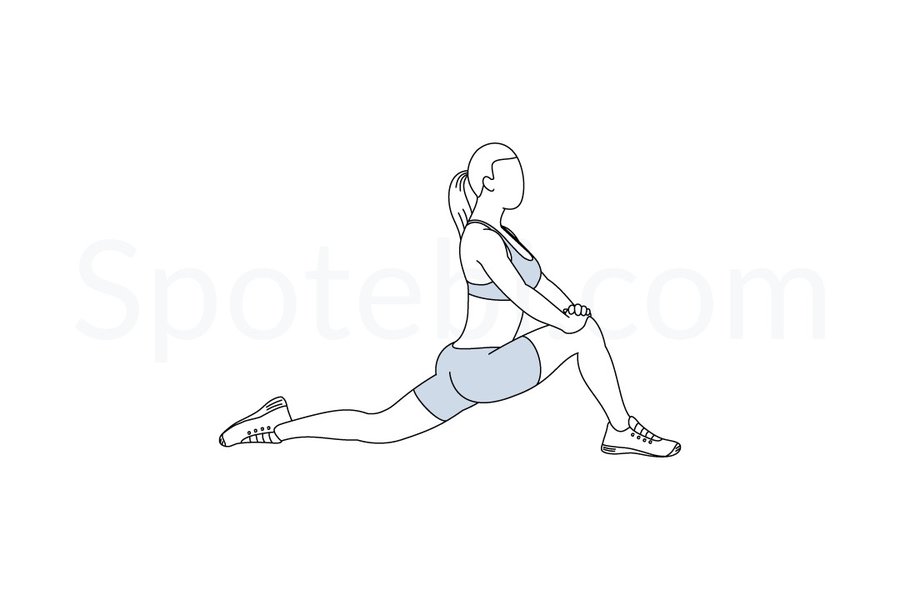
Kneeling Hip Flexor Stretch Illustration
How to perform: Begin in a kneeling position with one knee on the ground and the other foot flat on the floor in front of you, creating a 90-degree angle at both the front and back knees. Gently lean forward, keeping your torso upright, until you feel a stretch in the front of the hip of the kneeling leg. Ensure your hips remain square and avoid arching your lower back. Hold the stretch for 20-30 seconds. Repeat on the other side.
This stretch directly targets the iliopsoas and rectus femoris muscles on the side of the kneeling leg. It is a fundamental static stretch for addressing hip flexor tightness.
Studies suggest that static stretching can be effective in increasing hip range of motion, particularly in individuals with limited hip extension. While a single static stretch may not significantly impact immediate sport-specific performance, consistent static stretching over time can contribute to long-term flexibility improvements.
Dynamic Stretching
Dynamic stretching involves controlled movements through a full range of motion. These stretches are typically performed before exercise as part of a warm-up routine to prepare the muscles for activity, improve mobility, and reduce the risk of injury. Dynamic stretches for the hip flexors often involve swinging the leg or moving the hip through its natural range of motion.
Example: Leg Swings (Forward and Backward)
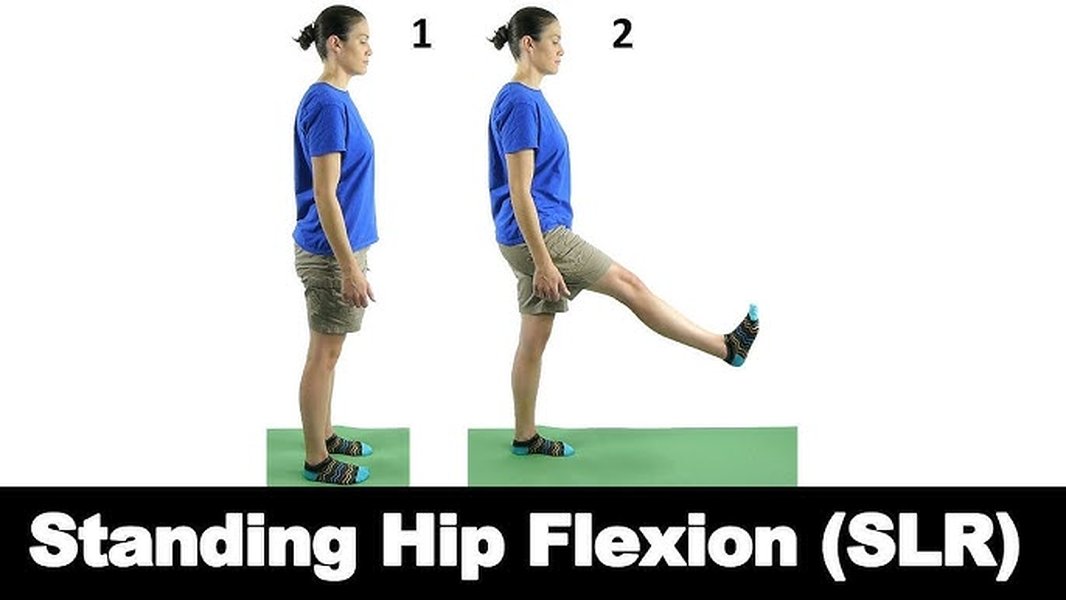
Standing Leg Swing
How to perform: Stand tall next to a wall or sturdy object for balance. Swing one leg forward and backward in a controlled motion, keeping the leg relatively straight but not locked out. Focus on moving from the hip joint. Perform 10-15 swings on each leg. Ensure the movement is smooth and within a comfortable range of motion.
This dynamic stretch helps to warm up the hip flexors (during the forward swing) and the hamstrings and glutes (during the backward swing), improving mobility and preparing the muscles for dynamic activities like running or sports.
Proprioceptive Neuromuscular Facilitation (PNF) Stretching
PNF stretching is a more advanced form of flexibility training that involves a combination of passive stretching and isometric contractions. It utilizes the body's reflexes to achieve greater range of motion. One common PNF technique is the "contract-relax" method, which involves stretching a muscle, then isometrically contracting that muscle against resistance, and finally relaxing and stretching the muscle further.
Understanding Agonist and Antagonist in PNF
In the context of hip flexion, the primary muscles involved in flexing the hip (the hip flexors) are considered the agonists. The muscles that oppose this action, primarily the hamstrings and gluteal muscles, are the antagonists. PNF techniques often involve engaging both the agonist and antagonist muscle groups to facilitate a deeper stretch in the target muscle.
Example: PNF Kneeling Hip Flexor Stretch (Contract-Relax)
How to perform: Start in a kneeling lunge position, similar to the static hip flexor stretch. From the stretched position where you feel a stretch in the hip flexors of the back leg, gently contract the hip flexor muscles of the back leg as if you are trying to lift the back knee off the ground (even though it remains on the ground). Hold this isometric contraction for 5-10 seconds. Then, relax the hip flexors and gently deepen the stretch by leaning further forward or tucking your tailbone. Hold the relaxed stretch for 20-30 seconds. Repeat this contract-relax cycle 2-3 times on each leg.
In this example, the hip flexors of the kneeling leg are the agonists. During the contraction phase, you are engaging these agonists. The relaxation that follows allows the muscle to be stretched further. While not explicitly contracting the antagonists (hamstrings/glutes) in this specific variation, other PNF techniques like contract-relax-antagonist-contract (CRAC) would involve contracting the opposing muscle group to further inhibit the target muscle and allow for a deeper stretch.
PNF stretching is considered highly effective for increasing range of motion, potentially more so than static stretching in the short term. However, research comparing the long-term effectiveness of PNF and static stretching for increasing range of motion yields mixed results, with some studies suggesting similar outcomes.
Physiological Basis of Increased Range of Motion Through Stretching
Stretching increases range of motion through a combination of mechanical and neurological adaptations. While mechanical changes in the muscle and connective tissues contribute to increased length, the nervous system plays a crucial role in modulating muscle tension and allowing for greater flexibility. Two key proprioceptors, the muscle spindle and the Golgi tendon organ, are central to this process.
The Role of Muscle Spindles
Muscle spindles are sensory receptors located within the muscle belly. They are sensitive to changes in muscle length and the rate of change of length. When a muscle is stretched, the muscle spindles are activated and send signals to the spinal cord. This triggers the stretch reflex (myotatic reflex), which causes the stretched muscle to contract, acting as a protective mechanism to prevent overstretching and potential injury.
During stretching, especially static stretching held for a period, the sensitivity of the muscle spindle can decrease. This reduction in sensitivity leads to a diminished stretch reflex, allowing the muscle to be stretched to a greater length without triggering a strong contractile response.
The Role of Golgi Tendon Organs (GTOs)
Golgi tendon organs are mechanoreceptors located in the tendons, near the junction of the muscle and tendon. They are sensitive to changes in muscle tension or force. When tension in the muscle and tendon increases, such as during a strong muscle contraction or a prolonged stretch, the GTOs are activated. GTO activation sends inhibitory signals to the spinal cord, which in turn causes the stretched muscle to relax (autogenic inhibition).
PNF stretching, particularly the contract-relax method, leverages the function of the GTOs. The isometric contraction phase increases tension in the muscle and activates the GTOs. The subsequent relaxation phase benefits from the autogenic inhibition mediated by the GTOs, allowing for a deeper stretch of the target muscle.
How Stretching Increases ROM (Short Answer)
Stretching increases range of motion by influencing the sensitivity of muscle spindles (reducing their activation during prolonged stretches) and activating Golgi tendon organs (triggering relaxation through autogenic inhibition) to allow muscles to lengthen further.
Integrating Different Stretching Methods
Incorporating a variety of stretching techniques into a fitness routine can provide comprehensive benefits for hip flexor flexibility and overall mobility. Dynamic stretches are excellent for warming up before exercise, preparing the muscles for movement. Static stretches can be beneficial for improving flexibility after a workout or as a standalone flexibility session. PNF stretching can be particularly useful for targeting specific areas of tightness and achieving more significant increases in range of motion, often with the assistance of a partner or by using resistance bands.
Sample Stretching Routine Components
| Stretch Type | Timing | Primary Benefit | Example |
|---|---|---|---|
| Dynamic | Before workout (warm-up) | Improved mobility, prepares muscles for activity | Leg Swings (Forward/Backward, Sideways) |
| Static | After workout (cool-down) or separate session | Increased muscle length, improved flexibility | Kneeling Hip Flexor Stretch, Lying Hip Flexor Stretch |
| PNF | After workout or separate session (requires warm muscles) | Significant gains in range of motion, targets specific tightness | Kneeling Hip Flexor Contract-Relax |
This table provides a simplified overview of how different stretching types can be incorporated. The optimal frequency and duration of stretching depend on individual needs, goals, and physical condition. Consulting with a physical therapist or qualified fitness professional can help in designing a personalized stretching program.
Frequently Asked Questions
How often should I stretch my hip flexors?
The frequency of hip flexor stretching can vary depending on your level of tightness and activity. For general flexibility, incorporating stretching into your routine several times a week is beneficial. If you have significant tightness, daily stretching may be recommended. Listen to your body and avoid stretching to the point of pain.
Can stretching hip flexors help with lower back pain?
Yes, tight hip flexors can contribute to lower back pain by altering pelvic alignment. Stretching the hip flexors can help restore a more neutral pelvic position, which may alleviate stress on the lower back and reduce pain.
Is it better to do static or dynamic stretches for hip flexors?
Both static and dynamic stretches have their place. Dynamic stretches are ideal for warming up before exercise to improve mobility. Static stretches are generally performed after exercise or as a separate session to improve overall flexibility and increase muscle length. PNF stretching can be used for targeted flexibility gains in warm muscles.
What are some signs of tight hip flexors?
Common signs of tight hip flexors include difficulty standing up straight, anterior pelvic tilt (forward tilting of the pelvis), pain in the front of the hip or groin, and lower back pain. Athletes, particularly runners and cyclists, may also experience reduced performance due to limited hip extension.
References
Last updated May 2, 2025