
Unlocking HIPAA: Your Comprehensive Guide to Health Information Privacy and Security
Navigate the complexities of the Health Insurance Portability and Accountability Act and understand its critical role in safeguarding your medical data.
The Health Insurance Portability and Accountability Act of 1996 (HIPAA) is a cornerstone of healthcare regulation in the United States. It establishes national standards to protect sensitive patient health information from being disclosed without the patient's consent or knowledge. Beyond privacy, HIPAA also aimed to improve the efficiency and effectiveness of the healthcare system by standardizing electronic healthcare transactions and combating waste, fraud, and abuse in healthcare and health insurance.
Key Highlights of HIPAA
- Protecting Patient Privacy: HIPAA's Privacy Rule establishes national standards for the protection of individuals' medical records and other identifiable health information (Protected Health Information - PHI).
- Securing Electronic Data: The Security Rule sets requirements for securing electronic Protected Health Information (ePHI), mandating administrative, physical, and technical safeguards.
- Ensuring Accountability: The Breach Notification Rule requires covered entities and business associates to notify affected parties in the event of a data breach, while the Enforcement Rule outlines penalties for non-compliance.
Who Must Comply with HIPAA?
HIPAA regulations apply to "covered entities" and their "business associates." Understanding these categories is crucial for recognizing the scope of HIPAA's reach.
Covered Entities
These are individuals or organizations that directly handle PHI and conduct certain healthcare transactions electronically. They fall into three main categories:
- Healthcare Providers: This includes doctors, clinics, hospitals, psychologists, chiropractors, nursing homes, pharmacies, and dentists, regardless of size, if they electronically transmit health information in connection with standard transactions.
- Health Plans: Entities that provide or pay the cost of medical care, such as health insurance companies, HMOs, company health plans, and government programs like Medicare and Medicaid.
- Healthcare Clearinghouses: Organizations that process nonstandard health information received from another entity into a standard format (i.e., standard electronic format or data content), or vice versa. Examples include billing services and community health management information systems.
Business Associates
A business associate is a person or entity that performs certain functions or activities on behalf of, or provides services to, a covered entity that involve the use or disclosure of PHI. Examples include:
- Claims processing or administration services
- Data analysis, processing, or administration
- Utilization review
- Quality assurance
- Billing
- Benefit management
- Practice management
- Legal, actuarial, accounting, consulting, data aggregation, management, administrative, accreditation, or financial services
Business associates must also comply with HIPAA's Security Rule and parts of the Privacy Rule, and are directly liable for HIPAA violations. Covered entities are required to have written contracts (Business Associate Agreements) with their business associates to ensure PHI is appropriately safeguarded.
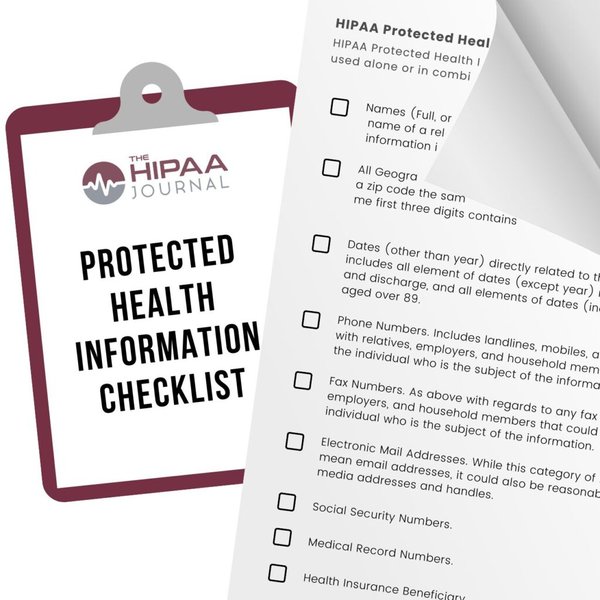
This image highlights examples of what constitutes Protected Health Information (PHI), emphasizing the breadth of data protected under HIPAA.
The Core Pillars of HIPAA: Key Rules Explained
HIPAA's framework is built upon several key rules that work together to protect health information and ensure accountability. These rules dictate how PHI can be used, disclosed, and secured.
The Privacy Rule
Protecting Individually Identifiable Health Information
The HIPAA Privacy Rule, effective April 14, 2003, establishes national standards for the protection of individuals' medical records and other Protected Health Information (PHI). It applies to PHI in any form – electronic, paper, or oral. Key aspects include:
- Use and Disclosure of PHI: It sets limits and conditions on the uses and disclosures that may be made of PHI without patient authorization. It also gives patients rights over their health information, including rights to examine and obtain a copy of their health records, and to request corrections.
- Patient Authorization: Generally, covered entities must obtain written authorization from an individual to use or disclose their PHI for purposes other than treatment, payment, or healthcare operations (TPO), unless a specific exception applies (e.g., public health activities, law enforcement purposes under strict conditions).
- Minimum Necessary Standard: Covered entities must make reasonable efforts to limit the use or disclosure of PHI to the minimum necessary to accomplish the intended purpose.
- Notice of Privacy Practices: Patients must be provided with a clear and understandable explanation of their privacy rights and how their PHI can be used and disclosed.
- Research Provisions: The Privacy Rule includes specific provisions for the use or disclosure of PHI for research purposes, often requiring Institutional Review Board (IRB) or Privacy Board approval, or the use of de-identified data or limited data sets with a data use agreement.
The Security Rule
Safeguarding Electronic Protected Health Information (ePHI)
Published on February 20, 2003, the Security Rule complements the Privacy Rule and specifically addresses the security of electronic Protected Health Information (ePHI). It requires covered entities and their business associates to implement three types of safeguards:
- Administrative Safeguards: These are administrative actions, policies, and procedures to manage the selection, development, implementation, and maintenance of security measures to protect ePHI and to manage the conduct of the covered entity's workforce in relation to the protection of that information. Examples include security management processes (risk analysis, risk management), security personnel (assigning a security official), information access management, workforce training, and evaluation.
- Physical Safeguards: These are physical measures, policies, and procedures to protect a covered entity's electronic information systems and related buildings and equipment from natural and environmental hazards, and unauthorized intrusion. Examples include facility access controls, workstation use policies, workstation security, and device and media controls (e.g., disposal, re-use, data backup, and storage).
- Technical Safeguards: These involve the technology and the policy and procedures for its use that protect ePHI and control access to it. Examples include access controls (unique user IDs, automatic logoff), audit controls (mechanisms to record and examine activity in information systems), integrity controls (ensuring data is not improperly altered or destroyed), and transmission security (e.g., encryption, though not explicitly mandated, it is strongly encouraged as an "addressable" specification).
The Security Rule is designed to be flexible and scalable, allowing organizations to implement measures appropriate to their size, complexity, and capabilities, as well as the risks to ePHI.
The Breach Notification Rule
Responding to Unauthorized Disclosures
Stemming from the Health Information Technology for Economic and Clinical Health (HITECH) Act, the Breach Notification Rule requires covered entities and their business associates to provide notification following a breach of unsecured PHI. Key requirements include:
- Defining a Breach: A breach is generally defined as an impermissible use or disclosure under the Privacy Rule that compromises the security or privacy of the PHI. An impermissible use or disclosure of PHI is presumed to be a breach unless the covered entity or business associate demonstrates that there is a low probability that the PHI has been compromised based on a risk assessment of at least four factors.
- Notification to Individuals: Affected individuals must be notified without unreasonable delay and in no case later than 60 calendar days after the discovery of a breach.
- Notification to HHS: Breaches affecting 500 or more individuals must be reported to the Secretary of Health and Human Services (HHS) without unreasonable delay and in no case later than 60 days following a breach. Breaches affecting fewer than 500 individuals must be logged and reported to HHS annually.
- Notification to Media: If a breach affects more than 500 residents of a state or jurisdiction, notice must also be provided to prominent media outlets serving that state or jurisdiction.
The Enforcement Rule
Ensuring Compliance and Accountability
The HIPAA Enforcement Rule sets out the procedures for investigations, the imposition of penalties, and hearings for HIPAA violations. Enforcement activities are primarily carried out by the HHS Office for Civil Rights (OCR).
- Investigations: OCR investigates complaints filed by individuals and conducts compliance reviews to determine if covered entities or business associates are complying with HIPAA Rules.
- Penalties: Violations can result in civil monetary penalties, which can range from $100 to $50,000 or more per violation, with annual maximums depending on the level of culpability. Criminal penalties for knowingly obtaining or disclosing identifiable health information in violation of HIPAA can include fines and imprisonment.
- State Attorneys General: State Attorneys General also have the authority to bring civil actions in federal district court on behalf of state residents for HIPAA violations and can obtain damages on behalf of individuals or statutory damages.
Compliance is often described as a "living culture" within an organization, requiring ongoing efforts, including regular risk assessments, employee training, and annual audits to maintain adherence to HIPAA standards.
Understanding the Scope of HIPAA Rules
The following table summarizes the key aspects of the main HIPAA rules, offering a quick reference to their purpose and requirements:
| Rule Name | Primary Focus | Key Requirements | Applies To |
|---|---|---|---|
| Privacy Rule | Protection of all PHI (oral, paper, electronic) and patient rights | Limits on use/disclosure, patient authorization, Notice of Privacy Practices, patient access to PHI, minimum necessary standard. | Covered Entities & Business Associates (certain provisions) |
| Security Rule | Protection of electronic PHI (ePHI) | Administrative, Physical, and Technical Safeguards (e.g., risk analysis, access controls, encryption considerations, audit trails). | Covered Entities & Business Associates |
| Breach Notification Rule | Notification procedures following a breach of unsecured PHI | Timely notification to individuals, HHS, and sometimes media, based on breach scope. Risk assessment for compromised PHI. | Covered Entities & Business Associates |
| Enforcement Rule | Investigations, penalties, and hearings for violations | Procedures for OCR investigations, civil monetary penalties, potential criminal charges. State AG authority. | Covered Entities & Business Associates |
HIPAA Rule Focus Areas: A Comparative View
To better understand how the different HIPAA rules contribute to the overall goal of protecting health information, the following radar chart illustrates their primary areas of emphasis. Each rule plays a distinct yet interconnected role in the HIPAA framework. The scores (out of 10) reflect the relative emphasis of each rule on specific aspects, based on a general interpretation of their objectives and requirements, not on quantitative data.
This chart visually represents how the Privacy Rule strongly emphasizes patient rights, the Security Rule focuses on ePHI protection and technical safeguards, the Breach Notification Rule prioritizes transparency after an incident, and the Enforcement Rule underscores accountability for compliance. All rules have an administrative and operational impact on covered entities and business associates.
Navigating the HIPAA Landscape: A Visual Map
The following mind map provides a visual overview of the key components and relationships within the HIPAA framework. It illustrates how the core objectives, rules, regulated entities, and fundamental concepts are interconnected to achieve the overarching goal of protecting health information.
(Health Insurance Portability and Accountability Act)"] id1["Core Objectives"] id1a["Protect Patient Health Information (PHI)"] id1b["Ensure Health Insurance Portability"] id1c["Reduce Healthcare Fraud & Abuse"] id1d["Standardize Electronic Healthcare Transactions"] id2["Key Rules"] id2a["Privacy Rule
(Governs use/disclosure of PHI)"] id2b["Security Rule
(Protects electronic PHI - ePHI)"] id2c["Breach Notification Rule
(Mandates notice of PHI breaches)"] id2d["Enforcement Rule
(Outlines investigations & penalties)"] id2e["Omnibus Rule
(Expands patient rights, BA liability)"] id3["Regulated Entities"] id3a["Covered Entities"] id3a1["Healthcare Providers"] id3a2["Health Plans"] id3a3["Healthcare Clearinghouses"] id3b["Business Associates
(And their subcontractors)"] id4["Fundamental Concepts"] id4a["Protected Health Information (PHI)
Individually identifiable health data"] id4b["Electronic PHI (ePHI)"] id4c["Patient Rights"] id4c1["Access & Obtain Copies of PHI"] id4c2["Request Amendments to PHI"] id4c3["Request Restrictions on Disclosures"] id4c4["Receive Notice of Privacy Practices"] id4d["Safeguards for ePHI"] id4d1["Administrative (Policies, Training)"] id4d2["Physical (Facility Access, Device Security)"] id4d3["Technical (Access Controls, Encryption)"] id4e["Minimum Necessary Disclosure"] id5["Enforcement & Penalties"] id5a["HHS Office for Civil Rights (OCR)"] id5b["State Attorneys General"] id5c["Civil Monetary Penalties"] id5d["Criminal Penalties"]
This mind map shows HIPAA's multi-faceted nature, branching from its core objectives to the specific rules that implement them, the entities bound by these regulations, the fundamental concepts like PHI and patient rights, and the enforcement mechanisms that ensure compliance.
HIPAA Explained: A Video Overview
For a dynamic explanation of HIPAA, the following video provides a concise summary of its key aspects, including what it is, who it affects, and the importance of its rules. Understanding these basics is crucial for both healthcare professionals and patients.
This video, "What is HIPAA? | HIPAA Training Video," offers insights into the fundamental principles of the Health Insurance Portability and Accountability Act. It touches upon the Privacy Rule and the responsibilities of entities handling sensitive health information, making it a useful resource for grasping the essentials of HIPAA compliance and its impact on the healthcare landscape.
Frequently Asked Questions (FAQ) about HIPAA
What is Protected Health Information (PHI)?
Protected Health Information (PHI) under HIPAA includes any individually identifiable health information that is created, received, maintained, or transmitted by a covered entity or business associate. This includes information related to an individual’s past, present, or future physical or mental health or condition, the provision of healthcare to the individual, or the past, present, or future payment for the provision of healthcare. Common identifiers include name, address, birth date, Social Security number, medical record numbers, health plan beneficiary numbers, photographs, and any other unique identifying number, characteristic, or code.
What are my rights as a patient under HIPAA?
HIPAA grants patients several important rights concerning their PHI. These include:
- The right to access, inspect, and obtain a copy of their medical and billing records.
- The right to request amendments or corrections to their PHI if they believe it is inaccurate or incomplete.
- The right to receive an accounting of disclosures of their PHI made by the covered entity for purposes other than treatment, payment, or healthcare operations.
- The right to request restrictions on certain uses and disclosures of their PHI (though covered entities are not always required to agree).
- The right to request confidential communications (e.g., to be contacted at an alternative address or phone number).
- The right to receive a Notice of Privacy Practices from health plans and direct treatment providers.
- The right to file a complaint with the covered entity or HHS if they believe their privacy rights have been violated.
Is encryption mandatory under HIPAA?
The HIPAA Security Rule does not explicitly mandate the use of encryption for all ePHI. However, encryption is an "addressable" implementation specification. This means that covered entities and business associates must conduct a risk assessment to determine if encryption is a reasonable and appropriate safeguard for their specific environment. If it is deemed so, they must implement it. If not, they must document why it is not reasonable and appropriate and implement an equivalent alternative measure if reasonable and appropriate. Given the increasing risk of data breaches and the "safe harbor" provision under the Breach Notification Rule (whereby encrypted data, if breached, may not require notification if the encryption key is not compromised), encryption is very strongly encouraged and widely considered a best practice for protecting ePHI both at rest and in transit.
What are the penalties for HIPAA violations?
Penalties for HIPAA violations can be severe and are categorized by levels of culpability. Civil monetary penalties can range from $100 to $50,000 or more per violation, with annual maximums up to $1.5 million per identical provision violated. The tiers are based on whether the entity did not know, had reasonable cause, acted with willful neglect but corrected the violation, or acted with willful neglect and did not correct it. Criminal penalties can also apply for knowingly obtaining or disclosing individually identifiable health information in violation of HIPAA, which can include fines up to $250,000 and imprisonment up to 10 years, depending on the motive (e.g., intent to sell, transfer, or use PHI for commercial advantage, personal gain, or malicious harm).
Recommended Further Exploration
To deepen your understanding of HIPAA and related topics, consider exploring these queries:
- What are the specific requirements for business associate agreements under HIPAA?
- How does HIPAA affect medical research and the use of de-identified data?
- What are common examples of HIPAA violations and how can they be prevented?
- How has the HITECH Act impacted HIPAA enforcement and breach notification requirements?
References
Last updated May 10, 2025