
The Historical Background of Kente Weaving
Exploring the Rich Heritage and Cultural Significance of Ghana's Iconic Textile
Key Takeaways
- Kente weaving originated among the Akan and Ewe peoples in the 17th century, deeply intertwined with Ghanaian royalty and social status.
- The vibrant patterns and colors of Kente cloth carry profound symbolic meanings, reflecting the cultural values and historical narratives of the Ghanaian people.
- Despite globalization, Kente weaving remains a vital cultural identifier, preserving traditional techniques while adapting to contemporary influences.
Introduction
Kente weaving stands as a profound testament to the rich cultural tapestry of Ghana, symbolizing both artistic excellence and deep-rooted social significance. Originating among the Akan and Ewe ethnic groups, Kente cloth has transcended its initial ceremonial purposes to become an emblem of African heritage worldwide. This exploration delves into the historical background of Kente weaving, highlighting its origins, evolution, and enduring cultural impact.
Origins of Kente Weaving
Early Beginnings
The genesis of Kente weaving is closely associated with the Akan people, particularly the Ashanti tribe, in the 17th century. Oral traditions recount that the craft was introduced by an individual from Bonwire, who brought the loom to the Asante from Bono Gyaman during the reign of Nana Oti Akenten (Boateng, n.d.). Another legend speaks of two men who, inspired by the intricate webs spun by the spider Anansi, developed the weaving techniques that led to the creation of Kente cloth (Smarthistory, 2025).
Royal Patronage and Social Significance
Initially, Kente cloth was a privilege reserved exclusively for Ashanti royalty and the elite. The Asantehene Opoku Ware I, who reigned in the 18th century, played a pivotal role in promoting and standardizing Kente weaving practices (Wikipedia, 2025). Under his patronage, weaving techniques were refined, and the production of elaborate and colorful cloths became emblematic of social status and authority within the Ashanti Empire (Armah, 2017).
Technological Advancements in Weaving
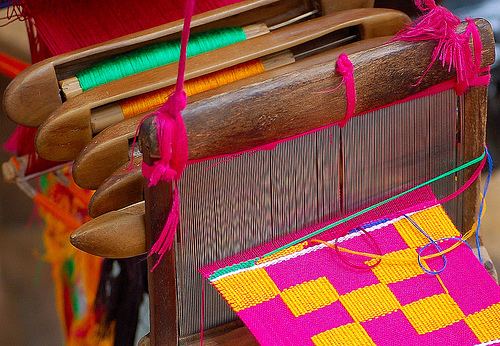
The technical aspects of Kente weaving evolved significantly over time. Traditional Kente looms are horizontal strip looms, where narrow strips of fabric are meticulously woven and then sewn together to form the final cloth (African Beads & Fabrics, 2025). Advanced techniques, such as triple weaving, demonstrated the high level of skill and craftsmanship required, allowing weavers to create intricate patterns and vibrant color combinations (Yeboah, 2014).
Cultural Symbolism and Patterns
Color Symbolism
Each color in Kente cloth holds specific symbolic meanings that convey messages about societal values, spiritual beliefs, and personal aspirations. For instance, yellow often signifies wealth and fertility, while red represents life and passion. These color choices are not arbitrary; they are deeply embedded in Ashanti and Ewe cultural narratives, serving as visual language that communicates complex ideas and emotions (Khan Academy, n.d.; Lam Museum of Anthropology, 2023).
Pattern Significance
The patterns woven into Kente cloth are more than mere decorations; they embody proverbs, historical events, and moral lessons. Each motif is carefully designed to reflect specific aspects of life and culture. For example, the "Eban" pattern symbolizes unity and harmony, while "Nsoromma" represents the idea of destiny and the stars guiding one's future. These patterns act as a narrative device, preserving oral histories and imparting wisdom through visual art (Momentslog, n.d.; Addison, 2009).
Table: Common Kente Patterns and Their Meanings
| Pattern Name | Meaning |
|---|---|
| Adinkra | Symbolizes wisdom and learning |
| Eban | Represents unity and harmony |
| Banku | Denotes spirituality and ancestors |
| Nsoromma | Signifies destiny and guidance |
| Obra | Symbol of beauty and prosperity |
Evolution and Adaptation
Impact of Trade and External Influences
The history of Kente weaving is also a narrative of adaptation and resilience. The influx of materials through extensive trade networks, including silk from Italy and dyes from various regions, enriched the color palette and expanded the possibilities of pattern design (Cabana Magazine, n.d.; Study.com, n.d.). These external influences were seamlessly integrated into traditional practices, allowing Kente cloth to evolve while maintaining its core cultural significance.
Globalization and International Recognition
In the modern era, globalization has played a significant role in elevating Kente cloth to international prominence. While traditional use was confined to Ghanaian royalty and ceremonial functions, today, Kente is embraced globally as a symbol of African heritage and identity. This widespread recognition has spurred both the preservation of traditional techniques and the innovation of new styles that cater to diverse markets (Shock & Dyadik, 2020; Yeboah, 2014).
Preservation of Traditional Techniques
Despite the pressures of modernity, the transmission of weaving knowledge from one generation to the next has been meticulously maintained. Master weavers play a crucial role in preserving the intricate skills required for traditional Kente production, ensuring that the cultural and historical essence of the cloth remains intact (Zedi, n.d.; Boateng, n.d.).
Contemporary Significance and Applications
Cultural Identity and Pride
Kente cloth continues to be a potent symbol of cultural identity among Ghanaians and the African diaspora. It is prominently featured in national celebrations, academic regalia, and significant life events such as weddings and funerals, serving as a tangible expression of heritage and pride (Lam Museum of Anthropology, 2023; Study.com, n.d.).
Modern Fashion and Design
The versatility of Kente cloth has inspired its incorporation into contemporary fashion and design. Designers blend traditional patterns with modern aesthetics to create garments and accessories that appeal to a global audience, bridging the gap between heritage and innovation (Momentslog, n.d.; Addison, 2009).
Economic Impact and Artisan Support
Kente weaving contributes significantly to the local economies of Ghana, providing livelihoods for artisans and supporting related industries such as dye production and textile export. Efforts to promote fair trade and sustainable practices ensure that the economic benefits of Kente production are equitably distributed (Yeboah, 2014; African Beads & Fabrics, 2025).
Challenges and Preservation Efforts
Threats from Mass Production
The rise of mass-produced textiles poses a significant threat to the traditional handwoven Kente industry. Factory-made imitations often lack the intricate patterns and quality of genuine Kente cloth, undermining the economic viability of artisan weavers and diluting the cultural value of the textile (Shaw, as cited in Cabana Magazine, n.d.).
Efforts to Sustain Traditional Weaving
To counteract these challenges, various initiatives focus on educating consumers about the importance of authentic Kente cloth and supporting local weavers through cooperative models and fair trade agreements. Additionally, cultural programs and heritage projects aim to document and preserve the nuanced techniques and stories behind Kente weaving (Boateng, n.d.; Zedi, n.d.).
Educational Institutions and Cultural Programs
Educational institutions in Ghana and abroad offer courses and workshops on Kente weaving, fostering a deeper understanding and appreciation of the craft. Cultural programs also play a vital role in promoting Kente as a subject of academic study and public interest, ensuring that its historical and cultural significance is recognized and valued (Armah, 2017; Addison, 2009).
Conclusion
The historical background of Kente weaving is a rich narrative of cultural expression, social stratification, and artistic innovation. From its origins among the Ashanti and Ewe peoples to its present-day status as a global symbol of African heritage, Kente cloth embodies the enduring spirit and creativity of Ghanaian artisans. Despite facing modern challenges, the dedication to preserving traditional weaving techniques ensures that Kente remains a vibrant and meaningful aspect of Ghana's cultural identity. As a living tradition, Kente weaving continues to adapt and thrive, bridging the past and the present while inspiring future generations.
References
Boateng, B. (n.d.). Adinkra and Kente Cloth in History, Law, and Life.
Wikipedia. (2025). Kente cloth.
Zedi. (n.d.). The History of Kente Cloth.
Momentslog. (n.d.). The Art of African Kente Cloth Weaving: Patterns and Symbolism.
Cabana Magazine. (n.d.). The Story of Ghanaian Kente Cloth.
Lam Museum of Anthropology. (2023). Ghana: Weave a Kente Cloth.
Midwest Global Group. (n.d.). History of Ashanti Kente Cloth/Kente Symbolism/Meanings.
Study.com. (n.d.). Kente Cloth | Definition, History & Significance.
Khan Academy. (n.d.). Kente cloth (Asante and Ewe peoples).
Last updated February 12, 2025