
Unraveling the Evolution of Librarianship in the United States
A Journey Through Information, Community, and Professional Identity
Key Insights into American Librarianship History
- Foundational Milestones: The professionalization of librarianship in the U.S. was significantly shaped by key events in 1876, including the formation of the American Library Association (ALA) and the publication of a comprehensive report on public libraries, marking a pivotal shift towards a recognized profession.
- Evolving Roles and Values: From custodians of books to facilitators of information and community hubs, the role of librarians has continuously adapted, guided by core values such as intellectual freedom, equitable access, and diversity, which are championed by organizations like the ALA.
- Impact of Technology and Society: Throughout its history, American librarianship has consistently responded to societal changes and technological advancements, from the introduction of cataloging systems to the integration of digital resources and AI, demonstrating an ongoing commitment to serving evolving informational needs.
The history of librarianship in the United States is a rich tapestry woven with threads of intellectual development, community service, and professional evolution. For those interested in delving into this fascinating subject, formulating a precise research question is crucial. A valid research question should be specific, researchable, and contribute meaningfully to the existing body of knowledge. Considering the multifaceted nature of librarianship, from its foundational principles to its modern challenges, offers numerous avenues for exploration.
A Compelling Research Question for American Librarianship
A compelling research question for someone interested in the history of librarianship in the U.S. could be:
"How have the core values of American librarianship, particularly intellectual freedom and equitable access, evolved and influenced the profession's adaptation to technological advancements and societal shifts from the late 19th century to the present day?"
This question allows for a deep dive into the foundational principles of librarianship while also examining its dynamic relationship with technology and broader societal changes. It provides ample scope for historical analysis, policy review, and an examination of professional practice over time.
Dissecting the Research Question: Why It's Effective
This research question is effective because it targets several critical aspects of American librarianship, allowing for a comprehensive and nuanced study.
Exploring Core Values: Intellectual Freedom and Equitable Access
The American Library Association (ALA), founded on October 6, 1876, has been instrumental in defining and promoting the core values of librarianship. Two of these foundational values, intellectual freedom and equitable access, are central to the profession's identity. Intellectual freedom ensures that individuals can access information from diverse viewpoints without restriction or censorship, while equitable access emphasizes the right of all people to information, regardless of their background or circumstances. These values are enshrined in documents like the Library Bill of Rights, adopted by the ALA in 1939, which is considered a defining moment for modern librarianship's commitment to intellectual freedom.
The history of public libraries in the U.S. since the country's founding has demonstrated consistent popular support for their democratic missions and services, underscoring the ideal of free access to information as a core American value, despite historical periods of inequality. Investigating how these core values have been articulated, defended, and sometimes challenged throughout history reveals much about the profession's commitment to its ideals.
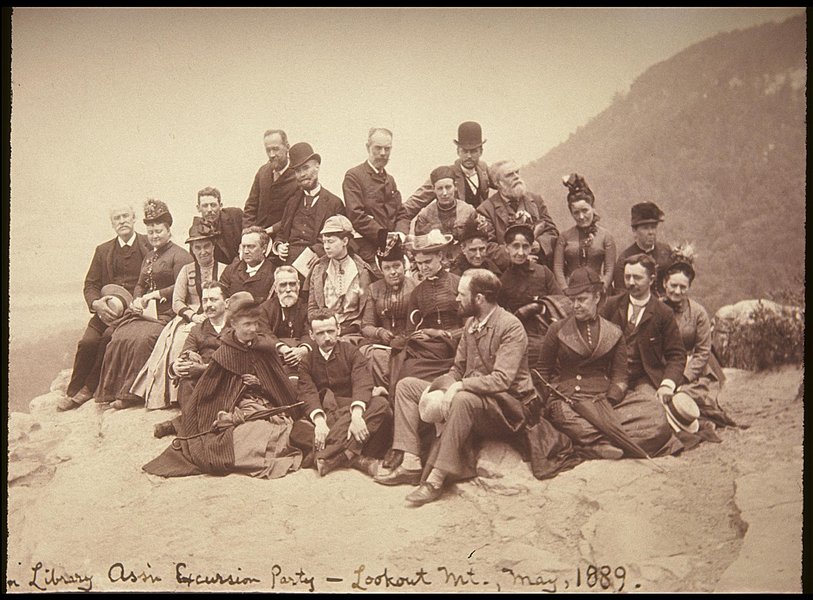
American Library Association members gathered in 1889, showcasing the early stages of professional organization.
Technological Advancements and Adaptation
Librarianship has consistently adapted to new technologies. The 19th century saw the emergence of standardized cataloging systems like the Dewey Decimal System, devised by Melvil Dewey, and Charles Cutter's cataloging principles, which fundamentally influenced library practices. As technology evolved, so did the tools and methods used by librarians. The shift from physical card catalogs to digital databases, and now to advanced information retrieval systems, showcases this continuous adaptation. The rise of digital libraries, electronic resources, and online platforms has transformed how information is managed and disseminated, requiring librarians to acquire new skills in areas such as digital preservation, metadata management, and electronic resource acquisition.
The "building boom" for libraries in the U late 1940s through the 1960s, aided by federal grants like those from the Higher Education Act, also facilitated the integration of new technologies and expanded library services. Today, librarians are exploring the implications of artificial intelligence (AI) and other disruptive digital innovations, considering how these technologies can support and enhance their roles while upholding core values.
Societal Shifts and Their Influence
Societal shifts have profoundly impacted the development of librarianship. For instance, the establishment of children's librarianship was linked to the development of reading habits in children and the shaping of their worldviews, reflecting changing attitudes towards children in society. Similarly, the civil rights movement in the U.S. brought about the desegregation of libraries, a period of significant challenge and transformation for the profession as it grappled with racism and resistance to social change. This period highlighted the importance of libraries as products of the society in which they exist and their role in promoting social equity.
The focus on diversity, equity, and inclusion (EDI) within librarianship today is a direct response to historical inequalities and ongoing societal needs. The American Library Association (ALA) actively works to recruit people of color and individuals with disabilities into the profession and promotes the development of diverse library collections and services for all people.
Key Eras and Developments in U.S. Librarianship
The history of librarianship in the United States can be broadly categorized into several key eras, each marked by significant developments in professional identity, service delivery, and technological integration.
19th Century: Professionalization and Foundations
The 19th century was a pivotal period for librarianship in the U.S., as it began to emerge as a true profession. The year 1876 is often cited as the "annus mirabilis" due to several landmark events: the formation of the American Library Association (ALA) on October 6, and the publication of "Public Libraries in the United States of America: Their History, Condition, and Management" by the U.S. Department of the Interior. This manual, aimed at practicing librarians, covered topics like management, administration, and cataloging, providing a foundational text for the nascent profession.
Melvil Dewey's establishment of the first formal library training program at Columbia University in 1887, followed by others at Pratt and Drexel, signaled the beginning of structured library education. This period also saw the rise of public libraries, such as the Toronto Public Library, which became one of the first and largest free libraries in North America, playing a crucial role in disseminating knowledge and promoting literacy.
Early 20th Century: Expansion and Specialization
The early 20th century witnessed continued growth and specialization within librarianship. The concept of library science solidified, with most library schools awarding master's degrees by the 1950s, emphasizing postgraduate education. The establishment of divisions within the ALA, such as for academic, school, and public libraries, reflected the increasing specialization of the profession. School librarianship, for example, developed in tandem with changing societal attitudes towards children and the rising popularity of kindergartens and nurseries.
Mid-20th Century: Post-War Boom and Social Change
The post-World War II era saw a significant "building boom" for libraries, partly fueled by federal grants, which allowed for infrastructure expansion and service improvements. This period also presented the challenges of desegregation during the Civil Rights Movement, forcing libraries to confront issues of racial inequality and adapt to social change. Academic libraries, in particular, saw growth and professionalization, with the formation of the Association of Research Libraries (ARL) in 1932 and the Association of College and Research Libraries (ACRL) in 1938 further solidifying their role in higher education.
This radar chart illustrates the perceived evolution of various aspects of librarianship over different historical periods in the U.S. Each axis represents a key dimension: Intellectual Freedom Advocacy, Equitable Access Implementation, Technological Adoption Rate, Community Engagement Levels, Professional Development Focus, and Diversity & Inclusion Initiatives. The data points, based on a qualitative assessment, show a general trend of increasing emphasis and capability across all dimensions from the late 19th century to the early 21st century. This visual representation helps to understand how the core values and practical applications of librarianship have broadened and deepened over time, providing a contextual backdrop for the proposed research question.
Late 20th and 21st Century: Digital Age and Community Hubs
The advent of the internet and digital information brought about a profound transformation, moving libraries "beyond the books." Librarians' roles evolved to include managing digital collections, providing technology training, and fostering digital literacy. Libraries have increasingly become vital community hubs, offering a wide array of services beyond traditional book lending, such as computer access, public programs, basic literacy education, and assistance with community resources. The ongoing integration of AI further revolutionizes information access, with librarians playing a crucial role in curating and guiding users through vast digital landscapes.
The following table summarizes key aspects of the evolution of librarianship in the U.S., offering a structured overview of changes across different periods:
| Period | Key Characteristics | Technological Impact | Societal Influence | Core Values Emphasis |
|---|---|---|---|---|
| Pre-1876 | Emergence of private, subscription, and early public libraries; unstandardized practices. | Limited; focus on physical texts. | Elite access, literacy promotion, religious influence (parish libraries). | Collection building, preservation. |
| 1876 - Early 1900s | Professionalization begins; ALA founded; formal library education (Dewey); standardization of cataloging. | Introduction of Dewey Decimal System, card catalogs. | Public library movement, mass literacy, urban development. | Organization of knowledge, promoting "good reading," foundational intellectual freedom. |
| Early to Mid-20th Century | Expansion of public and academic libraries; specialized librarianship (children's, school); focus on professional degrees. | Microfilm, early indexing services. | Changing attitudes towards children, educational reforms, post-WWI growth. | Professional ethics, access to information, early inklings of equitable access. |
| Mid- to Late 20th Century | Library building boom; integration of new media (audio-visual); desegregation efforts. | Introduction of computers, early databases. | Civil Rights Movement, Cold War information needs, academic research boom. | Intellectual freedom (Library Bill of Rights), equitable access, community service. |
| Late 20th Century - Present | Digital transformation; internet and online resources; shift to community hubs; AI integration. | Internet, digital repositories, AI, advanced information retrieval systems. | Information age, diverse populations, digital divide, sustainability concerns. | Digital literacy, privacy, diversity & inclusion (EDI), continued intellectual freedom and equitable access. |
Understanding the Evolution of the Librarian's Role
The video below, "How Librarianship Has Changed," provides a valuable perspective on the dynamic nature of the librarian's role throughout history. It underscores how the profession has moved beyond mere book curation to become a vital force in information literacy, community building, and digital navigation. The discussion in the video aligns perfectly with the proposed research question, highlighting the continuous adaptation librarians have undergone to meet the evolving needs of their patrons and society at large.
This video helps to visualize the transformation of librarianship, from a traditional focus on physical collections to a more expansive role embracing technology and community engagement. It illustrates how librarians have continually redefined their responsibilities to remain relevant and essential in an ever-changing information landscape.
Frequently Asked Questions about Librarianship in the U.S.
What is the significance of 1876 in American librarianship history?
How has technology influenced the role of librarians?
What are the core values of librarianship, and who promotes them?
How did librarianship adapt to societal changes like the Civil Rights Movement?
What is the focus of modern librarianship in the 21st century?
Conclusion: A Profession Defined by Adaptation and Values
The history of librarianship in the U.S. is a testament to a profession constantly in flux, yet steadfast in its core mission. From its nascent stages in the 19th century, marked by efforts towards professionalization and standardization, to its current role as a dynamic information and community hub, librarianship has consistently adapted to the evolving needs of society and the rapid pace of technological innovation. The enduring commitment to intellectual freedom and equitable access, championed by institutions like the ALA, has served as a moral compass, guiding librarians through periods of profound change, from the civil rights era to the digital revolution. Researching this rich history not only sheds light on the past but also offers critical insights into the ongoing evolution of information access and the crucial role librarians play in fostering an informed and engaged citizenry.
Recommended Further Research
- Explore the lasting legacy of Carnegie Libraries on the development and accessibility of public libraries across the United States.
- Investigate how American librarians have championed and implemented digital literacy initiatives to bridge the technological divide.
- Examine the historical and contemporary efforts to enhance racial and ethnic diversity within the U.S. librarian profession and its implications.
- Delve into how academic librarians are preparing for and integrating artificial intelligence into their services and collections to meet future research needs.