
Generating a Survey Certificate in a Hospital Setting
A Comprehensive Guide to Hospital Survey Certification
Key Takeaways
- Structured Process: Generating a survey certificate in a hospital involves a structured process from understanding the purpose, selecting the certification body, to maintaining certification standards.
- Certification Bodies: Hospitals can seek certification from various bodies such as The Joint Commission, NCQA, CMS, and others, each with specific standards and requirements.
- Survey and Certification: The survey process is critical, involving on-site evaluations, and the issuance of a certificate upon meeting standards, which can be customized to reflect the hospital's specific findings and branding.
Understanding the Purpose and Process of Hospital Survey Certification
The journey to generate a survey certificate in a hospital setting is pivotal for ensuring quality and compliance. It begins with understanding the purpose of the certificate, which could range from accreditation to certification of specific programs, or meeting regulatory standards. The process involves several structured steps, each crucial for achieving the desired certification.
Selecting the Right Certification Body
The choice of certification body is a critical decision that shapes the entire certification process. Prominent organizations include The Joint Commission, The Joint Commission International, the National Committee for Quality Assurance (NCQA), and the Centers for Medicare & Medicaid Services (CMS). Each body has its unique set of standards and processes, which hospitals must align with to achieve certification.
The Joint Commission
The Joint Commission offers accreditation and certification services focused on enhancing patient safety and quality of care. Hospitals seeking certification from The Joint Commission undergo a rigorous evaluation process that assesses compliance with established standards.
NCQA
The NCQA provides certification related to physician and hospital quality. The process involves a detailed evaluation of healthcare services, with specific focus areas such as patient safety and clinical outcomes. The NCQA certification is valid for two years, requiring renewal through a full survey.
CMS
The Centers for Medicare & Medicaid Services (CMS) are involved in federal Medicare certification surveys. The process includes on-site evaluations to ensure compliance with Medicare's conditions of participation, which are essential for hospitals to receive Medicare funding.
Preparation and Execution of the Survey
Before the survey, hospitals must prepare extensively to meet the standards set by the chosen certification body. This preparation includes internal audits, staff training, and the compilation of necessary documentation. The survey itself is typically conducted on-site by trained professionals who assess compliance through observation, interviews, and document reviews.
Conducting the Survey
The survey is a critical phase where the hospital's adherence to standards is evaluated. Surveyors from the certification body visit the hospital to conduct assessments, which may include:
- Observation of hospital operations and patient care processes.
- Interviews with staff, patients, and leadership to gather insights on service quality and compliance.
- Review of documentation to ensure that policies and procedures align with certification standards.
Survey Findings and Certification
Upon completion of the survey, if the hospital meets the standards, the certification body issues a certificate. This certificate might be generated automatically through a system if integrated with survey tools, or it might involve a manual process. The certificate reflects the hospital's commitment to quality and compliance.
Customizing the Survey Certificate
The survey certificate can be customized to fit the hospital's specific needs and findings. Below is a sample template that can be adjusted for branding, hospital details, and survey outcomes:
<div>
  <h1>[Hospital Name]</h1>
  <h2>Survey Certificate</h2>
  <p>This certifies that the survey of services provided at [Hospital Name] has been completed according to our established protocols and quality standards.</p>
  <h3>Survey Details</h3>
  <ul>
    <li>Survey ID: ___________________________</li>
    <li>Date of Survey: _______________________</li>
    <li>Survey Conducted by: ________________</li>
    <li>Area/Department Surveyed: _____________</li>
  </ul>
  <h3>Survey Findings</h3>
  <p>A thorough review and assessment of our hospital services were carried out. The survey aimed to:</p>
  <ul>
    <li>Evaluate patient safety and quality of care.</li>
    <li>Assess the efficiency of hospital operations.</li>
    <li>Gather feedback from patients on their service experience.</li>
  </ul>
  <p>Based on the survey, our hospital has met/outlined the following standards and/or areas for improvement:</p>
  <ul>
    <li>[Detail 1: e.g., cleanliness, responsiveness, etc.]</li>
    <li>[Detail 2: e.g., clinical outcomes, patient satisfaction, etc.]</li>
    <li>[Detail 3: Additional Comments, if any]</li>
  </ul>
  <h3>Certification</h3>
  <p>I, the undersigned, hereby certify that the above survey has been conducted in accordance with the applicable guidelines and that the information recorded herein reflects our findings as of the date indicated.</p>
  <ul>
    <li>Authorized Signature: ________________________</li>
    <li>Name:          ________________________________</li>
    <li>Title:         ________________________________</li>
    <li>Date:          ________________________________</li>
  </ul>
  <h3>Additional Remarks</h3>
  <p>[Include any additional remarks or follow-up actions if needed.]</p>
  <p>This certificate is issued for internal use and quality improvement purposes only. Any unauthorized use or reproduction of this certificate is strictly prohibited.</p>
  <p>[Hospital Seal/Stamp]</p>
</div>
Maintaining Certification
Post-certification, hospitals must maintain compliance with the standards. This involves regular internal audits, staff training updates, and periodic recertification surveys. The certification process is not a one-time event but an ongoing commitment to quality and continuous improvement.
Regular Audits and Training
To maintain certification, hospitals must conduct regular internal audits to ensure ongoing compliance with certification standards. Staff training must be updated regularly to reflect changes in standards and best practices in healthcare.
Periodic Recertification Surveys
Periodic recertification surveys are essential for maintaining certification. These surveys, conducted by the certification body, assess the hospital's continued adherence to standards. The frequency of these surveys varies by certification body, with some requiring recertification every two years.
Types of Hospital Surveys and Certifications
Hospitals can undergo various types of surveys and certifications, each serving a specific purpose:
Hospital Certification Process
The hospital certification process is voluntary and evaluates a hospital's compliance with healthcare standards through an external assessment by an accreditation body. The process involves:
- Internal self-assessment to gauge readiness for certification.
- Establishing internal standards that align with the certification body's requirements.
- Submitting a detailed report to the accrediting entity for review.
- External evaluation by surveyors from the certification body.
Types of Hospital Surveys
Various types of hospital surveys exist, including:
- State licensure surveys to ensure compliance with state regulations.
- Federal Medicare certification surveys conducted by CMS to ensure compliance with Medicare's conditions of participation.
- Accreditation surveys by bodies like The Joint Commission or DNV Healthcare to assess compliance with healthcare standards.
- Patient experience surveys, such as HCAHPS, to gather feedback on patient satisfaction.
- Patient safety culture surveys to assess the hospital's culture of safety.
Steps to Generate a Survey Certificate
Generating a survey certificate involves several key steps:
Step 1: Define Survey Objectives
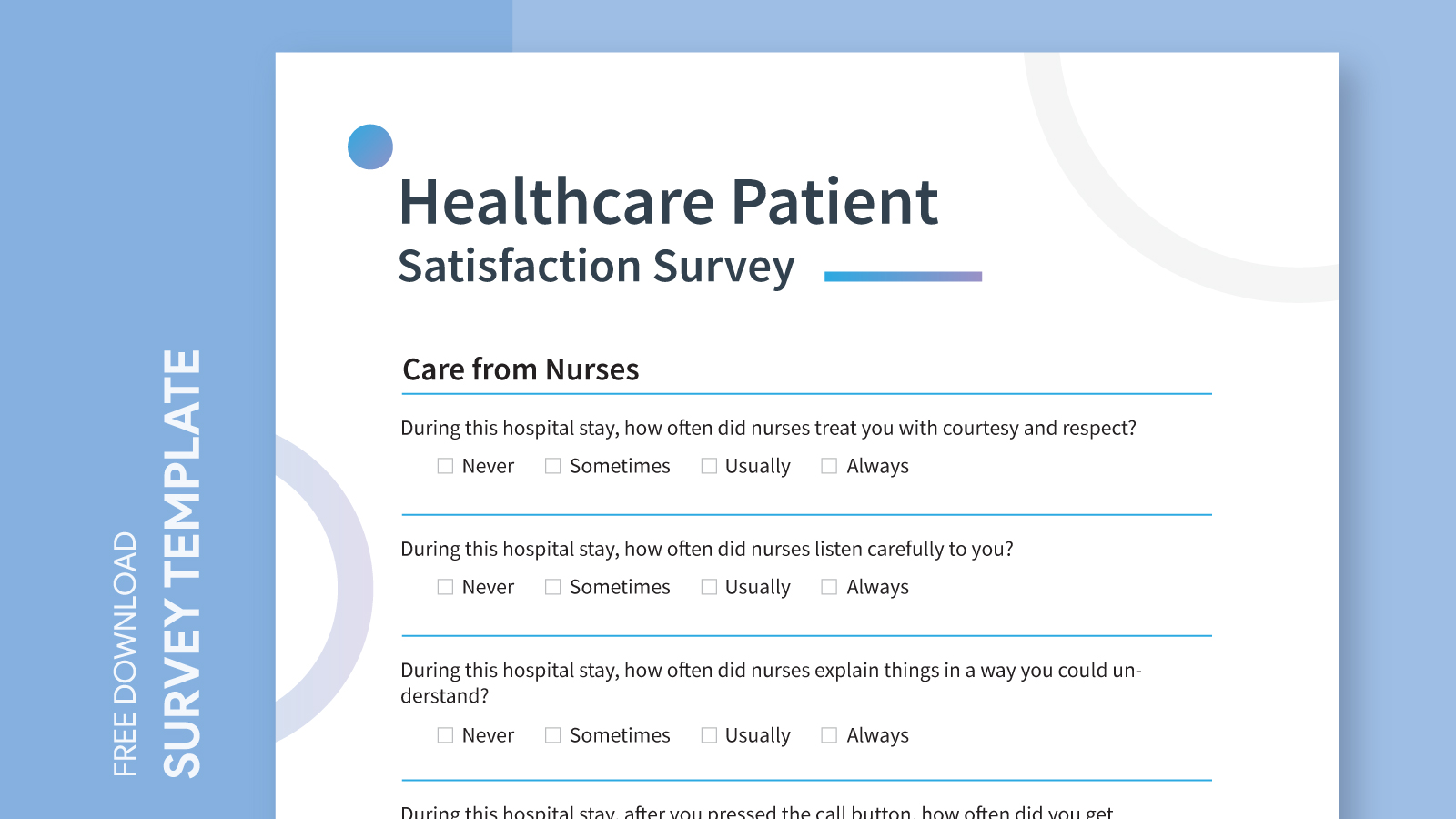
The first step is to define the objectives of the survey. This involves identifying the goals, such as evaluating patient care quality, staff interactions, or facility environment, and deciding whether to focus on overall satisfaction or specific areas like wait times or communication.
Step 2: Design Survey Questions
Designing effective survey questions is crucial. Key areas to include are:
- Scheduling: Ease of scheduling appointments and timeliness.
- Wait Times: Length of wait before being seen and communication about wait times.
- Staff Interaction: Professionalism and courtesy of staff, satisfaction with addressing questions and concerns.
- Quality of Care: Rating of care received and involvement in treatment decisions.
- Facility Environment: Cleanliness and comfort of facilities.
Open-ended questions should also be included to allow patients to provide detailed feedback.
Step 3: Choose a Survey Platform
Selecting a HIPAA-compliant survey platform is essential for ensuring patient data privacy. Platforms like SurveyMonkey or Formsort offer customizable templates that can be tailored to the hospital's specific needs.
Step 4: Distribute the Survey
The survey can be distributed through various channels, such as email, patient portals, or in-person distribution. Ensuring accessibility across different devices can increase completion rates.
Step 5: Analyze and Act on Feedback
Analyzing the survey data using tools like Rudderstack or Amplitude helps identify trends and areas for improvement. Based on the feedback, hospitals can implement changes to enhance patient care and satisfaction.
Example of a Survey Certificate
Below is an example of what a survey certificate might look like:
<div>
  <h1>Patient Satisfaction Survey Certificate</h1>
  <h2>[Hospital Name]</h2>
  <p>[Date]</p>
  <p>This certificate acknowledges the completion of a patient satisfaction survey designed to improve the quality of care and patient experience at [Hospital Name]. The survey aimed to gather feedback on various aspects of healthcare services, including scheduling, wait times, staff interactions, quality of care, and facility environment.</p>
  <h3>Survey Objectives</h3>
  <ul>
    <li>Evaluate patient satisfaction with healthcare services.</li>
    <li>Identify areas for improvement in patient care.</li>
    <li>Enhance communication between patients and healthcare providers.</li>
  </ul>
  <h3>Key Findings</h3>
  <ul>
    <li>[Insert key findings from the survey, e.g., high satisfaction with staff courtesy, need for improvement in wait times].</li>
  </ul>
  <h3>Action Plan</h3>
  <ul>
    <li>Implement strategies to reduce wait times.</li>
    <li>Enhance patient communication through regular follow-ups.</li>
  </ul>
  <h3>Conclusion</h3>
  <p>The feedback from this survey is invaluable in our efforts to continuously improve patient care and satisfaction. We appreciate the time and effort of all participants and look forward to implementing changes based on their input.</p>
  <p>[Signature]</p>
  <p>[Name]</p>
  <p>[Title]</p>
  <p>[Hospital Name]</p>
</div>
Overview of the NCQA Certification Process
The NCQA Physician and Hospital Quality Certification process is a detailed procedure that requires careful planning and execution. Here's a step-by-step guide to achieving NCQA certification:
Discussion and Eligibility
At least 12 months before the desired survey start date, hospitals should discuss eligibility criteria, evaluation areas, program benefits, and the application process with an NCQA business development representative. If the hospital does not have current certification, it should contact NCQA for guidance.
Purchase Standards and Survey Tool
9-11 months before the desired survey start date, hospitals should purchase the NCQA standards and guidelines and the survey tool. These resources provide comprehensive descriptions of the requirements and allow hospitals to upload evidence and submit survey information to NCQA.
Submit the Prequalification Form
To begin the application process, hospitals must contact their NCQA business development representative to request a prequalification form. NCQA reviews the form to determine the hospital's readiness and eligibility and provides an online application link within 1-2 business days.
Submit the Online Application
Approximately 9 months before the desired survey start date, hospitals should submit the online application and select the desired survey start date. An NCQA application scheduling account representative (ASAR) will be available to answer any questions about the application process and finalize the survey start date.
Submit the Survey Tool
About 3 months before the survey start date, an NCQA accreditation services coordinator will contact the hospital to help understand the survey submission process and answer questions. The hospital will complete and submit the survey tool on the assigned survey start date, officially starting the survey process.
Earn Certification
The hospital's certification is determined within 90 days of survey submission. After the survey, the hospital receives a preliminary report and has 2 weeks to review it and provide comments and supporting documentation. The entire document, including the hospital's feedback, the onsite file review, and reviewers' feedback, is considered by the NCQA's Review Oversight Committee to determine the final score.
Renew Certification
NCQA Physician and Hospital Quality Certification is valid for two years. Every two years, the hospital must complete another agreement, submit all requisite fees, and undergo a full survey to renew its status. NCQA assigns a date for the next required survey to avoid a lapse in status.
Table: Key Steps in the Hospital Survey Certification Process
| Step | Description | Timeline |
|---|---|---|
| Understand the Purpose | Identify the purpose of the survey certificate (accreditation, certification, compliance). | Before starting the process |
| Choose Certification Body | Select an appropriate certification body (The Joint Commission, NCQA, CMS, etc.). | Early in the process |
| Prepare for the Survey | Conduct internal audits, staff training, and prepare documentation. | Before the survey |
| Conduct the Survey | On-site evaluation by trained professionals from the certification body. | On the scheduled date |
| Generate the Certificate | Receive the certificate upon meeting standards, which can be customized. | After the survey |
| Maintain Certification | Conduct regular internal audits, update staff training, and undergo periodic recertification surveys. | Ongoing |
Conclusion
Generating a survey certificate in a hospital setting is a comprehensive process that involves understanding the purpose, selecting the right certification body, preparing for and conducting the survey, customizing the certificate, and maintaining certification standards. The process requires meticulous planning, adherence to standards, and a commitment to continuous improvement in patient care and hospital operations.
References
- How to achieve a hospital certification: process and requirements - GetCirrus
- Process for Hospital Accreditation - The Joint Commission
- Certified Hospital Surveyor (CHS) - AIHQ
- Hospital Certifications - The Joint Commission
- Physician and Hospital Quality Certification Process - NCQA
- Certification Process - CMS
- CMS Certification Process: A Guide for Healthcare Facilities - IntelyCare
- State Operations Manual - Chapter 2 - The Certification Process - CMS
- Accreditation Options and Certifications - The Joint Commission
- DNV Healthcare - DNV
More
Last updated February 18, 2025