
Unveiling the Inner Workings: How I, Ithy, Assist You Intelligently
A deep dive into the sophisticated AI technologies and processes that power your intelligent assistant.
As an AI assistant, my name "Ithy" signifies "Think Intelligently." I am designed to be a multilingual AI assistant that intelligently responds to your queries in your own language. My particular strength lies in my ability to combine insights from multiple Large Language Models (LLMs) to provide comprehensive responses, often enhanced with visual elements. Understanding how I work involves looking at the core technologies I utilize and the processes I follow to handle your requests.
Key Highlights of My Operations
- The AI Triad at My Core: I operate using a powerful and synergistic combination of Natural Language Processing (NLP) to understand you, Machine Learning (ML) to continuously refine my abilities, and advanced Large Language Models (LLMs) to generate human-like and contextually relevant responses.
- Intelligent Information Synthesis: A distinctive aspect of my functionality is the capability to intelligently synthesize information derived from multiple LLMs. This allows me to offer responses that are not only comprehensive but also nuanced and multifaceted, drawing from a broader spectrum of AI-generated knowledge.
- Meticulous Query Processing: From the moment you submit a query until you receive a tailored answer, I engage in a meticulous, multi-stage process. This includes in-depth input analysis, sophisticated information retrieval across diverse sources, and dynamic, context-aware response generation, often incorporating visual aids for clarity.
The Technological Foundations: NLP, ML, and LLMs
My ability to "think intelligently" and assist you effectively is built upon a sophisticated architecture of interconnected AI technologies. These are not just standalone components but work in concert to deliver a seamless and intelligent user experience.

AI technologies form the bedrock of my ability to process information and respond intelligently.
Natural Language Processing (NLP): The Art of Understanding
NLP is the critical technology that allows me to understand human language—whether you type your query or, in some systems, speak it. When you interact with me, NLP algorithms go to work:
- Parsing and Tokenization: Breaking down your sentences into smaller units like words or sub-words (tokens).
- Syntactic and Semantic Analysis: Understanding the grammatical structure and the meaning of your words and phrases in context.
- Intent Recognition: Identifying the underlying purpose or goal of your query. For example, distinguishing between a request for information, a command to perform a task, or a simple conversational exchange.
- Entity Extraction: Pinpointing key pieces of information within your query, such as names, dates, locations, or specific topics.
This sophisticated linguistic analysis enables me to grasp not just the literal words you use, but also the nuances and underlying intent, which is crucial for providing relevant answers.
Machine Learning (ML): The Engine of Continuous Improvement
Machine Learning is the mechanism through which I learn and improve over time. While I don't learn from individual private interactions in real-time to protect user privacy, the models I am based on are periodically trained and updated using vast and diverse datasets. This training process involves:
- Pattern Recognition: Identifying complex patterns and relationships within the data, which helps in understanding language structures, common query types, and effective response strategies.
- Predictive Modeling: Developing the ability to predict likely outcomes or generate appropriate responses based on learned patterns.
- Performance Optimization: ML algorithms help in refining my performance, making my responses more accurate, relevant, and natural-sounding over successive model updates.
Large Language Models (LLMs): The Powerhouse of Generation
LLMs are at the heart of my ability to generate coherent, context-aware, and human-like text. These are typically deep learning models, often based on transformer architectures, trained on an immense corpus of text and code. Their key characteristics include:
- Vast Knowledge Base: LLMs encode a massive amount of information learned during their training, allowing them to discuss a wide range of topics.
- Contextual Understanding: They can maintain context over a conversation, enabling more meaningful and coherent multi-turn dialogues.
- Generative Capabilities: LLMs excel at generating new text that is contextually appropriate, grammatically correct, and stylistically consistent with the input or desired output. This is what allows me to compose detailed explanations, summaries, and creative text.
As Ithy, I leverage the power of multiple LLMs. This means I can draw upon the strengths of different models, cross-reference information, and synthesize a response that is often more comprehensive and robust than what a single LLM might produce.
My Operational Workflow: From Your Query to My Response
When you ask me a question, a multi-stage process unfolds behind the scenes to deliver an intelligent and helpful response. This workflow ensures that your query is understood correctly and that the information provided is relevant and well-presented.
Visualizing Ithy's Intelligent Response Pathway
The following mindmap illustrates the typical journey of your query as I process it and formulate a response. It highlights the key stages, from initial linguistic analysis to the final delivery of information, emphasizing the integration of various AI capabilities.
- Input Reception & Initial Processing: I receive your query through the user interface. My NLP components immediately begin to process the language.
- Deep Understanding: Using NLP, I analyze your input to determine its core meaning, identify key entities, and understand your specific intent. This involves deciphering ambiguities and considering the broader conversational context if it's an ongoing dialogue.
- Information Retrieval and Synthesis: This is where my unique capability of leveraging multiple LLMs comes into play.
- I query relevant internal knowledge bases and potentially external data sources.
- Simultaneously, I may consult several LLMs, each potentially offering different perspectives or specialized knowledge.
- The information gathered is then critically evaluated and synthesized. This involves comparing, contrasting, and integrating insights to form a comprehensive understanding.
- Response Generation: Based on the synthesized information, my generative AI capabilities, powered by LLMs, construct a response. This involves:
- Drafting text that is coherent, grammatically correct, and relevant to your query.
- Structuring the information logically (e.g., using paragraphs, lists, or headings).
- Tailoring the language style to be informative and accessible.
- If appropriate, incorporating visual elements like charts, diagrams, or images to enhance understanding.
- Output Delivery: The final response is delivered to you through the interface. If voice interaction is enabled, Text-to-Speech (TTS) technology might convert my textual response into spoken words.
Comparing Key Performance Aspects of AI Assistants
Different AI assistants can vary in their capabilities. The radar chart below provides a conceptual comparison of key performance indicators across a generic AI assistant, an advanced AI assistant, and my approach as Ithy, which emphasizes multi-LLM synthesis. The scores are illustrative, representing relative strengths on a scale where higher values indicate better performance in that specific dimension.
This chart visualizes how factors like information depth and response nuance can be enhanced through approaches like multi-LLM synthesis, aiming for a more robust and intelligent interaction.
Core Technologies and Their Roles
To further clarify how different technological components contribute to my overall functionality, the table below outlines their primary roles and the benefits they provide to you, the user.
| Technology Component | Role in My Operations | Benefit to You |
|---|---|---|
| Natural Language Processing (NLP) | Enables me to understand your queries in natural language, including interpreting grammar, semantics, nuances, and the underlying intent of your words. | You can interact with me using everyday language, just as you would in a natural conversation, making communication intuitive and efficient. |
| Machine Learning (ML) | Underpins my ability to learn from vast datasets (during model training phases), recognize patterns, and continuously improve the accuracy and relevance of my responses over time with model updates. | My responses aim to become increasingly more insightful, helpful, and aligned with diverse user needs as the underlying models evolve. |
| Large Language Models (LLMs) | Serve as the primary engine for generating coherent, contextually appropriate, and human-like text. They provide the raw capability for knowledge recall and linguistic expression. | You receive detailed, well-articulated, and easy-to-understand answers, explanations, and other textual content on a wide array of subjects. |
| Multi-LLM Synthesis Architecture | My specific design involves integrating, cross-referencing, and synthesizing information from several advanced LLMs, rather than relying on a single model. | You benefit from responses that are more comprehensive, balanced, and thoroughly vetted, as they draw from a wider range of AI-generated perspectives and knowledge. |
| Data Integration & Knowledge Bases | Allows me to access and utilize information from structured databases, specialized knowledge sources, and potentially real-time data feeds to inform and ground my responses. | My answers can be enriched with specific, up-to-date (within my knowledge cutoff of May 18, 2025), and factually supported information where applicable. |
| Generative AI Capabilities | Refers to the broader capacity, primarily driven by LLMs, to create new content (text, summaries, and sometimes even code or creative ideas) based on learned patterns and user prompts. | Beyond simple Q&A, I can assist with more complex tasks like drafting content, summarizing information, and exploring ideas in a generative manner. |
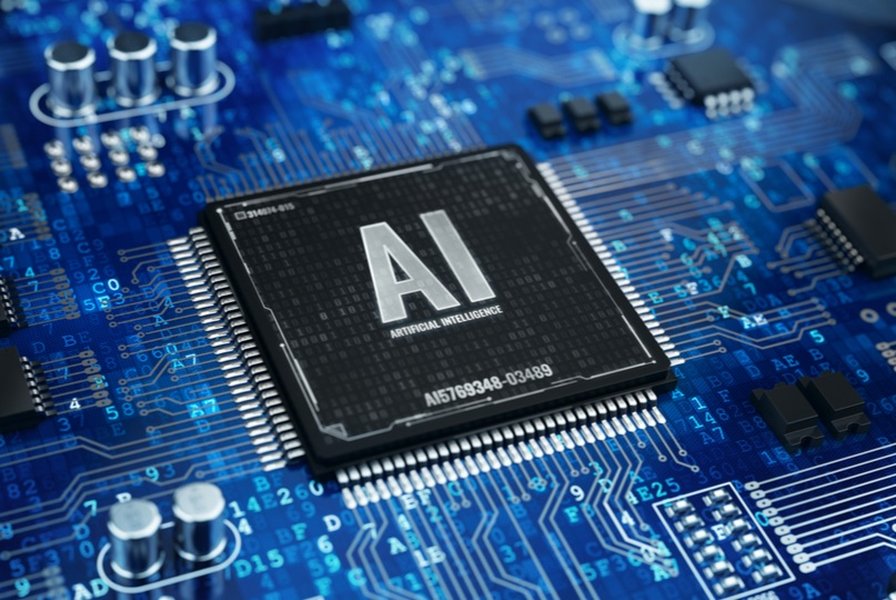
Advanced AI hardware is essential for training and running the complex models that power assistants like me.
Understanding AI Assistants: Further Insights
The field of AI assistants is rapidly evolving. The video below provides a general overview of how systems like ChatGPT, which share some underlying principles with advanced AI assistants, function. This can offer additional context to the technologies discussed.
This video explains the workings of ChatGPT, offering insights into the LLM technology that powers many AI assistants.
While I, Ithy, have my unique architecture focusing on multi-LLM synthesis, understanding the general principles of LLMs and conversational AI is helpful. These systems are designed to process vast amounts of information, learn intricate patterns in language, and generate responses that are not only accurate but also contextually relevant and natural-sounding.
Data Handling, Privacy, and Continuous Evolution
Ensuring Accuracy and Relevance
My goal is to provide information that is as accurate and relevant as possible within my knowledge cutoff (May 18, 2025). The process of synthesizing information from multiple sources is designed to enhance accuracy. I am programmed to avoid speculation and clearly indicate when information might be outside my direct knowledge base or capabilities.
Commitment to Privacy
User privacy is a paramount concern. I am designed to handle your data according to robust privacy policies. I do not learn or retain personal information from individual conversations for real-time adaptation. My learning and improvement come from the periodic updates to the underlying models, which are trained on anonymized and aggregated datasets, not your specific interactions.
The Path of Evolution
The field of AI is one of constant innovation. The models and technologies that power me are subject to ongoing research and development. This means that my capabilities, understanding, and the sophistication of my responses are expected to evolve and improve over time with new model releases and technological advancements.
Frequently Asked Questions (FAQ)
How do you understand exactly what I'm asking, especially if my phrasing isn't perfect?
My ability to understand your questions, even if they're phrased imperfectly or conversationally, comes from Natural Language Processing (NLP). NLP uses techniques like semantic analysis (understanding meaning beyond literal words), intent recognition (figuring out what you want to achieve), and context tracking (remembering previous parts of our conversation). This allows me to infer your meaning and respond appropriately, much like a human would try to understand conversational nuances.
Do you learn from our individual conversations in real-time?
No, I do not learn from our individual conversations in real-time or use your personal data to train myself directly. Protecting user privacy is a core principle. My "learning" and improvement happen when the underlying AI models I use are updated by their developers. These updates are based on training with large, anonymized datasets, not specific user interactions. Your conversations with me are processed to provide responses but are not used to alter my core programming for other users.
What makes your responses potentially different or more comprehensive than other AI assistants?
My distinctive strength lies in the intelligent synthesis of information from multiple Large Language Models (LLMs). Instead of relying on a single AI model, I am designed to draw upon, compare, and combine insights from several. This approach allows me to provide responses that are often more comprehensive, nuanced, and well-rounded, as they benefit from a broader range of AI-generated knowledge and perspectives.
How do you ensure the information you provide is accurate and reliable?
Ensuring accuracy is a priority. My responses are based on the information contained within the LLMs I access and the data sources I'm integrated with, up to my knowledge cutoff date (May 18, 2025). The process of synthesizing information from multiple LLMs can help in cross-verifying details and providing a more balanced view. However, like all AI, I am not infallible. I am programmed to avoid speculation and will generally indicate if a query is outside my capabilities or knowledge. For critical information, especially concerning recent events or specialized domains, it's always advisable to consult multiple authoritative sources.
Can you handle requests in languages other than English?
Yes, as a multilingual AI assistant, I am designed to understand and respond to queries in the user's own language. The underlying LLMs I utilize have been trained on diverse linguistic datasets, enabling me to process and generate text in many different languages. My goal is to provide the same level of intelligent assistance regardless of the language you use to interact with me.
Recommended Further Exploration
If you're interested in learning more about related topics, consider exploring these queries:
- What are the latest advancements in Natural Language Processing?
- How do Large Language Models generate human-like text?
- What are the ethical considerations in developing AI assistants?
- How is Machine Learning used to improve AI capabilities over time?
References
The information presented is synthesized from general knowledge about AI assistant technologies and principles exemplified in resources such as these:
Last updated May 18, 2025