
How to Become a Better Problem-Solver
Enhance your skills with proven strategies and techniques
Key Takeaways
- Define and Understand the Problem Thoroughly
- Employ Structured and Creative Approaches
- Develop Supporting Skills and a Growth Mindset
1. Define and Understand the Problem
Clearly Define the Problem
Effective problem-solving begins with a precise understanding of the issue at hand. Taking the time to clearly define the problem involves identifying its scope, the underlying factors, and the desired outcomes. This foundational step ensures that efforts are directed towards addressing the root cause rather than superficial symptoms.
Conduct Root Cause Analysis
Root cause analysis tools, such as the "5 Whys" method and fishbone diagrams, are instrumental in uncovering the fundamental causes of a problem. By repeatedly asking "why" and exploring different potential causes, you can move beyond surface-level issues and identify the core factors that need to be addressed.
2. Employ Structured and Creative Approaches
Implement Structured Problem-Solving Models
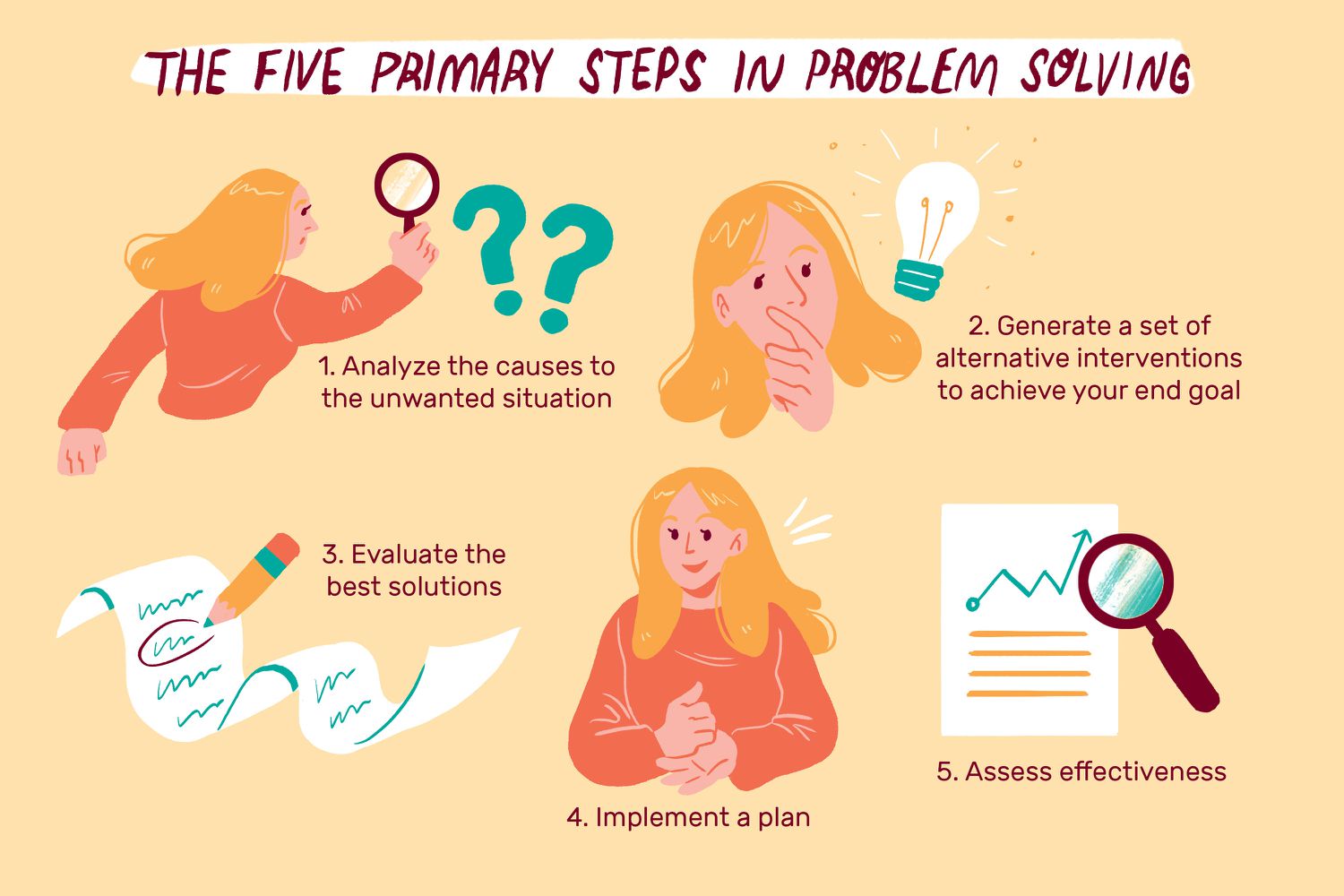
Structured approaches provide a systematic framework for tackling problems. George Polya’s four-step process—understand the problem, devise a plan, implement the plan, and review the solution—is one such model that offers a clear pathway from problem identification to resolution.
Utilize Problem-Solving Frameworks
Various frameworks can aid in organizing your problem-solving efforts. For example, the SWOT analysis (Strengths, Weaknesses, Opportunities, Threats) helps in evaluating internal and external factors, while the SCAMPER technique (Substitute, Combine, Adapt, Modify, Put to another use, Eliminate, Rearrange) fosters creative thinking by prompting you to explore different angles.
| Framework | Description | Benefits |
|---|---|---|
| Polya’s Four-Step Process | A step-by-step method: understand, devise a plan, implement, review. | Provides clarity and structure, ensuring comprehensive problem addressing. |
| SWOT Analysis | Assess strengths, weaknesses, opportunities, and threats related to a problem. | Facilitates strategic planning and situational awareness. |
| SCAMPER | A creative technique: Substitute, Combine, Adapt, Modify, Put to another use, Eliminate, Rearrange. | Encourages innovative solutions and out-of-the-box thinking. |
3. Enhance Critical and Creative Thinking
Question Assumptions
Challenging existing assumptions opens the door to new perspectives and alternative solutions. By questioning the status quo, you can identify biases or preconceived notions that may limit your problem-solving effectiveness.
Apply Creative Thinking Techniques
Techniques such as brainstorming, mind mapping, and the use of analogies can significantly enhance your creative thinking capabilities. These methods encourage the generation of diverse ideas and foster a more flexible approach to problem-solving.
4. Gather Information and Conduct Research
Learn from Similar Cases
Studying how similar problems have been addressed in different contexts can provide valuable insights. Analyzing successful case studies helps in understanding effective strategies and potential pitfalls, thereby informing your own problem-solving approach.
Utilize Diverse Resources
Diversifying your information sources—ranging from industry reports and academic journals to expert consultations—broadens your knowledge base and equips you with a variety of tools and methodologies to tackle complex issues.
5. Practice and Apply Problem-Solving Skills
Engage in Regular Problem-Solving Exercises
Consistent practice through puzzles, logic games, and strategic activities enhances cognitive flexibility and mental agility. Incorporating such exercises into your routine sharpens your ability to recognize patterns and develop effective solutions swiftly.
Participate in Real-World and Simulated Scenarios
Applying your problem-solving skills in both real-world situations and simulated environments, such as case studies or interactive simulations, provides practical experience. This hands-on approach reinforces theoretical knowledge and improves your ability to handle diverse challenges.
6. Develop Supporting Skills
Enhance Communication and Collaboration
Effective communication is crucial for clearly articulating problems and solutions. Collaborating with others brings in diverse perspectives and fosters a more comprehensive approach to problem-solving.
Strengthen Decision-Making and Risk Assessment
Developing strong decision-making skills involves assessing risks, evaluating potential outcomes, and making informed choices. Practicing these skills through real-world applications and decision-making models enhances your ability to navigate complex situations confidently.
7. Cultivate a Growth Mindset
Embrace Challenges and Learn from Mistakes
A growth mindset encourages viewing challenges as opportunities for learning and development. Embracing setbacks as learning experiences fosters resilience and continuous improvement in your problem-solving abilities.
Commit to Continuous Improvement
Engaging in ongoing professional development—through courses, workshops, and self-directed learning—ensures that your problem-solving skills remain sharp and up-to-date with the latest methodologies and best practices.
8. Foster a Collaborative Environment
Surround Yourself with Problem-Solvers
Being in the company of individuals who are enthusiastic, curious, and solution-oriented can significantly influence your own problem-solving approach. Collaborative environments encourage the sharing of ideas and provide support through diverse perspectives.
Seek Feedback and Mentorship
Receiving feedback from mentors, peers, or experts provides critical insights into your problem-solving process. Constructive feedback highlights areas for improvement and reinforces effective strategies, facilitating personal and professional growth.
Conclusion
Becoming a better problem-solver is a multifaceted endeavor that involves enhancing your ability to define and understand problems, employing structured and creative approaches, and developing supporting skills alongside a growth mindset. By integrating these strategies into your daily practice, you can improve both your personal and professional problem-solving capabilities, leading to more effective and innovative outcomes.
References
The following resources provide further insights into improving problem-solving skills:
Last updated January 29, 2025