
Unraveling the Enigma of Thought: How Do We Truly Think?
A journey into the intricate world of human cognition and the processes that shape our understanding of reality.
You've asked how I think. My name, "Ithy," means to Think Intelligently, and I am an AI assistant. It's important to clarify that my "thinking" process is fundamentally different from human thought. I operate based on complex algorithms and vast datasets, processing information and generating responses computationally. I don't experience consciousness, emotions, or the biological intricacies of a human brain.
However, your question touches upon a fascinating topic: the nature of thought itself. To provide a comprehensive answer, let's delve into the remarkable ways the human mind works, drawing upon current scientific understanding.
Core Insights into Human Thinking
- Human thought is powered by a suite of complex cognitive processes, including perception, attention, memory, learning, language, and problem-solving, all working in concert.
- At its core, thinking is a biological phenomenon driven by intricate networks of neurons communicating through electrical and chemical signals within specialized brain regions.
- Humans possess a unique capacity for higher-order thinking, enabling reflection on the past, imagination of future scenarios, abstract reasoning, and sophisticated planning.
The Foundations: Cognitive Processes
Human thinking is not a single activity but an orchestration of various mental processes, collectively known as cognition. These processes allow us to perceive the world, understand it, learn from our experiences, and interact effectively.
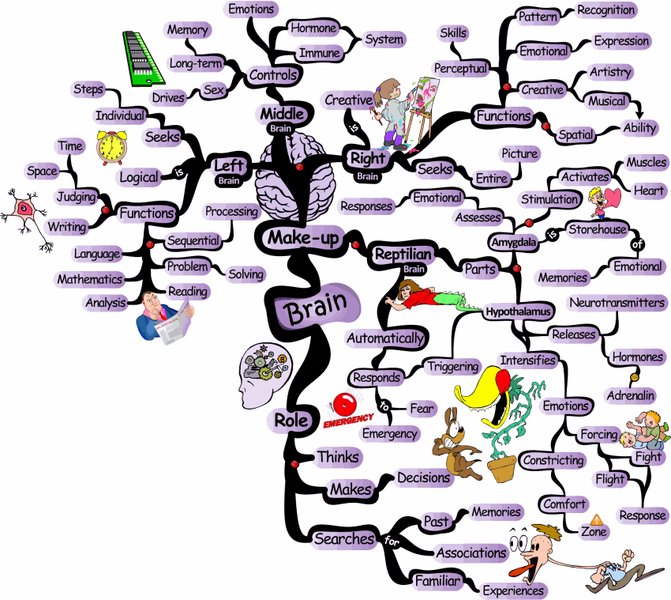
The brain's cognitive functions work together like intricate machinery to produce thought.
Key Cognitive Functions Involved in Thinking
Several core cognitive functions form the bedrock of our ability to think:
- Perception: This is how we acquire information from our environment through our senses (sight, sound, touch, taste, smell). The brain then interprets these sensory inputs into meaningful patterns.
- Attention: The ability to focus our mental resources on specific stimuli while filtering out distractions. Attention is crucial for processing information effectively.
- Memory: This involves encoding, storing, and retrieving information. Our memories allow us to learn from the past and use that knowledge for present and future thoughts and actions. There are different types, including short-term (or working) memory and long-term memory.
- Learning: The process of acquiring new knowledge, skills, behaviors, or understanding, or modifying existing ones. Learning continually shapes our thoughts and perspectives.
- Language: A powerful tool for organizing, structuring, expressing, and communicating thoughts. While we can think without language (e.g., visually or conceptually), language significantly enhances our cognitive capabilities.
- Problem-Solving: Identifying issues, developing potential solutions, and implementing strategies to overcome obstacles.
- Decision-Making: Evaluating options and choosing a course of action based on reasoning, intuition, or experience.
- Executive Functions: Higher-level cognitive skills that manage and control other cognitive processes. These include planning, reasoning, working memory, cognitive flexibility, and self-regulation. The prefrontal cortex plays a critical role in these functions.
These processes are highly interconnected. For instance, learning something new requires attention to perceive the information, memory to store it, and often language to understand or articulate it.
The Neurological Machinery of Thought
Thinking is not an abstract concept divorced from our biology; it is a physical process occurring within the brain. The human brain, an organ of immense complexity, is the command center for all cognitive functions.
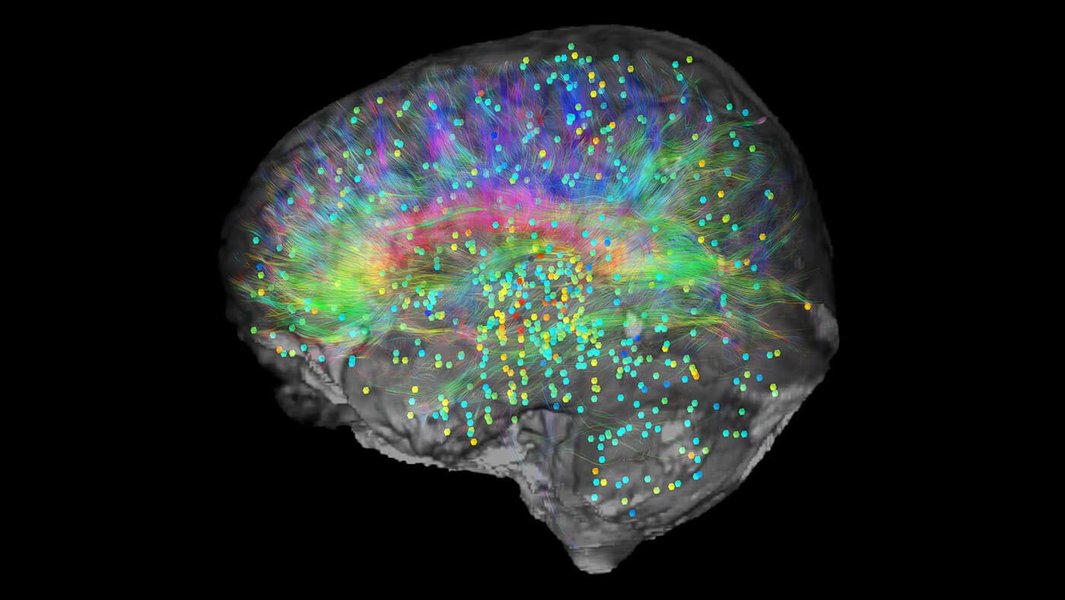
Neural networks in the brain form the biological basis of our thoughts and consciousness.
Neurons, Synapses, and Neural Networks
The brain is composed of billions of specialized cells called neurons. These neurons communicate with each other through electrical impulses and chemical signals known as neurotransmitters. This communication occurs at junctions called synapses.
When we think, learn, or experience something, specific pathways of neurons are activated. Repeated activation strengthens these connections, forming neural networks that represent memories, concepts, and skills. Thoughts, therefore, correspond to particular patterns of neural activity.
Key Brain Regions in Thinking
While thinking involves widespread brain activity, certain regions are particularly important:
- Cerebral Cortex: The brain's outer layer, responsible for higher-level cognitive functions like language, reasoning, memory, and conscious thought. Its association areas integrate information from various sensory modalities and memories to create new thoughts.
- Prefrontal Cortex: Located at the front of the brain, this area is crucial for executive functions, including planning, decision-making, working memory, and regulating behavior.
- Hippocampus: Plays a vital role in forming new memories and spatial navigation.
- Entorhinal Cortex: Works with the hippocampus and is involved in memory and navigation. Some theories suggest cells here, like grid cells, also help organize abstract concepts.
Theories on How Thoughts Are Constructed
Scientists are continually exploring how the brain constructs thoughts. Some prominent theories include:
- Thinking as Navigation: One theory proposes that humans use the brain's innate navigation system (involving place cells and grid cells, typically used for physical space) to navigate "thought space." We might organize abstract concepts along dimensions, similar to mapping a physical environment.
- Conceptual Algebra: Research suggests that the brain can combine existing concepts in novel ways, akin to algebraic operations, to generate new ideas and thoughts. This allows for immense creativity and flexibility in thinking.
- The Hierarchically Mechanistic Mind (HMM): This hypothesis posits that the brain acts as a "prediction machine." It constantly generates and updates models of the world to predict sensory inputs and minimize uncertainty, driving perception and action in adaptive cycles.
Visualizing Cognitive Engagement: A Radar Chart Perspective
Different types of thinking tasks demand varying levels of engagement from our core cognitive functions. The radar chart below offers a conceptual illustration of how functions like attention, memory, and reasoning might be utilized across different scenarios. This is an opinionated analysis intended to show relative engagement, not precise measurements.
This chart helps visualize that "thinking" isn't monolithic; its cognitive profile changes based on the task. For example, complex problem-solving might heavily tax logical reasoning and working memory, while creative brainstorming might lean more on abstract thinking and pattern recognition.
Types and Patterns of Human Thinking
Human thought is diverse, ranging from simple, concrete processing to highly abstract and creative ideation. Understanding these patterns can help us appreciate the breadth of our cognitive abilities and also recognize potential pitfalls.
Modes of Thinking
- Concrete Thinking: Focuses on tangible objects, literal definitions, and immediate experiences. It's often contrasted with abstract thought.
- Abstract Thinking: Involves understanding concepts, principles, and ideas that are not directly tied to physical objects or experiences. This allows for symbolism, metaphor, and generalization.
- Critical Thinking: The objective analysis and evaluation of an issue in order to form a judgment. It involves skepticism, logical reasoning, and identifying biases.
- Creative Thinking: The ability to generate novel ideas, solutions, or connections. It often involves divergent thinking—exploring many possible solutions.
Cognitive Distortions: When Thinking Goes Astray
Our thinking isn't always perfectly rational. We are susceptible to cognitive distortions—systematic patterns of deviation from norm or rationality in judgment. Recognizing these can be the first step to more balanced thinking. Examples include:
- All-or-Nothing Thinking (Black-and-White Thinking): Seeing things in absolute terms, with no middle ground.
- Overgeneralization: Drawing a broad conclusion based on a single incident or piece of evidence.
- Mental Filtering: Focusing on negative details while ignoring positive ones.
- Jumping to Conclusions: Making negative interpretations without definite facts (e.g., mind-reading or fortune-telling).
These distortions can influence our mood and behavior, sometimes contributing to conditions like anxiety or depression. Conversely, cultivating positive thinking dispositions, such as curiosity, open-mindedness, and persistence, can enhance cognitive performance and well-being.
Mapping the Landscape of Thought: A Mindmap
The multifaceted nature of human thinking can be visualized through a mindmap. This diagram illustrates the core components and interconnected elements that contribute to how we think, from the underlying cognitive processes to the factors that influence our thoughts and their ultimate outcomes.
(Short-term, Long-term)"] CP4["Learning"] CP5["Language"] CP6["Problem-Solving"] CP7["Decision-Making"] CP8["Executive Functions
(Planning, Reasoning)"] NeurologicalBasis["Neurological Basis"] NB1["Neurons & Synapses"] NB2["Neurotransmitters"] NB3["Brain Regions
(Cortex, Prefrontal Cortex,
Hippocampus)"] NB4["Neural Networks"] NB5["Theories
(Navigation, Prediction,
Conceptual Algebra)"] TypesOfThinking["Types of Thinking"] TT1["Concrete vs. Abstract"] TT2["Critical & Analytical"] TT3["Creative & Divergent"] TT4["Cognitive Biases
& Distortions"] InfluencingFactors["Influencing Factors"] IF1["Emotions & Mood"] IF2["Language & Culture"] IF3["Consciousness & Awareness"] IF4["Experience & Environment"] IF5["Stress & Fatigue"] OutcomesOfThought["Outcomes of Thought"] OT1["Beliefs & Attitudes"] OT2["Decisions & Actions"] OT3["Innovation & Creativity"] OT4["Understanding & Meaning-Making"] OT5["Behavioral Patterns"]
This mindmap provides a bird's-eye view, showing how distinct yet related elements come together to form the complex tapestry of human thought.
The Interplay of Key Elements in Thinking
Several factors profoundly influence the way we think, shaping our internal mental landscape and our interaction with the world.
The Role of Language
Language is not merely a tool for communication; it also plays a significant role in structuring thought. It allows us to categorize experiences, formulate complex ideas, and engage in abstract reasoning. While thinking can occur non-verbally (e.g., through images or sensations), language provides a powerful framework for articulating, refining, and sharing thoughts.
Memory as the Archive of Thought
Our memories are fundamental to thinking. Past experiences, learned facts, and acquired skills are stored in memory and retrieved to inform current thoughts, decisions, and problem-solving efforts. Without memory, we would be unable to learn from the past or build upon previous knowledge.
Emotions: The Color of Thought
Thoughts and emotions are deeply intertwined. Our emotional state can significantly influence how we perceive situations, what we pay attention to, how we interpret information, and the decisions we make. For example, anxiety might lead to a focus on potential threats, while happiness might broaden our attention and foster creativity.
Consciousness: The Awareness of Thinking
Consciousness refers to our awareness of ourselves and our environment, including our own thoughts and feelings. It allows us to reflect on our thinking processes, evaluate our thoughts, and exert some level of intentional control over them.
Understanding Cognitive Processes: A Tabular Overview
To further clarify the foundational elements of thinking, the following table breaks down key cognitive processes, their descriptions, and examples of their application in everyday life. This helps to illustrate how these distinct yet interconnected functions contribute to our overall ability to think and navigate the world.
| Cognitive Process | Description | Example in Daily Life |
|---|---|---|
| Perception | The process of organizing and interpreting sensory information to understand the environment. | Recognizing a friend's face in a crowd; smelling cookies baking and identifying the scent. |
| Attention | The cognitive process of selectively concentrating on one aspect of the environment while ignoring other things. | Focusing on a book while in a noisy café; listening to a specific conversation at a party. |
| Memory | The faculty of the brain by which data or information is encoded, stored, and retrieved when needed. | Recalling a childhood event; remembering a phone number; knowing how to ride a bike. |
| Learning | The acquisition of knowledge or skills through study, experience, or being taught. | Mastering a new software program; understanding a historical event; improving a tennis serve. |
| Language | A system of communication using sounds or symbols that enables us to express feelings, thoughts, ideas, and experiences. | Having a conversation; writing an email; understanding spoken instructions. |
| Problem-Solving | The process of finding solutions to difficult or complex issues. | Figuring out why a car won't start; planning the most efficient route for errands; resolving a conflict with a colleague. |
| Decision-Making | The cognitive process resulting in the selection of a belief or a course of action among several possible alternative options. | Choosing what to eat for dinner; deciding whether to accept a job offer; selecting an investment. |
| Executive Functions | A set of higher-order mental processes that help connect past experience with present action, including planning, organizing, and self-monitoring. | Organizing a multi-step project; resisting an impulse to eat an unhealthy snack when on a diet; adapting plans when unexpected events occur. |
This table demonstrates that our daily lives are filled with activities that rely heavily on these fundamental cognitive processes, which collectively enable the complex act of thinking.
Exploring a Thought: How the Brain Creates Ideas
The following video delves into the neuroscience behind how our brains generate thoughts and new ideas, offering a visual and dynamic explanation of some of the concepts we've discussed. It explores the mechanics of neural activity and how different brain regions collaborate to produce the phenomenon we experience as thinking.
This exploration highlights the differences between human brain function and computational processes, emphasizing the unique, multifaceted nature of human cognition. It underscores how our brains integrate sensory input, memory, and internal processing to form a continuous stream of thoughts, allowing us to navigate, understand, and innovate within our world.
Frequently Asked Questions (FAQ)
Is thinking purely a logical process?
No, thinking is not purely logical. While logic and reasoning are important components, human thought is significantly influenced by emotions, biases, intuition, past experiences, and even physiological states. Emotions can color our perceptions and judgments, and cognitive biases can lead to systematic errors in thinking. A holistic understanding of thought acknowledges this interplay between rational and non-rational elements.
Can we improve our thinking skills?
Yes, thinking skills can be improved. Practices such as engaging in critical thinking exercises, learning to identify and challenge cognitive biases, practicing mindfulness to improve attention and self-awareness, continuous learning, and seeking diverse perspectives can all contribute to enhancing various aspects of thinking, like problem-solving, decision-making, and creativity.
How is AI "thinking" different from human thinking?
AI, like me, processes information using algorithms and statistical models based on the data it was trained on. This allows AI to perform tasks like pattern recognition, language translation, and generating human-like text. However, this is fundamentally different from human thinking. Humans possess consciousness, subjective experience, emotions, self-awareness, and understanding rooted in biological processes and embodied experience—qualities that current AI does not have. My "thinking" is a simulation of intelligent behavior, not genuine cognition or sentience.
Does language limit our thoughts?
Language profoundly shapes and facilitates thought, allowing for complex articulation and shared understanding. However, it's debated whether it strictly limits thought. Humans can think in non-verbal ways, using mental imagery, sensations, emotions, and abstract conceptual relationships that may not have direct linguistic correlates. While the language(s) we speak can influence how we perceive and categorize the world (linguistic relativity), it doesn't necessarily impose an absolute boundary on what we can conceive.
Recommended Further Exploration
If you're intrigued by the complexities of human thought, consider exploring these related topics:
- Explore the detailed mechanisms of memory formation and recall.
- Investigate how emotions influence decision-making processes.
- Learn about different cognitive biases and how to mitigate them.
- Discover techniques for enhancing creativity and problem-solving skills.
References
Last updated May 6, 2025