
Comprehensive Overview of Human Biology
Introduction to Human Biology
Human biology is an interdisciplinary scientific field dedicated to understanding the human organism through the integration of various biological and physiological disciplines. It encompasses the study of humans at multiple levels of organization, from molecular and cellular processes to complex organ systems and entire ecosystems. This comprehensive overview explores the fundamental aspects of human biology, including cellular structures, genetics, physiological systems, development, homeostasis, health, disease, and the applications of this knowledge in diverse fields.
Levels of Biological Organization
1. Molecular Level
The molecular level is the most fundamental aspect of human biology, involving the study of atoms and molecules that constitute the human body. Key molecules include:
- Water (H2O): Vital for maintaining cellular functions and biochemical reactions.
- Carbohydrates: Provide energy through glucose and serve as structural components.
- Lipids: Essential for cell membrane structure, energy storage, and signaling.
- Proteins: Perform a wide range of functions, including enzymatic catalysis, structural support, and transport.
- Nucleic Acids: DNA and RNA carry genetic information and are crucial for protein synthesis.
2. Cellular Level
Cells are the basic structural and functional units of life. The human body consists of trillions of cells, each specialized to perform specific functions. Major types of cells include:
- Muscle Cells: Facilitate movement and force generation.
- Nerve Cells (Neurons): Transmit electrical signals for communication within the body.
- Blood Cells: Transport oxygen (red blood cells) and defend against pathogens (white blood cells).
- Epithelial Cells: Form protective layers covering organs and body surfaces.
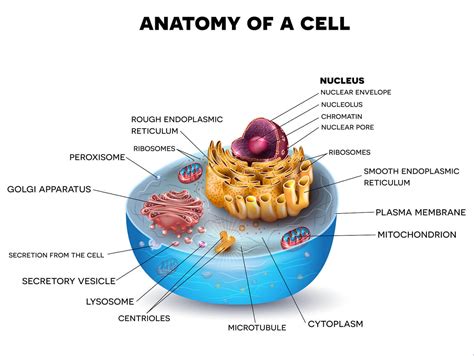
Key cellular components include the cell membrane, nucleus, mitochondria, endoplasmic reticulum, Golgi apparatus, lysosomes, and ribosomes. These organelles work together to sustain cellular functions such as energy production, protein synthesis, and waste removal.
3. Tissue Level
Tissues are collections of similar cells that work together to perform specific functions. The human body has four primary types of tissues:
- Epithelial Tissue: Covers body surfaces and lines internal cavities, providing protection and facilitating absorption and secretion.
- Connective Tissue: Supports and binds other tissues, including bone, cartilage, blood, and adipose tissue.
- Muscle Tissue: Responsible for movement, comprising skeletal, cardiac, and smooth muscle types.
- Nervous Tissue: Composed of neurons and glial cells, it facilitates communication and control within the body.
4. Organ Level
Organs are structures composed of two or more tissue types working together to perform complex functions. Examples of human organs include:
- Heart: Pumps blood throughout the body.
- Lungs: Facilitate gas exchange, supplying oxygen and expelling carbon dioxide.
- Liver: Metabolizes nutrients, detoxifies harmful substances, and produces vital proteins.
- Kidneys: Filter blood, removing waste products and regulating fluid balance.
5. Organ System Level
Organ systems consist of groups of organs that collaborate to carry out major life functions. The primary human organ systems include:
- Integumentary System: Comprises skin, hair, and nails, providing protection and regulating temperature.
- Skeletal System: Includes bones and cartilage, offering structure, support, and facilitating movement.
- Muscular System: Consists of muscles responsible for movement, posture, and heat production.
- Nervous System: Includes the brain, spinal cord, and nerves, coordinating body activities through electrical signals.
- Endocrine System: Composed of glands that secrete hormones, regulating various bodily functions.
- Cardiovascular System: Encompasses the heart and blood vessels, transporting oxygen, nutrients, and waste products.
- Lymphatic System: Involves lymph nodes and vessels, playing a key role in immune responses.
- Respiratory System: Facilitates the exchange of gases between the body and the environment.
- Digestive System: Breaks down food, absorbs nutrients, and eliminates waste.
- Urinary System: Regulates fluid balance and removes waste through urine production.
- Reproductive System: Responsible for producing offspring and maintaining reproductive functions.
6. Organismal Level
The organismal level represents the entire human body as a complete, integrated system. This level emphasizes the interaction between different organ systems to maintain overall health and functionality.
Core Processes and Concepts in Human Biology
1. Metabolism
Metabolism encompasses all chemical reactions that occur within the human body, divided into two main categories:
- Catabolism: The breakdown of complex molecules into simpler ones, releasing energy.
- Anabolism: The synthesis of complex molecules from simpler ones, requiring energy.
Metabolic processes are crucial for maintaining life, supporting growth, and facilitating energy transfer within cells.
2. Homeostasis
Homeostasis refers to the body's ability to maintain a stable internal environment despite external changes. Key aspects include:
- Temperature Regulation: Maintaining a consistent body temperature through mechanisms like sweating and shivering.
- pH Balance: Ensuring blood and other bodily fluids remain within optimal pH ranges.
- Fluid Balance: Regulating the distribution and concentration of fluids within the body.
- Blood Pressure Regulation: Maintaining stable blood pressure levels through cardiovascular and renal adjustments.
3. Genetics
Genetics is the study of heredity and variation in living organisms, focusing on how genes influence traits and behaviors. Key components include:
- DNA Structure and Function: DNA consists of nucleotides arranged in sequences that encode genetic information.
- Genes: Segments of DNA that code for specific proteins, influencing physical and biochemical traits.
- Inheritance Patterns: Principles that determine how traits are passed from parents to offspring, including Mendelian and non-Mendelian genetics.
- Population Genetics: Examines genetic variation within populations and how factors like mutation, selection, and migration affect gene frequencies.
4. Development and Aging
Human development encompasses the growth and differentiation processes from conception to adulthood, while aging involves the gradual decline in physiological function over time.
- Embryonic Development: The formation and differentiation of cells and tissues following fertilization.
- Growth: Increase in body size and complexity through childhood and adolescence.
- Aging: Structural and functional changes in organ systems leading to decreased resilience and increased susceptibility to diseases.
5. Immunology
Immunology studies the immune system and its role in defending the body against pathogens and disease. Key concepts include:
- Innate Immunity: The first line of defense, providing immediate but non-specific protection.
- Adaptive Immunity: A specialized response involving memory cells that provide long-term immunity.
- Pathogen Recognition: Mechanisms by which the immune system identifies and targets foreign invaders.
- Immune Response: The coordinated actions of immune cells and molecules to eliminate pathogens.
Genetics and Heredity
DNA and Chromosomes
Deoxyribonucleic acid (DNA) is the hereditary material in humans, organized into structures called chromosomes. Humans typically have 46 chromosomes, arranged in 23 pairs.
- Structure of DNA: DNA is composed of two strands forming a double helix, with nucleotides pairing adenine with thymine and cytosine with guanine.
- Genes: Genes are specific sequences of DNA that code for proteins, influencing traits and functions.
- Genetic Variation: Differences in DNA sequences among individuals lead to genetic diversity, affecting everything from physical appearance to susceptibility to diseases.
Inheritance Patterns
Inheritance patterns determine how traits are passed from parents to offspring. Key principles include:
- Mendelian Genetics: Based on Gregor Mendel's laws, including the concepts of dominant and recessive alleles.
- Non-Mendelian Genetics: Includes incomplete dominance, codominance, polygenic inheritance, and epistasis.
- Genetic Disorders: Conditions caused by abnormalities in an individual's DNA, which can be inherited or result from mutations.
Physiological Systems
1. Integumentary System
The integumentary system includes the skin, hair, nails, and associated glands. Its primary functions are:
- Protection: Shields the body from physical damage, pathogens, and UV radiation.
- Thermoregulation: Regulates body temperature through sweat production and blood flow adjustments.
- Sensation: Contains sensory receptors for touch, pressure, pain, and temperature.
2. Skeletal System
The skeletal system provides structure and support to the body, facilitating movement and protecting vital organs. Key components include:
- Bones: Rigid structures that form the skeleton, offering support and protection.
- Joints: Connections between bones that allow for movement and flexibility.
- Cartilage: Flexible connective tissue that cushions joints and supports bodily structures.
3. Muscular System
The muscular system is responsible for movement, posture, and heat production. It comprises three types of muscles:
- Skeletal Muscles: Voluntary muscles attached to bones, enabling body movements.
- Cardiac Muscle: Involuntary muscle found in the heart, responsible for pumping blood.
- Smooth Muscles: Involuntary muscles located in internal organs, facilitating functions like digestion and blood flow.
4. Nervous System
The nervous system controls and coordinates body activities through electrical and chemical signals. It consists of:
- Central Nervous System (CNS): Comprises the brain and spinal cord, processing and integrating information.
- Peripheral Nervous System (PNS): Includes all nerves outside the CNS, transmitting signals between the CNS and the rest of the body.
- Sensory Organs: Detect stimuli from the environment and convey information to the CNS.
5. Endocrine System
The endocrine system regulates bodily functions through hormones, which are chemical messengers produced by glands. Key glands include:
- Hypothalamus: Links the nervous system to the endocrine system, controlling hormone release.
- Pituitary Gland: The "master gland" that regulates other endocrine glands.
- Thyroid Gland: Controls metabolism and growth.
- Adrenal Glands: Produce hormones involved in stress responses and metabolism.
- Pancreas: Regulates blood sugar levels through insulin and glucagon secretion.
- Gonads: Produce sex hormones that regulate reproductive functions.
6. Cardiovascular System
The cardiovascular system transports essential substances throughout the body and removes wastes. It includes:
- Heart: A muscular organ that pumps blood.
- Blood Vessels: Arteries, veins, and capillaries that carry blood to and from body tissues.
- Blood: Composed of red blood cells (transport oxygen), white blood cells (fight infections), platelets (clotting), and plasma (liquid component).
7. Lymphatic System
The lymphatic system plays a crucial role in immune function and fluid balance. It consists of:
- Lymph Nodes: Filter lymph fluid and house immune cells.
- Lymph Vessels: Transport lymph throughout the body.
- Thymus and Spleen: Organs involved in lymphocyte production and blood filtration.
8. Respiratory System
The respiratory system facilitates the exchange of gases, providing oxygen to the body and removing carbon dioxide. Its main components are:
- Lungs: Primary organs of gas exchange.
- Airways: Include the trachea, bronchi, and bronchioles, conducting air to the lungs.
- Alveoli: Tiny air sacs where gas exchange occurs.
9. Digestive System
The digestive system breaks down food into nutrients, which the body uses for energy, growth, and cell repair. Key components include:
- Mouth: Initiates digestion through chewing and enzymatic action.
- Esophagus: Transports food to the stomach.
- Stomach: Mixes food with digestive juices to break it down.
- Intestines: Absorb nutrients (small intestine) and eliminate waste (large intestine).
- Liver and Pancreas: Produce bile and digestive enzymes, respectively, aiding in digestion and metabolism.
10. Urinary System
The urinary system removes waste products from the blood and maintains fluid and electrolyte balance. It includes:
- Kidneys: Filter blood to produce urine.
- Ureters: Transport urine from the kidneys to the bladder.
- Bladder: Stores urine until excretion.
- Urethra: Conducts urine out of the body.
11. Reproductive System
The reproductive system is responsible for producing offspring and ensuring the survival of the species. It consists of:
- Male Reproductive Organs: Include testes, which produce sperm and testosterone, and accessory glands like the prostate.
- Female Reproductive Organs: Include ovaries, which produce eggs and hormones, and structures like the uterus and fallopian tubes.
Genetic Information and Heredity
DNA Structure and Function
Deoxyribonucleic acid (DNA) is the hereditary material that carries genetic information essential for the growth, development, and functioning of living organisms. Its structure consists of two strands forming a double helix, with nucleotide bases pairing adenine with thymine and cytosine with guanine.
Gene Expression
Gene expression involves the processes by which information from a gene is used to synthesize functional gene products, typically proteins. This includes transcription (DNA to RNA) and translation (RNA to protein).
Inheritance Patterns
Traits are inherited based on patterns established by genetic principles:
- Mendelian Inheritance: Traits controlled by single genes with clear dominant and recessive alleles.
- Polygenic Inheritance: Traits influenced by multiple genes, leading to a continuous range of phenotypes.
- Sex-Linked Inheritance: Traits associated with genes located on sex chromosomes, often affecting males more severely.
Core Biological Processes
Cellular Respiration and Energy Production
Cellular respiration is the process by which cells convert biochemical energy from nutrients into adenosine triphosphate (ATP), the energy currency of the cell. It involves three main stages:
- Glycolysis: Occurs in the cytoplasm, breaking down glucose into pyruvate and producing a small amount of ATP.
- Krebs Cycle (Citric Acid Cycle): Takes place in the mitochondria, further oxidizing pyruvate to produce electron carriers.
- Electron Transport Chain: Also in the mitochondria, uses electrons from carriers to generate a large amount of ATP through oxidative phosphorylation.
Photosynthesis
Although humans do not perform photosynthesis, understanding this process in plants is crucial for comprehending how energy enters ecosystems and supports life.
Protein Synthesis
Protein synthesis is essential for cell function and involves two main steps:
- Transcription: DNA is transcribed into messenger RNA (mRNA) in the nucleus.
- Translation: Ribosomes read the mRNA sequence to assemble amino acids into proteins.
Development and Aging
Embryonic Development
Human development begins at fertilization, where a sperm cell unites with an egg cell to form a zygote. This single cell undergoes multiple divisions and differentiates into various cell types, forming the embryonic and fetal stages.
Growth
Postnatal growth occurs through childhood and adolescence, characterized by increases in size, complexity, and functional capabilities of organ systems.
Aging
Aging is the gradual decline in physiological function and increased vulnerability to diseases. Factors influencing aging include genetics, lifestyle choices, and environmental exposures.
Health and Disease
Pathophysiology
Pathophysiology examines how disease processes disrupt normal physiological functions. Understanding these mechanisms is essential for diagnosing and treating medical conditions.
Common Disorders
Human biology provides insights into various disorders, including:
- Cardiovascular Diseases: Conditions affecting the heart and blood vessels, such as hypertension and atherosclerosis.
- Diabetes: A metabolic disorder characterized by high blood sugar levels.
- Infectious Diseases: Illnesses caused by pathogens like bacteria, viruses, and fungi.
- Genetic Disorders: Conditions resulting from abnormalities in DNA, such as cystic fibrosis and sickle cell anemia.
- Cancers: Uncontrolled cell growth leading to tumors and potential metastasis.
Disease Prevention and Health Maintenance
Understanding human biology aids in developing strategies for disease prevention, health promotion, and effective treatment modalities. This includes vaccination, lifestyle modifications, and medical interventions.
Applications of Human Biology
Medicine and Healthcare
Human biology serves as the foundation for medical science, informing the diagnosis, treatment, and prevention of diseases. Medical professionals rely on biological principles to develop therapies, surgical techniques, and public health initiatives.
Pharmacology
Pharmacology involves studying how drugs interact with biological systems to treat illnesses. Insights from human biology guide the development of new medications and the understanding of drug effects and side effects.
Nutrition
Human biology examines the role of nutrients in maintaining health, supporting growth, and preventing diseases. Nutritional science informs dietary guidelines and interventions for various health conditions.
Forensic Science
Forensic biology applies biological principles to legal investigations, including DNA profiling, toxicology, and the analysis of biological evidence.
Public Health
Public health initiatives leverage knowledge from human biology to improve population health, manage epidemics, and develop health policies.
Educational Paths and Careers in Human Biology
Academic Curriculum
Studying human biology typically involves coursework in various disciplines, including:
- Anthropology
- Biological Sciences
- Physiology
- Genetics
- Psychology
- Sociology
- Urban Public Health
Students may pursue specialized tracks such as:
- Body, Mind, and Health
- Human Evolution and Variation
- Human Organizations
Career Opportunities
Graduates in human biology can pursue diverse career paths, including:
- Research Scientist: Conducting studies in various biological and medical fields.
- Healthcare Professional: Roles such as doctors, nurses, and allied health practitioners.
- Biotechnology: Working in industries focused on developing biological products.
- Public Health Official: Managing health programs and policies at local or national levels.
- Academia: Teaching and conducting research at colleges and universities.
- Government Roles: Engaging in regulatory, policy-making, and public health positions.
Interdisciplinary Connections
Human biology intersects with numerous other fields, enhancing its applicability and depth. Key interdisciplinary connections include:
-
Anthropology: Studying human evolution, cultural practices, and social structures.
-
Ecology: Understanding human interactions with the environment and the impact of ecological changes on health.
-
Biochemistry: Exploring the chemical processes within and related to living organisms.
-
Psychology: Investigating the biological bases of behavior and mental processes.
-
Sociology: Examining how social factors influence health and biological outcomes.
Future Directions in Human Biology
The field of human biology is dynamic, continuously evolving with advancements in technology and research methodologies. Future directions include:
- Genomic Research: Enhancing our understanding of the human genome and personalized medicine.
- Biomedical Engineering: Developing innovative technologies for medical diagnostics and treatment.
- Systems Biology: Integrating complex biological data to model and understand human physiology.
- Regenerative Medicine: Exploring stem cell research and tissue engineering to repair or replace damaged organs.
- Neuroscience: Delving deeper into the structure and function of the nervous system to address neurological disorders.
- Public Health Genomics: Applying genetic information to public health initiatives and disease prevention strategies.
Conclusion
Human biology is a multifaceted and interdisciplinary field that provides essential insights into the structure, function, and behavior of the human body. By integrating knowledge from molecular biology, genetics, physiology, and other disciplines, human biology not only advances our understanding of human health and disease but also informs various applications in medicine, public health, biotechnology, and beyond. As technological advancements continue to propel research forward, the significance of human biology in addressing contemporary health challenges and improving quality of life remains paramount.
Last updated January 1, 2025