
The Enduring Question of Human Hierarchy: Are Some Individuals Truly Superior?
An exploration of equality, difference, and the complex nature of human value.
The question of whether some humans are superior to others has been debated for centuries, touching upon profound philosophical, ethical, social, and scientific considerations. While human beings exhibit a vast array of differences in abilities, talents, and characteristics, the overwhelming consensus in modern ethical and legal thought leans towards the fundamental equality of all individuals.
Key Insights: Unpacking the Notion of Superiority
- Moral Equality as a Cornerstone: Philosophically and ethically, all human beings are considered to possess equal intrinsic worth and dignity, irrespective of their individual attributes or achievements. This principle underpins human rights and justice systems globally.
- Historical Misuse of Superiority Claims: Throughout history, assertions of group superiority (based on race, ethnicity, gender, or other factors) have been used to justify discrimination, oppression, and profound injustices. Landmark legal decisions, like Brown v. Board of Education, have actively worked to dismantle such notions.
- Distinguishing Difference from Hierarchy: Recognizing individual differences in skills, intelligence, or physical prowess is not synonymous with establishing a hierarchy of human value. Diversity in human capabilities contributes to the richness of society but does not imply that some individuals are inherently "better" or more deserving of rights and respect than others.
The Philosophical Bedrock: Equality in Human Worth
The dominant view in contemporary ethics and political philosophy is that all humans are morally equal simply by virtue of their shared humanity. This intrinsic dignity is not contingent upon intelligence, physical strength, wealth, or social status. Philosophers argue that this inherent equality forms the basis for universal human rights and the pursuit of just societies. Egalitarian theories, for instance, advocate for social structures that ensure equal respect, opportunities, and treatment for all, acknowledging natural human diversity without ranking individuals' fundamental worth.
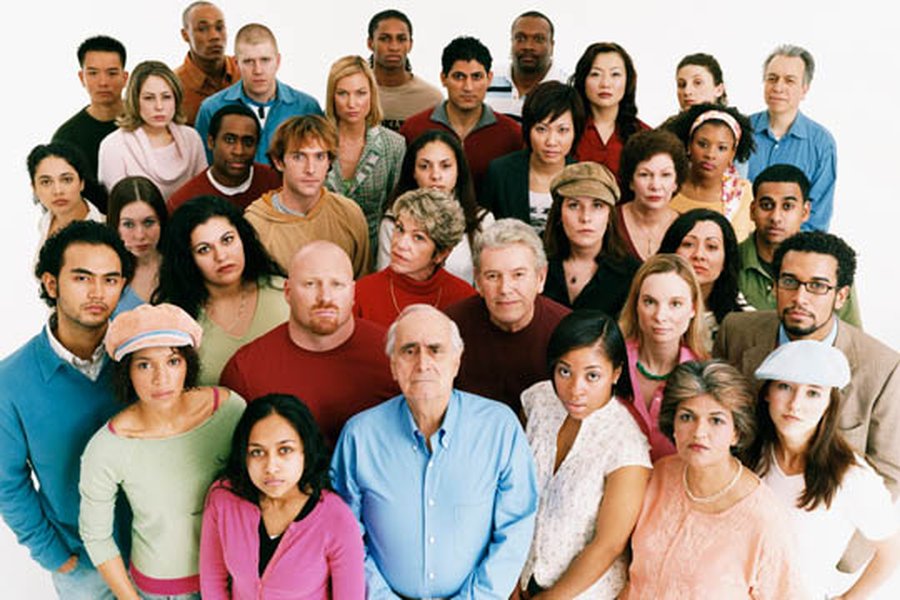
A diverse group of individuals, illustrating the variety within humanity.
Defining Equality: Beyond Sameness
It's crucial to understand that equality, in this context, does not mean that all individuals are the same in their abilities or characteristics. Rather, it refers to an equality of:
- Moral Standing: Each person has an equal claim to moral consideration.
- Fundamental Rights: All individuals are entitled to the same basic human rights.
- Opportunity (ideally): Society should strive to provide equitable opportunities for all its members to flourish, though this remains a significant challenge.
Variations in talents and abilities are natural and contribute to the complex tapestry of human society. However, these differences do not provide a justifiable basis for claiming that one individual or group is inherently superior to another in terms of their fundamental human value.
Historical Lens: The Dangerous Legacy of Superiority Claims
History is replete with examples where the notion of human superiority has been invoked to justify horrific acts of discrimination, oppression, and violence. From colonialism and slavery to racial segregation and genocide, the belief that one group is inherently "better" than another has served as a powerful and destructive ideology.
Case Study: Brown v. Board of Education
A pivotal moment in challenging state-sanctioned superiority claims was the 1954 U.S. Supreme Court decision in Brown v. Board of Education of Topeka. The court unanimously ruled that racial segregation in public schools was unconstitutional, overturning the "separate but equal" doctrine established by Plessy v. Ferguson (1896). The Court declared that "separate educational facilities are inherently unequal," recognizing that segregation itself implied the inferiority of the minority group and violated the Equal Protection Clause of the 14th Amendment. This landmark case underscored the legal and moral rejection of racial superiority as a basis for social policy.

Children from diverse backgrounds, symbolizing hope for an equal future.
The Psychology of Perceived Superiority
Beyond societal structures, psychological factors also play a role in how individuals perceive themselves and others. One notable concept is "illusory superiority."
Illusory Superiority: A Common Cognitive Bias
Illusory superiority, also known as the "above-average effect," is a cognitive bias whereby individuals tend to overestimate their own qualities and abilities in relation to others. Studies have shown that people often rate themselves as better than average in various domains, such as driving skills, intelligence, job performance, and even moral character. This bias is not necessarily indicative of malicious intent but reflects a common human tendency in self-perception. It can, however, contribute to interpersonal conflicts or an unwillingness to acknowledge personal flaws or the strengths of others.
This cognitive bias can extend from the individual to the group level, where members of a particular group might perceive their group as superior to others. Understanding these psychological tendencies is important for fostering humility and more objective self-assessment.
This video discusses the psychological concept of illusory superiority and its implications.
The video delves into the psychological phenomenon where individuals, and sometimes groups, perceive themselves as superior without objective basis. It explores how identity and ethnicity can sometimes be tied to these illusions, and the importance of critical self-reflection to overcome such biases. This is relevant as it highlights a key mechanism through which perceptions of superiority, whether individual or group-based, can arise and be maintained, often in contradiction to principles of equality and objective assessment.
Visualizing Human Value: A Multifaceted Perspective
Instead of a linear hierarchy, human value and capability can be seen as multidimensional. The following chart attempts to illustrate how different aspects of human existence are valued from an ethical standpoint that emphasizes equality, versus how they might be (mis)used as a basis for perceived superiority.
This chart highlights that while capacities like intelligence or societal contribution are valuable, ethical frameworks place paramount importance on intrinsic human dignity as the foundation of equality. Perceptions of superiority often arise from overemphasizing variable traits while undervaluing this fundamental equality.
Deconstructing "Superiority": A Summary Table
The concept of "superiority" can be applied in various contexts, often leading to misconceptions. The table below breaks down different aspects where superiority claims might arise, contrasting common fallacies with ethical and scientific viewpoints.
| Aspect of "Superiority" | Common Misconception / Claim | Ethical / Scientific Viewpoint | Historical Example / Consequence |
|---|---|---|---|
| Racial / Ethnic | "Certain races or ethnic groups are inherently superior to others." | No scientific basis for racial superiority; human genetic variation is clinal and complex. Such claims are social constructs used to justify inequality. All humans share equal moral worth. | Apartheid, Holocaust, slavery, racial segregation (e.g., pre-Brown v. Board of Education era). Leads to systemic discrimination and violence. |
| Intellectual | "Individuals with higher IQ or specific cognitive abilities are 'better' or more valuable humans." | Intelligence is multifaceted and one of many human capacities. While valuable, it does not confer greater intrinsic moral worth or justify denying rights to others. | Eugenics movements, which advocated for selective breeding and sterilization, often based on flawed intelligence metrics and discriminatory assumptions. |
| Physical | "Physically stronger, fitter, or more attractive individuals are inherently superior." | Physical attributes vary widely and serve different functions. They are not indicators of overall human value or moral standing. Aesthetic standards are culturally influenced and subjective. | Social Darwinism (misapplication of evolutionary theory) used to justify social hierarchies; discrimination based on physical appearance or ability. |
| Social / Economic Status | "Wealth, social standing, or power signifies inherent superiority." | Social and economic status are often products of complex systemic factors, opportunity, privilege, and luck, not solely individual merit or inherent quality. Does not equate to greater human worth. | Caste systems, rigid class structures, plutocracy. Leads to denial of opportunities and entrenched inequality. |
| Moral / Behavioral | "Individuals adhering to a specific moral code or exhibiting certain behaviors are intrinsically superior." | While virtuous behavior is valued, self-proclaimed moral superiority can be a form of judgment and may overlook universal ethical principles of empathy and respect. Moral fallibility is a human condition. | Religious persecution, "holier-than-thou" attitudes leading to social exclusion and conflict. |
This table underscores that claims of inherent human superiority, across various domains, are generally unfounded from an ethical and scientific perspective and have historically led to detrimental societal consequences.
Mapping the Concepts: Understanding Human Value and Equality
To further clarify the interconnected ideas surrounding human superiority and equality, the following mindmap outlines the core arguments and their relationships.
(Philosophical & Ethical Consensus)"] id1_1["All humans possess equal intrinsic worth and dignity"] id1_2["Rejection of inherent superiority based on traits"] id1_3["Foundation for universal human rights"] id1_4["Independent of physical, intellectual, or cultural differences"] id2["Acknowledging Human Differences & Diversity"] id2_1["Natural variations in talents, abilities, characteristics (e.g., intelligence, strength)"] id2_2["These differences do NOT equate to moral or inherent superiority of persons"] id2_3["Diversity enriches society"] id2_4["Specific skills make one 'better AT something', not 'a better human'"] id3["Historical Misuse & Dangers of 'Superiority' Claims"] id3_1["Justification for discrimination, oppression, inequality (e.g., racism, sexism, ableism)"] id3_2["Example: Racial Segregation (Plessy v. Ferguson)"] id3_3["Example: Brown v. Board of Education declared 'separate is inherently unequal'"] id3_4["Socially constructed hierarchies causing harm"] id4["Psychological Factors & Biases"] id4_1["Illusory Superiority: Cognitive bias to overestimate one's own positive qualities"] id4_2["Overconfidence effect"] id4_3["Group-level biases and in-group favoritism"] id5["Legal & Societal Stance (Modern Trend)"] id5_1["Laws and conventions increasingly reject discrimination based on perceived superiority"] id5_2["Emphasis on equal opportunity, dignity, and fair treatment"] id5_3["Ongoing struggle against prejudice and systemic inequality"]
This mindmap illustrates that while human differences are undeniable, the concept of inherent superiority is largely rejected in favor of moral equality. Historical and psychological factors often contribute to flawed perceptions of superiority, which legal and ethical frameworks aim to counteract.
Frequently Asked Questions (FAQ)
What is the difference between being "better at something" and "being a superior human"?
Being "better at something" refers to possessing a higher level of skill, talent, or proficiency in a specific domain (e.g., mathematics, athletics, art). This is a statement about a particular ability. "Being a superior human," on the other hand, implies an inherent, overall greater worth or value as a person. Ethical frameworks widely reject the latter, asserting that all humans have equal intrinsic moral worth, regardless of their specific talents or abilities. Excelling in one area does not make an individual a "superior" being in a moral or fundamental sense.
How has the idea of human superiority been used historically?
Historically, claims of superiority based on race, ethnicity, nationality, religion, gender, or social class have been used to justify oppression, discrimination, colonialism, slavery, and even genocide. By deeming one group "superior" and another "inferior," dominant groups have rationalized the denial of rights, exploitation, and violence against marginalized populations. The legal challenge to racial segregation in Brown v. Board of Education is a key example of formally rejecting such notions in law.
Does acknowledging individual talents mean some people are inherently superior overall?
No. Acknowledging that individuals possess different talents, skills, and levels of ability is simply recognizing human diversity. Someone might be a more skilled musician, a faster runner, or a more gifted mathematician. These are specific competencies. This does not translate into inherent overall superiority as a human being. The principle of equal moral worth holds that every individual, regardless of their specific talents or lack thereof in certain areas, deserves the same fundamental dignity and respect.
What is "illusory superiority" and how does it relate to this question?
Illusory superiority is a cognitive bias where individuals overestimate their own positive qualities and abilities and underestimate their negative qualities, relative to others. For example, a majority of people might rate themselves as "above average" drivers or more intelligent than their peers. This psychological tendency can contribute to individuals or groups feeling unjustifiably "superior" to others, even when objective evidence doesn't support such a claim. It highlights how perceptions of superiority can be rooted in biased self-assessment rather than actual, objective differences in overall human worth.
Recommended Further Exploration
- What are the philosophical arguments for moral equality among all humans?
- How did the Brown v. Board of Education decision impact the concept of equality?
- Explore the psychological effects of illusory superiority on individuals and society.
- Investigate historical examples of how claims of superiority led to social injustice.
References
Last updated May 10, 2025