
Understanding the Information Content of the Human Visual Field
A Comprehensive Analysis of Human Vision Capacity and Limitations
Key Takeaways
- The human visual field spans approximately 180 degrees horizontally and 135 degrees vertically, with the highest resolution concentrated in the central 2-3 degrees.
- Central vision, facilitated by the fovea, accounts for roughly 576 megapixels of information processing, while peripheral vision emphasizes motion detection over detail.
- The human visual system efficiently compresses vast amounts of visual data, transmitting an estimated 107 to 109 bits per second to the brain.
1. Introduction to the Human Visual Field
The human visual field represents the entire area within which objects can be perceived while the eye is fixated on a central point. Understanding the information content of this visual field involves analyzing its spatial extent, resolution, and the mechanisms through which visual data is encoded and processed by the brain.
2. Dimensions of the Human Visual Field
2.1 Horizontal and Vertical Extent
The human visual field extends broadly both horizontally and vertically, allowing for a wide perception of the surrounding environment without the need for constant eye movement.
| Aspect | Measurement |
|---|---|
| Horizontal Field (Monocular) | Approximately 180 degrees (combined binocular) |
| Vertical Field | Approximately 135 degrees |
| Foveal Vision | 2-3 degrees center |
2.2 Binocular vs. Monocular Vision
While each eye individually covers a significant portion of the visual field, binocular vision—the overlap of the fields from both eyes—enhances depth perception and field coverage. Binocular vision typically covers about 114 degrees horizontally, allowing for a comprehensive perception of the environment.
3. Spatial Resolution of the Human Visual Field
3.1 Central Vision and the Fovea
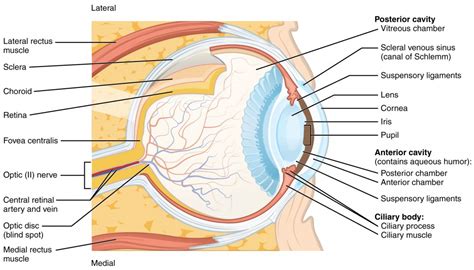
The fovea, a small pit located in the center of the retina, is responsible for sharp central vision. It encompasses roughly 2-3 degrees of the visual field and contains a high density of cone photoreceptor cells, enabling detailed vision essential for activities such as reading and face recognition.
3.4 Foveal Density and Megapixel Equivalent
Estimates suggest that the fovea alone contributes to a visual resolution equivalent of approximately 576 megapixels, considering eye movements and the high concentration of cones. This high-resolution capability allows humans to discern fine details within the central visual field.
3.2 Peripheral Vision
Surrounding the foveal area is the peripheral region of the retina, which offers a much lower spatial resolution. Peripheral vision is optimized for detecting motion and providing a broad spatial awareness, rather than fine detail. This trade-off allows humans to monitor their environment effectively while focusing sharply on specific tasks.
3.5 Photoreceptor Distribution
The retina houses approximately 120 million rod cells, which are highly sensitive to low light and motion, and about 6 million cone cells, which facilitate color vision and high-resolution tasks. The distribution of these photoreceptors is uneven, with cones concentrated in the fovea and rods dominating the peripheral areas.
4. Temporal Resolution and Information Processing
4.1 Temporal Resolution
Temporal resolution refers to the ability to perceive changes over time. The human eye can process visual information at rates of approximately 10-15 frames per second for smooth motion perception. However, under specific conditions, this rate can be higher, allowing for the perception of rapid movements.
4.2 Data Encoding and Transmission
The retina captures vast amounts of visual data, but the brain processes only a fraction of this information. Approximately 1.2 million axons of ganglion cells transmit visual data to the brain, effectively compressing the raw input. This compression is facilitated by neural mechanisms that prioritize relevant information, such as motion and changes in light.
4.4 Information Throughput
Estimates of the human visual system's data transmission rate range from 107 to 109 bits per second. This rate reflects the system's capacity to handle dynamic visual environments, balancing the need for high-resolution central vision with efficient peripheral processing.
5. Quantifying the Information Content
5.1 Megapixels and Photoreceptors
The human eye's resolution has been analogized to digital cameras, with estimates placing the equivalent at approximately 576 megapixels. This figure accounts for the high-resolution fovea and the dynamic movement of the eyes, which allow for a continuous stream of detailed information.
5.2 Bits per Degree of Visual Angle
The information content varies across the visual field, measured in bits per degree of visual angle. In the peripheral regions, the capacity is lower, averaging about tens of bits per degree, while the central region demands a much higher density due to the concentration of cones and the need for detailed perception.
6. The Role of Eccentricity in Information Processing
6.1 Eccentricity and Visual Acuity
Eccentricity refers to the distance from the center of the visual field. As eccentricity increases, visual acuity decreases logarithmically. This means that peripheral areas of the visual field provide less detailed information compared to the central vision.
6.2 Impact on Information Density
With increasing eccentricity, both information density and input fidelity decline sharply. This gradient ensures that the brain efficiently allocates resources to process areas of the visual field that require detailed attention, such as the center, while still maintaining awareness of peripheral movements and changes.
7. Mechanisms of Visual Data Compression
7.1 Selective Attention
The brain employs selective attention to prioritize certain aspects of the visual input over others. This mechanism allows for the efficient processing of relevant information while disregarding less critical data, effectively reducing the overall information load.
7.2 Saccadic Eye Movements
Rapid, involuntary eye movements known as saccades enable the brain to scan the environment quickly. By constantly shifting focus, the visual system creates the illusion of a continuously detailed scene, compensating for the limited resolution of the peripheral regions.
7.3 Neural Filtering
Neural filters process incoming visual data, enhancing significant features such as edges, motion, and color contrasts while suppressing background noise. This selective enhancement contributes to the effective compression and transmission of essential visual information.
8. Mathematical Framework of Visual Information
8.1 Information Theory Applications
Information theory provides a framework for quantifying the amount of information processed by the human visual system. By considering factors such as spatial resolution, color depth, and temporal dynamics, researchers can estimate the total information content.
8.4 Calculating Information Content
Using the formula:
$$ I = \sum_{deg} (bits/deg \times degrees) $$
Where I represents the total information content, and the summation accounts for varying bits per degree across different eccentricities, we can approximate the overall capacity of the visual field.
8.2 Bits per Second Transmission
Given the estimated transmission rate of 107 to 109 bits per second, the human visual system demonstrates a remarkable capacity to handle and process vast amounts of data in real-time, facilitating complex visual tasks and environmental interactions.
9. Comparative Analysis with Digital Systems
9.1 Human Eye vs. Digital Cameras
When comparing the human eye to digital imaging systems, the eyes offer a dynamic and highly efficient method of information processing. While digital cameras rely on static sensors, the human visual system utilizes movement and neural processing to capture and interpret visual data effectively.
9.2 Advantages of Biological Systems
Biological visual systems benefit from unparalleled adaptability, learning capabilities, and efficiency in data compression and interpretation. These advantages allow humans to navigate complex environments seamlessly, something that current artificial systems strive to emulate.
10. Implications and Applications
10.1 Neuroscience and Cognitive Science
Understanding the information content of the human visual field has profound implications for neuroscience and cognitive science. It aids in unraveling the complexities of visual perception, attention mechanisms, and the interplay between sensory input and neural processing.
10.2 Technological Innovations
Insights into human visual processing inform the development of advanced imaging technologies, virtual reality systems, and artificial intelligence models. Mimicking the efficiency and adaptability of the human visual system can lead to more sophisticated and responsive technological solutions.
11. Conclusion
The information content of the human visual field is a testament to the complexity and efficiency of biological systems. With a spatial extent covering approximately 180 degrees horizontally and 135 degrees vertically, combined with high-resolution central vision and efficient data compression mechanisms, the human eye processes an estimated 576 megapixels and transmits up to 109 bits per second. This intricate balance between detailed perception and broad spatial awareness enables humans to interact effectively with their environment, highlighting the remarkable capabilities of the human visual system.
References
Last updated January 20, 2025