
Unraveling Humanity's Core Challenge: Philosophical and Religious Perspectives
Exploring the complex web of issues philosophers and religious thinkers identify as mankind's most pressing concern today.
Highlights: Key Insights
- Consensus on Crisis: Both philosophical inquiry and religious traditions point towards a multi-faceted crisis encompassing moral failure, existential disorientation, and profound social fragmentation as central to humanity's current predicament.
- The Problem of Suffering and Intolerance: The persistent reality of suffering, injustice, and widespread religious persecution emerges as a critical concern, highlighting failures in human compassion, cooperation, and respect for fundamental rights.
- Search for Meaning and Shared Values: A core challenge lies in navigating a loss of shared moral vision and existential meaning in an increasingly complex, interconnected, and technologically advanced world facing systemic threats like climate change and inequality.
Defining the Defining Problem: A Complex Inquiry
Identifying the single "most significant" problem facing humankind is a profound task, yielding varied answers depending on the lens used. Philosophers delve into the fundamental nature of existence, knowledge, and ethics, while religious perspectives often focus on humanity's relationship with the divine, moral conduct, and spiritual well-being. Synthesizing these viewpoints reveals a complex tapestry of interconnected challenges rooted in human nature, societal structures, and existential questions.
Philosophical Lenses on Humanity's Predicament
Philosophical traditions offer diverse diagnoses of humanity's core issues, often focusing on fundamental aspects of existence, knowledge, and social organization.

Exploring the intersection of thought and belief.
Existential and Metaphysical Quandaries
The Weight of Being
Fundamental questions about existence itself persist. Thinkers like Martin Heidegger pondered why there is something rather than nothing, touching upon a deep-seated existential unease. This ties into broader inquiries about the nature of life, the human condition, and the inherent limitations of our understanding. Some argue that humanity's very nature of *having* problems is the core issue, a restlessness Blaise Pascal suggested stems from our inability to simply "sit quietly in a room alone," leading to distraction and avoidance of deeper truths.
Knowledge, Truth, and Values in Flux
Contemporary philosophy grapples with epistemological crises – how do we distinguish truth in an age where traditional authorities are questioned, and information (and misinformation) flows freely? Finding a new, solid foundation for shared sensibilities and common values in a globalized, diverse world is identified as a critical 21st-century challenge.
Moral, Social, and Political Failures
The Enduring Problem of Suffering and Evil
The existence of widespread suffering, injustice, and evil remains a central philosophical puzzle, particularly in the context of the philosophy of religion. Why does suffering exist on such a scale, often exacerbated by human actions? This question probes the nature of morality, justice, and the potential disconnect between ideals and reality.
Human Nature: Flawed or Transitional?
Philosophical anthropology explores the essence of being human. Are we inherently flawed, good, evil, or, as Nietzsche suggested, a transitional species constantly in flux? Understanding our nature is crucial to diagnosing problems like conflict, greed, and the misuse of power.
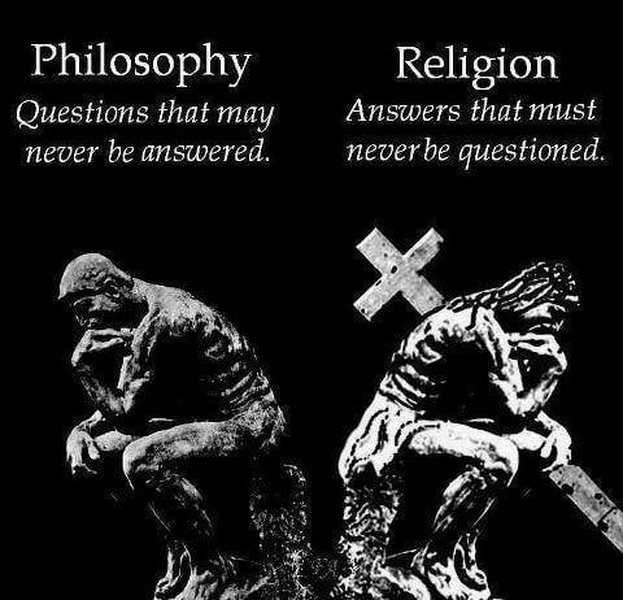
Contrasting approaches to understanding the world.
Systemic Crises: Inequality, Environment, Technology
Modern philosophical discourse increasingly addresses systemic issues: deepening global inequality, the existential threat of climate change, the ethical dilemmas posed by rapidly advancing technology (like AI), and the erosion of democratic norms and human rights. These are seen not just as practical problems but as reflections of underlying ethical failures.
Religious Perspectives on the Human Condition
Religious traditions often frame humanity's primary challenges in terms of spiritual well-being, moral responsibility, and the consequences of straying from divine principles or ethical teachings.
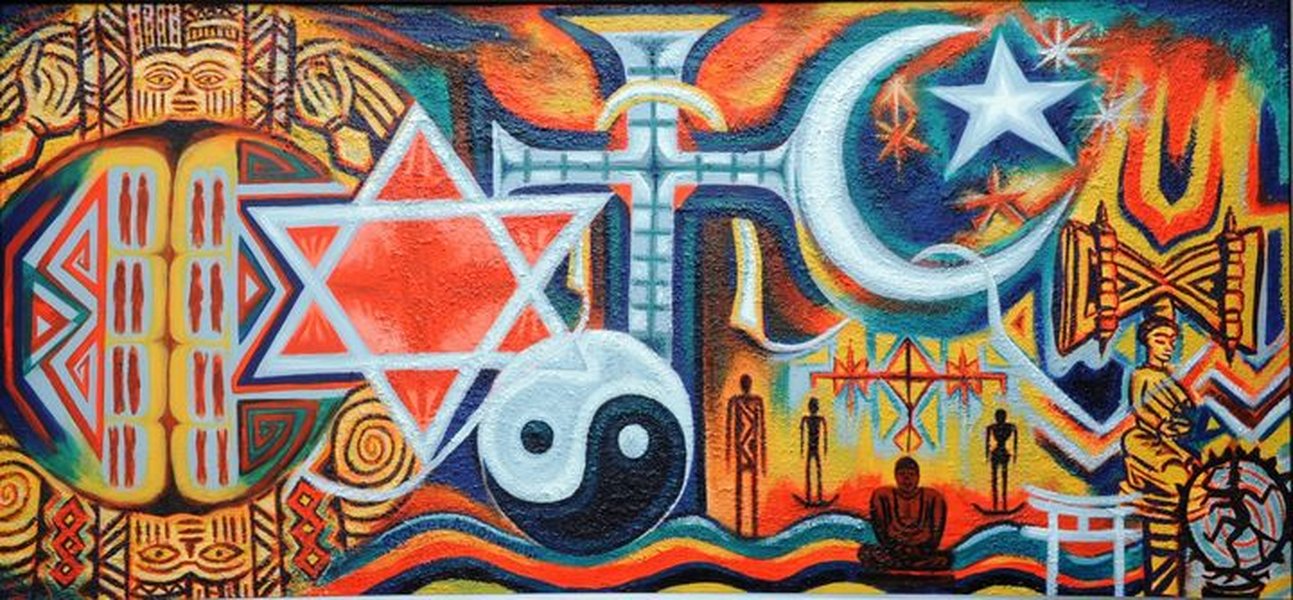
Symbols representing diverse religious and philosophical traditions.
Spiritual Disconnect and Moral Erosion
Alienation from the Divine or Ultimate Reality
Many faiths identify a fundamental problem in humanity's perceived separation or disconnection from God, the sacred, or ultimate reality. This alienation is often seen as the root cause of selfishness, moral decay, fear, and suffering. Concepts like "sin" in Christianity or "ignorance" and "attachment" in Buddhism point to internal states that lead to external problems.
The Crisis of Values
Religious viewpoints frequently critique materialism, the breakdown of community bonds, and a perceived loss of meaning in modern life as symptoms of a deeper spiritual malaise. There's a call to return to core values like compassion, justice, humility, and stewardship.
The Paradox of Religion: Conflict and Cohesion
Religious Persecution and Intolerance
A stark reality highlighted is the global crisis of religious persecution. Despite many perceiving religion as a force for tolerance, reports indicate widespread discrimination and violence targeting individuals and communities based on their faith or beliefs. This infringes upon fundamental human rights and fuels social conflict.
Religion as a Source of Division
Some critiques, reflected in the provided sources, go further, identifying religion *itself* as a major obstacle to human progress. Arguments are made that dogmatism, exclusivity, and the use of religious justifications for violence or discrimination create significant barriers to peace, rationality, and universal human rights.
The Call for True Religious Freedom
Countering persecution, there's a push to understand religious freedom not just as freedom *from* harm, but freedom *to* practice faith openly and contribute positively to society. This concept of "integral human development" links spiritual flourishing with overall human well-being.
Synthesizing Perspectives: Interconnected Crises
While originating from different frameworks, philosophical and religious perspectives converge on several critical areas, suggesting a complex, multi-layered core problem facing humanity.
The Centrality of Moral and Ethical Failure
Both viewpoints grapple intensely with **suffering, evil, and injustice**. Whether framed as a philosophical problem of reconciling ideals with reality, a consequence of flawed human nature, a spiritual failing (sin, ignorance), or the direct result of intolerance and systemic inequality, the failure to live ethically and compassionately emerges as a paramount concern.
The Struggle for Meaning and Coexistence
The **crisis of meaning, loss of shared values, and existential disorientation** are echoed across both domains. In a rapidly changing world facing global threats, the struggle to find purpose, establish common ethical ground, and achieve peaceful coexistence amidst diversity (including religious diversity) is critical.
Human Nature and Freedom's Burden
The **problem of human nature** – our capacity for both creation and destruction, compassion and cruelty – lies at the heart of many challenges. Both philosophy and religion emphasize human freedom and the responsibility that comes with it, highlighting the failure to consistently choose paths that promote collective well-being and justice.
Visualizing the Core Challenges
Mapping the Interconnections
The following mindmap illustrates how various identified problems might be interconnected, stemming from foundational issues related to human nature, societal structures, and existential concerns.
(Religious/Other)"] id2b2["Erosion of Human Rights"] id2b3["Breakdown of Community"] id2b4["Political Polarization"] id2c["Systemic Threats"] id2c1["Climate Change/Environmental Degradation"] id2c2["Misuse of Technology (AI Ethics)"] id2c3["Global Health Crises"] id2d["Influence of Belief Systems"] id2d1["Religious Dogmatism/Exclusivity"] id2d2["Religion as Barrier/Source of Conflict"] id2d3["Religion as Force for Good/Tolerance"]
Comparative Significance of Problems
This radar chart offers a speculative comparison of how philosophical versus religious perspectives might relatively weigh the significance of various global challenges. It's an interpretation based on the synthesized information, not definitive data, aiming to illustrate potential differences in emphasis.
The chart suggests potential variations: philosophy might place higher emphasis on existential and epistemological crises, while religious perspectives may prioritize moral failings, spiritual disconnection, and intolerance/persecution, though both recognize the gravity of social injustice and the problem of evil.
Focus on Key Issues: A Comparative Table
This table summarizes some of the major problems identified, outlining nuances from both philosophical and religious viewpoints.
| Problem Area | Philosophical Perspective Highlights | Religious Perspective Highlights |
|---|---|---|
| Suffering & Evil | Focus on logical/metaphysical problem (Why does it exist?), ethical implications, connection to human action/nature, justice. | Often framed by relationship to divine (test of faith, consequence of sin/disobedience/ignorance), central challenge to belief (Problem of Evil), call for compassion. |
| Intolerance & Persecution | Viewed as violation of rights, failure of reason/ethics, challenge to social contract/political philosophy, threat to open society. | Seen as direct attack on faith/dignity, global crisis hindering spiritual practice, sometimes fueled by religious extremism itself, call for freedom of belief. |
| Meaning & Purpose | Explores existential questions (Why are we here?), challenges from nihilism/absurdism, search for grounding values without traditional anchors. | Links meaning to divine purpose/ultimate reality, sees loss of meaning in materialism/secularism, emphasizes faith/spiritual practice for fulfillment. |
| Inequality & Injustice | Analyzed through theories of justice (e.g., Rawls), critiques of power structures, ethical failures in resource distribution, linked to political systems. | Critiqued as moral failing (greed, lack of compassion), violation of stewardship principles, call for social justice rooted in religious ethics (e.g., charity, equity). |
| Human Nature | Debates on inherent goodness/flaw, rationality vs. irrationality, freedom vs. determinism, potential for self-overcoming or inherent limitations. | Often views humans as created with purpose but flawed (sin, ignorance), emphasizes free will and moral responsibility, potential for redemption/enlightenment. |
| Environmental Crisis | Considered an ethical failure (intergenerational equity), consequence of anthropocentrism, challenge to sustainable living philosophies. | Viewed as failure of stewardship of creation, moral responsibility to protect the environment, violation of divine mandate. |
Philosophical Reflections on Existential Risk
The following video features philosopher Nick Bostrom discussing existential risks and humanity's long-term future, offering a philosophical perspective on the scale of challenges we face and the importance of navigating them wisely.
Bostrom's work encourages thinking beyond immediate crises to consider the profound, long-term consequences of our current actions and technological trajectories. He emphasizes the potential for both unprecedented flourishing and catastrophic failure, urging careful consideration of how we manage global risks, from artificial intelligence to pandemics, framing the ultimate problem as ensuring a positive long-term future for humanity.

Global crises like drought and famine highlight the tangible impact of systemic problems.
Frequently Asked Questions (FAQ)
Is there one single "most significant" problem agreed upon?
No, there isn't a universal consensus. Philosophers and religious traditions emphasize different aspects. Some philosophers might point to fundamental existential questions or ethical breakdowns, while religious perspectives may focus on spiritual disconnection, moral failings like sin or ignorance, or the tangible problem of religious persecution. The synthesis suggests the "most significant" problem is likely a complex interplay of moral/ethical failures, social fragmentation, existential disorientation, and systemic issues like intolerance and inequality.
How does the "problem of evil" relate to this discussion?
The "problem of evil" is central, especially in the philosophy of religion. It questions how an all-good, all-powerful deity can coexist with the reality of suffering and evil (both moral evil, like cruelty, and natural evil, like disasters). Philosophically, it challenges the logical consistency of certain religious beliefs. Religiously, it's a profound test of faith and a source of theological debate. Its relevance to the "most significant problem" lies in how it forces engagement with the reality of suffering, injustice, and the perceived flaws in the world, impacting both belief systems and ethical responses to hardship.
Is religion identified more as a problem or a solution?
The sources present a mixed view. Some explicitly identify religion (or its misapplication) as a primary problem, citing its role in division, conflict, intolerance, and hindering progress. Others highlight the global crisis of religious persecution, where believers are victims. Conversely, many people globally view religion positively, as a source of moral guidance, community cohesion, and tolerance. The challenge lies in religion's dual capacity – its potential to inspire great good and compassion, alongside its historical and ongoing involvement in conflict and oppression. The concept of "integral human development" seeks to emphasize the positive potential linked to genuine religious freedom.
How do issues like climate change or inequality fit in?
Systemic issues like climate change and inequality are increasingly recognized as critical problems within both philosophical and religious frameworks. They are often seen as manifestations of deeper underlying problems: ethical failures (e.g., prioritizing short-term gain, greed), failures of justice and equity, a lack of compassion or stewardship, and flawed power structures. From a philosophical standpoint, they raise questions about intergenerational justice and collective responsibility. From a religious perspective, they can be viewed as failures to uphold principles of creation care, justice for the poor, and respect for human dignity.
Recommended
- How do different philosophical schools define the problem of evil?
- What are the arguments for and against religion being a source of global conflict?
- Explore the concept of integral human development and religious freedom.
- How do contemporary philosophers address existential risks like climate change and AI?
References
 neouto.wordpress.com
Last updated April 27, 2025