
Unlocking Extreme Hydrophobicity: The Science Behind 130°+ Contact Angles
Perfect your silane-based hydrophobic coating for steel and glass surfaces with these optimized formulation strategies
Key Insights for Maximum Hydrophobicity
- Surface chemistry manipulation through optimal silane ratios and functional additives is the primary driver of achieving high contact angles
- Dual mechanism approach combining chemical hydrophobicity with micro/nano-scale roughness creates superior water repellency
- Processing parameters including reaction conditions, application technique, and curing protocol dramatically impact final performance
Understanding Your Current Formulation
Your approach to creating a hydrophobic coating using potassium silicate, GLYMO, and octadecylamine shows promise for achieving the target contact angle of 130+ degrees. The formulation leverages several key principles of hydrophobic surface engineering:
Chemical Analysis of Your Formulation
The current mixture combines several functional components:
| Component | Amount | Function |
|---|---|---|
| Potassium silicate solution | 80 parts | Forms silicate network backbone; provides adhesion to mineral substrates |
| Water | 12 parts | Diluent; facilitates silane hydrolysis |
| GLYMO | 7 parts | Coupling agent; improves adhesion; crosslinks silicate network |
| Octadecylamine | 1 part | Long-chain alkyl group provides hydrophobicity; reduces surface energy |
Reaction Mechanism Analysis
Your heating step at 70°C plays a crucial role in the formation of the hydrophobic network. During this process:
- The methoxy groups in GLYMO hydrolyze to form silanol groups (Si-OH)
- These silanol groups undergo condensation reactions with the potassium silicate
- Octadecylamine likely forms hydrogen bonds with silicate species
- Removal of methanol/water shifts equilibrium toward condensation, strengthening the network
Theoretical Contact Angle Prediction
While your current formulation could potentially achieve hydrophobicity, reaching a contact angle above 130° typically requires both low surface energy and surface roughness at micro/nano scales. The primary limitation in your current approach is that it primarily addresses chemical hydrophobicity without significant attention to surface topography.
Optimizing Your Formulation
To enhance your hydrophobic coating performance and consistently achieve contact angles above 130°, I recommend several strategic modifications:
1. Component Ratio Optimization
The ratio of hydrophobic components to coupling agents significantly impacts final performance:
GLYMO to Octadecylamine Ratio
Your current ratio of 7:1 (GLYMO:Octadecylamine) could be optimized. GLYMO primarily enhances adhesion but contributes less to hydrophobicity. Consider increasing the octadecylamine proportion to 2-3 parts while maintaining or slightly reducing GLYMO to 5-6 parts. This adjustment would increase the concentration of hydrophobic alkyl chains at the surface.
Silicate Concentration Considerations
The high silicate content (80 parts) may create a more hydrophilic character than desired. Consider reducing this to 60-70 parts while maintaining the solids content. This would increase the relative proportion of hydrophobic components in the final film.
2. Additives for Enhanced Performance
Surface Roughness Modifiers
To achieve contact angles above 130°, introducing controlled surface roughness is essential. Consider adding:
- Hydrophobically-modified silica nanoparticles (1-3% by weight) to create nano-scale roughness
- Fumed silica treated with hexamethyldisilazane (HMDS) to combine roughness with hydrophobicity
- Fluorinated silanes (0.5-1 part) to further reduce surface energy
Alternative Hydrophobic Agents
While octadecylamine provides good hydrophobicity, consider these alternatives or additions:
- Alkyltrialkoxysilanes with longer chains (C16-C18) provide direct covalent bonding
- Fluoroalkyl silanes offer superior hydrophobicity at lower concentrations
- Polydimethylsiloxane (PDMS) functionalized with reactive groups can enhance durability
3. Process Optimization
The radar chart above compares the performance attributes of your current formulation against optimized versions. The nanoparticle-modified formula shows significantly enhanced hydrophobicity while maintaining good adhesion and improving durability, though with some trade-offs in transparency and ease of application.
Reaction Conditions
Your current heating protocol is effective, but consider these refinements:
- Extend the heating time to 45-60 minutes to ensure complete condensation reactions
- Consider a two-stage heating process: 50°C for 30 minutes (hydrolysis stage), then 70°C for 30 minutes (condensation stage)
- Monitor pH during the reaction – maintaining pH 4-5 typically optimizes silane hydrolysis and condensation
Distillation Refinement
The removal of methanol/water is crucial, but instead of adding water back after cooling:
- Consider adding a co-solvent like ethanol or isopropanol (5-10 parts) after distillation
- This maintains solution stability while improving wetting on substrate surfaces
- Alternatively, use a controlled vacuum distillation to precisely remove volatiles
Application Techniques for Maximum Hydrophobicity
Surface Preparation
Proper surface preparation is critical for achieving high contact angles:
For Steel Substrates
- Degrease with solvent (acetone or isopropanol)
- Consider mild acid etching (5% phosphoric acid) to increase surface hydroxyl groups
- For optimal results, create micro-roughness via abrasive blasting or chemical etching
- Neutralize and thoroughly rinse surfaces before coating application
For Glass Substrates
- Clean with detergent solution followed by solvent rinse
- Activate surface with dilute sodium hydroxide solution (0.1N) for 5 minutes
- Rinse thoroughly with deionized water
- Allow to dry completely before coating application
Spray Application Parameters
To achieve uniform coating when spraying:
- Use HVLP (High Volume Low Pressure) spray equipment for fine atomization
- Maintain 20-30 cm distance from substrate surface
- Apply in thin, overlapping passes rather than a single heavy coat
- Ideal application temperature: 20-25°C with relative humidity below 60%
- Consider multiple thin coats with brief flash-off periods between applications
Curing Protocol
The curing process significantly affects final hydrophobicity:
- Allow initial flash-off at room temperature for 10-15 minutes
- Heat cure at 80-100°C for 30-60 minutes to complete condensation reactions
- For maximum hydrophobicity, consider a post-cure at 120°C for 15 minutes
- Allow 24 hours after curing before testing hydrophobic performance
Performance Testing Methodology
To verify that your coating achieves the target contact angle above 130°, implement these testing protocols:
Contact Angle Measurement
Use a goniometer or simple drop analysis method:
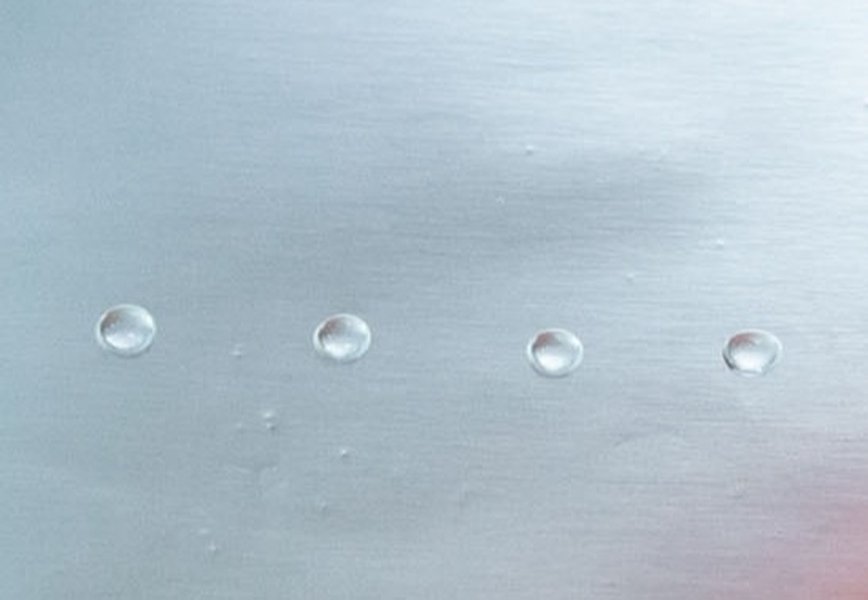
- Apply 5 μL droplets of distilled water on the coated surface
- Measure contact angle from droplet profile using image analysis
- Take multiple measurements across the surface (minimum 5)
- Calculate average contact angle and standard deviation
Durability Assessment
Verify the longevity of hydrophobic properties:
- Weathering tests: UV exposure (ASTM G154) for 500-1000 hours
- Abrasion resistance: Linear abrasion test (ASTM D4060)
- Chemical resistance: Exposure to acidic/alkaline solutions (pH 3-11)
- Thermal stability: Heat aging at 80°C for 7-14 days
Visual Assessment
For practical applications, observe:
- Water droplet roll-off angle (tilt until droplet moves)
- Water sheeting behavior under flowing water
- Self-cleaning properties with common contaminants
- Transparency/haze (particularly important for glass applications)
This video demonstrates DIY superhydrophobic coating application and testing, which illustrates the dramatic water-repellent effects achievable with well-formulated coatings. Note how the water beads up and rolls off easily from properly coated surfaces - this is the type of performance you're aiming to achieve with your optimized formulation.
Frequently Asked Questions
References
- Hydrophobic Silane Surface Treatments - Gelest Technical Guide
- Hydrophobic Glass Coating - NanoTech Coatings
- Machine Learning Optimization for Hydrophobic Surfaces - Nature Scientific Reports
- Is Silane Hydrophobic? Properties and Applications - Daken Chemical
-
Superhydrophobic Coatings Using Silica Nanoparticles - NCBI
-
Functional Hydrophobic Coatings: Mechanisms and Industrial Applications - ScienceDirect
-
Hydrophobic Coatings for Improving Corrosion Resistance - ScienceDirect
Recommended Topics

Last updated April 6, 2025