
Detecting Failures in RSpec's before(:all) Hook
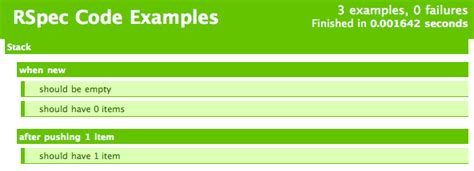
In RSpec, the before(:all) hook is commonly used for setting up resources or configurations that are shared across multiple test examples within a group. However, detecting failures within this hook poses significant challenges due to the way RSpec handles exceptions in before(:all). When an error occurs in this hook, it can prevent the execution of subsequent hooks and test examples, making it difficult to identify and manage such failures effectively.
Understanding the Challenge
The primary issue with before(:all) is that when an exception is raised within this hook, RSpec treats it as a fatal error for the entire test group. This means:
- Skipped Hooks and Examples: Subsequent
beforehooks and all examples within the group are skipped. This behavior limits the capacity to access the test results or perform cleanup actions through standardafter(:example)hooks. - Lack of Visibility: Failures in
before(:all)are not directly accessible within individual test examples, making it challenging to pinpoint the exact source of the failure.
These challenges necessitate alternative strategies to effectively detect and handle failures within the before(:all) hook.
Effective Strategies for Detecting Failures
1. Utilizing Instance Variables and Custom Reporting
One practical approach involves setting an instance variable within the before(:all) hook to indicate the occurrence of an exception. This flag can then be checked in the after(:example) hook to mark the test case as failed if necessary.
Implementation Steps
- Set an Instance Variable: In the
before(:all)hook, initialize an instance variable to track failures. - Check the Variable: In the
after(:example)hook, inspect the variable and flag the test as failed if it's set.
Below is an example implementation:
RSpec.configure do |config|
  config.before(:suite) do
    @test_failed = false
  end

  config.before(:all) do
    begin
      # Code that might raise an exception or fail
      raise "Boom" if some_condition
    rescue StandardError => e
      @test_failed = true
      # Optionally log or handle the exception here
    end
  end

  config.after(:example) do
    if @test_failed
      # Mark the test case as failed
      RSpec.current_example.status = :failed
    end
  end
end

describe 'Test Suite' do
  context 'Test Case 45322', testrail_id: 45322 do
    before(:all) do
      # Code that might raise an exception or fail
      raise "Boom" if @test_failed
    end

    it 'Should pass' do
      expect(true).to eq(true)
    end

    it 'Another assertion step' do
      expect(true).to eq(true)
    end

    it 'Yet another assertion step' do
      expect(true).to eq(true)
    end

    it 'One more assertion step' do
      expect(true).to eq(true)
    end
  end
end
In this setup, the @test_failed instance variable acts as a flag indicating whether an exception occurred in the before(:all) hook. The after(:example) hook then uses this flag to mark the test as failed, ensuring that failures are appropriately reported.
2. Wrapping before(:all) with Exception Handling
Another effective method involves explicitly rescuing exceptions within the before(:all) block. This allows for setting flags or storing error messages that can be referenced in the test examples or subsequent hooks.
Example Implementation
RSpec.describe "My Feature" do
  before(:all) do
    begin
      # Code that might fail
      raise "Simulated failure"
    rescue => e
      puts "Error in before(:all): #{e.message}"
      @before_all_failed = true
    end
  end

  after(:all) do
    if @before_all_failed
      puts "Cleaning up after before(:all) failure"
    end
  end

  it "does not run since before(:all) failed" do
    expect(true).to eq(true)
  end
end
Here, if an exception occurs within before(:all), the @before_all_failed flag is set. This flag can then be used in the after(:all) hook for cleanup or logging purposes. Although the execution of test examples may still be skipped, this approach provides a way to handle and report failures gracefully.
3. Employing around(:context) Instead of before(:all)
The around(:context) hook offers finer control over the execution flow of setup and teardown logic. By wrapping the test execution within this hook, you can capture and handle exceptions more effectively compared to before(:all).
Implementation Example
RSpec.describe "My Feature" do
  around(:context) do |context|
    begin
      # Setup code
      puts "Setting up the context"
      context.run
    rescue => e
      puts "Error in around(:context): #{e.message}"
    ensure
      # Cleanup code
      puts "Cleaning up the context"
    end
  end

  it "executes the test if setup succeeds" do
    expect(true).to eq(true)
  end
end
This approach ensures that even if the setup fails, you have better visibility into the error and can still perform necessary cleanup actions. It replaces the need for before(:all) while providing enhanced error handling capabilities.
4. Leveraging Custom RSpec Formatters
Custom formatters in RSpec can be designed to capture and report failures occurring within hooks like before(:all). By registering a custom formatter, you can globally monitor and log such failures across your test suite.
Creating a Custom Formatter
class MyCustomFormatter
  RSpec::Core::Formatters.register self, :example_group_started, :example_failed

  def initialize(output)
    @output = output
  end

  def example_group_started(notification)
    @output.puts "Starting example group: #{notification.group.description}"
  end

  def example_failed(notification)
    @output.puts "Failure detected: #{notification.exception.message}"
  end
end

RSpec.configure do |config|
  config.add_formatter(MyCustomFormatter)
end
This formatter listens for events like the start of an example group and any failed examples, including those resulting from failures in before(:all). By integrating such a formatter, you can achieve comprehensive logging and monitoring of test failures.
5. Using Shared Contexts with Failure Flags
Shared contexts in RSpec allow for the centralization of setup and failure handling logic. By defining a shared context that manages failure flags, you can reduce code duplication and streamline the detection of setup failures across multiple test examples.
Implementing Shared Contexts
RSpec.shared_context 'with setup' do
  before(:all) do
    begin
      # Expensive setup code
      @setup_failed = false
    rescue => e
      @setup_failed = true
      @setup_error = e
    end
  end

  before(:each) do
    if @setup_failed
      skip "Setup failed: #{@setup_error.message}"
    end
  end
end

RSpec.describe 'My Test Suite' do
  include_context 'with setup'

  it 'performs a test' do
    # Actual test code
    expect(true).to eq(true)
  end

  # Additional tests
end
By including the shared context in your test suite, each example checks the @setup_failed flag before execution. If the setup failed, the test is gracefully skipped with an informative message, enhancing both reliability and readability.
6. Handling Failures in after(:each) Hooks
Another method involves using the after(:each) hook to detect and manage failures. While after(:example) hooks are not executed if before(:all) fails, monitoring example metadata can still provide insights into test case statuses.
Here's how you can implement this:
RSpec.configure do |config|
  config.after(:each) do |example|
    if example.exception
      # Handle failure here
      puts 'Test failed'
    end
  end
end
Although this approach primarily detects failures within individual examples, it can be combined with other strategies to enhance overall failure detection mechanisms.
Best Practices and Recommendations
Prefer before(:each) Over before(:all)
While before(:all) is useful for setting up shared resources, it is generally recommended to use before(:each) wherever possible. This ensures that each test example runs in isolation, reducing the risk of side effects and making failure detection more straightforward.
Using before(:each) provides better isolation and cleaner state management, which aligns with the best practices advocated by the RSpec community. However, if performance considerations necessitate the use of before(:all), implementing robust failure detection strategies is essential.
Implement Clear Error Reporting
Regardless of the approach chosen, it is crucial to provide clear and informative error messages when a failure is detected in the setup hooks. This aids in debugging and ensures that the root cause of the failure is easily identifiable.
Monitor RSpec Updates
RSpec is an actively maintained framework, and improvements or changes in how hooks handle failures may be introduced in future releases. Keeping abreast of updates and community discussions, such as those on [GitHub Issue #2527](https://github.com/rspec/rspec-core/issues/2527) and [GitHub Issue #1849](https://github.com/rspec/rspec-core/issues/1849), can provide valuable insights and potential enhancements to your testing strategies.
Conclusion
Detecting failures within the before(:all) hook in RSpec requires deliberate strategies due to the inherent handling of exceptions by RSpec. By employing techniques such as utilizing instance variables, wrapping hooks with exception handling, leveraging around(:context) hooks, implementing custom formatters, and using shared contexts, you can effectively detect and manage such failures.
Moreover, adhering to best practices like preferring before(:each) over before(:all) when feasible, ensuring clear error reporting, and staying updated with RSpec developments will contribute to more reliable and maintainable test suites.
For a deeper understanding and further strategies, consider exploring the following resources:
Last updated January 9, 2025