
Unlocking Immediate Dental Implants: When Speed Meets Stability
Discover the crucial factors determining suitability for same-day dental implant restorations.

- 1.Key Insights into Immediate Loading Implants
- 2.Understanding Immediate Loading Implants
- 3.When Immediate Loading is a Viable Option: Key Indications
- 4.When Immediate Loading is Not Recommended: Contraindications
- 5.Comparative Analysis: Immediate vs. Delayed Loading Suitability
- 6.The Decision-Making Process in Dental Implantology
- 7.Key Clinical Factors for Success and Failure
- 8.Understanding Immediate Implant Placement in Practice
- 9.FAQs About Immediate Loading Dental Implants
- 10.Conclusion
- 11.Recommended Reading
- 12.Referenced Search Results
Key Insights into Immediate Loading Implants
- Primary Stability is Paramount: Immediate loading success hinges on achieving high initial implant stability, typically indicated by insertion torque values of ≥35 Ncm or an Implant Stability Quotient (ISQ) of ≥70.
- Patient Selection is Critical: Ideal candidates possess sufficient bone density and volume, excellent oral hygiene, and the absence of conditions like bruxism or uncontrolled systemic diseases that could compromise healing.
- Aesthetic and Functional Benefits: This technique offers rapid aesthetic and functional restoration, especially in visible areas, enhancing patient satisfaction and minimizing time without teeth.
Immediate loading in dental implantology represents a significant advancement, allowing for the placement of a provisional restoration on an implant within 48 hours of its surgical placement. This approach offers considerable advantages, primarily in reducing treatment time and providing immediate aesthetic and functional benefits to patients. However, its successful application is highly dependent on a careful assessment of both indications and contraindications.
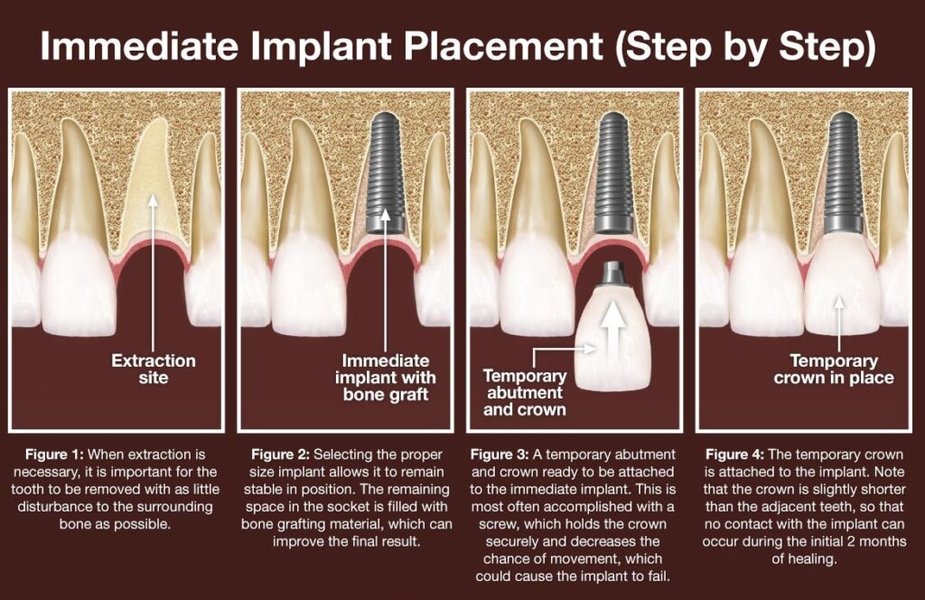
Immediate dental implant placement showcasing the integration of the implant into the bone.
Understanding Immediate Loading Implants
Immediate loading, often referred to as same-day implants or immediate function, revolutionizes the traditional multi-stage implant procedure. Instead of waiting several months for osseointegration (the fusion of the implant with the bone) before attaching a crown, a temporary or even definitive prosthesis can be placed almost immediately. This significantly improves the patient experience by shortening the treatment timeline and avoiding extended periods with missing teeth or uncomfortable temporary prosthetics.
What Exactly is Immediate Loading?
At its core, immediate loading involves placing a prosthetic crown, bridge, or denture onto the newly placed dental implant within a very short timeframe, typically within 24 to 48 hours of the implant surgery. This contrasts with conventional loading protocols, where the implant is left to heal undisturbed for several months before any restoration is attached. The success of immediate loading relies heavily on achieving exceptional primary stability of the implant during surgery, which is the mechanical engagement of the implant with the surrounding bone tissue.
When Immediate Loading is a Viable Option: Key Indications
The decision to proceed with immediate loading is based on a meticulous evaluation of various clinical factors and patient characteristics. The goal is to ensure predictable success and long-term stability of the implant.
Achieving Optimal Primary Stability
This is arguably the most critical factor. For immediate loading to be successful, the implant must achieve a high degree of initial stability within the bone. This stability is often measured by insertion torque values, with at least 35 Ncm, and ideally 45 Ncm, being a commonly recommended threshold. Another crucial metric is the Implant Stability Quotient (ISQ), with values generally needing to be at or above 70. High primary stability minimizes micromotion at the implant-bone interface, which is essential for successful osseointegration.
Ideal Bone Quality and Quantity
Patients must possess sufficient bone density and volume at the implant site. This includes an intact buccal plate and, ideally, adequate keratinized tissue. Good bone conditions provide the necessary support for the implant to achieve the required primary stability and withstand immediate functional forces.
Enhancing Aesthetics in Visible Areas
Immediate loading is particularly advantageous in the esthetic zone (front teeth). It allows for the immediate restoration of a patient's smile, preventing the psychological and social discomfort associated with missing teeth. For success in these areas, predictable emergence profiles, a thick soft tissue biotype, and the ability to place a provisional crown without excessive occlusal contact are vital.
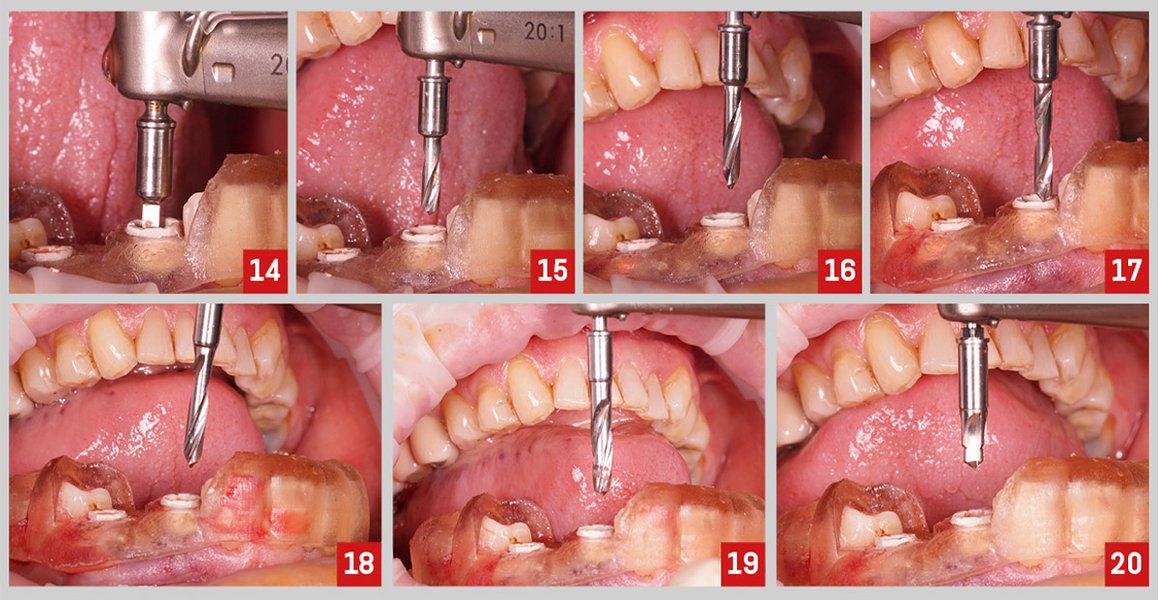
Advanced techniques like guided surgery can facilitate immediate implant placement and loading.
Patient-Specific Considerations
- Patient Preference for Speed: Individuals who prioritize a quick return to full function and aesthetics are excellent candidates, provided other clinical criteria are met.
- Good Oral Hygiene and Compliance: Patients must demonstrate excellent oral hygiene practices and be committed to post-operative care and maintenance.
- Absence of Parafunctional Habits: While some cases can be managed with occlusal protection, ideally, patients should not exhibit severe parafunctional habits like bruxism (teeth grinding) or clenching, which can exert excessive forces on the healing implant.
Expert Team and Meticulous Planning
The success of immediate loading also relies heavily on the expertise of the dental team. This includes precise surgical technique, the ability to fabricate and deliver a fixed provisional prosthesis on the same day, and meticulous prosthetic planning to ensure occlusal protection and appropriate load distribution.
When Immediate Loading is Not Recommended: Contraindications
While appealing, immediate loading is not suitable for all patients. Certain conditions significantly increase the risk of implant failure and necessitate a conventional delayed loading protocol.
Insufficient Primary Stability
If the implant cannot achieve adequate initial stability at the time of placement, immediate loading is contraindicated. Any micromotion can disrupt the delicate process of osseointegration, leading to fibrous encapsulation instead of bone integration, and ultimately implant failure.
Compromised Bone Conditions
Inadequate bone density, insufficient bone volume, or significant bone defects that prevent stable implant seating are clear contraindications. In such cases, bone grafting procedures may be necessary, followed by a delayed loading approach.
Active Infection and Systemic Health Issues
The presence of an active infection at the implant site is an absolute contraindication for immediate loading, as it drastically increases the risk of complications and failure. Similarly, uncontrolled systemic diseases, such as diabetes, autoimmune disorders, or significant bisphosphonate therapy, can impair healing and osseointegration, making immediate loading a higher risk proposition. Smoking is also a significant risk factor due to its negative impact on healing and increased risk of peri-implantitis.
Parafunctional Habits and Poor Oral Hygiene
Patients with severe bruxism or clenching habits, especially if uncontrolled, are at a higher risk of subjecting the immediate implant to excessive forces, which can lead to early failure. Poor oral hygiene or non-adherence to maintenance protocols can also predispose patients to peri-implant infections, jeopardizing the success of the immediately loaded implant.
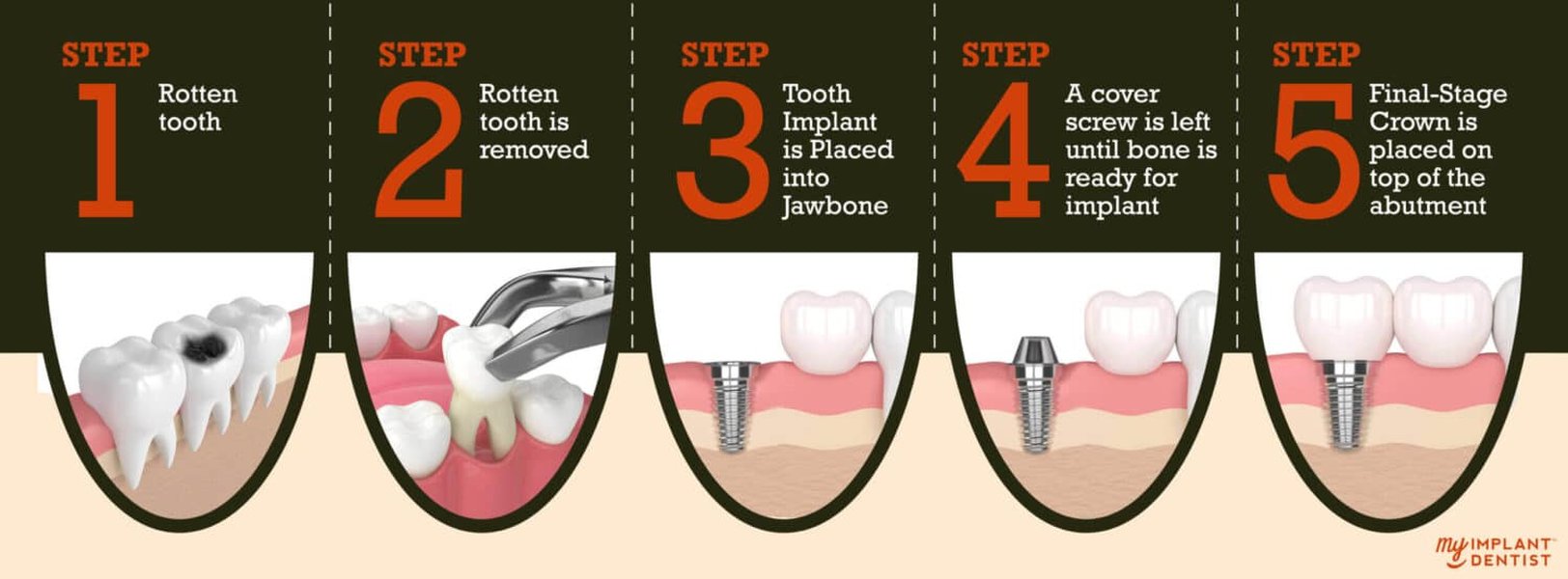
The multi-stage process of traditional dental implant placement, contrasting with immediate loading.
Complex Cases and Esthetic Challenges
While advancements are being made, highly complex cases requiring extensive bone augmentation or those with compromised buccal bone or very thin soft tissue biotypes in the esthetic zone may not be ideal for immediate loading. In these situations, ensuring predictable soft tissue stability and long-term esthetic outcomes may favor a delayed approach.
Comparative Analysis: Immediate vs. Delayed Loading Suitability
To further illustrate the decision-making process, consider the following radar chart which compares the suitability of immediate loading across various clinical and patient factors, relative to a conventional delayed approach. A score of 5 indicates high suitability for immediate loading, while 1 indicates low suitability.
Radar chart illustrating the relative suitability of immediate loading based on key clinical and patient factors.
The Decision-Making Process in Dental Implantology
The choice between immediate and delayed loading is a complex clinical decision that requires a thorough understanding of the patient's oral health, systemic health, and specific anatomical conditions. The goal is always to achieve long-term predictable success and patient satisfaction.
Mindmap outlining the key indications and contraindications for immediate loading dental implants.
The following bar chart compares the clinical challenges and benefits associated with immediate versus delayed loading protocols. Scores reflect opinionated analysis, with higher scores indicating a greater presence of the characteristic for that protocol.
Bar chart comparing clinical characteristics between immediate and delayed loading protocols.
Key Clinical Factors for Success and Failure
Successful immediate loading is not merely about quick placement but involves a combination of precise clinical execution and adherence to strict protocols. Conversely, neglecting critical factors can lead to complications and implant failure.
| Factor | Influence on Immediate Loading | Detail |
|---|---|---|
| Primary Stability | Crucial for success | Requires high insertion torque (≥35-45 Ncm) and ISQ (≥70) to prevent micromotion and promote osseointegration. |
| Bone Quality/Quantity | Directly impacts stability | Adequate bone density and volume are essential for initial mechanical fixation and long-term support. |
| Occlusal Scheme | Management is critical | Prosthesis design must ensure minimal or no occlusal contacts on the provisional restoration, especially in the early healing phase, to prevent overload. |
| Patient Compliance | Essential for healing | Strict adherence to post-operative instructions, including diet restrictions and oral hygiene, is vital. |
| Systemic Health | Impacts healing capacity | Uncontrolled diabetes, immunocompromised states, or certain medications can compromise bone healing and increase failure risk. |
| Parafunctional Habits | Significant risk factor | Bruxism or clenching can introduce excessive, uncontrolled forces, leading to implant micromotion or fracture. |
| Smoking | Increases complication rates | Impairs wound healing, reduces blood supply, and increases the risk of peri-implantitis and implant failure. |
Table summarizing critical factors influencing the success and failure of immediate loading dental implants.
Understanding Immediate Implant Placement in Practice
To further contextualize the immediate implant placement procedure and its clinical implications, the following video offers valuable insights. It delves into the practical aspects and considerations for achieving successful outcomes in immediate implant therapy.
This video, titled "[Immediate Dental Implant Placement] 6 Tips for Success", provides practical advice and key strategies for performing immediate implant placement successfully. It is relevant as it directly addresses the clinical execution and critical factors necessary for the success of immediate loading procedures.
FAQs About Immediate Loading Dental Implants
What is the main advantage of immediate loading?
How is primary stability measured for immediate loading?
Can anyone get immediate loading dental implants?
What are the risks associated with immediate loading?
Is immediate loading more expensive than conventional loading?
Conclusion
Immediate loading dental implants offer a compelling solution for rapid tooth replacement, providing significant benefits in terms of aesthetics, function, and patient convenience. However, its successful implementation demands a stringent selection process based on precise clinical indications, paramount among which are exceptional primary implant stability, optimal bone health, and meticulous surgical and prosthetic planning. Conversely, various contraindications, including insufficient stability, compromised systemic health, and unfavorable patient habits, necessitate a cautious approach, often favoring conventional loading protocols to ensure predictable long-term success. The decision to proceed with immediate loading is a nuanced clinical judgment, emphasizing the importance of an experienced dental team and a comprehensive patient assessment to achieve the best possible outcomes.
Recommended Reading
- What are the detailed clinical criteria for immediate implant placement success?
- How are occlusal forces managed in immediately loaded dental implants?
- What are the long-term success rates comparing immediate versus delayed implant loading?
- What are the latest advancements in technology for immediate loading dental implants?