
Unlocking Rapid Restoration: The Multifaceted Success of Immediate Loading Dental Implants
Delving into the critical biological, mechanical, and prosthetic elements that determine the triumph of immediate dental implant loading.

- 1.Key Insights into Immediate Loading Success
- 2.The Biological Blueprint for Success
- 3.The Mechanical Mechanics of Integration
- 4.The Prosthetic Path to Durability
- 5.A Deeper Look into Critical Thresholds
- 6.Advanced Techniques and Patient Selection
- 7.Comparative Analysis of Key Success Factors
- 8.Frequently Asked Questions
- 9.Conclusion
- 10.Recommended Further Reading
- 11.Referenced Search Results
Immediate loading dental implants represent a significant advancement in dental prosthetics, offering patients the benefit of receiving a functional and aesthetic restoration shortly after implant placement, often within 48 to 72 hours. This approach can dramatically reduce treatment time and enhance patient satisfaction. However, achieving successful immediate loading is a complex endeavor that hinges on a delicate interplay of biological, mechanical, and prosthetic factors. A thorough understanding and meticulous management of these elements are paramount to ensure the longevity and stability of the implant and its restoration.
Key Insights into Immediate Loading Success
- Primary Stability is Paramount: The immediate mechanical fixation of the implant in the jawbone, often measured by insertion torque (≥35 Ncm) or ISQ values (≥65-70), is the single most critical biological and mechanical prerequisite for immediate loading.
- Micromotion Control: Limiting micromotion at the bone-implant interface to below approximately 150 µm is essential to prevent fibrous tissue formation and promote direct bone-to-implant contact (osseointegration).
- Meticulous Prosthetic Design: Screw-retained, rigidly splinted provisional restorations, designed for minimal occlusal load and careful consideration of aesthetics, are vital for distributing forces and protecting the healing implant.
The Biological Blueprint for Success
The biological environment plays a fundamental role in determining the suitability and ultimate success of immediate loading. A healthy and robust biological foundation is non-negotiable for predictable outcomes.
Achieving Optimal Primary Stability
Primary stability refers to the mechanical anchorage of the implant within the bone immediately after placement, before any biological integration has occurred. This initial stability is crucial because it minimizes micromotion at the bone-implant interface, which, if excessive, can lead to the formation of fibrous tissue instead of new bone, ultimately causing implant failure. Ideal primary stability is typically indicated by an insertion torque of at least 35 to 45 Ncm or an Implant Stability Quotient (ISQ) value of 65 to 70 or higher, measured by Resonance Frequency Analysis (RFA).
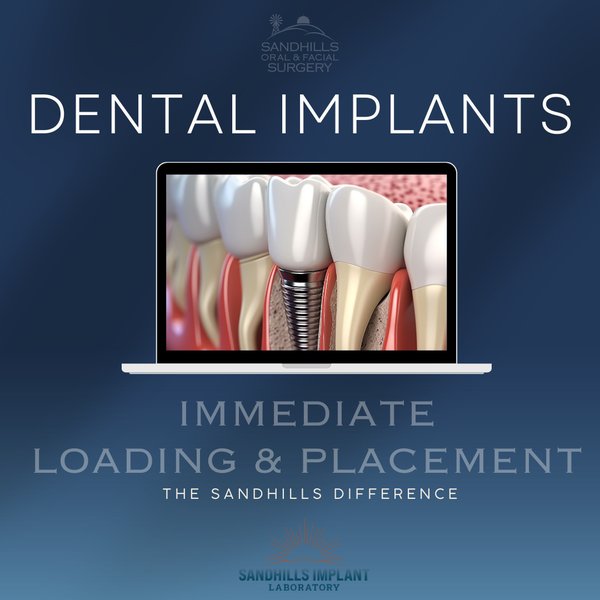
Illustration depicting the integration of dental implants into the jawbone.
Bone Quality and Quantity: The Foundation
The inherent characteristics of the patient's jawbone are critical. Denser bone, classified as Misch Types I and II (e.g., in the anterior mandible), generally offers superior primary stability compared to softer bone types (Misch Types III and IV, often found in the posterior maxilla). Adequate bone volume, typically greater than 5 mm in buccolingual width and 12 mm in height, is also essential for securely housing the implant and ensuring sufficient bone-implant contact. Without these prerequisites, the risk of early implant failure due to insufficient stability increases significantly.
Systemic and Local Host Factors
The patient's overall health and local oral conditions profoundly influence biological healing and osseointegration. Systemic conditions such as uncontrolled diabetes, which can impair healing, and heavy smoking, known to compromise blood supply and increase infection risk, can negatively impact the success of immediate loading. Similarly, active gum disease (periodontitis) or existing infections in the implant site are absolute contraindications. Meticulous oral hygiene is also paramount to prevent peri-implantitis and promote a healthy healing environment around the implant.
The Mechanical Mechanics of Integration
Beyond the biological landscape, mechanical factors dictate how the implant interacts with the bone under load, safeguarding the delicate process of osseointegration.
Implant Design and Surface Features
The design of the implant itself plays a pivotal role in achieving and maintaining mechanical stability. Features such as macro-geometry, thread design (e.g., aggressive threads for better initial grip), and surface characteristics (e.g., roughened surfaces to enhance bone apposition) are engineered to optimize load transfer and encourage direct bone-to-implant contact. These design elements are particularly crucial in cases where bone quality is less than ideal, helping to maximize primary stability and reduce micromotion.
Controlling Micromotion and Occlusal Loads
Excessive micromotion at the bone-implant interface (typically exceeding 150 µm) is a well-established cause of fibrous encapsulation rather than osseointegration. Therefore, controlling occlusal forces is a cornerstone of mechanical success in immediate loading. This often means designing provisional restorations for non-functional or lightly loaded occlusion. In multi-implant cases, rigid splinting of the prostheses helps to distribute occlusal loads across several implants, minimizing stress on any single implant and thereby reducing micromotion. Careful management of these forces is essential during the initial healing phase when the implant is most vulnerable.
Mindmap illustrating the interconnected factors critical for immediate loading implant success.
The Prosthetic Path to Durability
The prosthetic components and their meticulous planning and execution are equally critical, translating biological and mechanical stability into a functional and aesthetic outcome.
Optimal Prosthetic Retention and Design
From a prosthetic standpoint, screw-retained prostheses are generally favored over cement-retained options for immediate loading. This preference stems from the ease of retrieval for maintenance or addressing complications, and the avoidance of potential biological complications associated with residual cement. In cases involving multiple implants, rigid splinting of the provisional restoration is highly recommended. This strategy effectively distributes occlusal loads among all connected implants, preventing excessive stress on any single implant and minimizing micromotion.
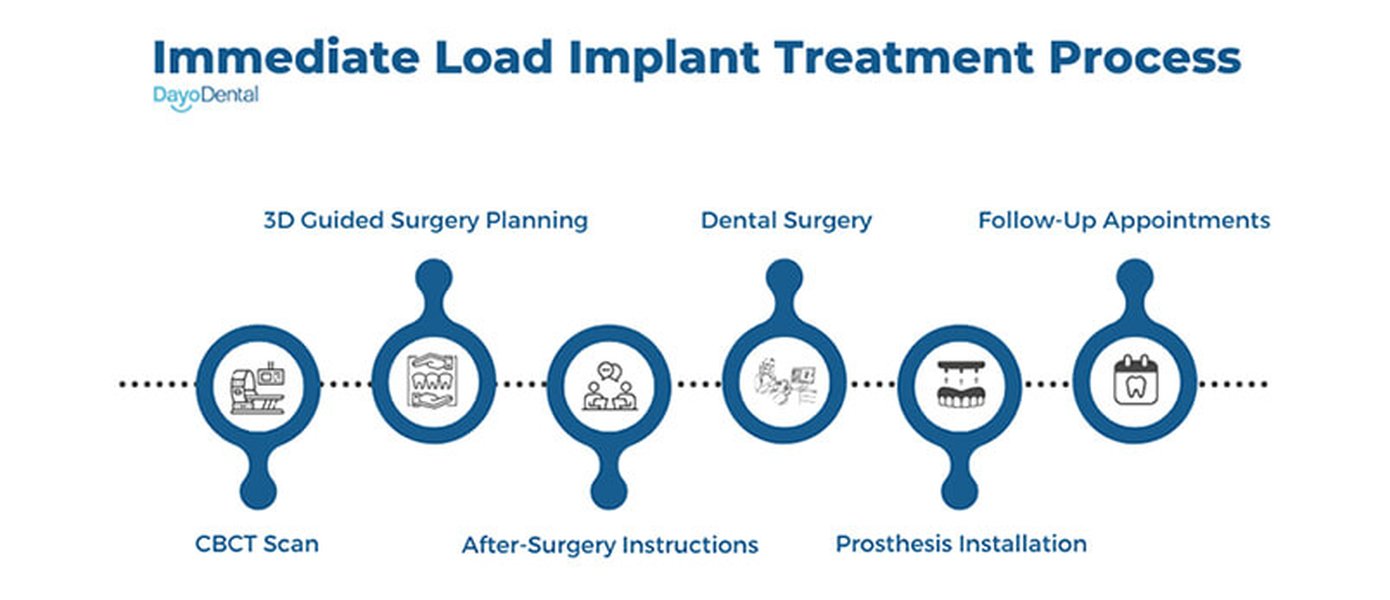
An illustrative diagram depicting the process of immediate load implant treatment.
Precise Occlusal Considerations
Careful occlusal planning is fundamental to prevent overloading the newly placed implants. The provisional restoration should be designed to minimize contact in centric and eccentric movements, especially during the critical initial healing phase. Patients must also adhere to strict dietary limitations, typically consuming only soft foods for 8 to 12 weeks, to avoid applying excessive biting forces that could compromise osseointegration.
The Role of Advanced Planning
Modern dental technology, particularly 3D planning and computer-guided surgery, significantly enhances the accuracy and predictability of immediate loading procedures. These tools allow for precise implant positioning, optimization of surgical sites, and pre-fabrication of provisional restorations, all of which contribute to a more predictable prosthetic outcome and reduced chair time.
The following table summarizes the key factors across biological, mechanical, and prosthetic domains, along with their ideal characteristics and implications for immediate loading success:
| Factor Category | Specific Factor | Ideal Characteristics | Implications for Success |
|---|---|---|---|
| Biological | Primary Stability | Insertion torque ≥ 35-45 Ncm; ISQ ≥ 65-70 | Essential for limiting micromotion and promoting osseointegration. |
| Bone Quality | Dense bone (Misch Types I-II) | Provides superior initial mechanical support. | |
| Bone Quantity | ≥ 5mm buccolingual width; ≥ 12mm height | Adequate bone volume for secure implant placement. | |
| Systemic Health | Controlled conditions, non-smoker | Optimizes healing potential and reduces infection risk. | |
| Local Conditions | Absence of infection/periodontitis, good oral hygiene | Crucial for healthy soft tissue and bone healing. | |
| Mechanical | Implant Design | Optimized macro-geometry, thread design, surface texture | Maximizes primary stability and bone apposition. |
| Micromotion Control | Maintain micromotion < 150 µm | Prevents fibrous encapsulation, promotes osseointegration. | |
| Occlusal Loading | Controlled, non-functional or light loading | Protects implant from excessive forces during healing. | |
| Prosthetic | Prosthesis Type | Screw-retained preferred | Easier retrieval, avoids cement-related complications. |
| Splinting (multiple implants) | Rigid splinting | Distributes occlusal forces, reduces stress on individual implants. | |
| Provisional Design | Minimal occlusal contact, aesthetic, soft tissue contours | Protects implant, maintains aesthetics and soft tissue. | |
| Dietary Restrictions | Soft food diet (8-12 weeks) | Minimizes mechanical stress during critical healing. | |
| Planning Accuracy | 3D planning, surgical guides | Ensures precise implant placement and prosthetic outcome. |
A Deeper Look into Critical Thresholds
The decision to proceed with immediate loading is not arbitrary; it relies on objective measurements and established thresholds. These numerical guidelines serve as vital indicators of whether the biological and mechanical conditions are favorable for this advanced treatment protocol.
Understanding Insertion Torque and ISQ Values
Insertion torque, typically measured in Newton-centimeters (Ncm), quantifies the rotational resistance encountered during implant placement. A value of 35-45 Ncm is widely accepted as the minimum threshold for successful immediate loading, indicating sufficient primary stability. The Implant Stability Quotient (ISQ), derived from Resonance Frequency Analysis (RFA), provides a non-invasive, objective measure of implant stability. An ISQ value of 65-70 or higher is generally considered adequate for immediate loading protocols. These metrics, alongside clinical judgment, guide the clinician in assessing the mechanical integrity of the implant-bone interface.
The Significance of Micromotion
Micromotion at the bone-implant interface must be rigorously controlled. Research indicates that if micromotion exceeds approximately 150 µm, the body's healing response tends towards fibrous tissue encapsulation rather than direct bone formation (osseointegration). This critical threshold underscores the importance of adequate primary stability and careful occlusal load management, especially during the initial weeks of healing.
Advanced Techniques and Patient Selection
The success of immediate loading is also heavily dependent on meticulous case selection and advanced surgical and prosthetic techniques. Not all patients are candidates for immediate loading, and a comprehensive evaluation is essential.
The Art of Patient Selection
Ideal candidates for immediate loading possess adequate bone quality and quantity, good overall health, excellent oral hygiene, and are non-smokers or have well-controlled systemic conditions. Patients with parafunctional habits like bruxism (teeth grinding) may require special considerations or might be better suited for delayed loading due to the increased risk of overloading. A thorough assessment of the patient's medical history, oral health, and lifestyle factors is crucial.
The Role of Guided Surgery
The video below provides valuable insights into guided surgery procedures for immediate loading, highlighting the use of surgical templates for precise implant placement. This technology significantly enhances predictability and reduces potential complications, particularly in complex cases or in the aesthetic zone.
This video demonstrates a guided surgery procedure for anterior partial bridges with immediate loading, emphasizing precision.
Comparative Analysis of Key Success Factors
To further illustrate the relative importance of these factors, here are some comparative insights:
This radar chart illustrates the relative impact of various factors across biological, mechanical, and prosthetic domains on the overall success of immediate loading implants. Each spoke represents a crucial element, with a higher score indicating a greater influence within that domain.
This bar chart compares different aspects related to immediate loading implants, illustrating their potential impact on success, patient experience, and risks. Scores are based on an opinionated analysis of their overall influence in a clinical setting.
Frequently Asked Questions
What is primary stability in immediate loading implants?
What are the recommended values for insertion torque and ISQ in immediate loading?
Why are screw-retained prostheses preferred for immediate loading?
What dietary restrictions are necessary after immediate implant loading?
Can everyone get immediate loading dental implants?
Conclusion
The success of immediate loading dental implants is a sophisticated interplay of meticulously managed biological, mechanical, and prosthetic factors. From ensuring robust primary stability and favorable bone conditions to employing advanced implant designs, controlling occlusal forces, and utilizing precise prosthetic techniques, each element contributes significantly to the overall outcome. While offering substantial advantages in treatment efficiency and patient satisfaction, immediate loading demands careful case selection, comprehensive planning, and an experienced clinical team to navigate its complexities and achieve predictable, long-term success. The integration of cutting-edge diagnostic tools and surgical techniques further enhances the predictability and safety of this transformative dental procedure.
Recommended Further Reading
- Advanced considerations for immediate implant placement in aesthetic zones
- Long-term survival rates of immediate vs delayed dental implants
- Impact of systemic health on dental implant osseointegration
- Innovations in dental implant surface technology and design