
Imperial Quaternions of the Holy Roman Empire (HRE)
An In-Depth Exploration of the HRE's Quintessential Structure
Key Takeaways
- The Imperial Quaternions were fundamental in representing the hierarchical structure of the Holy Roman Empire.
- Each quaternion categorized specific ranks and estates, ensuring organized governance and representation.
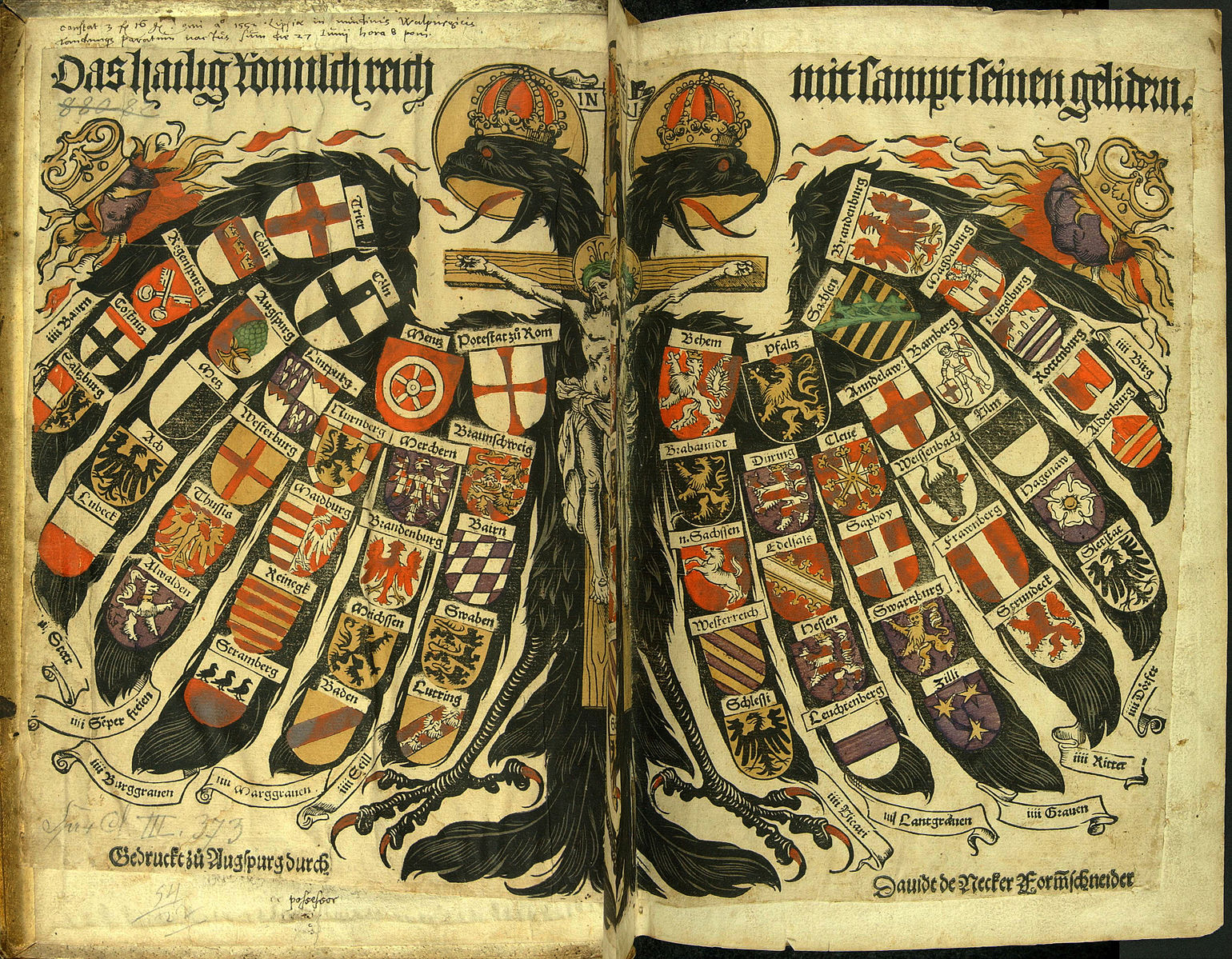
- The Quaternion Eagle served as a symbolic emblem, encapsulating the empire's multifaceted composition.
Introduction to Imperial Quaternions
The Holy Roman Empire (HRE), a complex and multifaceted political entity in Central Europe, utilized a system known as the Imperial Quaternions to symbolize and organize its diverse estates. Introduced around the early 16th century, the Imperial Quaternions were visual and administrative groupings that played a crucial role in representing the hierarchical and territorial composition of the empire. This comprehensive examination delves into the structure, categories, and significance of the Imperial Quaternions within the HRE.
Historical Context of the Holy Roman Empire
The Holy Roman Empire, existing from the early Middle Ages until its dissolution in 1806, was a conglomerate of various territories in Central Europe. Its decentralized nature meant that power was distributed among numerous princes, dukes, counts, and other nobles, each governing their respective regions. The Imperial Quaternions emerged as a method to symbolize and manage this intricate web of authority, providing a structured representation of the empire's vast and varied estates.
Structure of Imperial Quaternions
The term "quaternion" refers to a grouping of four elements. In the context of the HRE, Imperial Quaternions were symbolic groupings of four estates or ranks within the empire. These quaternions were depicted on heraldic symbols, most notably the Quaternion Eagle, which combined these groups with the Imperial Eagle to convey the empire's organizational structure.
Primary Categories of Imperial Quaternions
1. Electors (Kurfürsten)
Electors were the highest-ranking members of the empire, possessing the exclusive right to elect the Holy Roman Emperor. They were divided into two primary quaternions:
- Spiritual Electors (Geistliche Kurfürsten): Consisting of the Archbishops of Mainz, Trier, and Cologne.
- Secular Electors (Weltliche Kurfürsten): Including the King of Bohemia, the Count Palatine of the Rhine, the Duke of Saxony, and the Margrave of Brandenburg.
2. Dukes (Herzöge)
Dukes held significant territorial authority and were categorized into several quaternions:
- Pillars of the Empire (Reichspfeiler): Comprising the Dukes of Austria, Styria, Carinthia, and Carniola.
- Vicar Dukes (Reichsvikare): Including the Dukes of Bavaria, Saxony, Brunswick-Lüneburg, and the Margrave of Brandenburg-Ansbach.
3. Margraves (Markgrafen)
The margraves were responsible for governing border territories (marks) and were grouped into a quaternion:
- Margraves of Meissen
- Margraves of Brandenburg
- Margraves of Baden
- Margraves of Ansbach
4. Landgraves (Landgrafen)
Landgraves managed large provinces and were organized into the following quaternion:
- Landgraves of Thuringia
- Landgraves of Hesse
- Landgraves of Leuchtenberg
- Landgraves of Lower Lusatia
5. Burggraves (Burggrafen)
Burggraves oversaw fortified towns and castles. Their quaternion typically included:
- Burggraves of Nuremberg
- Burggraves of Magdeburg
- Burggraves of Regensburg
- Burggraves of Friedberg
6. Counts (Grafen)
Counts governed counties and were divided into various quaternions based on their regions:
- Counts Palatine (Pfalzgrafen): Including the Counts Palatine of the Rhine, Tübingen, Veldenz, and Zweibrücken.
- Other Counts: Such as Counts of Nassau, Henneberg, Hohenlohe, and Schwarzburg.
7. Lords (Herren)
Lords controlled smaller noble territories and were organized into the following quaternion:
- Lords of Mecklenburg
- Lords of Pomerania
- Lords of Holstein
- Lords of Oldenburg
8. Imperial Cities (Reichsstädte)
Imperial cities were self-ruling municipalities within the empire, grouped as follows:
- Augsburg
- Nuremberg
- Lübeck
- Cologne
9. Imperial Knights (Reichsritter)
Imperial knights were minor nobility without significant territorial holdings. Their grouping could vary, but typically consisted of prominent knightly families.
10. Ecclesiastical Princes (Geistliche Fürsten)
These were prince-bishops who wielded both religious and secular power, including:
- Prince-Bishops of Würzburg
- Prince-Bishops of Bamberg
- Prince-Bishops of Speyer
- Prince-Bishops of Strasbourg
11. Abbots (Äbte)
Abbots managed ecclesiastical territories and were organized into quaternions such as:
- Abbots of Fulda
- Abbots of Kempten
- Abbots of Corvey
- Abbots of Weingarten
12. Other Estates
This category encompassed various minor estates, including:
-
Teutonic Order
-
Livonian Order
-
Other minor noble families and territories
Additional Groupings and Variations
While the above categories represent the primary imperial quaternions, variations existed based on regional significance and temporal changes. Some representations included additional groupings such as Vicars and Castles, adapting to the evolving political landscape of the HRE. By the mid-16th century, the number of entities could expand up to 45, reflecting the empire's dynamic nature.
The Quaternion Eagle: A Symbolic Emblem
The Quaternion Eagle served as the heraldic representation of the Holy Roman Empire's Imperial Quaternions. This emblem incorporated the Imperial Eagle, flanked by various groupings of four (quaternions) to symbolize the structured hierarchy of the empire. Each quaternion within the eagle represented a specific category of the empire's estates, visually conveying the complexity and organized governance of the HRE.
Imperial Circles vs. Imperial Quaternions
It's essential to distinguish between Imperial Circles (Reichskreise) and Imperial Quaternions, as both played roles in the administration of the HRE but served different purposes.
Imperial Circles
Established during the early modern period, Imperial Circles were administrative divisions created for military, fiscal, and judicial organization. They aimed to streamline governance, taxation, and defense across the sprawling territories of the HRE.
Imperial Quaternions
In contrast, Imperial Quaternions were symbolic and heraldic groupings that represented the empire's hierarchical structure. While Imperial Circles were practical administrative units, Quaternions served as visual representations of the empire's complex social and political fabric.
Detailed Table of Imperial Quaternions
| Category | Members |
|---|---|
| Spiritual Electors | Archbishop of Mainz, Archbishop of Trier, Archbishop of Cologne |
| Secular Electors | King of Bohemia, Count Palatine of the Rhine, Duke of Saxony, Margrave of Brandenburg |
| Pillars of the Empire | Duke of Austria, Duke of Styria, Duke of Carinthia, Duke of Carniola |
| Vicar Dukes | Duke of Bavaria, Duke of Saxony, Duke of Brunswick-Lüneburg, Margrave of Brandenburg-Ansbach |
| Margraves | Margrave of Meissen, Margrave of Brandenburg, Margrave of Baden, Margrave of Ansbach |
| Landgraves | Landgrave of Thuringia, Landgrave of Hesse, Landgrave of Leuchtenberg, Landgrave of Lower Lusatia |
| Burggraves | Burggrave of Nuremberg, Burggrave of Magdeburg, Burggrave of Regensburg, Burggrave of Friedberg |
| Counts Palatine | Count Palatine of the Rhine, Count Palatine of Tübingen, Count Palatine of Veldenz, Count Palatine of Zweibrücken |
| Other Counts | Count of Nassau, Count of Henneberg, Count of Hohenlohe, Count of Schwarzburg |
| Lords | Lords of Mecklenburg, Lords of Pomerania, Lords of Holstein, Lords of Oldenburg |
| Imperial Cities | Augsburg, Nuremberg, Lübeck, Cologne |
| Imperial Knights | Various knightly families without significant territorial holdings |
| Ecclesiastical Princes | Prince-Bishop of Würzburg, Prince-Bishop of Bamberg, Prince-Bishop of Speyer, Prince-Bishop of Strasbourg |
| Abbots | Abbot of Fulda, Abbot of Kempten, Abbot of Corvey, Abbot of Weingarten |
| Other Estates | Teutonic Order, Livonian Order, Various minor noble families and territories |
Significance of Imperial Quaternions
The Imperial Quaternions were more than mere symbolic representations; they played a pivotal role in the functioning and perception of the Holy Roman Empire. By categorizing estates into quaternions, the empire could visually and administratively manage its vast and varied components. This structure facilitated communication, governance, and the assertion of imperial authority across different regions and ranks.
Administrative Efficiency
Grouping estates into quaternions allowed for a streamlined approach to governance. It simplified the complex web of allegiances and privileges, making it easier to implement imperial policies and coordinate military and fiscal responsibilities.
Heraldic Representation
The Quaternion Eagle, as a heraldic emblem, served to reinforce imperial identity and unity. By displaying the various quaternions within the eagle, the emblem underscored the collective strength and organized structure of the empire, fostering a sense of shared purpose among its diverse members.
Political Legitimacy
The delineation of quaternions played a role in legitimizing the emperor's authority. By recognizing and symbolizing the established ranks and estates, the imperial system affirmed the emperor's position as the unifying figure at the apex of the empire's hierarchical structure.
Evolution and Variations of Quaternions
Over the centuries, the structure and composition of Imperial Quaternions evolved in response to political shifts, territorial changes, and the dynamic nature of the HRE. While the foundational categories remained relatively stable, the specific members within each quaternion could change, reflecting the rise and fall of noble families, the acquisition of new territories, or shifts in political alliances.
Mid-16th Century Expansions
By the mid-16th century, some representations of the Imperial Quaternions expanded to include up to 45 entities. This expansion was a testament to the empire's resilience and adaptability, accommodating the increasing complexity of its constituent states and the need for more precise administrative categorization.
Regional Adaptations
Different regions within the HRE might have had slight variations in their quaternion structures to better manage local governance. These adaptations ensured that the imperial system remained flexible, capable of addressing regional specificities while maintaining overall cohesion.
Challenges and Limitations
Despite their organizational benefits, the Imperial Quaternions were not without challenges. The decentralized nature of the HRE meant that local autonomy often superseded imperial directives, leading to potential conflicts and inefficiencies. Additionally, the symbolic nature of quaternions sometimes obscured the practical complexities of imperial governance.
Decentralized Authority
The HRE's emphasis on local governance and noble autonomy meant that imperial decrees were not always uniformly enforced. The power dynamics between different estates could lead to friction, undermining the effectiveness of the quaternions as tools for centralized control.
Symbolism vs. Practicality
While the Quaternion Eagle and other heraldic symbols provided a clear visual representation of the empire's structure, they did not always translate into practical administrative efficiency. The symbolic alignment of estates into quaternions did not necessarily reflect the on-the-ground realities of governance, leading to potential mismatches between representation and functionality.
Conclusion
The Imperial Quaternions of the Holy Roman Empire were a testament to the empire's intricate and layered structure. By organizing its diverse estates into symbolic groupings of four, the HRE was able to manage its expansive and varied territories more effectively. The Quaternion Eagle, as a heraldic emblem, encapsulated this complexity, serving both as a representation of imperial authority and a tool for governance. Despite challenges related to decentralized authority and the balance between symbolism and practicality, the Imperial Quaternions played a crucial role in shaping the administrative and visual landscape of the Holy Roman Empire.
References
Last updated February 11, 2025