
The Symphony of Motion: Why Equations and Vectors are Physics' Unsung Heroes
Exploring the profound impact of mathematical descriptions and directional quantities in understanding the physical world.

Key Insights into the Significance of Equations of Motion and Vectors
- Comprehensive System Description: Equations of motion provide the mathematical framework to describe how physical systems evolve over time, detailing changes in position, velocity, and acceleration under various influences.
- Coordinate-Independent Analysis: Vectors offer a concise and powerful way to represent physical quantities that possess both magnitude and direction, allowing for a coordinate-independent description of motion across multiple dimensions.
- Predictive Power and Problem-Solving: The synergy between equations of motion and vector analysis enables accurate predictions of future states, facilitates complex problem-solving in engineering and astrophysics, and underpins the design of practical solutions for real-world challenges.
In the vast and intricate realm of physics and mechanics, understanding how objects move and interact is paramount. This comprehension is fundamentally rooted in two indispensable mathematical concepts: equations of motion and vectors. Far from being mere abstract tools, these elements form the bedrock upon which our understanding of the physical universe is built, from the simplest projectile trajectory to the most complex celestial mechanics. Their importance stems from their ability to provide a precise, unified, and predictive framework for describing the behavior of physical systems.
Equations of motion act as the narratives of physics, chronicling how dynamic variables such as position, velocity, and acceleration transform over time. These mathematical formulas, often taking the form of differential equations, allow physicists and engineers to model and predict the path and state of an object under specific conditions. Whether it's the motion of a falling apple or the intricate dance of planets in a solar system, these equations provide the quantitative language to articulate these phenomena. The celebrated Newton's second law, \(F = ma\), stands as a prime example, elegantly connecting force, mass, and acceleration, forming a cornerstone of classical mechanics.
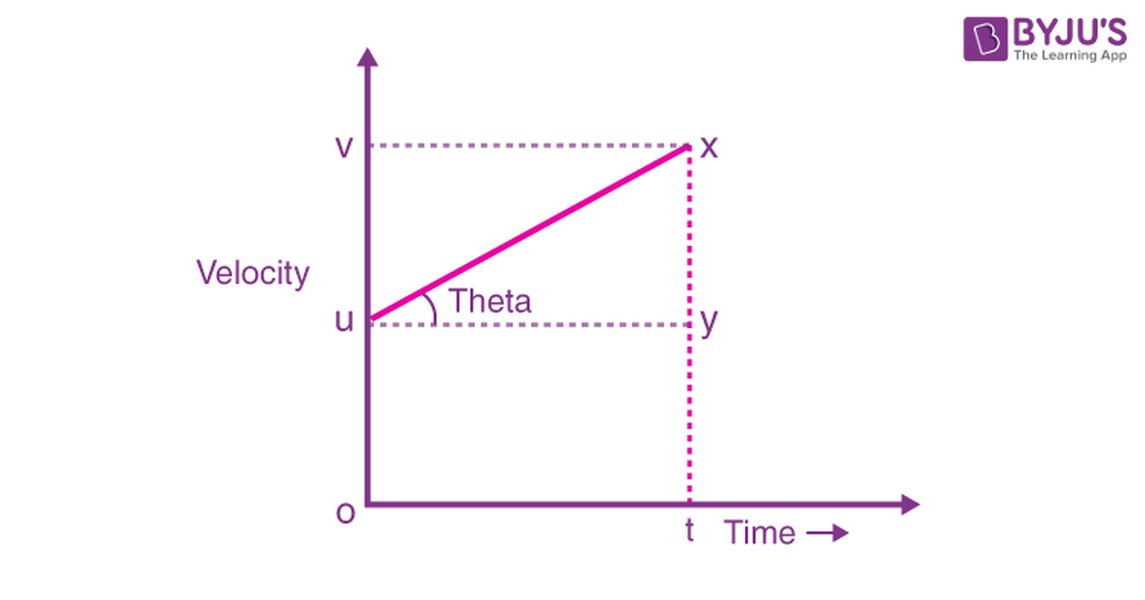
An illustration depicting the interrelationship between various parameters in equations of motion.
Complementing these equations are vectors, mathematical entities that embody both magnitude and direction. This dual nature is crucial for representing physical quantities that cannot be fully described by a single numerical value. Displacement, velocity, acceleration, and force are all vector quantities, requiring both their size and their orientation in space to be fully understood. Geometrically, vectors are often visualized as arrows, where the length signifies magnitude and the arrowhead indicates direction. The power of vectors lies in their ability to simplify the representation of physical laws, making them independent of any specific coordinate system and enabling a more profound understanding of the inherent nature of physical phenomena.
Unraveling the Temporal Evolution of Physical Phenomena
The core utility of equations of motion lies in their capacity to describe how a physical system changes over time. They are the mathematical statements that govern the evolution of a system's state, providing a quantitative means to track its journey through space and time. These equations are not limited to simple, linear movements but extend to complex, multi-dimensional scenarios, wave propagation, and even the esoteric realms of relativity and quantum mechanics.
Kinematic Equations: Foundations of Motion Prediction
In classical mechanics, particularly for scenarios involving constant acceleration, a set of fundamental equations, often referred to as the 'suvat' equations, are indispensable. These equations elegantly link displacement (\(s\)), initial velocity (\(u\)), final velocity (\(v\)), acceleration (\(a\)), and time (\(t\)). Their simplicity and direct applicability make them crucial for solving a wide array of problems, from predicting the landing spot of a projectile to determining the speed of a vehicle after a certain duration.
- \(v = u + at\): This equation relates final velocity to initial velocity, acceleration, and time. It's fundamental for understanding how velocity changes uniformly.
- \(s = ut + \frac{1}{2}at^2\): This equation describes displacement based on initial velocity, acceleration, and time, providing insight into the distance covered during accelerated motion.
- \(v^2 = u^2 + 2as\): This equation connects final velocity, initial velocity, acceleration, and displacement, allowing calculations without direct knowledge of time.
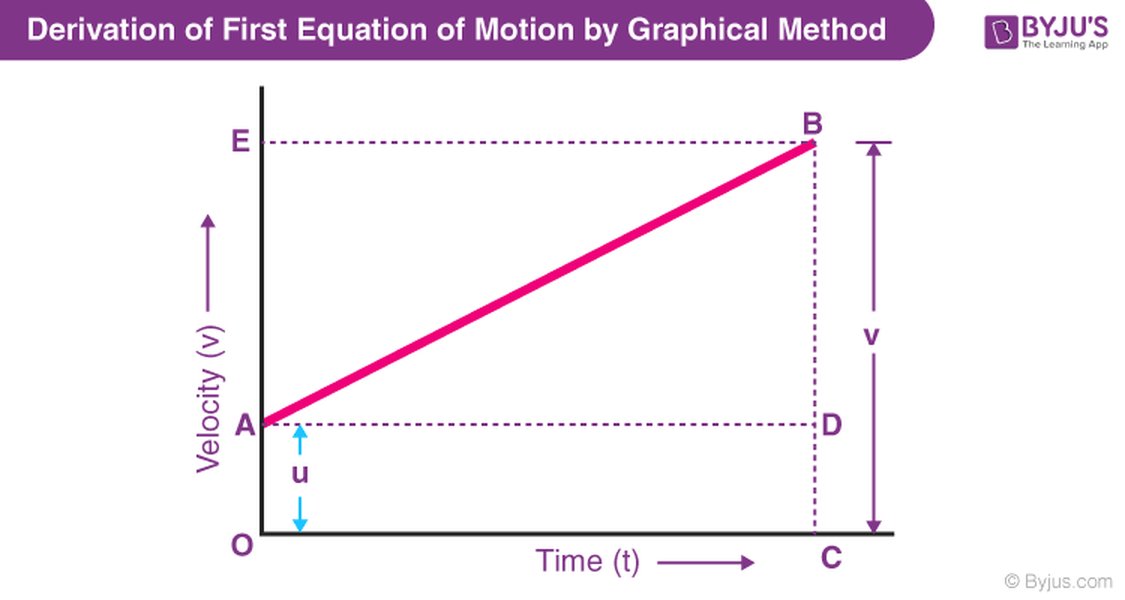
Graphical representations aiding the derivation of equations of motion.
These equations are not merely theoretical constructs; they are practical tools that enable engineers to design safer vehicles, astrophysicists to predict orbital paths, and everyday technologies like GPS navigation to function accurately. Without them, understanding and predicting motion would involve computationally intensive integrations of differential equations, a process that would significantly hinder technological advancement and scientific discovery.
The following table summarizes the key kinematic equations and their applications:
| Equation | Description | Primary Use Case |
|---|---|---|
| \(v = u + at\) | Relates final velocity to initial velocity, acceleration, and time. | Calculating final velocity or time when acceleration is constant. |
| \(s = ut + \frac{1}{2}at^2\) | Describes displacement based on initial velocity, acceleration, and time. | Determining displacement or time for uniformly accelerated motion. |
| \(v^2 = u^2 + 2as\) | Connects final velocity, initial velocity, acceleration, and displacement. | Finding final velocity or displacement when time is not a factor. |
| \(s = \frac{(u+v)}{2}t\) | Relates displacement to average velocity and time. | Useful when initial and final velocities are known and acceleration is constant. |
The Indispensable Role of Directional Quantities in Physics
While equations of motion provide the framework for temporal evolution, vectors provide the necessary directional context for a complete description of physical reality. Many physical quantities, such as force, velocity, and displacement, are inherently directional and cannot be fully understood without considering their orientation in space. Vectors bridge this gap, offering a powerful mathematical construct for handling such quantities.
Magnitude and Direction: The Dual Nature of Vectors
The defining characteristic of a vector is its possession of both magnitude (size) and direction. This contrasts with scalars, which only have magnitude (e.g., temperature, mass, speed). The distinction is crucial; a speed of 60 mph is different from a velocity of 60 mph north, as the latter specifies direction, making it a vector quantity.
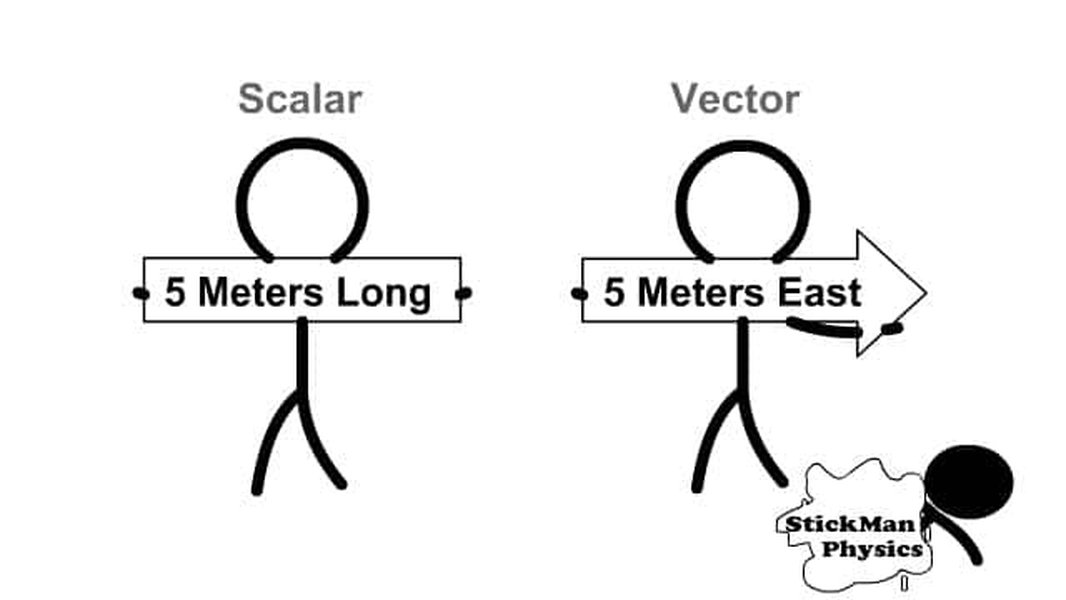
A visual representation distinguishing scalar quantities from vector quantities.
Vector algebra provides a set of rules for manipulating these directional quantities. Operations like vector addition, subtraction, and resolution into components are routinely employed to analyze complex physical situations. For instance, when multiple forces act on an object, vector addition allows physicists to determine the net resultant force, which dictates the object's acceleration according to Newton's second law.
Coordinate Independence and Problem Simplification
One of the most significant advantages of using vectors is their ability to provide a coordinate-independent description of physical laws. This means that the laws of physics, when expressed in vector form, remain valid regardless of the chosen coordinate system (e.g., Cartesian, cylindrical, spherical). This inherent universality reflects the fundamental nature of physical phenomena and significantly simplifies problem-solving by avoiding the need for constant conversion between different reference frames. The Feynman Lectures on Physics famously emphasize this point, highlighting how vectors reduce mathematical tedium and offer a more elegant expression of physical laws.
How These Concepts Intertwine for a Complete Physical Description
The true power in physics and mechanics emerges from the synergy between equations of motion and vectors. They are not isolated tools but rather complementary components of a comprehensive framework. Equations of motion often take on a vectorial form in multi-dimensional contexts, allowing for a coherent and consistent description of physical phenomena.
For instance, Newton's second law, \(F = ma\), is inherently a vector equation. The force \(F\) and acceleration \(a\) are both vector quantities, meaning their direction must be considered alongside their magnitude. When applied in a multi-dimensional setting, this equation breaks down into component equations along each axis (e.g., \(F_x = ma_x\), \(F_y = ma_y\)), effectively blending the principles of vector decomposition with the dynamic relationships expressed by the equations of motion.
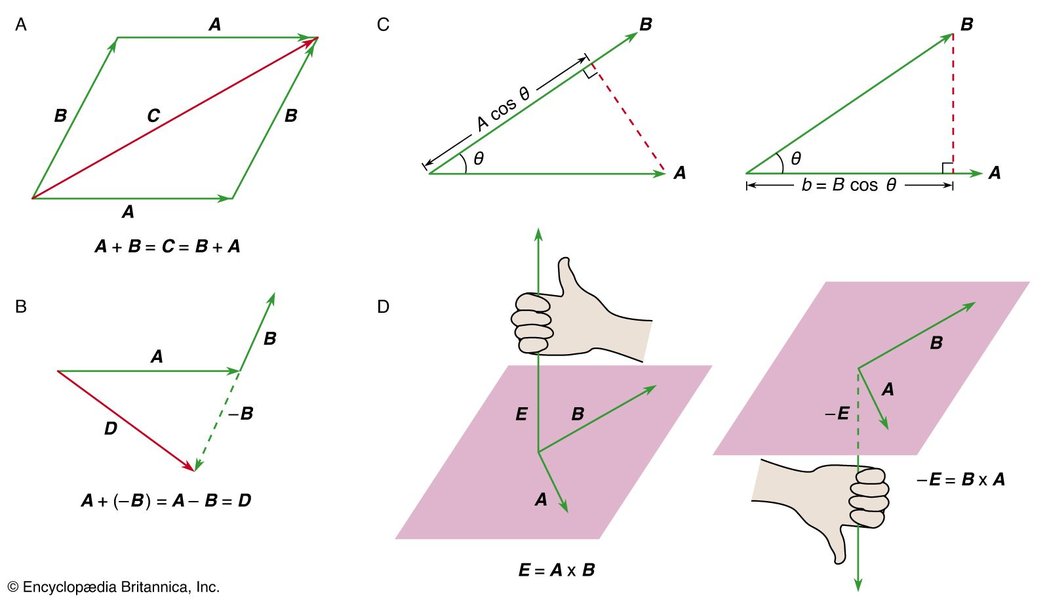
An illustration showing vector addition and resolution into components, crucial for applying equations of motion in multi-dimensional spaces.
This combined approach is vital for analyzing complex systems like the trajectory of a spacecraft, the stresses within a bridge, or the flow of fluids. Vectors allow for the decomposition of complex motions and forces into manageable components, while equations of motion then govern how these components evolve over time. This integrated methodology simplifies problem-solving significantly, transforming seemingly intractable problems into solvable challenges.
This mindmap illustrates the interconnected importance of equations of motion and vectors in physics and mechanics, highlighting their individual contributions and synergistic impact.
From Engineering Marvels to Cosmic Discoveries
The practical implications of mastering equations of motion and vectors are vast and far-reaching. They are not confined to academic physics problems but are critical in numerous real-world applications across various disciplines:
- Engineering: In civil engineering, understanding forces and motion through vector analysis and equations of motion is crucial for designing stable bridges and buildings. In aerospace engineering, these tools are essential for spacecraft design, trajectory planning, and propulsion system optimization.
- Astrophysics: The orbital mechanics of planets, stars, and galaxies are entirely governed by vectorial forms of equations of motion, particularly Newton's law of universal gravitation.
- Robotics: Designing robots that can move, manipulate objects, and navigate environments requires a deep understanding of kinematics and dynamics, which are mathematically expressed through equations of motion and vectors.
- Sports Science: Analyzing the motion of athletes, projectiles (like a thrown ball), or equipment (like a golf club) relies heavily on these concepts to optimize performance and prevent injuries.
- Everyday Technology: GPS systems, car safety features (like airbags and anti-lock brakes), and even the physics engine in video games all utilize these fundamental principles.
The video below provides an excellent overview of the fundamental equations used in mechanics, offering further context on their derivation and application:
This video delves into the derivation of five fundamental mechanics formulas, providing a deeper understanding of their origins and significance. It complements our discussion on how these equations, often expressed vectorially, form the bedrock of mechanical analysis.
Frequently Asked Questions (FAQ)
What is the main difference between scalars and vectors?
Why are equations of motion important for prediction?
How do vectors simplify complex physics problems?
Do equations of motion and vectors apply beyond classical mechanics?
Conclusion
In conclusion, the equations of motion and vectors are not just mathematical constructs; they are the fundamental language and toolkit of physics and mechanics. Equations of motion provide the dynamic narrative, describing how systems evolve in time, while vectors offer the essential directional context, allowing for a comprehensive and coordinate-independent description of physical quantities. Their combined power enables precise prediction, efficient problem-solving, and a deeper understanding of the physical world, driving innovation across countless scientific and engineering disciplines. From the minutiae of subatomic particles to the grandeur of cosmic phenomena, the principles embodied by these concepts remain indispensable for unraveling the mysteries of the universe.
Recommended Further Exploration
- How to derive kinematic equations of motion?
- Applications of vector calculus in fluid dynamics?
- The role of vectors in electromagnetic theory?
- Advanced equations of motion in general relativity?