
Unlock Your Juggling Potential: The Path to Mastery!
Transform your coordination and control with a dynamic, progressive juggling training regimen.
Essential Insights for Juggling Mastery
- Consistent, Focused Practice: Regular, short sessions (20-60 minutes daily) are more effective than infrequent, long ones. Prioritize quality throws and precise catches over speed.
- Master the Fundamentals: The 3-ball cascade is your core. Build proficiency with one and two balls before integrating the third. Focus on relaxed posture, consistent throw height, and a steady rhythm.
- Progressive Skill Development: Begin with basic techniques, then gradually introduce variations, increase object count, and incorporate drills that challenge accuracy, tactile feedback, and weaker hand proficiency.
Improving your juggling skills transcends simple repetition; it demands a structured, intelligent approach that nurtures accuracy, control, consistency, and coordination. A well-designed training program will systematically build these attributes, transforming sporadic attempts into fluid, masterful sequences. This comprehensive guide synthesizes expert advice and proven methodologies to outline an effective training regimen, adaptable whether you're aiming for recreational enjoyment, athletic enhancement, or performance artistry.
The Core Pillars of Juggling Improvement
Success in juggling is built upon several foundational principles that must be integrated into your practice:
Relaxation and Proper Posture
Tension is the enemy of smooth juggling. Keep your shoulders relaxed and your body weight balanced. Excessive arm and elbow movement indicate inefficiency. A relaxed posture enables fluid movements and reduces fatigue, allowing for longer, more productive practice sessions. Your stance should be firm yet comfortable, providing a stable base for precise throws and catches.
Maintaining a consistent throw height is crucial. Aim for throws that peak just above eye level, allowing adequate time to prepare for the next throw. This consistency builds muscle memory and rhythm, which are vital for complex patterns.
Accuracy and Consistency in Throws
Every throw should be deliberate and precise, landing in the same predictable "box" or target area for your hands. Drills like "locking your catch points" — where you focus on catching the ball at a specific, consistent location — help engrain this accuracy. Practicing single-hand throws and catches repeatedly before combining them also sharpens precision.
Consider experimenting with slight head tilts or looking away briefly during practice. This "disruption of visual feedback" enhances tactile sensitivity and improves your ability to judge throws and catches by feel, rather than relying solely on sight.
Developing Ball Control and Tactile Feedback
Beyond simply keeping balls in the air, true control involves precise manipulation. For hand juggling, this translates to minimizing unnecessary ball movement and ensuring soft, controlled catches. For soccer juggling, this might involve alternating foot or thigh juggles, keeping the ball low and close. These drills cultivate a refined sense of touch and responsiveness, crucial for advanced maneuvers.
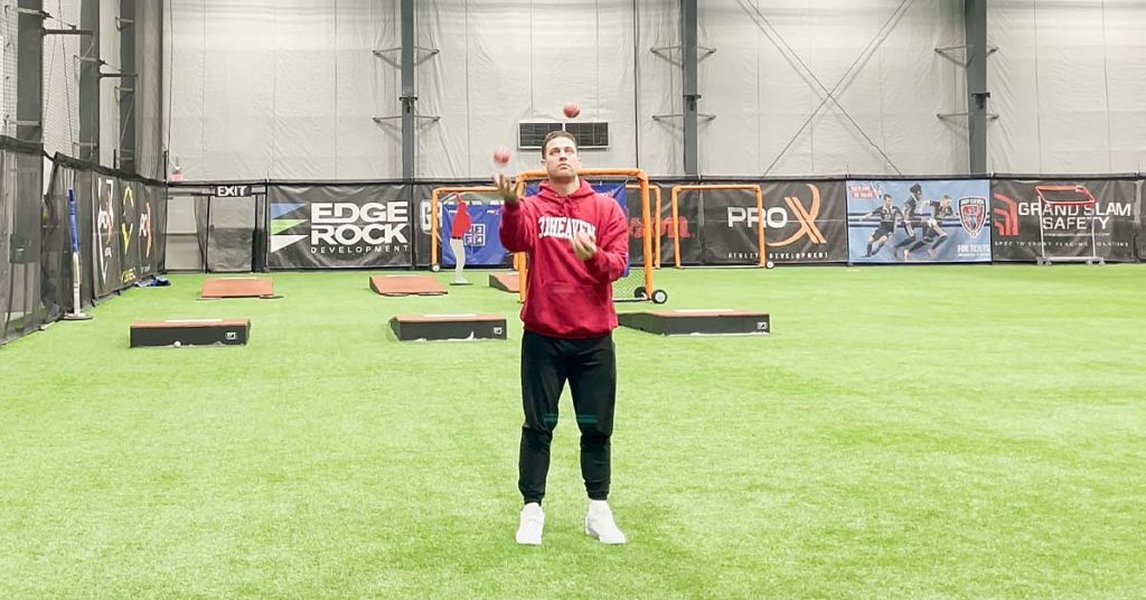
An athlete demonstrating skillful soccer juggling, highlighting advanced ball control.
Goal Setting and Progressive Difficulty
Break down your overall juggling aspirations into smaller, measurable goals. This could range from "juggle 3 balls for 30 seconds without dropping" to "master the shower pattern within a week." Tracking your progress, perhaps through a practice journal or a dedicated app, provides motivation and highlights areas for improvement.
Once you achieve stability with a basic pattern, gradually introduce complexity. This might involve increasing the number of objects, learning new tricks like back crosses or columns, or incorporating different props (rings, clubs). The key is incremental challenge, building upon mastered skills rather than attempting too much too soon.
A Comprehensive Juggling Training Program
An effective juggling training program should be structured, progressive, and adaptable to your current skill level and goals. Here’s a detailed framework:
Phase 1: Foundational Mastery (Beginner to Intermediate)
This phase focuses on establishing a rock-solid foundation for three-ball juggling. It's about building muscle memory, rhythm, and basic control.
Initial Assessment and Warm-up (5-10 minutes)
- Warm-up: Begin with light arm movements, shoulder rolls, and simple tosses with one or two balls. This prepares your muscles and improves blood flow.
- Self-Assessment: If you're new, attempt a basic 3-ball cascade. Identify what feels awkward or where balls are consistently dropping.
Mastering the 3-Ball Cascade (15-25 minutes)
- Single Ball Drill: Practice throwing a single ball in an arc from one hand to the other, aiming for a consistent height (just above head level). Focus on a smooth, relaxed throw and a soft catch. Repeat with each hand.
- Two-Ball Drill: Hold one ball in each hand. Throw one ball, and as it reaches its peak, throw the second ball. Catch the first, then the second. Focus on the timing and the "X" shape of the throws. Avoid patterns like the "2-ball shower" initially, as they don't directly build into the cascade.
- Three-Ball Cascade Introduction: Start with two balls in your dominant hand and one in your non-dominant hand. Throw the first ball from your dominant hand, then the second ball from your non-dominant hand as the first peaks. Catch the first ball with your non-dominant hand. Continue this rhythm. Focus on smooth, consistent throws rather than speed. Use beanbags or weighted tennis balls initially, as they won't bounce or roll away easily.
- Rhythm and Consistency: Use a metronome to help maintain a steady pace for your throws. Focus on the feeling of the balls leaving your hands and landing in the same spots.
Here's an embedded video tutorial that can significantly help beginners grasp the 3-ball cascade, offering clear visual guidance and troubleshooting tips:
This video provides an in-depth, beginner-friendly tutorial for learning the fundamental 3-ball cascade, offering visual guidance on throws, catches, and common mistakes to help establish a solid juggling foundation.
Phase 2: Progressive Skill Development (Intermediate)
Once you can consistently juggle three balls in a cascade for several minutes, it's time to refine your technique and introduce new challenges.
Refining Technique (10-15 minutes)
- Weaker Hand Practice: Actively begin throws with your non-dominant hand to improve its dexterity and ensure balanced skill development.
- Lock Catch Point Drills: Focus on catching balls at the same height and position every time. This drill helps develop precise muscle memory.
- Controlled Heights: Practice juggling with varying throw heights – lower to increase speed, higher to slow down and focus on accuracy.
Introducing Variations and New Tricks (15-20 minutes)
- Columns: Learn to juggle all three balls in a vertical line, with two balls moving up and down in the center and one on each side.
- Half-Shower: A pattern where balls are thrown high in an arc from one hand to the other, while the other hand performs short, quick throws.
- Tennis: A variation where one ball travels straight across while the others perform cascade throws.
- Back Crosses: Incorporate throws that cross behind your back.
- Disrupt Visual Feedback: Briefly close your eyes or look away while juggling to enhance your tactile sense and rely more on feel.
Stamina and Consistency (5-10 minutes)
- Timed Juggling: Set a timer and aim to juggle for a specific duration (e.g., 2-3 minutes) without dropping.
- Counted Juggles: Set targets for the number of consecutive catches you can make. Track your personal bests.
Phase 3: Advanced Training and Performance (Advanced)
For jugglers seeking higher mastery, this phase involves increasing complexity, object count, and integrating performance elements.
Increasing Object Count (Variable)
- Four-Ball Fountain: Learn to juggle two balls in each hand simultaneously.
- Five-Ball Cascade: This is a significant leap. Break it down into sections: master two balls in one hand, then practice the five-ball rhythm with fewer throws, gradually adding more.
Prop Exploration and Bounce Juggling (Variable)
- Experiment with rings and clubs. Each prop requires slightly different mechanics and offers new challenges.
- Explore bounce juggling, which involves throwing balls against a surface (like a floor) and catching them on the rebound.
Creating Routines and Performance (Variable)
- Idea Generation: Develop a concept or theme for a juggling sequence.
- Choreography: Plan the flow of tricks and transitions between them.
- Practice & Refine: Rehearse the routine repeatedly, adjusting and perfecting movements.
- Strong Finish: Plan a impactful ending, perhaps with your most impressive trick and a clean catch.
Sample Weekly Juggling Training Routine
This table provides a balanced weekly plan that integrates different aspects of juggling improvement, from fundamental practice to trick introduction and skill refinement.
| Day | Focus Area | Specific Exercises/Drills | Duration (approx.) |
|---|---|---|---|
| Monday | Basic Cascade & Accuracy | 3-ball cascade, head-tilt juggling, consistent peak throws | 20-30 minutes |
| Tuesday | Single-hand & Weak Hand Throws | Lock catch point drills, one-hand juggling, starting with non-dominant hand | 20-30 minutes |
| Wednesday | Ball Control & Rhythmic Drills | Alternating foot/thigh juggles (if applicable), slow deliberate cascade with metronome | 20-30 minutes |
| Thursday | Tactile Sensitivity & Recovery | Juggling with limited vision/eyes closed, light, relaxed juggling | 20-30 minutes |
| Friday | Trick Introduction & Transitions | Back crosses, columns, half-showers, practice transitions between patterns | 20-30 minutes |
| Saturday | Review & Challenge Day | Full cascade (timed), multi-ball attempts (if ready), chaining new tricks | 30-40 minutes |
| Sunday | Rest or Leisure Practice | Light, fun juggling without pressure, stretching | 15-20 minutes |
Visualizing Juggling Skill Development
The journey to juggling mastery involves enhancing various interconnected skills. This radar chart illustrates how different aspects of your juggling ability progress over time with dedicated practice across foundational, intermediate, and advanced stages. Each spoke represents a crucial skill, and the filled area indicates proficiency.
As you can see, a beginner typically starts with relatively lower proficiency across all skills, with a slightly stronger foundation in basic consistency and stamina due to initial practice. An intermediate juggler shows significant improvement across the board, having gained better accuracy, control, and a modest trick repertoire. An advanced juggler demonstrates high proficiency in all areas, with a broad trick repertoire and the ability to handle various props and maintain performance over extended periods. This chart emphasizes that improvement is holistic, requiring attention to all aspects of juggling.
Navigating Your Juggling Journey: A Mindmap for Success
This mindmap outlines the interconnected elements of a successful juggling training program, from fundamental techniques to advanced strategies and external resources. It serves as a visual guide to ensure a holistic approach to skill development.
Frequently Asked Questions About Juggling Improvement
How long does it take to become proficient at juggling?
What type of balls are best for beginners?
Should I practice every day?
How do I overcome plateaus in my juggling progress?
Is juggling good for my coordination?
Conclusion: The Art of Consistent Endeavor
Improving your juggling skills is a rewarding journey that combines physical dexterity with mental discipline. By adhering to a structured training program that emphasizes relaxation, consistent throws, progressive skill development, and deliberate practice, you can unlock remarkable progress. Remember to set clear, measurable goals, leverage available online resources and community support, and most importantly, enjoy the process. The path to juggling mastery is paved with consistent effort, patience, and the joy of continuous learning.
Recommended Further Exploration
- Explore advanced juggling patterns for performance routines.
- Discover the cognitive benefits of consistent juggling practice.
- Learn about appropriate juggling equipment for various skill levels.
- Strategies to overcome common plateaus in juggling skill development.