
Activating the Role of In-Between Spaces in Urban Social Interaction
Exploring design strategies and translation into Arabic for inclusive urban environments
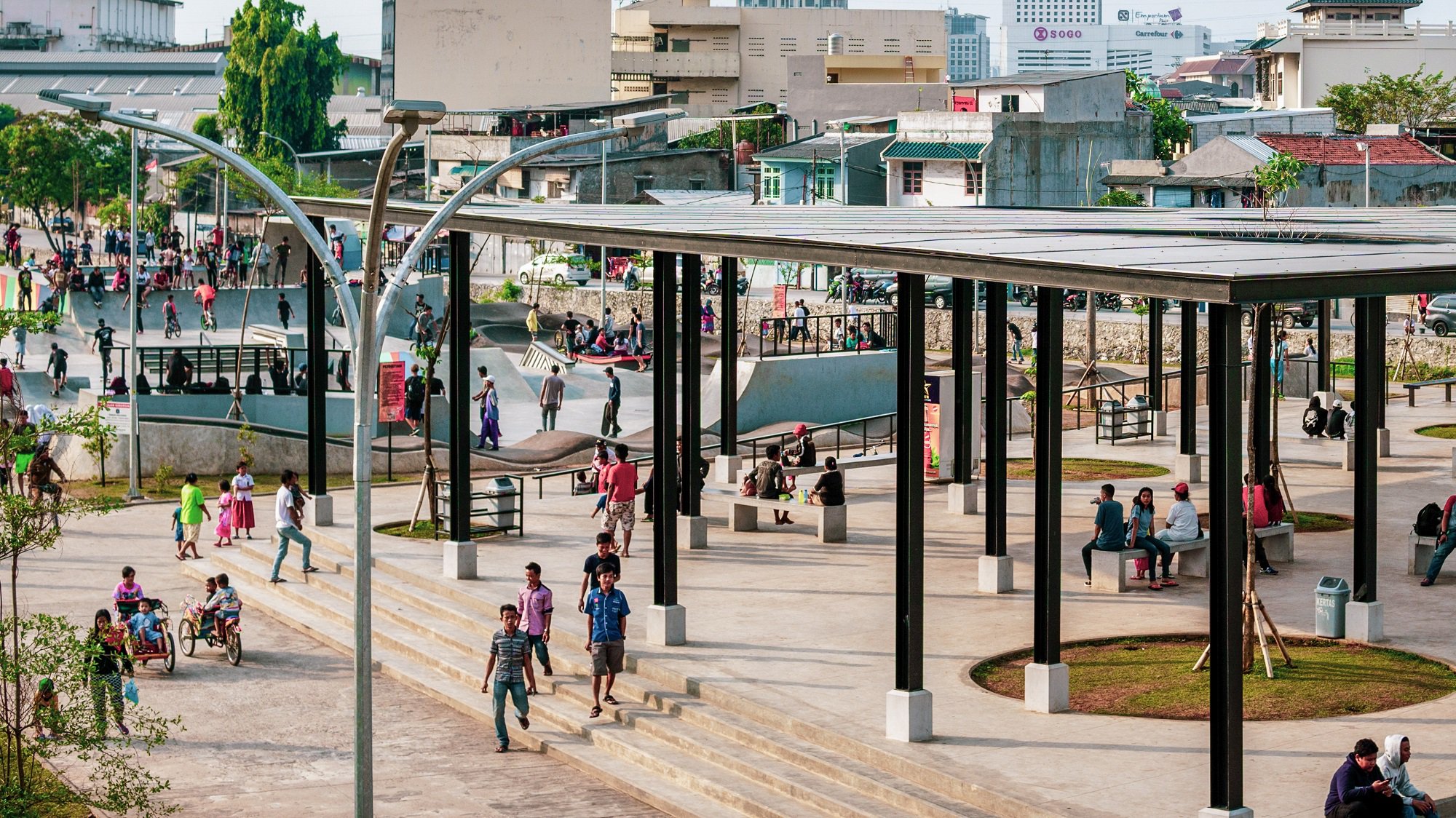
Key Highlights
- Designing Transitional Urban Spaces: In-between spaces enhance community interaction and connectivity.
- Social Dynamics and Place-Making: The spatial configuration of these areas actively influences social behavior.
- Arabic Translation and Global Relevance: Providing Arabic translations extends the reach and impact of urban design discourse.
Introduction to In-Between Spaces
Urban environments consist not only of distinct zones such as residential, commercial, or public spaces, but also a series of transitional areas known as in-between spaces. These spaces, located between buildings, streets, parks, and plazas, are dynamic settings that can significantly influence the way people interact socially. The power of these intermediaries lies in their ability to redefine the boundaries between the private and the public, providing an essential connective tissue that supports spontaneous social interactions and fosters a sense of community.
Understanding the Concept
In-between spaces are not merely physical gaps; they are realms of potential where urban design meets human behavior. Research in the field of urban design has shown that the thoughtful planning of such spaces encourages community engagement and supports a variety of social interactions ranging from casual conversations to organized communal activities. These transitional areas can be created by strategic architectural interventions that intentionally blur the lines separating private property from public land, thereby inviting citizens to use and personalize these areas in ways that reinforce urban inclusivity and social vibrancy.
Core Functions of In-Between Spaces
The functions of in-between spaces are multi-faceted. They act as:
- Social Interaction Catalysts: Serving as neutral grounds, these spaces facilitate face-to-face encounters and lay the foundation for community dialogue.
- Community Anchors: By providing accessible and inviting venues, in-between spaces become centers for communal activities including markets, pop-ups, and temporary cultural exhibitions.
- Spatial Extenders: They extend the limits of dwellings, offering additional outdoor space for recreation and informal gatherings.
- Inclusive Design Tools: When designed with both permeability and adaptability, these areas contribute to the creation of environments that are both inclusive and secure.
Design Imperatives and Urban Social Interaction
Impact on Social Cohesion
The relationship between urban design and social interaction is a subject of intense academic and professional interest. Well-planned in-between spaces can act as vital mechanisms for social cohesion by providing safe zones for residents to interact and collaborate. Studies have demonstrated that rather than being mere leftover or neglected spaces, these transitional areas have the power to stimulate social and cultural dynamics that might otherwise remain dormant.
Encouraging Casual Interactions
Urban planners have found that a degree of unpredictability in these spaces often leads to a variety of social exchanges. For instance, slightly confined or semi-enclosed spaces can promote a sense of safety that encourages people to stop, linger, and engage with one another. Such environments are particularly effective in neighborhoods where traditional public spheres may be lacking or underutilized.
Flexibility and User Adaptation
Another essential aspect is the inherent flexibility of in-between spaces. Instead of imposing a fixed spatial aesthetics—where each element of design is rigidly defined—urban designers advocate for adaptable elements. This flexibility allows users to engage with the space in multiple ways, which in turn can foster innovative forms of social engagement. The transformation of these spaces often occurs organically as the local community adapts and personalizes them based on their daily needs and cultural practices.
Urban Integration and Safety
Beyond facilitating casual interactions, the strategic design of in-between spaces also plays a pivotal role in urban integration. When these spaces are seamlessly connected within the urban grid, they can serve as safe passageways and community gathering spots, reducing the isolation that sometimes accompanies city living. In many cases, the conversion of neglected urban segments into vibrant in-between spaces has been linked to increased perceptions of safety and community spirit.
Translating the Urban Narrative into Arabic
Bridging Linguistic and Cultural Gaps
The importance of disseminating ideas about urban design and social interaction goes beyond language. By translating scholarly articles and research findings into Arabic, experts can ensure that insights about in-between spaces are accessible to a broader audience. Many architectural and urban planning discourses have remained restricted to English, potentially limiting their applicability in Arabic-speaking regions. Translating these discussions broadens the cultural exchange and supports local initiatives to create more vibrant public spaces.
Translation Tools and Resources
Several advanced translation tools have proven highly effective in converting complex texts about urban design into Arabic. Tools such as DeepL, Google Translate, QuillBot, and Online Document Translator preserve both the linguistic nuance and the structural integrity of the original text. These resources provide a starting point for those wishing to engage with urban design literature in Arabic, while also offering professional translation services for more refined outputs.
A Sample Arabic Translation
Below is a translated segment that encapsulates the core message of activating in-between spaces to foster social interaction in urban areas:
تفعيل دور المساحات بينية في خدمة التفاعل الاجتماعي في المدن
تعتبر المساحات بينية، مثل مواقع الأراضي غير المستخدمة أو المساحات بين المباني والشوارع، جزءًا مهمًا من بنية المدينة. هذه المساحات، على الرغم من أنها غالبًا ما يتم تجاهلها، تتيح الفرصة لتعزيز التفاعل الاجتماعي وتشجيع التفاعلات الجديدة بين الأفراد. يمكن أن تكون هذه المساحات بمثابة فترات توقف في الوظائف المحددة مسبقًا، مما يسمح للمستخدمين بتجربة وتشكيل المستقبل.
يجب علينا إعادة النظر في المساحات بينية كجزء من المدينة التي غالبًا ما نغفلها. هذه المساحات تحمل إمكانيات كبيرة لكل من المستخدمين، من خلال تشكيل هويتهم ومستقبلهم، والفضاء نفسه، من خلال إعطاء الشكل والمعنى للمدينة.
Integrating Conceptual Insights: A Practical Overview
Urban Transformation through In-Between Spaces
To fully appreciate the transformative potential of in-between spaces, it is essential to consider both theoretical frameworks and practical applications. Urban transformation strategies encompass both microscopic and macroscopic approaches. At a micro level, the design of a small urban alley or courtyard can facilitate micro-interactions, play, and community-driven activities. At a macro level, a network of well-connected in-between spaces can redefine cityscapes, turning underutilized areas into vibrant social hubs.
Table: Comparison of Urban Space Functions
| Aspect | Description | Impact on Social Interaction |
|---|---|---|
| Social Interaction Catalyst | Spaces designed for brief encounters and extended gatherings. | Encourages spontaneous meet-ups, discussion, and bonding. |
| Community Anchor | Areas designated for communal events and local activities. | Acts as a nucleus for neighborhood identity and social solidarity. |
| Spatial Extender | Supplementary spaces that extend the functional environment of buildings. | Enhances recreational options and increases public engagement. |
| Inclusive Design | Integrative layouts that accommodate a diverse range of users. | Promotes a sense of belonging and urban inclusiveness. |
Implementing Effective Urban Policies
For city planners, policymakers, and developers, integrating in-between spaces into urban strategies is not simply an aesthetic pursuit; it is a vital social intervention. As cities face challenges such as rapid urbanization, population density, and social fragmentation, creating inclusive, adaptable spaces can significantly mitigate these issues. The overarching goal should be to prioritize design approaches that empower citizens, enhance security, and foster everyday social practices.
Strategies for Promoting In-Between Spaces
Successful strategies include:
- Community Engagement Initiatives: Involve local residents in the planning and implementation process to ensure that the space reflects community needs and cultural values.
- Incremental Urbanism: Allow spaces to evolve naturally over time through a process of community adaptation and iterative design adjustments.
- Design Flexibility: Create spaces with multifunctional elements that invite diverse uses and can adapt to changing urban dynamics.
- Safety and Accessibility: Ensure that new spaces are both accessible and secure to encourage active use and positive social behavior.
Bridging Global Perspectives and Local Experiences
Synthesis of Urban Design and Cultural Translation
The dynamic relationship between urban design and social practices is increasingly recognized across global cities. Translating academic and professional discourses on in-between spaces, especially into languages like Arabic, facilitates a greater exchange of ideas. This translation effort not only preserves the intellectual value of these concepts but also adapts them to distinct cultural contexts. The Arabic translation, by incorporating local idioms and culturally resonant references, has the potential to drive local urban regeneration projects that are both innovative and grounded in community values.
Moreover, the strategic translation work empowers local stakeholders and practitioners by providing them access to pioneering research and design innovations from around the world. This cross-cultural dissemination fosters a more inclusive dialogue about urban living, bridging the gap between global best practices and local realities.
Tools for Enhanced Translation
To ensure precision and clarity, several translation tools are especially useful:
- DeepL Translator: Highly regarded for its accuracy and the preservation of context in translations.
- Google Translate: Offers quick translations for words, phrases, and documents.
- QuillBot AI: Provides a blend of machine and human translation elements to maintain textual integrity.
- Online Document Translator: Useful for maintaining the original layout and formatting of source documents.
Practical Implications for Urban Planners and Designers
The Role of Contextual and Cultural Nuances
Urban planning in the modern era demands a balanced consideration of both the physical environment and the cultural context. In-between spaces are an archetype of how subtle yet impactful design elements can transform urban landscapes. Their development should not be seen purely as a matter of aesthetics; rather, they are fundamental interventions that nurture cooperative public behavior and civic engagement. Successful urban design acknowledges historical, cultural, and community-specific narratives, ensuring that these spaces serve as authentic reflections of local identity.
Policy frameworks that integrate community consultation, cultural heritage considerations, and contemporary design practices not only create more vibrant spaces but also facilitate resilient social networks. In effect, cities that prioritize these factors are better equipped to navigate the challenges of urbanization and social fragmentation.
Key Considerations for Future Urban Projects
Planners and designers must constantly evaluate:
- How the physical configurations of transitional zones can be modified to better support a variety of social activities.
- The role of community feedback in maintaining and evolving these spaces over time.
- The potential security benefits that arise from well-integrated public and private areas.
References
-
Evaluating the impact of mass housings' in-between spaces - ScienceDirect
-
Understanding in-between spaces on spatial perception - ScienceDirect
- In-between spaces and social interaction: a morphological analysis - Springer
- DeepL Translator - DeepL
- QuillBot AI Translation - QuillBot
Recommended Queries
Last updated March 9, 2025