
Unveiling India's Capital: Why New Delhi Holds the Key and How Capitals Are Forged
Discover the fascinating story behind New Delhi's designation, its historical roots, and the universal process of establishing a nation's heart.
Highlights
- New Delhi is officially the capital of India, serving as the administrative and political hub, distinct yet part of the larger National Capital Territory of Delhi.
- The choice of New Delhi stemmed from a blend of historical significance, strategic geographical positioning, and a deliberate plan by the British to create a modern administrative center, a decision cemented post-independence.
- Capital cities worldwide are generally selected based on criteria like central location, historical legacy, political stability, economic viability, and planned infrastructure to effectively govern a nation.
Pinpointing the Nation's Heart: What is India's Capital?
The capital of the Republic of India is New Delhi. It is situated in the north-central part of the country, nestled on the west bank of the Yamuna River. While often used interchangeably with "Delhi" in casual conversation, New Delhi is technically a specific urban district within the larger National Capital Territory (NCT) of Delhi. The NCT encompasses both the historic city of Old Delhi and the planned metropolis of New Delhi.
Crucially, New Delhi serves as the nucleus of India's governance. It houses the seats of all three branches of the national government:
- The Executive Branch (represented by the Rashtrapati Bhavan, the President's official residence, and offices of the Prime Minister and Cabinet).
- The Legislative Branch (Parliament of India, including the Lok Sabha and Rajya Sabha).
- The Judicial Branch (the Supreme Court of India).
This concentration of power makes New Delhi the undisputed political and administrative capital of India. While Mumbai is often referred to as the financial capital due to its economic might, New Delhi remains the center of national authority and diplomacy.
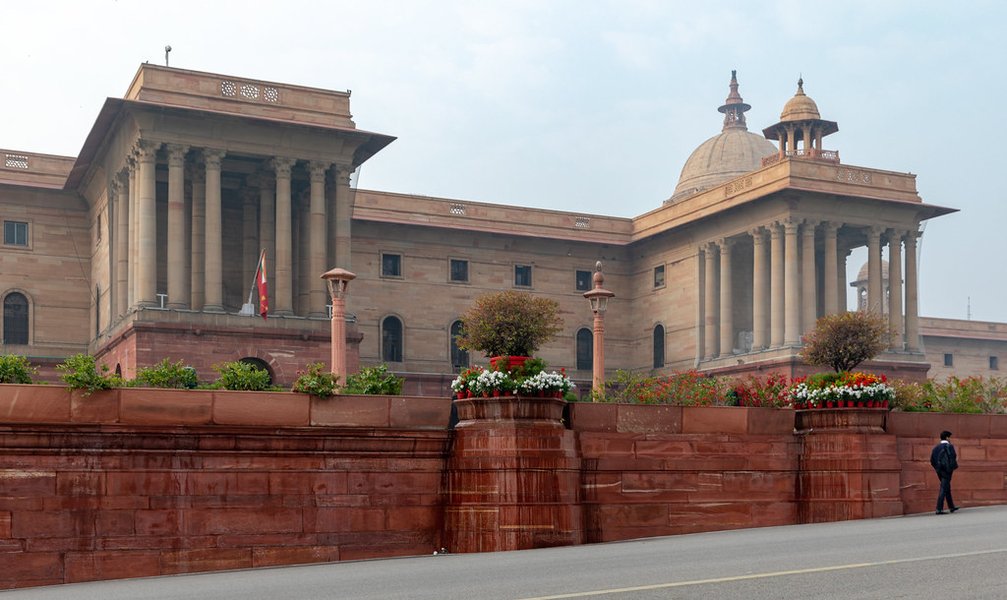
Government buildings cluster near the President's Palace (Rashtrapati Bhavan) in New Delhi, reflecting the city's role as the administrative core.
Unraveling the "Why": The Story Behind New Delhi's Capital Status
New Delhi's designation as India's capital wasn't accidental; it resulted from a complex interplay of historical currents, strategic calculations, and deliberate planning during the British colonial era, later affirmed by independent India.
A Tapestry Woven Through History
The Shift from Calcutta
Prior to New Delhi, Calcutta (now Kolkata) served as the capital of British India from 1772. However, the administrative center began to feel geographically peripheral, especially considering the vastness of the subcontinent. The decisive moment came during the grand Delhi Durbar of December 1911, when King George V announced the transfer of the capital from Calcutta to Delhi. This marked a significant shift in British imperial policy.
Echoes of Past Empires
Delhi wasn't a random choice. The region boasts an immensely deep history as a center of power. It's associated with the legendary city of Indraprastha from the epic Mahabharata and served as the capital for numerous powerful dynasties, including the Delhi Sultanate and the Mughal Empire. Choosing Delhi allowed the British to tap into this historical legitimacy, positioning their rule within a long lineage of Indian sovereignty. This connection to both Hindu and Muslim heritage (as noted by Mughal influence) added symbolic weight.
Inauguration and Continuity
Following the 1911 announcement, the construction of a new, planned city – New Delhi – commenced. Designed by renowned British architects Sir Edwin Lutyens and Sir Herbert Baker, the city was formally inaugurated as the capital on February 13, 1931, by the Viceroy, Lord Irwin. After India gained independence in 1947, the new Indian government chose to retain New Delhi as its capital, leveraging the existing infrastructure and symbolic status.
Strategic and Geographical Imperatives
Centrality and Accessibility
Delhi's location in north-central India offered significant advantages over Calcutta. It provided a more central point from which to administer the sprawling territories of British India, facilitating better communication and control. Its position was also seen as strategically more secure, particularly concerning potential threats from the northwest.
Logistical Advantages
Situated on the Yamuna River, Delhi had access to a vital water source and historical trade routes. Furthermore, its climate was considered more favourable for year-round administration compared to Calcutta's humidity. Its relative proximity to Shimla, the British summer capital, was another practical consideration for colonial administrators seeking respite from the heat.
Symbolism and Political Goals
The move to Delhi was laden with symbolism. It represented a new phase of British rule, aiming for a more unified and centrally governed empire. For the British, occupying a site with such deep historical roots was a way to assert continuity and authority. For independent India, retaining New Delhi symbolized continuity of governance while adapting the existing structures for a sovereign democratic republic.
A Purpose-Built Administrative Hub
New Delhi was conceived and constructed specifically to be a capital city. Lutyens and Baker envisioned a grand metropolis embodying imperial power and administrative efficiency.

The Rashtrapati Bhavan, designed by Lutyens, exemplifies the architectural grandeur intended for India's new capital.
Architectural Vision
The city's layout features wide, tree-lined avenues, expansive green spaces, and monumental government buildings arranged in a geometric pattern, often incorporating elements inspired by Indian architectural traditions. Key structures like the Viceroy's House (now Rashtrapati Bhavan), the Secretariat buildings, and Parliament House (Sansad Bhavan) were designed to impress and function as the nerve center of the government.
Designed for Governance
Unlike cities that evolved organically, New Delhi was planned from the outset to accommodate the complex needs of a national government, including administrative offices, residences for officials, diplomatic enclaves, and supporting infrastructure. This deliberate design aimed to ensure smooth and efficient governance.
The Blueprint of Power: How Are Capital Cities Generally Chosen?
The selection and establishment of a capital city is a pivotal decision for any nation. While each case has unique circumstances, like New Delhi's colonial origins, several common factors influence this process globally.
Key Considerations in Capital Selection
Choosing a capital involves weighing various strategic, practical, and symbolic elements:
Geographical Position:
Often, a central location is preferred to ensure equitable access and facilitate administration across the entire country. Factors like defensibility, access to major waterways or trade routes, and availability of natural resources also play a role.Historical & Cultural Significance:
Cities with a rich past or deep cultural resonance are frequently chosen. This connection to history can lend legitimacy to the government and foster national identity. Many capitals were former seats of power for preceding kingdoms or empires.Political & Strategic Factors:
Sometimes, a capital is chosen as a compromise between competing regions or ethnic groups to promote unity. Security concerns, geopolitical stability, and the desire to project power can also influence the decision.Economic & Logistical Needs:
A capital must be able to support the extensive infrastructure required for government operations, including transportation networks, communication systems, housing for officials, and diplomatic missions. Economic viability and potential for growth are important considerations.Urban Planning & Development:
Some capitals are existing major cities designated as such, while others are meticulously planned and built specifically for the purpose (like New Delhi, Brasilia, or Canberra). Planned capitals offer the advantage of designing infrastructure specifically tailored to government functions from the ground up.
Visualizing the Factors
The following mind map illustrates the interconnected factors typically involved in selecting a nation's capital city:
Water Access"] id1e["Climate"] id2["Historical & Cultural Factors"] id2a["Historical Significance /
Seat of Power"] id2b["Cultural Importance"] id2c["National Identity /
Symbolism"] id2d["Legitimacy"] id3["Political & Strategic Factors"] id3a["National Unity /
Compromise"] id3b["Security / Stability"] id3c["Geopolitics"] id3d["Government Control"] id4["Economic & Logistical Factors"] id4a["Infrastructure Needs"] id4b["Economic Viability"] id4c["Transportation Hub"] id4d["Population Support"] id5["Urban Planning"] id5a["Existing City Designation"] id5b["Planned City Construction"] id5c["Suitability for
Government Functions"]
This complex interplay ensures that the chosen city can effectively serve as the administrative, political, and often symbolic heart of the nation.
Comparing Capital Priorities: New Delhi vs. General Factors
While the general factors for choosing a capital apply broadly, the specific emphasis can vary. The selection of New Delhi had its unique historical context under British rule. This radar chart provides an opinionated analysis comparing the relative importance of key factors in New Delhi's selection versus a hypothetical 'average' capital city choice globally. The scale suggests relative importance (higher number means more important in the decision).
As illustrated, New Delhi's selection appears heavily weighted towards its deep Historical Significance, the specific Political Strategy of the British Empire (and later independent India), its status as a Deliberately Planned city, and its potent Symbolic Representation. While Geographical Centrality was important, factors like immediate Economic Focus seem less prioritized in the initial decision compared to a hypothetical average where economic viability might rank higher alongside geography.
A Journey Through Time: India's Historical Capitals
India's vast history has seen numerous cities serve as capitals under different rulers and empires. New Delhi is the current culmination of this long legacy. Here's a glimpse into some prominent historical capitals:
| City | Notable Period/Empire | Significance |
|---|---|---|
| Pataliputra (Modern Patna) | Maurya Empire, Gupta Empire | A major political and cultural center in ancient India for centuries. |
| Delhi (Various Sites) | Delhi Sultanate | Served as the capital for multiple dynasties during the Sultanate period, establishing its long-term importance. |
| Agra | Mughal Empire | A primary capital during the height of Mughal power, home to the Taj Mahal. |
| Fatehpur Sikri | Mughal Empire (Akbar's reign) | Briefly served as Emperor Akbar's capital, known for its unique architecture. |
| Calcutta (Kolkata) | British East India Company / British Raj | Capital of British India from 1772 until the shift to Delhi in 1911. |
| Allahabad (Prayagraj) | British India (Transition) | Served as the capital for a single day in 1858 during the transfer of power from the East India Company to the British Crown. |
This table highlights that the concept of a single, fixed capital is relatively modern in the Indian context, with power centers shifting based on dynastic fortunes and strategic priorities over millennia.
Visualizing Delhi's Enduring Legacy
The history of Delhi as a center of power spans millennia. From ancient Indraprastha to the modern metropolis, the region has witnessed the rise and fall of empires, culminating in its current role as the capital of the world's largest democracy. This video provides a glimpse into this rich heritage:
"The Capital of India | Know Your Country | National Geographic" explores Delhi's journey from ancient roots to its modern status.
Understanding this historical depth provides crucial context for why Delhi, and subsequently the planned city of New Delhi, was seen as such a potent symbol and strategic location for governing India, both by the British and later by the independent Indian nation.
Frequently Asked Questions (FAQ)
▶ Is Delhi and New Delhi the same thing?
Not exactly. New Delhi is a specific district within the larger National Capital Territory (NCT) of Delhi. The NCT includes both Old Delhi (the historic city) and New Delhi (the planned capital built mainly during the British era). New Delhi specifically houses most of the central government institutions. However, in common usage, "Delhi" often refers to the entire metropolitan area, including New Delhi.
▶ When exactly did New Delhi become the capital?
The decision to shift the capital from Calcutta to Delhi was announced by King George V in December 1911. Construction of New Delhi began thereafter. The city was formally inaugurated as the capital of British India on February 13, 1931. It continued as the capital after India's independence in 1947.
▶ Was Calcutta the only previous capital of India?
No. While Calcutta was the capital of British India immediately before New Delhi, India has had many capitals throughout its long history under various empires and dynasties. Notable examples include Pataliputra, Agra, Fatehpur Sikri, and Delhi itself during the Sultanate period.
▶ Why was Calcutta replaced as the capital?
Calcutta was replaced primarily for strategic, political, and symbolic reasons. The British felt Delhi offered a more central location for governing the vast subcontinent and was historically significant as a seat of power, unlike Calcutta which was associated more with the East India Company's rise. Delhi was also perceived as less prone to regionalist sentiments prevalent in Bengal at the time, and its location offered better oversight of the strategically important northwest frontier.
▶ Is New Delhi the financial capital of India too?
No, while New Delhi is the political and administrative capital, Mumbai is generally considered the financial and commercial capital of India due to the presence of major financial institutions, the stock exchange (BSE), and significant corporate headquarters.
Recommended
- Explore the architectural design of New Delhi by Lutyens and Baker.
- Compare New Delhi with other planned capital cities like Canberra and Brasilia.
- What was the significance of the Delhi Durbar of 1911?
- How has Delhi's role as a capital evolved since India's independence?
References
Last updated May 4, 2025