
Understanding the Dynamics of India-China Exports
A Comprehensive Look at Key Products and Trade Trends
Key Highlights of India-China Exports
- Ores, Slag, and Ash: These products were the leading exports from India to China in 2023, highlighting China's demand for raw materials.
- Trade Deficit: India consistently faces a significant trade deficit with China, driven by high imports of electronic and manufactured goods from China.
- Potential Growth Areas: Amid global trade shifts, India is identifying sectors like apparel, chemicals, and pharmaceuticals for potential export growth to China.
Trade relations between India and China are a significant aspect of the global economy. While China is a major trading partner for India, the balance of trade heavily favors China. Understanding the key products exported from India to China provides insight into the economic relationship and potential areas for growth and diversification.
Leading Indian Exports to China
A Detailed Look at the Commodity Basket
India's export basket to China is diverse, but certain categories consistently dominate the trade flow. These exports often consist of raw materials and intermediate goods that feed into China's vast manufacturing sector.
Ores, Slag, and Ash: A Primary Export
According to 2023 data, ores, slag, and ash represent the most significant export category from India to China. This underscores China's reliance on India for essential raw materials used in its industrial processes, particularly in sectors like steel production. Iron ore is a key component within this category, although recent data indicates a significant decrease in iron ore exports to China in FY25 compared to the previous year, potentially due to factors like economic slowdown and steel production adjustments in China.
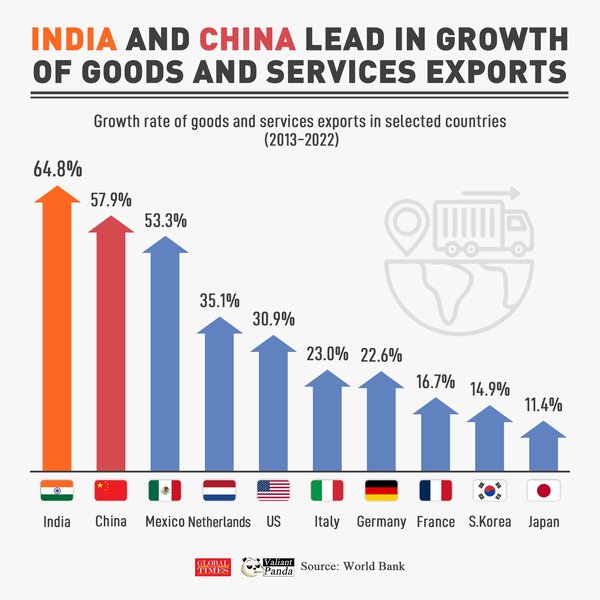
India and China showing growth in goods and services exports.
Organic Chemicals and Other Substances
Organic synthetic substances and organic chemicals also feature prominently in India's exports to China. These chemicals serve as crucial inputs for various industries in China, including pharmaceuticals and textiles. Despite India's efforts to reduce reliance on Chinese imports, trade in organic chemicals with China has seen an increase.
Metals and Mineral Products
Iron metal and mineral powders are other important commodities that India exports to China. These products are essential for China's heavy industries and infrastructure development. The demand for these raw materials in China directly impacts the volume of India's exports in these categories.
Textiles and Related Products
Cotton yarn is a notable export from India to China within the textile sector. China is a major global hub for textile manufacturing, and Indian cotton yarn serves as a significant raw material for their industry. While textile exports overall have seen fluctuations, cotton yarn remains a consistent item in the export basket.
Gems, Jewellery, and Marine Products
Gems and jewellery, along with marine products (such as fish), are also exported from India to China. While perhaps not as high in value as raw materials, these products represent other facets of India's export capabilities to the Chinese market.
Understanding the Trade Balance
The Persistent Trade Deficit
Despite India's exports to China, the bilateral trade relationship is characterized by a significant and widening trade deficit, heavily skewed in favor of China. This imbalance is a major point of discussion and concern for India.
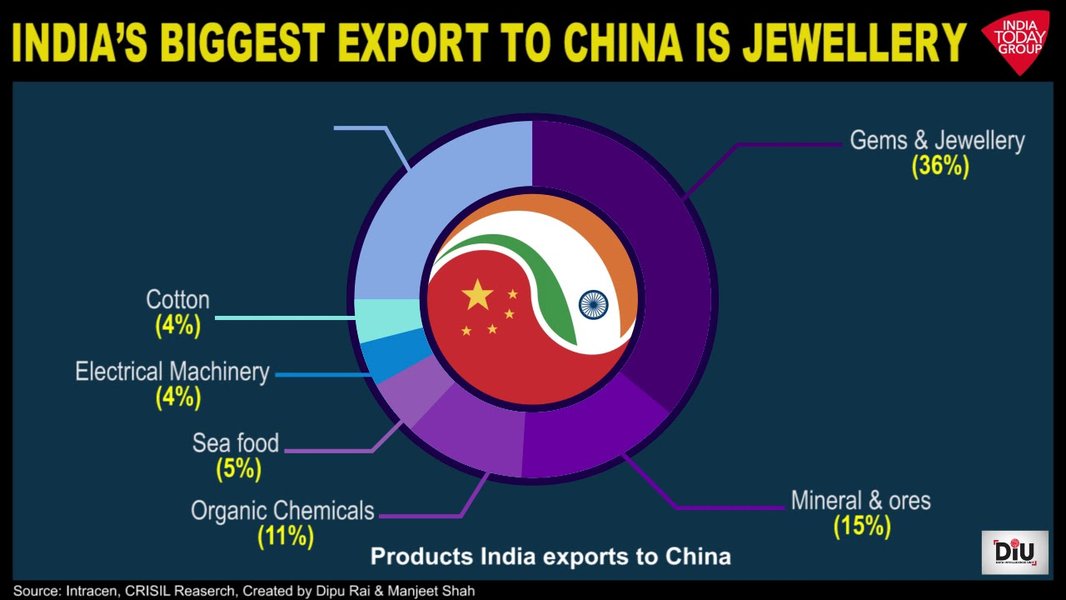
Visual representation of India's exports to China.
In the fiscal year 2024/25, India recorded a trade deficit of a staggering $99.2 billion with China. This widening gap is primarily attributed to India's substantial imports of electronic goods, consumer durables, and machinery from China. While India's exports to China stood at approximately $14.25 billion in FY25, a decrease from the previous year, imports from China surged to a record high of $113.45 billion in the same period.
Key Imports from China
India imports a wide array of products from China, including:
- Electronic and electrical equipment (Integrated Circuits, Telephones, Computers)
- Organic chemicals
- Machines, nuclear reactors, and boilers
- Iron and steel
- Medical and optical instruments
- Plastic products
- Fertilizers
- Toys and sports requisites
The heavy reliance on China for electronic components and machinery highlights India's position in global supply chains and the need for domestic manufacturing growth to reduce this dependency.
Factors Influencing India-China Trade
Beyond the Numbers: Market Access and Global Dynamics
Several factors influence the trade dynamics between India and China, including market access issues, global trade tensions, and India's domestic manufacturing initiatives.
Market Access Impediments for Indian Goods
One of the reasons cited for India's narrow export basket to China and the persistent trade deficit is the presence of market access impediments for certain Indian products. These include non-tariff barriers on agricultural products and challenges in sectors where India is competitive, such as pharmaceuticals and IT services. Addressing these barriers is crucial for achieving a more balanced trade relationship.
Impact of Global Trade Tensions
The ongoing trade tensions between the US and China present both challenges and opportunities for India. As businesses look to diversify their supply chains away from China, India has the potential to attract investment and increase its exports, particularly in sectors targeted by US tariffs on Chinese goods, such as apparel, chemicals, and pharmaceuticals.
India's Push for Self-Reliance
India's increased policy emphasis on self-reliance and boosting domestic manufacturing through initiatives like "Make in India" and Production Linked Incentive (PLI) schemes aims to reduce reliance on imports, including those from China. However, the initial phases of some PLI schemes have shown a continued reliance on imported components, often from China, highlighting the complexity of shifting established supply chains.
Future Outlook and Opportunities
Navigating the Complexities for Balanced Growth
While the trade deficit with China remains a challenge, there are potential opportunities for India to increase and diversify its exports. Focusing on sectors with existing competitiveness and addressing market access issues in China are key steps.
Identifying High-Potential Export Sectors
India has identified specific sectors where it has a competitive edge and can potentially increase exports to China. These include:
-
Apparel
-
Chemicals
-
Pharmaceuticals
-
Engineering Goods
-
Marine Products
Promoting these sectors and actively seeking market access in China can help to partially offset the trade imbalance.
Diversification of the Export Basket
Moving beyond traditional raw material exports and increasing the share of value-added products in the export basket to China is crucial for India. This would involve enhancing manufacturing capabilities and competitiveness in sectors demanded by the Chinese market.
Addressing Trade Discrepancies and Market Access
Continued dialogue and efforts to address trade data discrepancies and market access issues with China are essential for fostering a more transparent and balanced trade relationship. Removing non-tariff barriers and streamlining export processes can facilitate smoother trade flows.
Trade Statistics Overview (2023)
Snapshot of Key Trade Figures
The following table provides a snapshot of key trade figures between India and China in 2023, highlighting the significant imbalance.
| Category | Value (USD Billion) |
|---|---|
| India Exports to China (2023) | 16.25 |
| China Exports to India (2023) | 117.68 |
| India-China Total Trade (2023) | 133.93 |
| India's Trade Deficit with China (FY 2024/25) | 99.2 |
Note: Trade figures can vary slightly depending on the source and reporting methodology. The trade deficit figure for FY 2024/25 is based on recent data.
Frequently Asked Questions
What are the main products India exports to China?
The main products India exports to China include ores, slag and ash (particularly iron ore), organic synthetic substances, cotton yarn, iron metal, mineral powders, fish, and gems and jewellery.
Why is there a significant trade deficit between India and China?
The significant trade deficit is primarily due to India's high volume of imports from China, particularly in electronic goods, machinery, and other manufactured products. This is coupled with a narrower basket of Indian exports to China and existing market access challenges for some Indian goods.
How have global trade tensions impacted India-China trade?
Global trade tensions, such as the US-China trade war, have created opportunities for India as businesses look for alternative sourcing destinations. This could potentially lead to increased exports from India in certain sectors.
What is India doing to address the trade imbalance with China?
India is focusing on boosting domestic manufacturing through initiatives like PLI schemes, diversifying its export basket, identifying new export opportunities in sectors like pharmaceuticals and chemicals, and engaging in bilateral discussions to address market access issues in China.
What is the value of India's exports to China?
According to the United Nations COMTRADE database, India's exports to China were US$16.25 Billion during 2023. Recent provisional data for FY 2024/25 indicates exports were around $14.25 billion.
References
Last updated April 20, 2025