
Unraveling Decades of Conflict: The Wars Between India and Pakistan
A deep dive into the historical clashes, their enduring impact, and the volatile present shaping South Asia.
The relationship between India and Pakistan, two nuclear-armed neighbors, has been fraught with tension and conflict since their independence in 1947. The partition of British India and the subsequent dispute over the princely state of Jammu and Kashmir have been the primary catalysts for a series of wars and numerous military skirmishes. This enduring rivalry continues to define the geopolitical landscape of South Asia, with recent events underscoring its persistent volatility.
Key Insights into the Indo-Pakistani Conflicts
- Kashmir as the Core Issue: The unresolved status of the Kashmir region remains the central and most persistent cause of conflict, fueling multiple wars and ongoing border tensions.
- Cycle of Wars and Skirmishes: Four major wars (1947-48, 1965, 1971, and 1999) and numerous smaller conflicts and standoffs have marked the history of India-Pakistan relations, each adding layers to the complex dispute.
- Recent Escalations and Nuclear Dimension: Tensions have significantly escalated in recent years, including in 2025, with both nations possessing nuclear capabilities, adding a grave dimension to any potential large-scale conflict.
The Genesis: Partition and the Kashmir Dispute
Seeds of Conflict Sown in 1947
The partition of British India in August 1947, based on religious lines, led to the creation of Hindu-majority India and Muslim-majority Pakistan. This event was accompanied by widespread communal violence and one of the largest mass migrations in human history. The fate of several princely states, which had been semi-autonomous under British rule, remained undecided. Among these, Jammu and Kashmir, with its Muslim-majority population and Hindu ruler, Maharaja Hari Singh, became the primary point of contention.
Pakistan laid claim to Kashmir based on its Muslim majority and geographical contiguity, while India asserted its claim following the Maharaja's signing of the Instrument of Accession to India in October 1947, after an invasion by Pakistani-backed tribal militias. This act of accession and the ensuing military intervention by India marked the beginning of the first war between the two newly independent nations and established Kashmir as the enduring flashpoint.
A Chronicle of Major Wars
The Indo-Pakistani conflicts have manifested in several major wars, each with distinct causes, courses, and consequences.
1. The First Kashmir War (1947-1948)
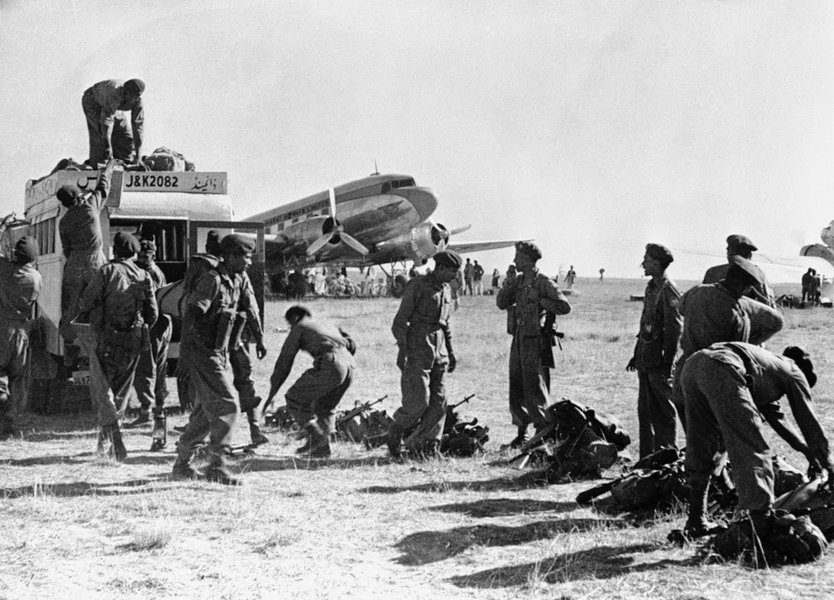
Pakistani soldiers during the Indo-Pakistani war of 1947–1948.
The Initial Spark
Immediately following partition, Pashtun tribal militias from Pakistan's North-West Frontier Province, supported by elements of the Pakistani army, invaded Kashmir in October 1947. Their aim was to annex the state to Pakistan. Faced with this invasion, Maharaja Hari Singh appealed to India for military assistance and signed the Instrument of Accession.
Course and Outcome
Indian troops were airlifted into Srinagar and managed to halt the advance of the tribal forces. The war continued for over a year, with intense fighting in various sectors. It concluded with a United Nations-mediated ceasefire on January 1, 1949. This ceasefire established a demarcation line, later known as the Line of Control (LoC), which divided Kashmir. India gained control of approximately two-thirds of the territory, including the Kashmir Valley, Jammu, and Ladakh, while Pakistan administered the remaining one-third, known as Azad Kashmir and Gilgit-Baltistan. A UN resolution proposed a plebiscite to determine the final status of Kashmir, but it was never implemented due to disagreements over demilitarization preconditions.
Significance
This war solidified the division of Kashmir and entrenched the territorial dispute as the central issue in India-Pakistan relations. It set a precedent for future conflicts and internationalized the Kashmir problem.
2. The Second Indo-Pakistani War (1965)

Indian Centurion tanks during the Battle of Asal Uttar, one of the largest tank battles of the 1965 war.
Renewed Hostilities
The 1965 war was initiated by Pakistan's "Operation Gibraltar," a covert operation designed to infiltrate forces into Indian-administered Kashmir and instigate an insurgency against Indian rule. This was followed by a series of border skirmishes escalating into full-scale warfare.
Course and Outcome
The conflict, which began in August 1965, saw widespread fighting along the international border and the LoC. India launched a counter-offensive, crossing into Pakistani territory in the Punjab region. The war involved significant armored engagements, including the Battle of Asal Uttar, which was one of the largest tank battles since World War II. After seventeen days of intense fighting, a UN-mandated ceasefire came into effect. The war ended in a stalemate, with both sides claiming victory but no significant territorial changes. The subsequent Tashkent Declaration, mediated by the Soviet Union in January 1966, called for a return to pre-war lines and a commitment to resolving disputes peacefully.
Significance
The war demonstrated that the Kashmir issue remained unresolved and could easily escalate into major conflict. It also highlighted the involvement of external powers (USA and USSR) in regional crisis management. While India had a slight advantage when the ceasefire was declared, the war exposed vulnerabilities on both sides.
3. The Third Indo-Pakistani War (1971) – Bangladesh Liberation War
Crisis in East Pakistan
This war was unique as its primary cause was not Kashmir but the political crisis in East Pakistan (now Bangladesh). Decades of political and economic grievances, coupled with linguistic and cultural differences between West and East Pakistan, culminated in a massive civil uprising in East Pakistan. The Pakistani military launched a brutal crackdown ("Operation Searchlight") against the Bengali population and its independence movement, leading to a massive refugee influx into India.
Course and Outcome
India, facing a humanitarian crisis and sympathetic to the Bangladeshi cause, provided support to the Mukti Bahini (Bangladeshi liberation forces). After pre-emptive air strikes by Pakistan on Indian airfields on December 3, 1971, India formally entered the war. The conflict was fought on two fronts: the eastern front in East Pakistan and the western front along the India-Pakistan border. Indian forces, in coordination with the Mukti Bahini, launched a swift and decisive campaign in the east. Within 13 days, on December 16, 1971, the Pakistani forces in Dhaka surrendered, leading to the creation of the independent nation of Bangladesh. On the western front, fighting was less decisive but still significant.
Significance
The 1971 war was a turning point in South Asian geopolitics. It resulted in the dismemberment of Pakistan and the emergence of Bangladesh, significantly altering the regional balance of power in India's favor. The subsequent Shimla Agreement in 1972 formalized the Line of Control in Kashmir and committed both nations to resolving differences bilaterally.
4. The Kargil War (1999)
High-Altitude Intrusion
In the spring of 1999, Pakistani soldiers and Kashmiri militants infiltrated across the Line of Control into the Kargil district of Indian-administered Kashmir, occupying strategic high-altitude posts overlooking key Indian supply routes. This intrusion caught the Indian military by surprise.
Course and Outcome
India responded with "Operation Vijay," a large-scale military operation to evict the intruders. The conflict involved intense fighting in rugged, high-altitude terrain, with both air and ground forces engaged. After several weeks of heavy combat, Indian forces successfully recaptured most of the occupied territories. International diplomatic pressure, particularly from the United States, played a crucial role in compelling Pakistan to withdraw its remaining forces.
Significance
The Kargil War was the first major armed conflict between India and Pakistan after both nations had openly declared their nuclear capabilities in 1998. This raised serious global concerns about the potential for nuclear escalation. The conflict demonstrated the continued fragility of the LoC and the risk of miscalculation in the region. India's victory reinforced its control over the Kargil heights.
Comparing the Conflicts: A Multifaceted Analysis
The major wars between India and Pakistan varied significantly in their scale, strategic objectives, and impact. The following chart provides a comparative perspective on several dimensions of these conflicts, reflecting an analytical assessment rather than precise quantitative data. The values are scaled notionally from 1 (lowest) to 10 (highest) for comparison.
This chart illustrates how each conflict had unique characteristics. For instance, the 1971 war resulted in the most significant territorial and geopolitical shift (creation of Bangladesh), while the Kargil War carried a high risk of escalation due to the nuclear status of both nations.
Ongoing Tensions and Recent Escalations
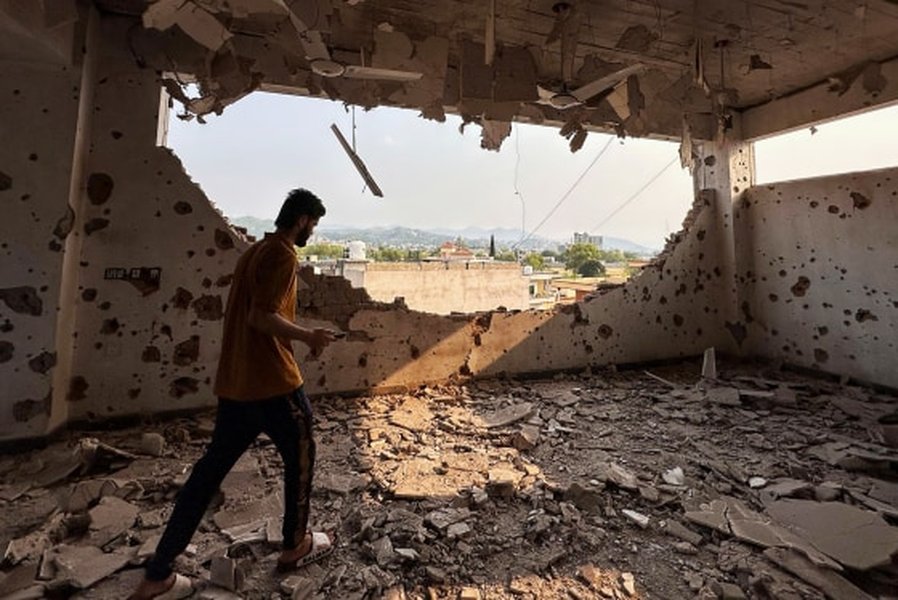
Recent image depicting heightened security in Kashmir, reflecting ongoing tensions (May 2025).
Beyond these major wars, the Indo-Pakistani relationship has been characterized by persistent low-intensity conflict, border skirmishes, and military standoffs. The Siachen Glacier conflict, fought at extreme altitudes from 1984 to 2003, is a notable example. The Line of Control remains one of the most heavily militarized borders in the world.
The Nuclear Dimension
Both India and Pakistan conducted nuclear tests in 1998, officially declaring themselves nuclear powers. This development added a dangerous new dimension to their rivalry. While India maintains a "No First Use" (NFU) policy regarding nuclear weapons, Pakistan's doctrine does not preclude a first strike in response to overwhelming conventional attack. The presence of nuclear arsenals raises the stakes of any conflict, with the constant fear of escalation to a nuclear exchange.
Escalations in 2025
As of May 2025, tensions have reached a critical point following a series of escalatory events. A militant attack in Pahalgam, Indian-administered Kashmir, in April 2025, which killed 26 tourists, triggered a sharp response from India. This included "Operation Sindoor," described as precision strikes on alleged terror-linked sites across Pakistan and Pakistan-occupied Kashmir, based on intelligence of further impending attacks.
On May 7, 2025, India reportedly launched missile attacks into Pakistani territory. Pakistan retaliated by claiming to shoot down Indian jets and has taken several countermeasures:
- Closing its airspace to Indian airlines.
- Declaring Indian military advisors persona non grata.
- Suspending bilateral trade and visa-free travel.
- Closing its side of the Attari-Wagah border post.
Furthermore, India announced its intention to suspend the Indus Waters Treaty of 1960, a critical water-sharing agreement. Pakistan has stated that such a move would be considered "an act of war." Diplomatic ties have been severely downgraded, and both nations are on high alert. International actors have urged restraint and de-escalation.
Visualizing the Conflict Landscape
The complex history of Indo-Pakistani conflicts, with its multiple wars, underlying causes, and key events, can be visualized through a mindmap. This diagram outlines the major conflicts and their connections to the core issues.
(Maharaja's Accession)"] id2["Major Wars"] id2a["First Kashmir War (1947-1948)"] id2a1["Tribal Invasion"] id2a2["Indian Intervention"] id2a3["UN Ceasefire & LoC"] id2b["Second Indo-Pak War (1965)"] id2b1["Operation Gibraltar"] id2b2["Tank Battles"] id2b3["Tashkent Declaration"] id2c["Third Indo-Pak War (1971)"] id2c1["Bangladesh Liberation War"] id2c2["Indian Support for Mukti Bahini"] id2c3["Surrender at Dhaka
Creation of Bangladesh"] id2c4["Shimla Agreement"] id2d["Kargil War (1999)"] id2d1["Pakistani Infiltration"] id2d2["Operation Vijay"] id2d3["High-Altitude Warfare"] id2d4["Nuclear Backdrop"] id3["Other Conflicts & Tensions"] id3a["Siachen Conflict (1984-2003)"] id3b["Military Standoffs (e.g., 2001-2002)"] id3c["Ongoing LoC Skirmishes"] id3d["Nuclear Deterrence"] id4["Recent Escalations (2025)"] id4a["Pahalgam Attack (April 2025)"] id4b["Operation Sindoor"] id4c["Missile Strikes (May 2025)"] id4d["Diplomatic & Economic Fallout"] id4e["Indus Water Treaty Concerns"]
This mindmap illustrates how the Partition and the Kashmir dispute formed the bedrock of the conflict, leading to distinct wars and periods of heightened tension, including the recent critical developments in 2025.
Impact and Implications
The decades of conflict have had profound and far-reaching consequences:
- Human Cost: Tens of thousands of military personnel and civilians have lost their lives, and millions have been displaced across the various wars and ongoing skirmishes.
- Economic Strain: Both nations allocate significant portions of their national budgets to military expenditure, diverting resources that could otherwise be used for socio-economic development.
- Regional Instability: The persistent hostility contributes to instability in South Asia, hindering regional cooperation and economic integration.
- Global Concerns: The nuclear capabilities of both India and Pakistan mean that any major conflict has the potential for catastrophic escalation, drawing international attention and concern.
Summary of Major Wars
The following table provides a concise overview of the four major wars fought between India and Pakistan:
| War | Year(s) | Primary Cause / Trigger | Key Outcome(s) |
|---|---|---|---|
| First Kashmir War | 1947-1948 | Dispute over Kashmir's accession following Partition; Pakistani-backed tribal invasion. | UN-mediated ceasefire; Kashmir divided by the Line of Control (LoC); India controls approx. 2/3, Pakistan approx. 1/3. |
| Second Indo-Pakistani War | 1965 | Pakistan's "Operation Gibraltar" to infiltrate Kashmir and incite insurgency. | Military stalemate; Tashkent Declaration calling for return to pre-war lines; no significant territorial changes. |
| Third Indo-Pakistani War | 1971 | Bangladesh Liberation War; Political crisis in East Pakistan and Indian intervention. | Decisive Indian victory; Creation of independent Bangladesh; Shimla Agreement formalizing LoC. |
| Kargil War | 1999 | Pakistani military and militant infiltration into Kargil sector of Indian-administered Kashmir. | Indian victory; Pakistani forces withdraw from Indian territory; heightened concern due to nuclear capabilities. |
This table highlights the distinct triggers and resolutions of each major conflict, underscoring the recurring theme of Kashmir and the evolving nature of warfare between the two nations.
This video provides a historical overview of the India-Pakistan conflict, explained with maps, offering context to the decades of tensions.
The video titled "History of India-Parkistan Conflict Explained on Maps" delves into the origins of the conflict, tracing it back to the 1947 partition of British India. It visually demonstrates the territorial disputes, particularly concerning Kashmir, and outlines the progression of major wars and skirmishes. By using maps, it helps to illustrate the geographical context of the battles and the strategic importance of contested regions. This visual aid is particularly useful for understanding how borders shifted or were solidified through various conflicts and agreements, such as the establishment of the Line of Control. The explanation of the deep-rooted historical, political, and demographic factors provides a foundational understanding of why this rivalry has been so enduring and volatile.
Frequently Asked Questions (FAQ)
What is the main reason for the conflicts between India and Pakistan?
The primary and most persistent reason for the conflicts is the disputed territory of Jammu and Kashmir. Following the partition of British India in 1947, the princely state of Jammu and Kashmir, with a Muslim majority and a Hindu ruler, became a point of contention. Both India and Pakistan claim the entire region, leading to multiple wars and ongoing tensions.
How many wars have India and Pakistan fought?
India and Pakistan have fought four major wars:
- The First Kashmir War (1947-1948)
- The Indo-Pakistani War of 1965
- The Indo-Pakistani War of 1971 (which led to the creation of Bangladesh)
- The Kargil War (1999)
What is the Line of Control (LoC)?
The Line of Control (LoC) is a military control line separating the Indian-administered parts of Jammu and Kashmir from the Pakistani-administered parts. It was established as a ceasefire line after the 1947-1948 war and formally named the LoC in the 1972 Shimla Agreement. It is not an internationally recognized border but serves as a de facto boundary. It is one of the most heavily militarized frontiers in the world.
How have nuclear weapons affected the India-Pakistan conflict?
Both India and Pakistan became overt nuclear powers in 1998. The presence of nuclear weapons has added a critical and dangerous dimension to their conflict. While some argue it has created a state of "nuclear deterrence," preventing full-scale conventional wars from escalating uncontrollably (as seen during the Kargil War), it also raises the stakes immensely, as any major conflict carries the risk of nuclear exchange. This has led to increased international scrutiny and pressure for restraint during crises.
What is the current situation between India and Pakistan as of May 2025?
As of May 2025, tensions between India and Pakistan are exceptionally high. Following a militant attack in Indian-administered Kashmir in April 2025, India conducted "Operation Sindoor," involving precision strikes. This was followed by reported missile attacks by India into Pakistani territory in early May 2025, with Pakistan claiming to have downed Indian jets. Both countries have downgraded diplomatic ties, suspended trade and travel links, and exchanged strong rhetoric. India's announcement of suspending the Indus Water Treaty has further exacerbated the situation, with Pakistan viewing it as a potential act of war. The international community is urging de-escalation.
Recommended Further Exploration
To delve deeper into the complexities of the Indo-Pakistani relationship, consider exploring these related topics:
- What is the detailed history and current status of the Kashmir dispute?
- Explore the implications of the Indus Waters Treaty and its potential suspension.
- Analyze the role of international diplomacy in mediating India-Pakistan conflicts.
- How have nuclear weapons shaped the strategic doctrines of India and Pakistan?
References
Last updated May 9, 2025