
The Evolving Landscape of Influence in Scientometrics Today
Unpacking the Key Figures and Methodologies Shaping the Field of Scientific Measurement
- No Single Dominant Figure: Unlike the foundational era of scientometrics, which saw figures like Eugene Garfield and Derek J. de Solla Price, contemporary influence is distributed among numerous prominent researchers, institutions, and the ongoing evolution of methodologies.
- Methodological Innovation and Application: Modern influence is heavily weighted towards those developing and applying advanced scientometric techniques—including AI integration—to assess research impact, identify emerging trends, and inform science policy, rather than focusing solely on individual h-index scores.
- Institutional and Collaborative Leadership: Key organizations such as Clarivate, AD Scientific Index, and the International Society for Scientometrics and Informetrics (ISSI), along with researchers from leading universities, play crucial roles in shaping the field's direction and defining influential metrics.
The field of scientometrics, which quantitatively studies scholarly literature, has undergone significant evolution since its inception. While its foundations are often attributed to pioneers like Eugene Garfield, who developed the Science Citation Index in 1964, and Derek J. de Solla Price, the landscape of influence today is far more multifaceted. Instead of a single, overarching influential figure, contemporary scientometrics is shaped by a confluence of leading researchers, innovative methodologies, and the institutional bodies that drive its application and development. The focus has shifted from mere citation counts to sophisticated analyses that reveal trends, identify influential research, and inform critical decisions in academia and policy.
Foundational Pillars and Modern-Day Shapers
Tracing the Roots to Understanding Current Influence
To understand who is most influential today, it's essential to acknowledge the historical figures who laid the groundwork. Eugene Garfield, founder of the Institute for Scientific Information (ISI) and creator of the Science Citation Index, was instrumental in establishing quantitative methods for analyzing scientific literature. His work, alongside that of Derek J. de Solla Price, formed the bedrock of modern scientometrics, emphasizing the measurement of research impact and the understanding of scientific citations.
Today, influence is less about singular individuals and more about collectives and the continuous refinement of the discipline. Leading researchers, often associated with institutions like Leiden University, Hungarian Academy of Sciences, and Hasselt University, continue to push the boundaries of scientometric analysis. These individuals contribute to core journals like Scientometrics and the Journal of Scientometric Research, publishing theoretical and empirical studies that introduce new methods and insights into the production, communication, and use of scientific information.
The Role of Key Organizations and Journals
Organizations such as Clarivate (publisher of the Highly Cited Researchers list) and AD Scientific Index are major players in defining and recognizing influence within the scientific community. Clarivate's annual "Highly Cited Researchers" list, for example, identifies individuals who have demonstrated significant and broad influence in their fields by authoring multiple Highly Cited Papers™ (ranking in the top 1% by citations). Similarly, AD Scientific Index evaluates scientists based on total and recent citation counts, capturing the breadth and real-time currency of academic recognition.
The journal Scientometrics, established in 1978, remains a central forum for scholarly discourse in the field. It is a peer-reviewed, monthly journal that publishes original research on all quantitative aspects of science and technology. Its continued relevance and Q1 quartile ranking in computer science and social sciences underscore its ongoing influence in shaping the methodology and theoretical underpinnings of the discipline.
Measuring Influence: Metrics and Methodologies
Beyond the H-Index: A Comprehensive View of Scientific Impact
While the h-index is a widely used metric for individual researcher impact, contemporary scientometrics employs a broader array of indicators to assess influence. These include journal impact factors, SCImago Journal Rank (SJR), CiteScore, and various forms of citation analysis. The move towards more nuanced assessments reflects a desire to capture the multifaceted nature of scientific contribution.
For instance, Research.com sets H-index thresholds (typically 30 or 40) for considering researchers in global rankings, alongside the proportion of publications within a specific research area, and the scholar's awards and achievements. This holistic approach moves beyond a simple citation count, recognizing the qualitative aspects of influence, such as leadership in research initiatives or contributions to policy. The scientometrics.org platform, for example, helps grant reviewers rapidly rank scientific productivity based on current international standards, emphasizing impact over sheer volume.
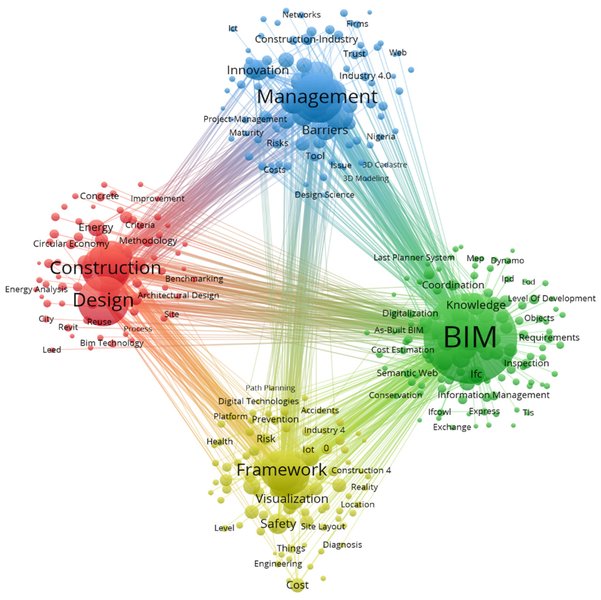
This image illustrates a network visualization, a common tool in scientometrics to map collaborations and identify influential research clusters within a given field. Such visualizations help researchers understand the dynamics of knowledge exchange and identify key contributors.
Emerging Trends and the Future of Scientometrics
The field is continuously adapting to new technologies and data sources. The integration of AI in research analysis, the use of open-access data, and the development of alternative metrics (altmetrics) are all areas where new forms of influence are emerging. These advancements allow for deeper insights into research funding, communication, commercialization, and societal impact. The CoDi Congress in 2025 will bring together international experts in bibliometrics and scientometrics to discuss these advancements, highlighting the collaborative nature of shaping the field's future.
The debate around "formal" versus "informal" approaches to research evaluation—where formal relies heavily on scientometric indicators and informal on the quality of published manuscripts—is also a significant area of influence. This ongoing discussion shapes how research is assessed for grants, promotions, and overall academic standing.
Key Areas of Impact and Notable Contributions
Diverse Contributions Across Disciplines
Influence in scientometrics today is demonstrated not just by individuals, but by the impact of their methodologies across various scientific disciplines. For instance, researchers in economics and finance, particularly those based in the United States, lead global rankings. This indicates a strong application of scientometric principles within specific fields to identify top scholars.
| Aspect of Influence | Description | Examples/Manifestations in 2025 |
|---|---|---|
| Methodological Innovation | Development of new quantitative techniques and tools for analyzing scientific literature. | Integration of AI in research analysis; advanced bibliometric software; studies on citation dynamics. |
| Journal Leadership | Editors and editorial boards of prominent scientometric journals setting publication standards and research directions. | Editors of Scientometrics and Journal of Scientometric Research; special issues on emerging topics. |
| Ranking and Assessment Systems | Entities responsible for creating and maintaining global researcher and institutional rankings. | Clarivate's "Highly Cited Researchers" list; AD Scientific Index global rankings; Research.com. |
| Policy and Grant Influence | Researchers and bodies whose work directly informs science policy and research funding decisions. | NRDIO's reviewer support tool in Hungary; discussions on responsible research assessment (CoARA Steering Board). |
| Interdisciplinary Application | Application of scientometric methods to understand trends and influence in diverse fields. | Studies on leadership in construction, AI's impact on research, economics and finance rankings. |
This table summarizes the various facets of influence within the contemporary scientometrics landscape, demonstrating that impact is multifaceted and extends beyond individual recognition to systemic contributions.
The Human Element in a Data-Driven Field
Despite the quantitative nature of scientometrics, the human element remains vital. Individuals like Jian Wang, winner of the Eugene Garfield Award, advocate for broadening the application of scientometrics to new fields, emphasizing its potential for interdisciplinary growth. Similarly, events like the ISSI conference (International Conference on Scientometrics and Informetrics) serve as crucial platforms for leading experts and researchers to converge, share insights, and collectively steer the future of the discipline.
This radar chart compares the different facets of influence between foundational figures and contemporary influencers in scientometrics. It illustrates how influence has evolved, with a shift from individual dominance in core areas to a more distributed impact across methodological innovation, policy, publication leadership, global rankings, interdisciplinary reach, and community engagement. While foundational figures excelled in establishing the field, contemporary influence is characterized by a broader, more collaborative approach.
The Evolving Landscape of Scientific Recognition
Beyond Traditional Metrics: New Frontiers in Measuring Impact
The academic world is increasingly moving towards a more nuanced understanding of "impact." This shift is influenced by discussions around responsible research assessment, where the quality of research and its broader societal implications are given more weight alongside traditional bibliometric indicators. This calls for a re-evaluation of what constitutes true influence in scientometrics today. Researchers are developing and refining methods that can capture the impact of research in areas beyond academic citations, such as its influence on policy-making, public discourse, and technological innovation.
The debate on how scientometrics should be applied to support grant reviewers and assess research productivity also highlights a critical area of influence. Tools like those on scientometrics.org aim to provide objective measures, but also spark discussions about the potential for "perverse incentives" if misused, leading to a "publish or perish" environment. This ongoing dialogue is crucial for ensuring that scientometrics serves to enhance, rather than detract from, the quality and integrity of scientific research.
This video, "Preprints in the Public Eye: Challenges and Solutions in an Open Science Environment," discusses the evolving landscape of scientific publishing, particularly the role of preprints. This is highly relevant to scientometrics as the field constantly adapts to new modes of scientific communication and assesses their impact and integrity. Understanding these challenges is key to developing robust and responsible scientometric practices in the future.
Conclusion: A Distributed and Dynamic Influence
In summary, there isn't one single "most influential figure" in scientometrics today in the same way there were foundational pioneers like Eugene Garfield. Instead, influence is distributed among a network of key players: leading researchers who innovate methodologies, influential journals that set academic standards, and powerful organizations like Clarivate and AD Scientific Index that shape global rankings. The ongoing discussions about responsible research assessment and the integration of new technologies like AI also represent significant forces shaping the field. The collective effort to refine metrics, foster interdisciplinary application, and ensure the ethical use of scientometric data defines the true influence in this dynamic field today.
Frequently Asked Questions
What is scientometrics?
Who are the historical founders of scientometrics?
How is influence measured in scientometrics today?
What are some emerging trends in scientometrics for 2025?
Recommended Searches
- Explore the impact of AI on scientometrics research in 2025.
- Delve into the principles and challenges of responsible research assessment in academia.
- Investigate the future directions of research metrics and evaluation methodologies.
- Understand the detailed methodology behind Clarivate's Highly Cited Researchers list.
References
Last updated May 21, 2025