
Inventions and Innovations of the Information Age
A Detailed Journey Through Technological Milestones and Their Visual Representations
Key Highlights
- Technological Evolution: Discover how inventions like the transistor, personal computers, the Internet, and smartphones have transformed society.
- Integration of Visual Media: Learn how digital imaging, camera innovations, and dynamic graphical representations bolster our understanding of these advancements.
- Impactful Innovations: Understand the synergy between hardware innovations—such as integrated circuits and optical networking—and software breakthroughs including the World Wide Web and social media.
Historical Overview of the Information Age
The Information Age, sometimes known as the Digital Age or Computer Age, marks a period defined by rapid technological advancement and the digitalization of many aspects of human life. This era began in the mid-20th century and has expanded to include revolutionary breakthroughs in electronics, telecommunication, computing, and digital media. The transition from analog devices to digital systems has not only reshaped industries such as education, healthcare, and finance but also transformed everyday communication and creativity.
Major Inventions and Their Visual Representations
Transistors: The Building Blocks of Modern Electronics
Overview
The invention of the transistor in 1947 by pioneers such as Walter Houser Brattain and John Bardeen was a pivotal moment in the history of electronics. Transistors replaced bulky vacuum tubes and made it possible to design smaller, more efficient devices. These components are fundamental in almost every electronic gadget today, from radios and televisions to computers.
Visual Insight
Visual representations of transistors typically show intricate, tiny semiconductor devices often magnified to reveal the internal structure. High-resolution images of transistors can be found on stock photo websites, providing detailed close-ups that highlight their compact design.
Integrated Circuits: Miniaturization of Electronics
Overview
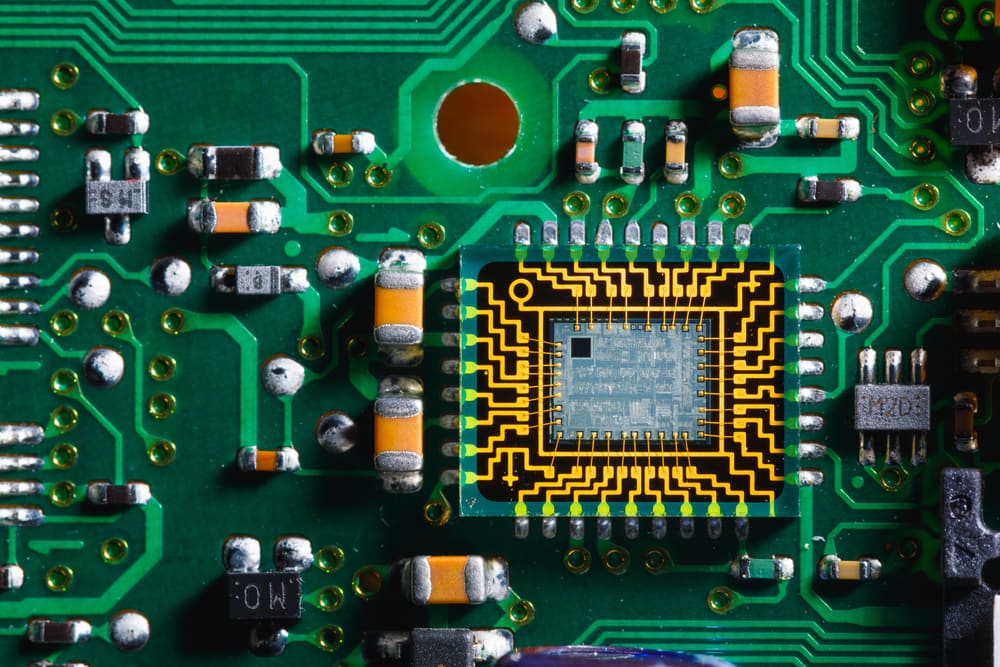
Integrated circuits (ICs) are collections of miniaturized electronic components and circuits integrated into a single chip. Their development, which began in the late 1950s, made it possible to place thousands and later millions of components on a tiny piece of semiconductor. This miniaturization revolutionized computing, enabling the creation of powerful yet compact devices.
Visual Insight
Images of integrated circuits often reveal densely packed circuit patterns and intricate designs that underscore advancements in microfabrication techniques. Such images are popular in technology exhibits and on digital photography platforms, illustrating the evolution of computer hardware.
Personal Computers: Democratizing Digital Access
Overview
The advent of personal computers in the 1970s changed the landscape of computing by making digital technology accessible to the general public. Iconic machines such as the Apple II and IBM PC helped usher in an era where computing moved out of large institutions and into homes and offices worldwide.
Visual Insight
Photographs of early personal computers, including desktop setups, microcomputers, and later, portable laptops, capture an era of rapid innovation. These images help illustrate the evolution from bulky machinery to sleek and portable devices that dominate modern computing.
The Internet and World Wide Web: Revolutionizing Global Communication
Overview
The Internet, initially developed from research projects like ARPANET in the 1960s, and the subsequent creation of the World Wide Web in 1989 by Tim Berners-Lee, transformed global communication. These innovations made it possible to share information instantaneously around the world, reshaping everything from commerce to social interactions.
Visual Insight
Diagrams and infographics that map out the network of connections or display the evolution of web design serve as visually striking representations of the digital revolution. High-quality images depict servers, data centers, and the flow of information through optical fibers, emphasizing both the complexity and accessibility of the Internet.
Smartphones: The Fusion of Communication and Computing
Overview
Smartphones integrate multiple technologies, combining computing power with communication capabilities in a single device. Introduced to the mass market with devices like the first iPhone in 2007, smartphones have transformed the way people interact with their environment, access the Internet, and manage day-to-day tasks.
Visual Insight
Images of smartphones often capture sleek designs, detailed user interfaces, and dynamic displays. Stock photography and historical archives show the progression from basic mobile phones to today’s smartphones that serve as portals to a vast digital ecosystem.
Digital Cameras and Optical Networking: Enhancing Visual Communication
Digital Cameras
The transition from film to digital photography revolutionized how images are captured, stored, and shared. Early digital cameras paved the way for modern high-definition imaging, offering convenience, instant review, and creative possibilities that film-based photography could not match.
Optical Networking
Optical networking, driven by the development of optical fibers and light amplification methods, is the backbone of contemporary communications. High-speed data transmission, enabled by these technologies, supports everything from Internet connectivity to television broadcasts.
Visual Insight
Visual content related to digital cameras often includes side-by-side comparisons of film versus digital outputs, the intricate internal structures of camera sensors, and the evolution of camera designs over decades. For optical networking, images typically feature long stretches of fiber optic cables, diagrams of network topologies, and setups demonstrating global data exchange.
Advanced Technologies and Their Representations
Beyond these foundational inventions, the Information Age continues to welcome further innovations aimed at enhancing efficiency, connectivity, and user experience. Two areas where advanced technologies are of particular interest include artificial intelligence (AI) and social media platforms.
Artificial Intelligence: Bridging Data and Decision-Making
Overview
AI technologies encompass machine learning, deep learning, and natural language processing, among other areas. They have become essential in various sectors, including healthcare, finance, education, and entertainment. AI-driven systems can analyze extensive datasets, recognize speech and images, and even simulate human conversation.
Visual Insight
The visual representations of AI often include neural network diagrams, heat maps, and illustrative depictions of data flow. Many exhibitions and tech articles utilize engaging images to communicate the complexities and capabilities of AI-driven technologies.
Social Media: Connecting the World Through Digital Platforms
Overview
Social media platforms such as Facebook, Twitter, and Instagram have redefined human interaction by enabling instantaneous communication across vast distances. These platforms have completely changed the way news is disseminated, communities are formed, and ideas are exchanged.
Visual Insight
Images that capture the essence of social media often focus on screenshots of popular apps, user interface designs, and infographics showing user engagement statistics. The juxtaposition of modern design elements and data-driven graphics makes these images both informative and visually appealing.
Comprehensive Overview Table
| Invention/Innovation | Timeframe & Origin | Technological Impact | Common Visual Representations |
|---|---|---|---|
| Transistors | 1947, USA | Replaced vacuum tubes; enabled miniaturization in electronics. | Close-up images of semiconductor chips. |
| Integrated Circuits | Late 1950s, USA | Miniaturized circuits; laid groundwork for modern computers. | Microscopic images of silicon chips and circuit layouts. |
| Personal Computers | 1970s-1980s, Global | Democratized computing; sparked digital revolution in businesses and homes. | Photos of early desktops, laptops, and microcomputers. |
| Internet & World Wide Web | 1960s-1990s, Global | Transformed global communication; enabled instant connectivity and information sharing. | Diagrams of network topologies, server farms, and data centers. |
| Smartphones | 2007 onwards, Global | Integrated computing and mobile communication; reshaped digital lifestyles. | High-resolution images of modern smartphone designs and interfaces. |
| Digital Cameras & Optical Networking | Late 1980s onwards, Global | Enabled digital photography and high-speed data transmission via optical fibers. | Images of digital camera sensors, fiber optic cables, and network diagrams. |
| Artificial Intelligence | 2010s onwards, Global | Enhanced decision-making across sectors; enabled advanced data processing. | Neural network diagrams, data visualizations, and algorithm illustrations. |
| Social Media Platforms | 2000s onwards, Global | Revolutionized communication and community building on a global scale. | Screenshots of apps, engagement graphs, and interface designs. |
Understanding the Role of Images in the Information Age
Images play a pivotal role in communicating the profound changes instigated by technological innovation during the Information Age. Digital images not only document the evolution of hardware and software but also act as powerful visual tools that help educate, inspire, and inform audiences worldwide. The proliferation of digital photography and image editing tools has enabled both professionals and amateurs to capture and distribute images that embody the essence of modern technology.
Digital Imagery and Its Significance
Innovation in Image Capture
The transition from analog to digital imaging revolutionized visual documentation. With the advent of digital cameras, even casual users found it easy to capture high-resolution images, preserving historical moments and technological innovations. Today, digital images are used extensively in journalism, academia, and marketing to illustrate narrative-driven content. High-quality photographs of technological artifacts—such as circuit boards, fiber optic cables, and sleek device designs—bring abstract concepts to life for a diverse audience.
Graphical Representations for Enhanced Communication
Beyond mere photographical documentation, the Information Age has embraced elaborate graphical representations. Infographics, schematics, and diagrams are now commonplace in educational resources and tech articles. These images help break down complex systems into manageable visual components, strengthening our understanding of underlying technological processes and the flow of digital information. The integration of visual data with textual analysis empowers users to glean insights quickly and efficiently.
Digital Repositories and Stock Image Resources
Numerous online platforms offer extensive collections of images relevant to the inventions and innovations of the Information Age. These digital repositories provide a visual archive that spans decades, from early transistor designs to modern AI interfaces. Below is a summary of some well-known sources where enthusiasts, researchers, and designers can find high-quality images.
- Pixabay - Free Images Repository
- Shutterstock - Stock Photos and Vectors
- Getty Images - High-Quality Stock Photography
- Freepik - Vector Graphics and Images
- Wikipedia - Information Age Overview
These repositories not only provide visuals that chronicle technological evolution but also offer contextual information through metadata and descriptive captions. Users can view historical progressions, compare design changes, and appreciate the engineering marvels that mark this transformative period.
Further Considerations
As society continues to traverse the Information Age, the interplay between technological advancements and visual representation remains a dynamic facet of cultural documentation. Innovations today are setting the stage for future breakthroughs, and each technological leap is accompanied by sophisticated imaging technologies that chronicle these changes. Whether it is through high-resolution displays, immersive virtual visualizations, or intricate infographics, the emphasis on visual detail enhances our understanding and appreciation of digital evolution.
In conclusion, the Information Age is characterized not only by its groundbreaking technological advancements but also by the vibrant visual culture that has emerged alongside it. The combination of inventive hardware, forward-thinking software, and dynamic visual imagery serves as a testament to human ingenuity and the never-ending quest to connect, communicate, and innovate.
References
- Pixabay - Free Images Repository
- Shutterstock - Information Age Photos
- Getty Images - Stock Photos on Information Age
- Freepik - Vector Graphics and Images
- Wikipedia - Information Age Overview
Recommended Further Queries
Last updated March 20, 2025