
Navigating the Waters: Your Comprehensive Guide to Inground Pool Removal
Unveiling the Methods, Costs, and Considerations for Reclaiming Your Backyard
Key Highlights of Inground Pool Removal
- Strategic Planning is Paramount: Before any demolition begins, it's crucial to understand local regulations, obtain necessary permits, and carefully consider the future use of the space to select the most appropriate removal method.
- Two Primary Removal Methods Exist: Homeowners can choose between "partial removal" (or "fill-in"), which is generally quicker and more affordable, and "full removal," a more thorough but costlier option essential if future construction is planned on the site.
- Professional Expertise is Highly Recommended: While DIY removal might seem appealing for above-ground pools, inground pool removal is a complex, labor-intensive process with potential risks like sinkage or improper drainage if not executed by experienced, licensed professionals.
Deciding to remove an inground swimming pool is a significant decision for any homeowner. Whether driven by concerns about costly repairs, high maintenance expenses, safety issues, or simply a desire to reclaim valuable backyard space, understanding the intricacies of pool removal is key. This guide will provide a detailed overview of the processes involved, the factors influencing costs, and critical considerations to ensure a smooth and successful project.
Why Consider Removing Your Inground Pool?
Many factors motivate homeowners to part ways with their beloved swimming pools. An aging pool often comes with mounting maintenance costs, including chemical treatments, cleaning, and frequent repairs for leaks or equipment malfunctions. Safety is another major concern, especially for families with young children or pets, as pools inherently pose a drowning risk. Furthermore, a pool can decrease a home's value in certain markets or regions where pools are not in high demand due to climate or lifestyle preferences. Reclaiming yard space for other purposes, such as a larger garden, a patio, or simply more usable green area, is also a common incentive.
Understanding Inground Pool Removal Methods
There are two primary approaches to removing an inground swimming pool: partial removal and full removal. Each method has distinct processes, cost implications, and suitability for different future uses of the land.
Partial Pool Removal (Fill-in)
Partial removal, often referred to as a "pool fill-in," is generally the more common, faster, and more affordable option. This method involves draining the pool, punching multiple holes (at least 20) in the bottom to ensure proper drainage and prevent future water collection, and then demolishing only the top two feet of the pool's side walls. The remaining pool structure is then backfilled with the demolished concrete and rubble, followed by layers of clean dirt and compacted soil. The top layer is typically finished with fresh topsoil or sod to blend with the surrounding landscape.
While partial removal is less labor-intensive and quicker, usually taking 2-3 days, it comes with a crucial caveat: the remaining pool structure underground must be disclosed to future property buyers. Improper execution of a partial fill-in can lead to issues like sinkage, swelling, or poor drainage, potentially creating a hazardous "mud pit" or an unstable area in the yard. If you ever plan to build a permanent structure on the former pool site, partial removal is not recommended.
Full Pool Removal (Complete Demolition)
Full pool removal is the most comprehensive method, involving the complete demolition and hauling away of all pool materials, including steel, gunite, vinyl, fiberglass, and concrete. This approach ensures that no part of the pool structure remains underground. After demolition, the excavated area is meticulously backfilled with engineered fill and compacted in layers to prevent future settling or sinkage. An engineered backfill is particularly important if any new construction, such as an addition or shed, is planned for the area.
Although full removal is more expensive and time-consuming due to the extensive demolition, debris removal, and precise compaction requirements, it offers complete freedom for future use of the land. It eliminates any concerns about potential structural issues or disclosure requirements associated with buried pool components, making it the ideal choice for homeowners seeking to maximize their property's potential.
A Glimpse into the Demolition Process
The demolition process typically begins with draining the pool and disconnecting all electrical, gas, and plumbing lines. Heavy machinery, such as excavators, skid steers, and jackhammers, are then used to break up the concrete, fiberglass, or vinyl shell. For concrete pools, the rebar is often cut, and the concrete is broken into small, manageable pieces. The debris is then hauled away for proper disposal, often involving significant disposal fees due to the weight and volume of materials.
The Step-by-Step Pool Removal Process
Regardless of the chosen method, pool removal follows a structured series of steps to ensure safety and compliance.
-
Permits and Regulations
Before any work begins, it is imperative to research and obtain all necessary permits from your local municipality or county. This step is critical as regulations vary widely and often dictate the acceptable removal methods, backfill requirements, and inspection protocols. Failure to secure proper permits can lead to fines, project delays, or even the requirement to undo work that doesn't comply with local codes. Some areas may even require amending your property's plat map to reflect the pool's removal.
-
Draining the Pool
The first physical step is to completely drain the pool. This is typically done using a pump, with the water often discharged into a sewer clean-out point, usually located within 100 feet of the pool. Proper drainage is essential to avoid structural damage or creating a muddy, unstable area.
-
Demolition
As discussed, this involves breaking down the pool structure. For partial removal, only the top sections are demolished. For full removal, the entire structure is broken down and removed. This stage often requires specialized equipment like excavators, jackhammers, and angle grinders for rebar.
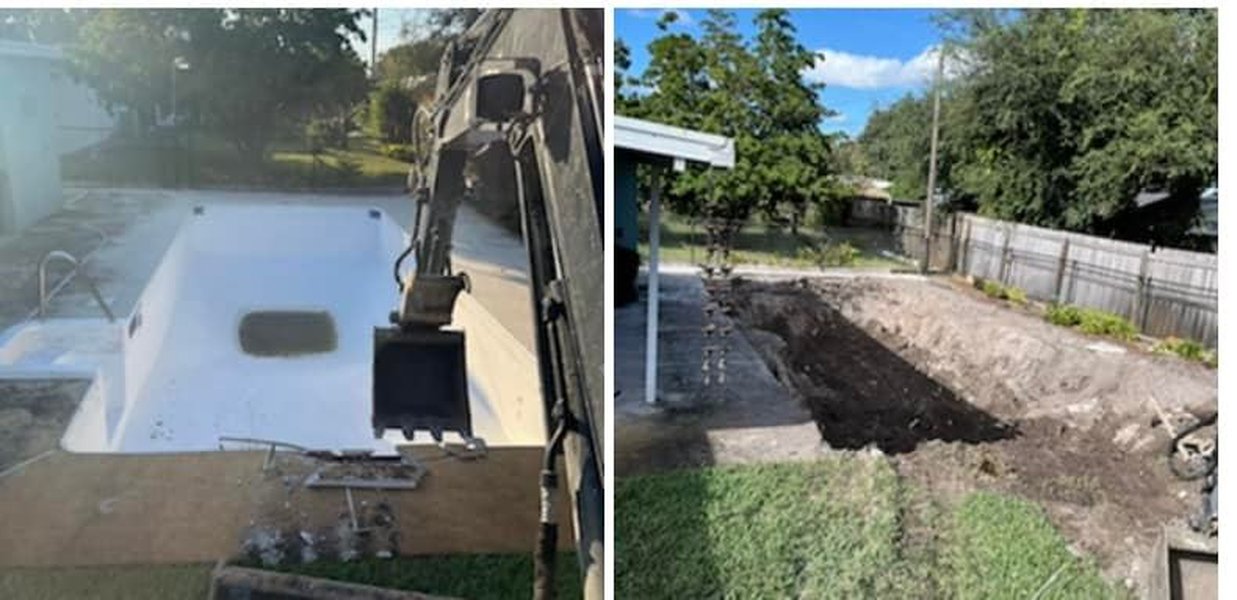
Heavy machinery breaking down an inground pool structure during demolition.
-
Debris Removal
All demolished materials, whether from a partial or full removal, must be hauled away. This process adds significantly to the overall cost, as it involves labor, transportation, and disposal fees. Some materials, like certain metals, might be recyclable, which could potentially offset some costs.
-
Backfilling and Compaction
Once the debris is removed, the remaining cavity is filled. For partial removal, rubble from the demolition may be used as initial fill, followed by clean dirt. For full removal, engineered backfill is typically used. Crucially, the fill material must be compacted in layers to ensure stability and prevent future settling or sinkage. This often requires heavy compaction equipment and, for full removal, may necessitate a certified compaction report by a geotechnical engineer.
-
Site Restoration
The final step involves grading the area to match the surrounding landscape, adding topsoil, and preparing it for its new purpose. This could involve planting grass, installing a patio, or any other landscaping desired by the homeowner. It's an opportunity to transform the space into a functional and aesthetically pleasing part of the yard.
Cost Considerations for Inground Pool Removal
The cost of removing an inground pool can vary significantly, generally ranging from $2,500 to over $20,000. Several factors influence this range:
| Factor | Impact on Cost | Details |
|---|---|---|
| Removal Method | Significant | Partial removal is less expensive ($2,500 - $8,100) than full removal ($4,100 - $16,000+). |
| Pool Size | Higher for larger pools | Larger pools require more labor, debris removal, and fill material. A 20x40 ft inground pool can cost $6,100 - $16,400. |
| Pool Material | Varies | Concrete pools are typically the most expensive to demolish ($5,000 - $15,000+) due to their weight and demolition effort. Fiberglass pools often require full removal as pieces cannot be left in the ground, but costs can be lower if removed in one piece ($6,000 - $16,000). Vinyl-lined pools are often less costly. |
| Accessibility | Higher for difficult access | Pools in hard-to-reach areas requiring smaller equipment or more manual labor will increase costs. Easy access means lower costs. |
| Location/Labor Costs | Regional variation | Costs vary by geographic region, reflecting local labor rates and disposal fees. High cost-of-living areas will see higher prices. |
| Additional Features | Increases cost | Features like built-in steps, spas, waterfalls, large decks, or patios surrounding the pool add to the demolition scope and cost. Deck removal alone can be an added expense. |
| Debris Disposal | Significant expense | Hauling and disposing of concrete, fiberglass, or other materials contributes substantially to the total cost. |
| Fill Material & Compaction | Can be substantial | The cost of fill dirt, especially engineered backfill, and the necessary compaction to prevent sinkage, is a major component. It can take 100-150 cubic yards of fill for a typical pool. |
| Permits & Inspections | Mandatory cost | Required permits and any mandated engineering reports or inspections add to the overall project cost. |
It's important to obtain multiple quotes from licensed and insured contractors to compare prices and services. While DIY removal for above-ground pools is feasible, inground pool removal is a complex undertaking best left to professionals to avoid potential costly mistakes and ensure proper safety and structural integrity of the reclaimed land.
Choosing the Right Professional for Pool Removal
Selecting a qualified contractor is one of the most critical steps in ensuring a successful pool removal. Look for licensed and insured demolition contractors with specific experience in pool removal. Ask for references, check their past projects, and ensure they are familiar with local regulations and permitting requirements. A reputable contractor will provide a detailed quote, explain the chosen removal method, and outline the steps involved, including debris disposal and site restoration.
The Importance of Professional Expertise
Attempting a DIY inground pool removal carries significant risks. Without proper knowledge and equipment, homeowners could face:
- Improper Drainage: Leading to water accumulation, creating a muddy hazard or causing structural issues.
- Inadequate Compaction: Resulting in future sinkholes, uneven surfaces, or settlement problems that could damage future structures or landscaping.
- Structural Issues: If the remaining pool shell isn't properly dealt with, it can collapse or shift.
- Permit Violations: Leading to costly fines or forced re-work.
- Safety Hazards: Operating heavy machinery without experience is extremely dangerous.
Professional contractors have the equipment, expertise, and understanding of engineering principles to ensure the job is done safely and correctly, providing peace of mind and preventing long-term problems.
Visualizing the Impact of Pool Removal Factors
The various factors influencing pool removal complexity and cost can be visualized to provide a clearer understanding of their relative impact. This radar chart illustrates how different elements contribute to the overall challenge of an inground pool removal project.
This radar chart illustrates that while partial removal has lower values across the board, full removal presents higher values for factors like demolition complexity, debris volume, compaction requirements, permit strictness, and especially its impact on future construction potential. This visual comparison highlights why full removal, while more expensive, offers greater versatility for the transformed space.
Reimagining Your Backyard: Post-Removal Landscaping Ideas
Once the pool is removed, the newly reclaimed space offers a blank canvas for various landscaping possibilities. This is an exciting opportunity to transform your backyard into something more functional and aligned with your current lifestyle.
- New Patio or Outdoor Living Area: Converting the area into a spacious patio, complete with seating, an outdoor kitchen, or a fire pit, is a popular choice for creating a dedicated entertainment or relaxation zone.
- Expanded Lawn or Garden: Simply extending your lawn or creating a lush garden bed can significantly increase usable green space, ideal for play areas, gardening, or open recreation.
- Sport Court or Play Area: For active families, the space can be repurposed into a small sports court for basketball, pickleball, or a dedicated children's play area with swings and structures.
- Water Feature or Pond: While removing a pool, some homeowners opt for a smaller, low-maintenance water feature like a koi pond or a decorative fountain for a tranquil ambiance.
- Accessory Dwelling Unit (ADU) or Shed: With a full removal and proper engineered backfill, the site can potentially accommodate a new structure, such as a detached office, guest house, or a large storage shed, subject to local zoning laws.

Before and after transformation of a backyard after pool removal.
Video Insight into Pool Demolition
To provide a clearer understanding of the practical aspects of inground pool removal, the following video offers a visual walkthrough of the demolition process. This helps in grasping the scale of the operation and the machinery involved.
A detailed look at the process of removing a swimming pool using heavy equipment.
This video provides an excellent visual complement to the detailed steps outlined earlier, showcasing the efficiency and precision required when using heavy machinery for pool demolition. It highlights the significant effort involved in breaking down and preparing the site, reinforcing why professional assistance is highly recommended for inground pool removal.
Frequently Asked Questions About Pool Removal
What are the main reasons homeowners remove inground pools?
Is DIY inground pool removal recommended?
How long does inground pool removal typically take?
Will removing my pool increase my home's value?
What permits are required for pool removal?
What is engineered backfill, and why is it important?
Recommended Further Exploration
- Explore a detailed cost breakdown for various inground pool removal scenarios.
- Understand the comprehensive benefits of hiring professional pool demolition services.
- Discover innovative and inspiring ideas for transforming your backyard space post-pool removal.
- Investigate the legal and disclosure implications of choosing partial versus full pool removal.
References
Last updated May 21, 2025