
The Indispensable Buzz: Unveiling the Diverse World of Insect Pollinators and Their Vital Roles
Discover the unsung insect heroes, beyond just bees, that keep our ecosystems thriving and food on our tables.
Insect pollinators are the linchpins of terrestrial ecosystems and agricultural productivity worldwide. They are responsible for the reproduction of a vast majority of flowering plants, including a significant portion of the crops that feed humanity. While bees often take the spotlight, a diverse array of other insects plays equally crucial roles in this essential ecological service. Understanding these varied pollinators and their contributions is vital for appreciating the complexity of nature and the importance of conservation efforts.
Essential Insights: Key Takeaways
- Diverse Pollinators: Beyond bees, insects like butterflies, moths, flies, beetles, wasps, and even ants contribute significantly to pollination.
- Ecosystem & Agriculture Cornerstone: Insect pollination is essential for approximately 75-80% of the world's flowering plants and 75% of global food crops, contributing massively to food security and biodiversity.
- Economic & Ecological Impact: The economic value of insect pollination is estimated to be over €150 billion globally, and their role is crucial for maintaining genetic diversity in plants and overall ecosystem resilience.
The Unsung Heroes of Pollination
Pollination is the process of transferring pollen grains from the male anther of a flower to the female stigma, leading to fertilization and the production of seeds and fruits. Insects, while foraging for nectar, pollen, or other resources, inadvertently become vectors for this transfer. This interaction is a cornerstone of biodiversity, supporting not only plant life but also the myriad of organisms that depend on these plants for food and habitat. Various studies highlight that non-bee insects, for example, can account for a substantial percentage (around 39%) of flower visits in crop systems, underscoring the importance of a diverse pollinator community (PNAS).

Vibrant flowers serve as crucial food sources, attracting a diverse array of insect pollinators.
Key Insect Pollinator Groups and Their Roles
Different insect groups have evolved unique relationships with flowering plants, showcasing a remarkable diversity in pollination strategies. Below, we explore the primary types of insect pollinators and their specific contributions:
Bees (Order: Hymenoptera, Superfamily: Apoidea)
Bees are arguably the most recognized and efficient insect pollinators, with over 20,000 species identified globally. Their bodies, often covered in branched hairs (scopae) or possessing specialized pollen baskets (corbiculae), are perfectly adapted for collecting and transporting pollen. Bees rely on nectar for energy and pollen for protein and other nutrients, especially for their larvae.
Roles:
- Master Pollinators: Bees actively collect and transfer large quantities of pollen. Social species like honeybees (Apis mellifera), bumblebees (Bombus spp.), and stingless bees are numerically dominant in many agricultural landscapes, providing extensive pollination services (ScienceDirect).
- Crop Specialists: They are vital for the production of a wide range of crops, with studies showing they pollinate at least 72% of global food crops. For instance, bee pollination can triple fruit production and improve the size and quality of apples (Natural History Museum).
- Wildflower Champions: Solitary bees and other native bee species are crucial for the reproduction of wild plants, maintaining biodiversity within natural ecosystems.
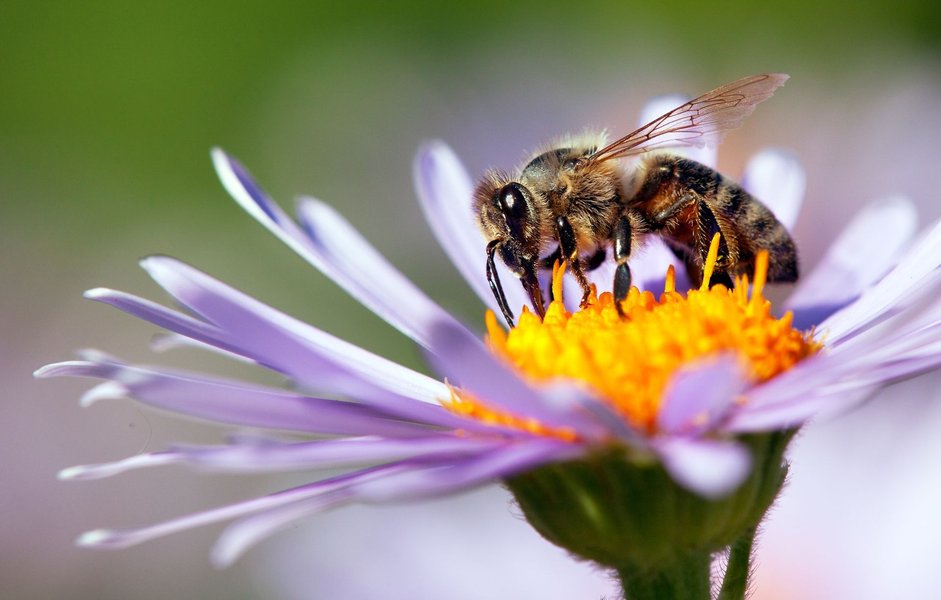
A bee diligently collects pollen, showcasing its crucial role in plant reproduction.
Butterflies and Moths (Order: Lepidoptera)
With their long proboscises adapted for sipping nectar from tubular flowers, butterflies and moths also serve as important pollinators. While generally less efficient pollen carriers than bees due to their less hairy bodies, their wide-ranging flight patterns contribute to long-distance pollen transfer.
Roles:
- Daytime and Nighttime Service: Butterflies are active during the day, visiting a variety of colorful, often scented, flowers. Moths, many of which are nocturnal, pollinate night-blooming flowers that are typically pale or white and heavily scented.
- Ecosystem Supporters: They are valuable pollinators in wild ecosystems, supporting the health of diverse plant communities in parks, gardens, and natural habitats (Xerces Society). Some species, like the yucca moth, have highly specialized mutualistic relationships with particular plants.
- Agricultural Contributors: Certain moth species can be significant pollinators for specific agricultural crops. However, many Lepidoptera species are facing population declines, which poses a threat to the pollination services they provide.

A butterfly extends its proboscis to feed on nectar, incidentally transferring pollen.
Flies (Order: Diptera)
Often overlooked, flies represent a highly diverse group of pollinators, with over 85,000 species. Many adult flies feed on nectar and pollen, and in doing so, they contribute significantly to pollination, especially for plants with easily accessible flowers or those that emit yeasty, spicy, or decay-like odors.
Roles:
- Diverse Pollinators: Various fly families are involved in pollination. Hoverflies (Syrphidae) are particularly notable, resembling bees and wasps, and are effective pollinators of many crops and wildflowers. They are known to travel long distances, potentially carrying pollen over 100 kilometers (Natural History Museum).
- Crop Pollination: Flies are important pollinators for a range of crops, including apples, peppers, mangoes, cashews, and even cacao (from which chocolate is made, pollinated by tiny midges).
- Alternative Pollinators: They can be crucial in environments or conditions where bees are less active, such as high altitudes, cool temperatures, or shaded areas. Even mosquitoes, a type of fly, are known to pollinate certain orchid species.
Beetles (Order: Coleoptera)
Beetles are among the most ancient insect pollinators, with fossil evidence suggesting their involvement in pollinating flowers millions of years ago. Modern beetles, with over 400,000 described species, continue this role, particularly for large, robust, bowl-shaped flowers, often with strong fruity or aminoid scents.
Roles:
- "Mess and Soil" Pollinators: Beetles often chew on floral parts and defecate within flowers, a pollination syndrome known as cantharophily. They are attracted to flowers that offer ample pollen or specialized food bodies.
- Ancient Plant Pollinators: They are important pollinators for ancient plant lineages like magnolias, water lilies, and spicebush.
- Specialized Interactions: Some beetles are efficient at pollinating plants with sticky or stringy pollen that adheres well to their hard exoskeletons.
Wasps (Order: Hymenoptera)
While most wasps are predators or parasitoids, many adult wasps visit flowers to feed on nectar. Compared to their bee relatives, wasps generally have smoother bodies with fewer hairs, making them less efficient at deliberate pollen collection. However, they still contribute to pollination incidentally.
Roles:
- Incidental Pollinators: Pollen may stick to their bodies as they forage for nectar and be transferred to other flowers. Fig wasps are a classic example of highly specialized wasp pollinators, essential for the reproduction of fig trees.
- Ecosystem Balance: Beyond their minor role in pollination for most species, wasps play a significant role in controlling populations of other insects, including agricultural pests.
Ants (Order: Hymenoptera, Family: Formicidae)
Ants are generally considered minor or occasional pollinators. Their relatively smooth bodies and grooming habits, coupled with the secretion of antimicrobial compounds (like myrmicacin) that can reduce pollen viability, often limit their effectiveness. However, there are exceptions.
Roles:
- Niche Pollinators: Some ant species are effective pollinators for specific low-growing plants with small, inconspicuous flowers that are easily accessible from the ground. For instance, certain ants in Australia are known to pollinate several orchid and lily species (ThoughtCo).
- Seed Dispersers: Ants are often more significant as seed dispersers (myrmecochory) than as pollinators.
Thrips (Order: Thysanoptera)
These minute insects, often less than a millimeter long, are among the earliest known pollinators. They feed on plant saps, tissues, and pollen.
Roles:
- Micro-Pollinators: While moving within and between flowers to feed, thrips can carry pollen grains, contributing to the pollination of certain plants, especially those with compact inflorescences.
Comparative Effectiveness of Insect Pollinators
Different insect pollinators vary in their effectiveness based on several factors, including their morphology, foraging behavior, abundance, and flower preferences. The radar chart below provides a conceptual comparison of key pollinator groups across several attributes. The values are illustrative, based on general ecological understanding, rather than precise quantitative data, to show relative differences.
This chart illustrates that bees generally rank high in pollen carrying capacity and agricultural importance. Flies, especially hoverflies, show high abundance and activity in diverse conditions. Butterflies and moths exhibit notable flower specificity. Beetles and wasps, while important, generally score lower on these comparative metrics but fulfill crucial niche roles.
Visualizing the Pollinator Network
The intricate relationships between insect pollinators, plants, and the broader ecosystem can be visualized using a mindmap. This diagram highlights the key types of pollinators and their multifaceted roles in supporting both natural environments and human agriculture.
Major agricultural role"] id1b["Butterflies & Moths (Lepidoptera)"] id1b1["Long-distance pollen transfer
Day & night activity"] id1c["Flies (Diptera)"] id1c1["Diverse group (e.g., hoverflies)
Important in various conditions"] id1d["Beetles (Coleoptera)"] id1d1["Ancient pollinators
Mess & soil pollination"] id1e["Wasps (Hymenoptera)"] id1e1["Incidental pollinators
Predatory benefits"] id1f["Ants (Hymenoptera)"] id1f1["Niche pollinators for specific plants"] id1g["Thrips (Thysanoptera)"] id1g1["Tiny, early pollinators"] id2["Ecological Roles"] id2a["Plant Reproduction"] id2a1["Facilitate fertilization
Seed & fruit production"] id2b["Biodiversity Maintenance"] id2b1["Support wild plant diversity
Foundation of food webs"] id2c["Genetic Diversity"] id2c1["Promote cross-pollination
Enhance plant resilience"] id2d["Ecosystem Stability"] id2d1["Contribute to overall ecosystem health"] id3["Agricultural Importance"] id3a["Crop Yield & Quality"] id3a1["Essential for ~75% of food crops
Improve fruit size, shape, and nutritional value"] id3b["Economic Value"] id3b1["Billions of dollars annually
Supports livelihoods"] id3c["Food Security"] id3c1["Ensures stable production of fruits, vegetables, nuts, and seeds"] id4["Threats to Pollinators"] id4a["Habitat Loss & Fragmentation"] id4b["Pesticide Use"] id4c["Climate Change"] id4d["Diseases & Parasites"] id4e["Invasive Species"]
This mindmap demonstrates the central role of insect pollinators, branching out into the various types, their ecological functions (such as ensuring plant reproduction and maintaining biodiversity), their critical importance to agriculture (including enhancing crop yields and ensuring food security), and the threats they currently face.
The Broader Impact: A Video Perspective
To further appreciate the diverse world of pollinators and their significance, the following video offers compelling insights into their roles and the importance of their conservation. "The Power of Pollinators" showcases the beauty and ecological necessity of these often-underappreciated creatures, particularly focusing on wild native bees but relevant to the broader spectrum of insect pollinators.
This video emphasizes that pollinators are not just a homogenous group; there's an incredible diversity among them, each contributing uniquely to the health of our planet. It highlights the intricate interactions between plants and their pollinators, a dance of co-evolution that has shaped terrestrial ecosystems for millions of years. Understanding this diversity is key to effective conservation strategies.
Summary Table of Insect Pollinators and Key Roles
The following table provides a concise summary of the major insect pollinator groups and their primary roles in pollination, drawing from various ecological studies and observations.
| Insect Pollinator Group | Order | Key Characteristics & Roles in Pollination | Primary Food Source from Flowers |
|---|---|---|---|
| Bees | Hymenoptera | Highly efficient; hairy bodies for pollen collection; specialized pollen-carrying structures; vital for agriculture and wild plants. Many species exhibit flower constancy. | Pollen and Nectar |
| Butterflies | Lepidoptera | Long proboscis for nectar feeding; less efficient pollen carriers than bees but contribute to long-distance pollen transfer; active during the day. | Nectar |
| Moths | Lepidoptera | Many are nocturnal pollinators of night-blooming, often fragrant flowers; some, like hawk moths, are strong fliers. | Nectar |
| Flies (incl. Hoverflies) | Diptera | Diverse group; hoverflies mimic bees/wasps and are significant pollinators; other flies attracted to various floral scents, including decay-like odors. Important in various climates/conditions. | Pollen and Nectar |
| Beetles | Coleoptera | Ancient pollinators; often "mess and soil" pollinators of large, robust flowers; attracted to strong scents; feed on pollen and floral tissues. | Pollen, Floral Tissues, Nectar |
| Wasps | Hymenoptera | Primarily nectar feeders; smoother bodies, less efficient pollen carriers than bees; some specialized relationships (e.g., fig wasps). | Nectar |
| Ants | Hymenoptera | Occasional pollinators, typically for low-growing plants with accessible nectar; antimicrobial secretions can reduce pollen viability. | Nectar, Honeydew |
| Thrips | Thysanoptera | Tiny insects; can transfer pollen within and between compact flowers while feeding on pollen and plant tissues. | Pollen, Plant Tissues/Sap |
This table summarizes the distinct contributions of each major insect group to the vital process of pollination. While bees are often highlighted, it's clear that a diverse community of insects is necessary for comprehensive pollination services across different plant species and ecosystems.
Frequently Asked Questions (FAQ)
1. Why are bees considered the most important pollinators?
Bees are highly efficient pollinators due to several factors. Their bodies are often covered in specialized hairs (scopae) or they have pollen baskets (corbiculae on hind legs) designed to collect and transport large amounts of pollen. They also exhibit "flower constancy," meaning they tend to visit flowers of the same species during a single foraging trip, which increases the chances of successful pollination. Furthermore, bees actively collect pollen as a primary food source for their larvae, making them purposeful visitors to flowers. As noted by sources like the Natural History Museum and ScienceDirect, their numerical abundance and specialized behaviors make them dominant pollinators in many ecosystems and agricultural settings.
2. Do all insects that visit flowers act as pollinators?
Not all insects that visit flowers are effective pollinators. Some insects may be "nectar robbers," accessing nectar without coming into contact with the flower's reproductive parts, or they may consume pollen without effectively transferring it. The effectiveness of an insect as a pollinator depends on its morphology (body structure), behavior (how it interacts with the flower), and the frequency of its visits. For example, ants may visit flowers for nectar but their smooth bodies and grooming habits often make them poor pollen vectors, as indicated by sources like ThoughtCo.
3. How important are non-bee insects for crop pollination?
Non-bee insects, including flies, butterflies, moths, beetles, and wasps, play a very significant role in crop pollination. Research, such as studies highlighted by PNAS, indicates that non-bee insects can account for a substantial portion (around 39%) of flower visits to crops globally. They contribute to the yield and quality of many important food crops and can provide resilience to pollination services, especially if bee populations decline. Flies, for example, are key pollinators for crops like apples, peppers, and mangoes (Xerces Society).
4. What is the economic impact of insect pollination?
Insect pollination has a massive economic impact globally. It is essential for the production of approximately 75% of globally important crops. The economic value of these pollination services is estimated to be over €150 billion annually (ScienceDirect). This value comes from increased crop yields, improved fruit and seed quality, and the overall stability of food production systems that rely on these insect allies.
Recommended Queries for Further Exploration
- How does habitat loss affect different types of insect pollinators?
- What are the most effective ways to create pollinator-friendly gardens?
- Explore the specific pollination mechanisms of nocturnal moths versus diurnal butterflies.
- What is the role of specialized insect pollinators like fig wasps in their ecosystems?
References
Last updated May 14, 2025