
Inshas Unveiled: Assessing the Environmental Footprint of Egypt's Nuclear Heartland
A deep dive into the ecological considerations surrounding the uranium production pilot plant and associated facilities at Inshas, Egypt.
The Inshas area, approximately 30 km northeast of Cairo in Sharqia Province, serves as the hub of Egypt's nuclear research activities, housing a uranium production pilot plant alongside several other critical facilities. Understanding the environmental impact of this complex is crucial, given the nature of nuclear materials and processes involved. This assessment synthesizes available information regarding the ecological considerations, potential risks, and mitigation strategies employed at Inshas.
Key Insights: Environmental Profile of Inshas
- Comprehensive Nuclear Complex: Inshas is home to not only a uranium production pilot plant but also research reactors (ETRR-1, ETRR-2), a Fuel Manufacturing Pilot Plant (FMPP), a Hydrometallurgy Pilot Plant (HPP), and the Hot Laboratory and Waste Management Center (HLWMC), creating a multifaceted environmental oversight challenge.
- Focus on Radiological and Chemical Safety: Primary environmental concerns revolve around potential radiological contamination (including radionuclides like Cesium-137 and Strontium-85) of soil, water (Quaternary and Miocene aquifers), and air, alongside chemical pollution from processing activities.
- Active Mitigation and Oversight: The Egyptian Atomic Energy Authority (EAEA) plays a central role in managing these facilities, implementing environmental monitoring, waste management protocols, and adhering to international safeguards, including those from the International Atomic Energy Agency (IAEA).
The Inshas Nuclear Landscape: Facilities and Functions
The environmental impact assessment of the Inshas area necessitates a clear understanding of the various facilities present and their operational scope, particularly concerning uranium-related activities.
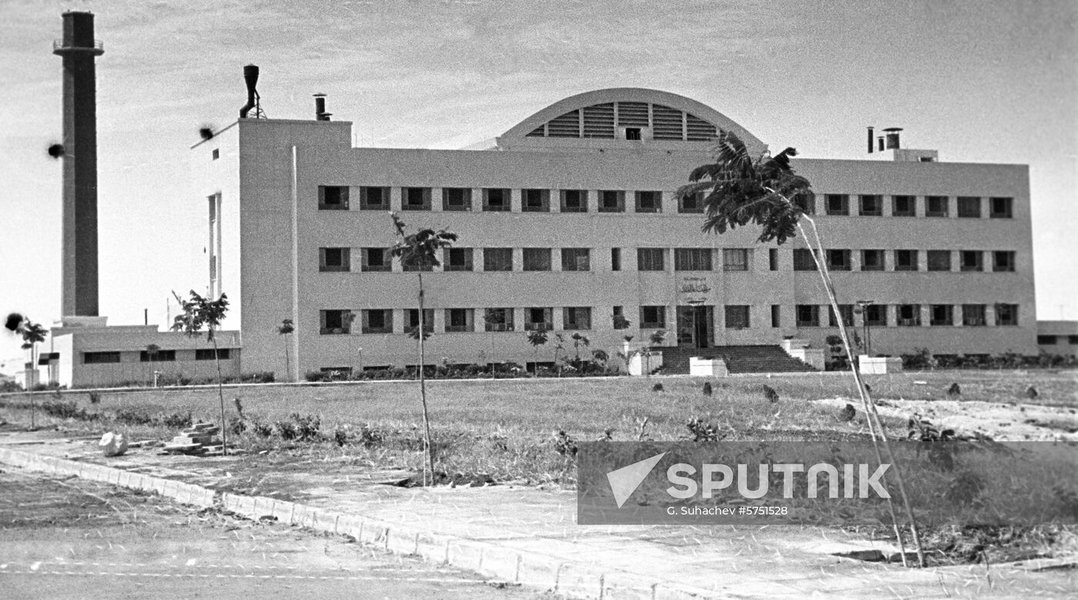
The Metallurgical Pilot Plant at Inshas, a key facility in Egypt's uranium processing research.
The Uranium Production Pilot Plant and Associated Ventures
Egypt's efforts in the uranium fuel cycle at Inshas have primarily been at a research and pilot scale. Key aspects include:
- Uranium Extraction Research: Attempts were made to extract uranium from indigenous resources like phosphoric acid and monazite deposits. These pilot-scale projects reportedly faced technical difficulties and were not deemed economically feasible for large-scale production. The research aimed at producing "yellowcake" (uranium concentrate).
- Fuel Manufacturing Pilot Plant (FMPP): Established in 1998 under the EAEA, the FMPP is designed to fabricate MTR-type (Materials Testing Reactor) fuel plates. It utilizes enriched uranium hexafluoride (UF6, approximately 19.75% U-235) as raw material for Egypt's research reactors. This process involves chemical processing requiring strict containment.
- Hydrometallurgy Pilot Plant (HPP): This facility is involved with research and development of uranium extraction processes, which inherently involve chemical leaching and generate waste streams requiring careful management.
Key Research and Support Facilities
Beyond direct uranium processing, other facilities contribute to the overall operational and environmental context of Inshas:
- Research Reactors (ETRR-1 and ETRR-2):
- ETRR-1: A 2MW Soviet-supplied research reactor.
- ETRR-2: A more modern, 22MW multi-purpose research reactor of Argentinean design.
- Hot Laboratory and Waste Management Center (HLWMC): This crucial center handles plutonium research, and more significantly for environmental impact, the treatment, conditioning, storage, and disposal of radioactive waste generated from Inshas activities. It also manages spent sealed radioactive sources.
- Pilot-Scale Conversion Plant: A facility for converting uranium compounds, part of the front-end fuel cycle research.
- Low and Intermediate Radioactive Waste (LILW) Disposal Facility: Dedicated to the disposal of certain categories of radioactive waste, its integrity and monitoring are vital for long-term environmental protection.
The presence of other general industrial plants in the broader Inshas area also contributes to the cumulative environmental load, necessitating a holistic assessment approach.
An aerial view of the Nuclear Research Center in Inshas, highlighting the complex of facilities.
Core Environmental Impact Concerns at Inshas
The concentration of nuclear and industrial activities at Inshas gives rise to several potential environmental impacts that require diligent assessment and management.
Radiological Releases and Contamination Pathways
The handling of uranium and other radioactive materials in fuel fabrication, reactor operation, and waste management inherently carries risks of radiological releases.
Soil and Groundwater Vulnerability
Studies have indicated potential risks of radionuclide migration. For instance, assessments of the LILW disposal facility at Inshas have considered the potential for radionuclides like Cesium-137 (137Cs) and Strontium-85 (85Sr) to leach into groundwater and soil. While one 2008 study found concentrations in a nearby well to be below maximum permissible levels, the Quaternary and Miocene aquifers in the area are crucial water resources. The Quaternary aquifer, often semi-confined by clay beds, along with local soil compositions (e.g., quaternary deposits), influences contaminant mobility. Proximity to water bodies like the Ismaalia Canal also raises concerns about potential contaminant spread if containment fails.
Atmospheric Dispersion Risks
Emissions from routine operations and potential accidents at nuclear facilities could affect air quality. Safety assessments, particularly for the ETRR-2 reactor, have evaluated atmospheric protection and modeled potential dispersion of radionuclides under various scenarios, including hypothetical accidents like loss-of-coolant events. These emphasize the need for robust safeguards.
Radionuclide Uptake in the Ecosystem
Research conducted in the Inshas region has documented the soil-to-plant uptake of radionuclides. Studies at the EAEA site have shown transfer factors for 137Cs and 85Sr into various plants, including crops like rice (Oryza sativa). This highlights a potential pathway for radionuclides to enter the food chain, impacting local agriculture and potentially human health.
Chemical Pollution and Waste Management
Uranium extraction (e.g., using phosphoric acid) and fuel fabrication processes involve chemically hazardous substances. Potential releases of these chemicals, heavy metals, and acidic effluents pose risks to air, water, and soil quality if not managed meticulously. The HLWMC is central to managing both radioactive and associated chemical wastes, but the effectiveness and capacity of these systems are critical environmental parameters.
Water Resource Implications
The Inshas facilities rely on local water sources for processing and cooling. The potential for contamination of these surface and groundwater resources from radioactive or chemical runoff necessitates continuous and rigorous environmental monitoring. Physico-chemical changes in groundwater, potentially linked to industrial activities including the uranium pilot plant, have been noted in broader regional assessments.
Assessing and Mitigating Risks: A Multi-faceted Approach
Various studies and ongoing efforts aim to understand, quantify, and mitigate the environmental risks associated with the Inshas nuclear complex.
Key Facilities, Risks, and Mitigation Summary
The following table outlines the primary functions, potential environmental risks, and key mitigation approaches for the main facility groups at Inshas relevant to uranium production and nuclear activities:
| Facility/Activity Group | Primary Function in Nuclear Cycle | Potential Environmental Risks | Key Mitigation Approaches |
|---|---|---|---|
| Uranium Production Pilot Plant | Research in uranium extraction (e.g., from phosphoric acid, monazite) & yellowcake processing | Chemical/radiological effluents (liquid, gaseous, solid), dust, soil contamination | Process containment, pilot-scale operational limits, waste stream treatment, adherence to environmental standards |
| Fuel Manufacturing Pilot Plant (FMPP) | Fabrication of MTR-type fuel plates using enriched UF6 | Radioactive material handling incidents, release of UF6 or byproducts, chemical hazards | Strict containment systems, air filtration, quality control laboratories, specialized equipment, personnel training |
| Research Reactors (ETRR-1, ETRR-2) | Nuclear research, isotope production, materials testing | Controlled operational radioactive releases, potential accident scenarios leading to wider radionuclide dispersion | Robust shielding, engineered safety systems, cooling systems, emergency preparedness plans, IAEA safeguards compliance |
| Hydrometallurgy Pilot Plant (HPP) | Research on uranium extraction processes | Generation of hazardous liquid effluents and solid residues containing chemicals and radionuclides | Dedicated waste treatment protocols, containment measures for experimental setups, controlled discharges |
| Waste Management (HLWMC, LILW Disposal) | Treatment, conditioning, storage, and disposal of radioactive wastes | Potential leakage from storage/disposal units, long-term soil and groundwater contamination if integrity fails | Engineered barriers, site selection criteria, hydrogeological assessments, continuous monitoring, EAEA regulatory oversight |
| General Industrial Activities (nearby) | Non-nuclear industrial processes | Conventional pollutants (air, water emissions), cumulative impact alongside nuclear facilities | Standard environmental regulations, potential for coordinated regional environmental planning |
Findings from Radionuclide Monitoring and Impact Studies
Several studies have focused on specific environmental aspects:
- Atmospheric Protection Studies: Assessments have identified contaminant sources and proposed mitigation measures for air quality around Inshas.
- Groundwater Quality Assessments: GIS-based studies in the broader northeast Cairo region, including Inshas, have monitored groundwater for pollutants and assessed aquifer vulnerability.
- Hypothetical Accident Impact Analysis: Probabilistic studies, especially for ETRR-2, have modeled the environmental consequences of major hypothetical accidents (e.g., loss-of-coolant). These analyses help refine emergency preparedness and safety measures, concluding that existing protocols aim to keep impacts below critical thresholds, but underscore the need for vigilance.
- Waste Disposal Site Assessments: Geological and contaminant transport assessments for the LILW disposal site examine how local geology (e.g., Quaternary deposits) influences radionuclide movement, recommending enhanced controls.
Role of the Egyptian Atomic Energy Authority (EAEA) and International Cooperation
The EAEA is the primary national body responsible for overseeing the safety and environmental management of the Inshas facilities. This includes:
- Implementing environmental monitoring programs for air, water, and soil.
- Ensuring adherence to national environmental regulations and radiation protection standards.
- Managing radioactive waste, from collection to final disposal.
Furthermore, Egypt's nuclear facilities, including the research reactors at Inshas, operate under IAEA safeguards, which involve international oversight and promote transparency concerning nuclear safety and radiological emissions. These safeguards also necessitate environmental impact evaluations as part of responsible nuclear stewardship.
Environmental Impact Factors: A Visual Overview
The multifaceted nature of environmental impacts at Inshas can be visualized through a radar chart. This chart offers an opinionated perspective based on the synthesized information, comparing the potential inherent risk levels of various environmental factors against the assessed effectiveness of current mitigation and control measures. Higher "Potential Risk" values suggest a greater inherent threat if unmanaged, while higher "Mitigation Effectiveness" indicates stronger controls in place. The goal is for mitigation to effectively counter the risks.
This chart illustrates that while potential risks associated with nuclear and chemical activities are significant, mitigation efforts are in place. Continuous improvement and rigorous monitoring are essential to maintain and enhance the effectiveness of these measures, particularly in areas like water contamination and ecosystem impact where perceived mitigation effectiveness might be relatively lower compared to the high potential risks.
Interconnectedness of Inshas Facilities and Environmental Factors
The following mindmap illustrates the complex relationships between the various facilities at Inshas, the types of environmental concerns they generate, the pathways of impact, and the overarching regulatory and assessment frameworks. Understanding these interconnections is key to a holistic environmental impact assessment.
This mindmap highlights how activities at facilities like the uranium pilot plant or research reactors can lead to specific environmental concerns such as radiological contamination or chemical pollution, which are then addressed through various assessment and mitigation strategies under the guidance of bodies like the EAEA and IAEA.
Challenges and Ongoing Vigilance
Despite the established framework for environmental management, several challenges persist:
- Technical Hurdles in Uranium Extraction: Past attempts at uranium extraction on a pilot scale at Inshas faced significant technical difficulties and proved economically unfeasible. While this may limit the scale of current direct environmental hazards from large-scale uranium processing, the research activities and associated waste streams still require careful management.
- Cumulative Impacts: The presence of multiple nuclear facilities alongside other industrial plants in the Inshas area necessitates a comprehensive approach to assess the cumulative environmental effects rather than isolated impacts from individual sources.
- Long-term Waste Management: Ensuring the long-term safety and security of radioactive waste disposal sites remains a critical ongoing challenge, requiring continuous monitoring and potential future interventions.
- Data Availability: While studies exist, detailed, publicly available Environmental Impact Assessment (EIA) reports specifically for each pilot plant and operation are not always readily accessible, which can limit comprehensive independent evaluation of their environmental footprint.
Continuous environmental evaluation, adherence to international best practices, and transparent reporting are crucial to protect local ecosystems, water supplies, and ensure the radiological safety of workers and the neighboring populations.
Frequently Asked Questions (FAQ)
What are the main environmental risks associated with the Inshas facilities?
The primary environmental risks include potential radiological contamination of soil, groundwater (affecting Quaternary and Miocene aquifers), and air from routine operations or accidental releases of radionuclides such as Cesium-137 and Strontium-85. Chemical pollution from processing agents (like phosphoric acid used in experimental uranium extraction) and heavy metals is also a concern. Additionally, there are risks associated with the long-term management and disposal of radioactive and chemical wastes.
How is radioactive waste managed at Inshas?
Radioactive waste at Inshas is managed by the Hot Laboratory and Waste Management Center (HLWMC). This includes the collection, segregation, treatment, conditioning, storage, and disposal of various types of radioactive waste generated by the research reactors, pilot plants, and laboratories. There is also a dedicated Low and Intermediate Level Radioactive Waste (LILW) disposal facility. Management practices aim to adhere to national regulations and international safety standards, involving engineered barriers and environmental monitoring.
What is the role of international bodies in overseeing Inshas?
The International Atomic Energy Agency (IAEA) plays a significant role. Egypt's research reactors and other relevant nuclear facilities at Inshas operate under IAEA safeguards. These safeguards are designed to verify that nuclear material and activities are used exclusively for peaceful purposes. This involves inspections, monitoring, and reporting, which indirectly contribute to ensuring high safety and environmental standards, as IAEA guidelines often inform national regulatory frameworks.
Have there been significant issues with uranium extraction attempts at Inshas?
Yes, pilot-scale uranium extraction projects at Inshas, aimed at processing materials like phosphoric acid and monazite, reportedly encountered significant technical difficulties and were not found to be economically viable for large-scale operations. While these setbacks mean that large-scale uranium production is not currently a major activity, the research and pilot operations themselves still generate waste and have localized environmental considerations that require management.
Recommended Further Exploration
- Explore detailed analyses of how radionuclides might move through the specific geological formations found at the Inshas site.
- Investigate the effectiveness of wastewater treatment technologies used in nuclear facilities, particularly those suited to arid environments like Egypt.
- Discover how the implementation of IAEA safety standards at Inshas compares with other international research reactor locations.
- Learn about the findings from long-term ecological monitoring programs in the vicinity of the Inshas nuclear research center.
References
Last updated May 15, 2025