
Understanding the International Space Station's Lifespan and Future
Exploring the factors influencing the ISS's operational limits and the plans for its eventual retirement and replacement.
Key Insights on ISS Longevity
- Structural Integrity: The primary limitation on the ISS's lifespan is the degradation of its structure due to the harsh space environment and accumulated stresses from docking and undocking.
- Maintenance and Upgrades: While extensive maintenance, including both preventive tasks and complex repairs, has significantly extended the ISS's operational life, it cannot counteract the long-term structural aging.
- Planned Retirement and Transition: NASA and its international partners are planning to deorbit the ISS around 2030, transitioning to commercially owned and operated space stations for future low-Earth orbit activities.
The Engineered Lifespan of the ISS
When the International Space Station (ISS) was first conceived and its initial components were launched starting in 1998, the expectation for its operational life was considerably shorter than its current projected retirement date. Initially, NASA anticipated the station would last through 2015. However, through continuous assembly, upgrades, and extensive maintenance, the ISS has significantly outlived this initial estimate, demonstrating remarkable resilience and the success of international collaboration in space.
Each module of the ISS was designed with a planned lifetime, often cited as 10 to 15 years, with the possibility of extending to 30 years with maintenance. The continuous human presence on the ISS, which began in November 2000, has now exceeded two decades, making it the longest continuous human presence in space. This extended operational period is a testament to the ongoing efforts to maintain and upgrade the orbiting laboratory.
Initial Projections vs. Reality
The discrepancy between the initial lifespan projections and the current operational timeline highlights the dynamic nature of large-scale space programs. The ability to perform on-orbit maintenance and deliver new components has been crucial in extending the station's life. As parts and systems wear out, they can be replaced or augmented by new parts launched from Earth.
Factors Limiting Indefinite Operation
Despite the success in extending its lifespan, the ISS cannot operate indefinitely. The primary limiting factor is the degradation of the station's primary structure. The harsh environment of space, including temperature extremes as the station passes in and out of sunlight, and the accumulated stresses from numerous docking and undocking maneuvers by visiting spacecraft, take a toll on the station's materials and structural integrity. While maintenance can address many issues, it cannot fully counteract this long-term structural aging.
Maintaining an Orbital Outpost
Maintaining a complex structure like the International Space Station in the harsh environment of space is a monumental task. It involves a multi-faceted approach, combining preventive maintenance, scheduled repairs, and the ability to respond to unexpected issues and failures. Astronauts on board play a crucial role in this process, performing a wide range of maintenance tasks that are essential for the station's continued operation and the safety of the crew.
Maintenance activities on the ISS are categorized into different levels, requiring varying degrees of skill and resources. These levels ensure that tasks are performed efficiently and effectively, whether it's a routine inspection or a complex repair requiring a spacewalk.
Types of On-Orbit Maintenance
The ISS utilizes different levels of maintenance to address issues:
-
Organizational Level: This involves tasks performed by the crew on board, such as inspections, cleaning, and replacing easily accessible components. Astronauts receive extensive training for these preventive maintenance tasks before their missions.
-
Intermediate Level: These tasks may require more specialized tools or procedures and might involve assistance from ground control.
-
Depot Level: This level involves more complex repairs, potentially requiring the replacement of larger modules or systems, and often necessitates spacewalks (Extravehicular Activities - EVAs) or the use of robotic arms.
The Role of Astronauts in Maintenance
Astronauts are the primary maintainers of the ISS. They are trained to handle a wide array of tasks, from routine cleaning and filter replacements to more intricate repairs of life support systems and scientific equipment. The ability of the crew to perform these tasks on orbit is critical, as returning components to Earth for repair is often not feasible or timely.
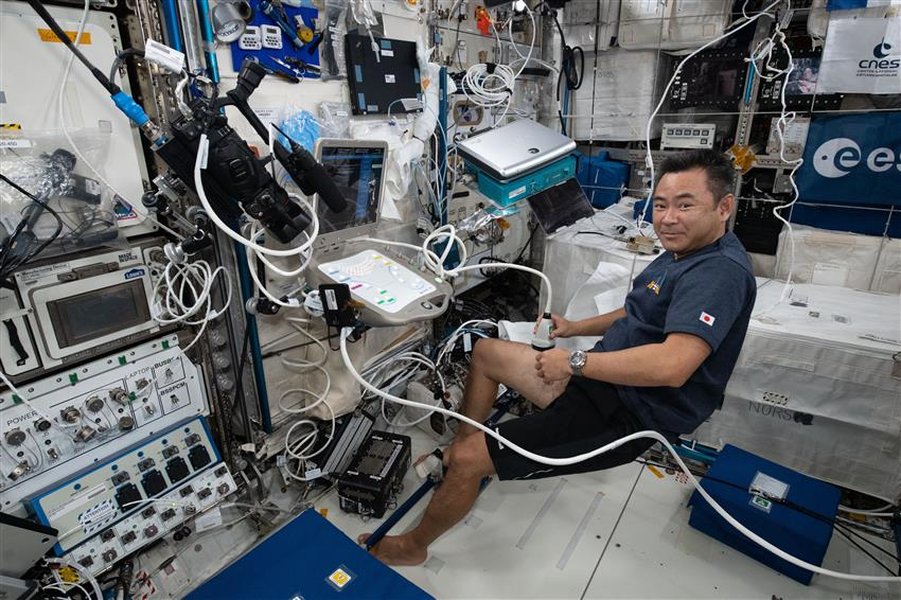
An astronaut performing maintenance inside the International Space Station.
Tools and Facilities for Maintenance
The ISS is equipped with various tools and facilities to support maintenance activities. This includes a Maintenance Work Area (MWA), which is a portable platform that can be set up to provide a stable workbench for tasks. External robotic arms, such as the Canadarm2 and Dextre (Special Purpose Dexterous Manipulator), are also vital for external maintenance and repairs that are too complex or dangerous for astronauts to perform during spacewalks.
The Maintenance Work Area (MWA) provides a dedicated space for conducting repairs and experiments.
Addressing Unexpected Issues and Failures
Despite rigorous planning and preventive maintenance, unexpected problems and failures are a reality of operating in space. The ISS program has encountered various maintenance issues throughout its history, some of which have impacted the assembly timeline or reduced the station's capabilities. The ability of the crew and ground control to quickly diagnose and resolve these issues has been paramount to ensuring the station's continued safe operation.
Learning from these malfunctions is an essential part of the ISS mission, providing invaluable experience for future long-duration space journeys.
The Path Towards Retirement
While extensive maintenance has prolonged the life of the International Space Station, the cumulative effects of the space environment and the aging of its structure necessitate an eventual retirement. NASA and its international partners have a plan in place for the ISS's end of life, which involves a controlled deorbit and transition to new platforms.
The 2030 Target Date
The current plan is for the International Space Station to cease operations around 2030. This decision has been formally announced by NASA and supported by most of the international partners, including the United States, Japan, Canada, and the participating countries of the European Space Agency. Russia has indicated support through 2028.
Several factors contribute to this timeline, including the increasing costs of maintaining an aging structure and the desire to transition to more cost-effective and technologically advanced platforms.
This video discusses the aging of the International Space Station and the reasons behind its planned retirement.
Deorbiting the ISS
The planned end-of-life scenario for the ISS involves a controlled deorbit. This is a critical step to ensure that the station does not pose a risk to populated areas when it re-enters Earth's atmosphere. The process will involve a series of maneuvers to lower the station's orbit, culminating in a controlled descent over a remote area of the Pacific Ocean, known as Point Nemo.
Controlled deorbiting requires significant propellant and precise timing to ensure the debris lands in a designated safe zone. The amount of delta-V (change in velocity) required for deorbiting is substantial, highlighting the energy needed to bring such a massive structure out of orbit.
The Future of Low-Earth Orbit
As the ISS approaches retirement, NASA is actively working with private companies to develop commercial space stations. The vision is to transition from a government-led platform to a model where NASA becomes a customer, purchasing services on commercially owned and operated stations. This approach is intended to be more cost-effective and foster innovation in the private space sector.
Several companies have received funding from NASA to develop designs for future space stations, signaling a shift in how human presence in low-Earth orbit will be sustained in the coming years. This transition aims to ensure an uninterrupted presence in space for research, technology development, and commercial activities.
Comparing ISS Lifespan Factors
The longevity of the ISS is a result of a complex interplay of design considerations, operational strategies, and the inherent challenges of the space environment. The following table summarizes some of the key factors influencing its lifespan:
| Factor | Impact on Lifespan | Mitigation Strategies |
|---|---|---|
| Structural Degradation (Stress, Temperature Cycles, Radiation) | Limits the ultimate lifespan due to material fatigue and weakening. | Material selection, structural monitoring, localized repairs. |
| Micrometeoroid and Orbital Debris Impacts | Can cause damage to the station's hull and components. | Shielding, avoidance maneuvers, damage assessment and repair. |
| System Wear and Tear | Components and systems have finite operational lives. | Preventive maintenance, scheduled replacement of parts, on-orbit repairs. |
| Technological Obsolescence | Older technology may become less efficient or harder to maintain. | Upgrades and replacement of outdated systems. |
| Funding and Political Support | Requires sustained financial investment and international cooperation. | Long-term agreements, demonstrated scientific and technological returns. |
Understanding these factors is crucial for appreciating the engineering and operational challenges of maintaining a human presence in space for extended periods.
Frequently Asked Questions About ISS Longevity
How long was the ISS originally intended to last?
The International Space Station was initially planned to operate through 2015.
Has the ISS lifespan been extended? If so, why?
Yes, the ISS lifespan has been extended multiple times. This has been possible due to successful maintenance, upgrades, and the continued value of the station for scientific research and technology development. The current plan is to operate it until around 2030.
What is the main reason the ISS cannot last forever?
The primary reason the ISS cannot last forever is the structural degradation caused by the harsh space environment, including temperature variations and stresses from docking, which leads to material fatigue over time.
What will happen to the ISS when it is retired?
When the ISS is retired, it is planned to be deorbited in a controlled manner, with the debris intended to fall into a remote area of the Pacific Ocean.
What will replace the International Space Station?
NASA is encouraging the development of commercially owned and operated space stations to replace the ISS and provide platforms for future activities in low-Earth orbit.
References
Last updated May 9, 2025