
Interpreting Your Cholesterol Test Results: A Comprehensive Guide
Understanding Your Lipid Profile for Cardiovascular Health
Key Insights from Your Cholesterol Test
- Total Cholesterol: A measure of all cholesterol in your blood, including HDL, LDL, and 20% of your triglycerides. Aim for levels below 200 mg/dL.
- LDL Cholesterol: Often referred to as "bad" cholesterol, high levels can lead to plaque buildup in arteries. Ideally, keep this below 100 mg/dL, especially if you have existing heart conditions.
- HDL Cholesterol: Known as "good" cholesterol, higher levels are protective against heart disease. Aim for 60 mg/dL or above. Levels above 40 mg/dL for men and 50 mg/dL for women are considered healthy.
As an AI assistant designed to provide information based on comprehensive data, I can offer insights into understanding your cholesterol test results. A cholesterol test, also known as a lipid panel or lipid profile, is a blood test that measures the levels of different types of cholesterol and triglycerides in your blood. These numbers are crucial indicators of your cardiovascular health and help assess your risk of heart disease and stroke.
What is Cholesterol and Why is it Important?
Cholesterol is a waxy, fat-like substance that is essential for building healthy cells. However, high levels of certain types of cholesterol in your blood can lead to the buildup of plaque in your arteries, a condition called atherosclerosis. This can narrow your arteries, restricting blood flow and increasing your risk of heart attack and stroke.
The lipid profile typically measures the following:
- Total Cholesterol: The sum of all cholesterol in your blood.
- Low-Density Lipoprotein (LDL) Cholesterol: Often called "bad" cholesterol because it contributes to plaque buildup.
- High-Density Lipoprotein (HDL) Cholesterol: Known as "good" cholesterol because it helps remove excess cholesterol from your arteries and carries it to the liver for disposal.
- Triglycerides: Another type of fat in your blood that the body uses for energy. High levels can also increase your risk of heart disease, particularly in women.
Understanding Your Lipid Panel Results
Cholesterol levels are typically measured in milligrams per deciliter (mg/dL) in the United States. In some other countries, they may be measured in millimoles per liter (mmol/L).
Total Cholesterol Levels
Your total cholesterol level is a quick overview of the total amount of cholesterol in your blood. It's calculated by adding your HDL cholesterol, LDL cholesterol, and 20% of your triglyceride level.
Here are the general categories for total cholesterol levels in adults:
- Desirable: Below 200 mg/dL (below 5.18 mmol/L)
- Borderline High: 200 to 239 mg/dL (5.18 to 6.18 mmol/L)
- High: 240 mg/dL and above (above 6.18 mmol/L)
LDL Cholesterol Levels
LDL cholesterol is a primary focus for managing heart disease risk. Lower levels are generally better.
Here are the general categories for LDL cholesterol levels in adults:
- Optimal: Less than 100 mg/dL (less than 2.6 mmol/L). This is the goal for individuals with diabetes or heart disease.
- Near Optimal: 100 to 129 mg/dL (2.6 to 3.3 mmol/L)
- Borderline High: 130 to 159 mg/dL (3.4 to 4.1 mmol/L)
- High: 160 to 189 mg/dL (4.1 to 4.9 mmol/L)
- Very High: 190 mg/dL and above (above 4.9 mmol/L). If your level is this high, your doctor will likely recommend treatment.
HDL Cholesterol Levels
Higher levels of HDL cholesterol are associated with a lower risk of heart disease. This is the one number you want to be high.
Here are the general categories for HDL cholesterol levels in adults:
- Low (Poor): Less than 40 mg/dL (less than 1.0 mmol/L) for men, less than 50 mg/dL (less than 1.3 mmol/L) for women.
- Acceptable: 40 to 59 mg/dL (1.0 to 1.5 mmol/L)
- High (Good): 60 mg/dL and above (above 1.5 mmol/L). This level is considered protective against heart disease.
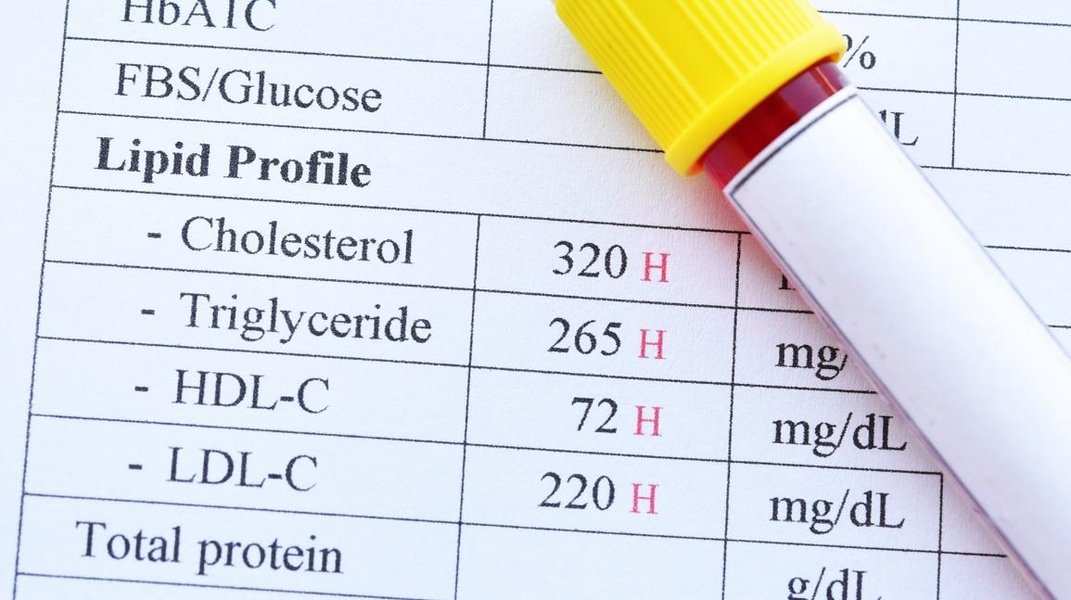
Illustration of typical cholesterol test results.
Triglyceride Levels
Triglycerides are another important component of the lipid profile. High levels can increase your risk of heart disease.
Here are the general categories for triglyceride levels in adults:
- Normal: Less than 150 mg/dL (less than 1.7 mmol/L)
- Borderline High: 150 to 199 mg/dL (1.7 to 2.2 mmol/L)
- High: 200 to 499 mg/dL (2.3 to 5.6 mmol/L)
- Very High: 500 mg/dL and above (above 5.6 mmol/L)
Interpreting Your Results in Context
It's crucial to understand that your cholesterol numbers are just one piece of the puzzle in assessing your overall cardiovascular risk. Your healthcare provider will consider your lipid profile results in conjunction with other factors, including:
- Age
- Sex
- Family history of heart disease
- Smoking status
- Presence of other conditions like diabetes or high blood pressure
- Lifestyle factors such as diet and exercise
These factors contribute to your overall risk score, which helps determine the best course of action for managing your cholesterol levels and reducing your risk of heart attack and stroke. Your doctor may use a risk assessment tool, such as a QRISK score, to estimate your likelihood of having a heart or circulation problem over the next 10 years.
Calculated vs. Direct LDL
You might notice that your LDL level is listed as "calculated" on your results. This means it's an estimate based on your total cholesterol, HDL, and triglycerides using the Friedewald equation:
\[ \text{LDL} = \text{Total Cholesterol} - \text{HDL} - \left( \frac{\text{Triglycerides}}{5} \right) \]This calculation requires fasting beforehand, as triglyceride levels can fluctuate significantly after eating. Sometimes, LDL is measured directly from your blood sample, which doesn't always require fasting.
Visual guide to healthy cholesterol ranges.
What to Do Based on Your Results
Based on your cholesterol test results and your individual risk factors, your healthcare provider will recommend a plan to manage your cholesterol. This may include:
Lifestyle Modifications
For many people, lifestyle changes are the first step and can significantly improve cholesterol levels. These include:
- Dietary Changes: Adopting a heart-healthy diet rich in fruits, vegetables, whole grains, lean proteins, and healthy fats. Limiting saturated and trans fats, cholesterol, and added sugars.
- Regular Exercise: Engaging in regular physical activity can help lower LDL and triglycerides while increasing HDL.
- Weight Management: Losing excess weight can help improve cholesterol levels.
- Quitting Smoking: Smoking damages blood vessels and negatively impacts cholesterol levels.
Medication
If lifestyle changes are not enough to reach your target cholesterol levels, your doctor may prescribe medication. Statins are commonly prescribed drugs that help lower LDL cholesterol. Other medications may be used depending on your specific needs and the type of dyslipidemia you have.
Frequency of Cholesterol Testing
The recommended frequency for cholesterol testing varies depending on your age, health status, and risk factors. For healthy adults aged 20 or older, the American Heart Association recommends having cholesterol checked every four to six years. If you have risk factors for heart disease or are already managing high cholesterol, your doctor may recommend more frequent testing.
Watch this video for a visual explanation of your lipid panel results.
This video provides a helpful overview of the standard cholesterol panel and what the different numbers signify, which can complement your understanding of your own test results.
Additional Cholesterol Components
While a standard lipid profile includes total cholesterol, LDL, HDL, and triglycerides, your doctor may order additional tests for a more complete picture of your lipid health.
Non-HDL Cholesterol
Non-HDL cholesterol is your total cholesterol minus your HDL cholesterol. This measurement includes all the "bad" types of cholesterol (like LDL and VLDL) that contribute to plaque buildup. Some guidelines now emphasize non-HDL cholesterol as a target for treatment, especially in individuals with high triglyceride levels.
A healthy non-HDL cholesterol level is generally below 130 mg/dL (below 3.4 mmol/L).
VLDL Cholesterol
Very low-density lipoprotein (VLDL) is another type of lipoprotein that carries triglycerides. VLDL is considered a "bad" cholesterol because it also contributes to atherosclerosis. VLDL is not typically measured directly in a standard lipid panel because it's difficult to measure accurately. It's often estimated as 20% of your triglyceride level.
Frequently Asked Questions (FAQ)
Do I need to fast before a cholesterol test?
In most cases, yes, you will need to fast for 9 to 12 hours before a lipid panel, consuming only water. This is because triglyceride levels can be affected by recent food intake, which can impact the calculation of LDL cholesterol. However, some tests that measure LDL directly may not require fasting. Always follow your healthcare provider's instructions regarding fasting.
Can stress or illness affect my cholesterol levels?
Yes, stress, acute illness, infection, injury, or even events like a heart attack or stroke can temporarily affect your cholesterol levels. If your results are unexpectedly high or low, your doctor may recommend repeating the test after you have recovered.
What is the difference between mg/dL and mmol/L?
These are different units of measurement for cholesterol levels. mg/dL stands for milligrams per deciliter, commonly used in the United States. mmol/L stands for millimoles per liter, used in many other countries. There are conversion factors to move between the two units, but your lab results will typically be reported in the standard unit for your region.
Can cholesterol levels be too low?
While high cholesterol is a significant concern, very low levels of LDL cholesterol can also be associated with certain health conditions, although this is much less common than high cholesterol. If your cholesterol levels are unusually low, your doctor will investigate the underlying cause.
How does age and gender affect cholesterol levels?
Cholesterol levels can change with age. They tend to rise as people get older. There are also some differences between men and women. Before menopause, women often have lower LDL levels than men. However, after menopause, women's LDL levels tend to rise. Your doctor will consider your age and gender when interpreting your results.
Recommended Further Exploration
- What lifestyle changes can help lower my cholesterol?
- What medications are used to treat high cholesterol?
- What is a heart-healthy diet for managing cholesterol?
- How is my overall cardiovascular risk assessed?
References
Last updated May 19, 2025