
Introduction to Machine Learning and Data Structures & Algorithms
Overview
Machine Learning (ML) and Data Structures & Algorithms (DSA) are two pivotal areas in the realm of computer science and data science. Understanding both is essential for developing efficient, scalable, and intelligent systems. This tutorial provides a structured introduction to both ML and DSA, exploring their fundamental concepts, interconnections, and resources for further learning.
Part 1: Data Structures and Algorithms (DSA)
What are Data Structures?
Data structures are specialized formats for organizing, managing, and storing data efficiently. They are the backbone of algorithm implementation, enabling the manipulation and retrieval of data in optimized ways.
Common Data Structures
- Arrays and Lists: Fundamental structures for storing sequences of elements. Arrays offer constant-time access but have fixed sizes, while lists can dynamically grow or shrink.
- Linked Lists: Consist of nodes where each node points to the next. Ideal for scenarios with frequent insertions and deletions.
- Stacks and Queues: Abstract data types with specific access orders. Stacks follow Last-In-First-Out (LIFO) principles, while Queues follow First-In-First-Out (FIFO).
- Trees: Hierarchical structures, including binary trees, binary search trees, and heaps, used to represent data with inherent hierarchical relationships.
- Graphs: Consist of nodes (vertices) and edges, representing networks and relationships. Essential for modeling complex connections like social networks or transportation systems.
- Hash Tables: Utilize hash functions to map keys to values, offering efficient data retrieval and storage.
Common Algorithms
- Sorting Algorithms: Methods like Quick Sort, Merge Sort, and Heap Sort arrange data in a particular order, optimizing search and retrieval operations.
- Searching Algorithms: Techniques such as Binary Search efficiently locate specific data within structures like arrays or trees.
- Dynamic Programming: A methodology for solving complex problems by breaking them down into simpler subproblems, storing their solutions to avoid redundant computations.
- Graph Algorithms: Algorithms like Depth-First Search (DFS), Breadth-First Search (BFS), Dijkstra’s Algorithm for shortest paths, and Kruskal’s and Prim’s Algorithms for Minimum Spanning Trees.
- Greedy Algorithms: Make locally optimal choices at each step with the hope of finding a global optimum, used in various optimization problems.
Importance of DSA in Computer Science
DSA forms the foundation for efficient programming. A solid grasp of data structures and algorithms enables developers to write optimized code, solve complex problems effectively, and build systems that scale. In the context of Machine Learning, efficient data handling and algorithm optimization are crucial for training models and processing large datasets.
Learning Resources for DSA
- Khan Academy: Offers comprehensive tutorials on algorithms and data structures. Visit Khan Academy Algorithms.
- GeeksforGeeks: A vast repository of articles, tutorials, and practice problems on various DSA topics. Explore more at GeeksforGeeks.
- Books: "Introduction to Algorithms" by Cormen, Leiserson, Rivest, and Stein is a highly regarded resource for in-depth understanding.
Part 2: Machine Learning (ML)
What is Machine Learning?
Machine Learning is a subset of artificial intelligence that focuses on enabling computers to learn from data and make decisions or predictions without being explicitly programmed. It leverages statistical techniques to identify patterns and insights within data.
Key Concepts in ML
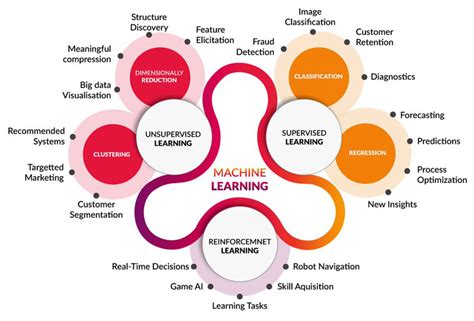
- Supervised Learning: Involves training models on labeled data, where the desired output is known. Common tasks include classification and regression.
- Unsupervised Learning: Deals with unlabeled data, aiming to identify inherent patterns or structures. Techniques include clustering and dimensionality reduction.
- Reinforcement Learning: Focuses on training agents to make a sequence of decisions by rewarding desired behaviors and penalizing undesired ones.
Popular ML Algorithms
- Linear Regression: Predicts a continuous output variable based on one or more input features.
- Logistic Regression: Used for binary classification tasks, predicting categorical outcomes.
- Decision Trees: Tree-like models used for both classification and regression tasks, making decisions based on feature values.
- Support Vector Machines (SVM): Effective for both classification and regression by finding the optimal hyperplane that separates classes.
- Neural Networks: Inspired by the human brain, these models consist of interconnected layers of nodes capable of capturing complex patterns in data.
- k-Nearest Neighbors (k-NN): A simple, instance-based learning algorithm used for classification and regression by analyzing the closest data points.
Applications of Machine Learning
- Image Recognition: Identifying and classifying objects within images.
- Natural Language Processing (NLP): Enabling machines to understand and respond to human language.
- Recommendation Systems: Suggesting products or content based on user preferences and behavior.
- Predictive Analytics: Forecasting future trends based on historical data.
- Autonomous Vehicles: Enabling self-driving cars to perceive and navigate their environment.
Importance of ML in Modern Technology
ML has revolutionized numerous industries by automating decision-making processes, enhancing data analysis, and enabling innovations that were previously unattainable. Its ability to learn and adapt makes it indispensable for developing intelligent applications and systems.
Learning Resources for ML
- Google's Machine Learning Crash Course: A free, comprehensive course offering practical ML knowledge. Access it at Google ML Crash Course.
- Stanford CS229 (Machine Learning): A renowned university course with available lecture notes and videos. Search for "Stanford CS229" to find resources.
- Andrew Ng's Machine Learning Course on Coursera: A popular introductory course that covers fundamental ML concepts. Find it by searching "Andrew Ng Machine Learning Coursera".
- Books: "Hands-On Machine Learning with Scikit-Learn, Keras, and TensorFlow" by Aurélien Géron provides practical insights and implementations.
Combining Machine Learning with Data Structures & Algorithms
The Interconnection Between ML and DSA
Data Structures and Algorithms are integral to the efficient implementation of Machine Learning models. Efficient data handling, processing large datasets, and optimizing computational tasks are paramount in ML. Here’s how DSA contributes to ML:
- Efficient Data Storage: Utilizing appropriate data structures like hash tables and trees ensures quick data retrieval and manipulation, essential for preprocessing and feature engineering in ML.
- Algorithm Optimization: Implementing ML algorithms with optimized sorting and searching techniques can significantly reduce computational overhead and training time.
- Scalability: Proper use of data structures allows ML models to scale efficiently with increasing data volumes, maintaining performance and accuracy.
- Graph-Based ML: Many advanced ML techniques, such as graph neural networks, rely on graph data structures to model complex relationships and interactions.
Practical Applications
- Training Efficiency: Sorting algorithms can organize data efficiently for faster training iterations in ML models.
- Real-Time Processing: Data structures like queues enable real-time data processing and streaming, vital for applications like recommendation systems and online learning.
- Memory Management: Optimized data structures contribute to better memory utilization, allowing handling of large-scale datasets without significant performance degradation.
- Algorithm Implementation: Implementing ML algorithms such as k-NN or decision trees requires a solid understanding of appropriate data structures to ensure accuracy and speed.
Case Study: k-Nearest Neighbors (k-NN)
The k-NN algorithm is a simple yet effective classification technique that relies heavily on data structures and algorithms:
- Data Storage: Efficient storage using arrays or lists allows quick access to training data points.
- Searching: Implementing spatial data structures like k-d trees can expedite the search for nearest neighbors, reducing the computational complexity from linear to logarithmic time.
- Distance Calculation: Optimized algorithms for calculating distances (e.g., Euclidean distance) enhance the performance of the k-NN classifier.
Best Practices for Integrating ML and DSA
Optimizing Code Performance
Writing optimized code is crucial for performance, especially when dealing with large datasets or complex models. Leveraging efficient data structures and algorithms can lead to significant improvements in training and inference times.
Choosing the Right Tools and Libraries
Utilize established libraries and frameworks that implement optimized DSA within their ML algorithms. Libraries like Scikit-Learn, TensorFlow, and PyTorch are built with performance in mind, abstracting complex DSA implementations.
Balancing Complexity and Efficiency
While advanced data structures and algorithms can offer performance gains, it's essential to balance their complexity with maintainability and readability of the code. Strive for clear, efficient implementations that can be easily understood and modified.
Continuous Learning and Adaptation
The fields of ML and DSA are continuously evolving. Staying updated with the latest advancements, best practices, and optimization techniques ensures that your skills and implementations remain relevant and efficient.
Additional Resources
-
Coursera: Offers a wide range of courses in both ML and DSA.
-
edX: Provides comprehensive programs and certifications in computer science topics.
-
Udacity: Features nanodegree programs focused on practical applications of ML and DSA.
-
Books:
- "Hands-On Machine Learning with Scikit-Learn, Keras, and TensorFlow" by Aurélien Géron for practical ML implementations.
-
"Introduction to Algorithms" by Cormen, Leiserson, Rivest, and Stein for in-depth understanding of DSA.
Conclusion
Mastering both Machine Learning and Data Structures & Algorithms is essential for anyone aspiring to excel in the fields of computer science and data science. While ML provides the tools and techniques for extracting insights and making predictions from data, DSA ensures that these processes are carried out efficiently and effectively. By understanding and integrating these two domains, you can build robust, scalable, and intelligent systems capable of tackling complex real-world problems.
Last updated January 3, 2025