
Unmasking Investment Properties: Which Scenario Doesn't Belong?
A deep dive into accounting standards to identify the true nature of property investments.
Understanding what constitutes an "investment property" is crucial, not just for investors but also for accurate financial reporting. The definition, largely governed by International Accounting Standard 40 (IAS 40), helps distinguish properties held for rental income or capital appreciation from those used for other purposes. Let's explore the given scenarios to pinpoint which one falls outside this classification.
Key Insights at a Glance
- Investment Property Defined: Primarily, property (land or building) held to earn rental income, for capital appreciation, or both. It's not for owner-occupation or for sale in the ordinary course of business.
- Scope of IAS 40: This standard provides clear criteria and examples, including how properties leased by a lessee (as right-of-use assets) can qualify.
- The Deciding Factor: The core of the analysis lies in whether each option aligns with the primary purpose of holding an investment property as per IFRS.
What Defines an Investment Property?
According to International Accounting Standard 40 (IAS 40), an investment property is defined as property (which can be land, a building, part of a building, or both) held by the owner, or by a lessee as a right-of-use asset, with the intention to earn rental income, achieve capital appreciation, or both. This definition is critical because it differentiates investment properties from other types of assets, such as:
- Owner-occupied property (IAS 16 - Property, Plant and Equipment): Property held for use in the production or supply of goods or services, or for administrative purposes.
- Property held for sale in the ordinary course of business (IAS 2 - Inventories): Property developed or acquired with the intention of resale.
The classification hinges on the purpose for which the property is held. Even if a property is currently vacant, if the intention is to lease it out or hold it for its value to increase, it can qualify as an investment property.

A commercial building available for lease, often considered an investment property.
Analyzing the Options: Which One Doesn't Fit?
Let's examine each option provided by the user against the established definition of investment property:
Option A: A vacant building held for rental in terms of an operating lease
Is it an Investment Property? Yes.
IAS 40.8(d) explicitly includes "a building that is vacant but is held to be leased out under one or more operating leases" as an example of investment property. The key here is the intention to earn rental income. The current vacancy does not disqualify it, as long as it's being held for the purpose of generating rentals. This aligns perfectly with the core definition.

Vacant commercial buildings held for future rental income are typical investment properties.
Option B: Land for which the future use has not yet been determined
Is it an Investment Property? Yes.
IAS 40.8(b) lists "land held for a currently undetermined future use" as an example of investment property. The standard clarifies that if an entity has not determined whether it will use the land as owner-occupied property or for short-term sale in the ordinary course of business, the land is regarded as being held for capital appreciation. Therefore, such land falls within the scope of investment property.
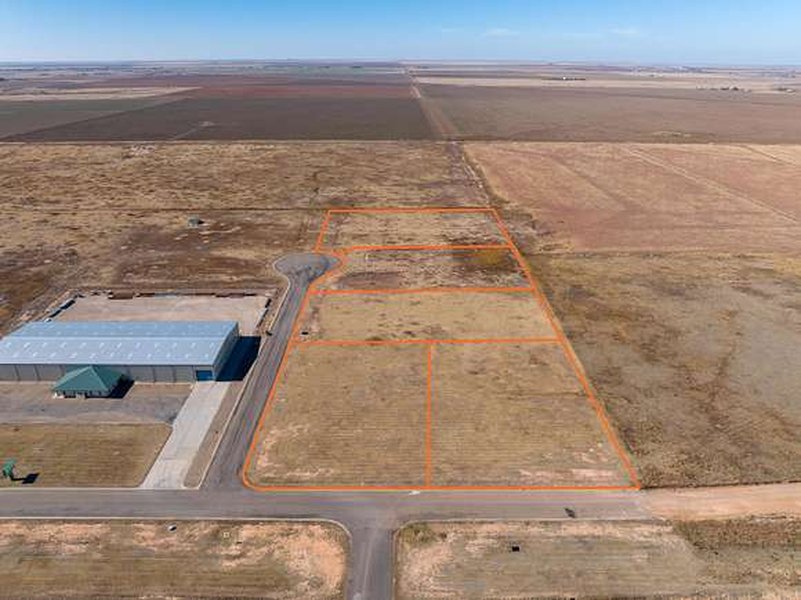
Undeveloped land with undetermined future use can be an investment property if held for capital appreciation.
Option C: A building held as a right-of-use asset and leased out under operating lease agreements
Is it an Investment Property? Yes.
This scenario involves a property that a lessee controls (as a right-of-use asset under IFRS 16 Leases) and subsequently subleases to another party under an operating lease. IAS 40.5 was amended to explicitly state that investment property is "property (land or a building—or part of a building—or both) held (by the owner or by the lessee as a right-of-use asset) to earn rentals or for capital appreciation or both".
If the lessee holds this right-of-use asset for the purpose of earning rental income (by subleasing it), it meets the definition of an investment property. The entity would then have an accounting policy choice to measure this investment property either at cost or fair value, as per IAS 40.30.
The Verdict: Identifying the Outlier
Based on the analysis of each option against the criteria set out in IAS 40:
- Option A is an example of investment property.
- Option B is an example of investment property.
- Option C is an example of investment property.
Since all three options (A, B, and C) describe scenarios that can be classified as investment property under IFRS, none of them individually represent something that is *NOT* an example of investment property.
Therefore, the correct response to the question "Which of the following is NOT an example of investment property?" is:
Option D: None of the above.
This means that all the listed scenarios (A, B, and C) are indeed examples of what can be considered investment property, assuming they meet all underlying criteria (like intent and, where applicable, accounting policy choices for fair value measurement of ROU assets).
Summary of Options vs. Investment Property Classification
The table below summarizes the assessment of each option based on IAS 40 criteria:
| Option | Description | Qualifies as Investment Property? | Rationale (based on IAS 40) |
|---|---|---|---|
| A | A vacant building held for rental in terms of an operating lease | Yes | IAS 40.8(d) - Held to earn rentals. |
| B | Land for which the future use has not yet been determined | Yes | IAS 40.8(b) - Held for capital appreciation. |
| C | A building held as a right-of-use asset and leased out under operating lease agreements | Yes | IAS 40.5 (amended) - ROU asset held by lessee to earn rentals. |
| D | None of the above | N/A (This is the answer to the user's question) | Options A, B, and C are all examples of investment property. |
Visualizing Investment Property Characteristics
The following chart illustrates key factors influencing the classification of a property as an investment property, comparing the provided options and a contrasting example (owner-occupied property). A higher score (out of 5) indicates a stronger alignment with typical investment property characteristics. Note that "IFRS 16 ROU Applicability" is specifically relevant for leased assets considered for investment property classification, and "IAS 40 Fair Value Option" refers to the accounting choice available for investment properties.
This chart helps to visually represent how strongly each scenario aligns with the core attributes of an investment property, such as the intent to generate returns (rental or capital appreciation) and its non-operational nature from the holder's perspective.
Mapping the Concepts of Investment Property
To further clarify the relationships between the core ideas surrounding investment properties, the mindmap below outlines the definition, examples (including those from your query), and key considerations under IAS 40.
Owner-Occupied (IAS 16)
Inventory (IAS 2)"] id2["Scope: What Qualifies?"] id2a["Land"] id2b["Buildings (or part of)"] id2c["Held by Owner"] id2d["Held by Lessee as Right-of-Use Asset (IFRS 16)"] id3["Examples Discussed"] id3a["Option A: Vacant Building for Lease"] id3aa["Intent to earn rentals"] id3b["Option B: Land with Undetermined Use"] id3bb["Presumed for capital appreciation"] id3c["Option C: ROU Asset Subleased"] id3cc["Lessee holds to earn rentals"] id4["Key Exclusions (Not Investment Property)"] id4a["Property used in production/supply of goods/services"] id4b["Property used for administrative purposes"] id4c["Property held for sale in ordinary course of business"] id5["Accounting Considerations"] id5a["Initial Recognition at Cost"] id5b["Subsequent Measurement:
Fair Value Model OR
Cost Model"] id5c["Specific rules for ROU assets"]
This mindmap visually structures the definition, scope, and examples of investment property, highlighting how the options presented fit within the IAS 40 framework.
IAS 40 Explained: Investment Property Fundamentals
For a concise explanation of IAS 40, including definitions and examples of investment property, the following video provides valuable insights. It covers the core principles discussed and can help solidify understanding of how these properties are accounted for.
This video, "Investment Property (IAS 40) | Explained with Examples", directly addresses the definition and provides examples which are pertinent to understanding the classification of the options in question. It elaborates on the criteria that differentiate investment property from other assets, which is key to correctly identifying which scenarios fit the definition.
Frequently Asked Questions (FAQ)
1. What is the main purpose of holding an investment property?
The main purpose of holding an investment property is to earn rental income, to benefit from capital appreciation (its value increasing over time), or a combination of both. It is not held for use in the entity's own operations or for sale in the normal course of business.
2. Can a property I use for my own business be an investment property?
No, a property used for your own business operations (e.g., as an office, factory, or for administrative purposes) is classified as owner-occupied property under IAS 16 (Property, Plant and Equipment), not as investment property under IAS 40. The distinction is based on the primary use of the property.
3. How does IFRS 16 affect the classification of leased properties as investment property?
IFRS 16 (Leases) requires lessees to recognize a right-of-use (ROU) asset for most leases. IAS 40 was amended to clarify that such an ROU asset can be classified as investment property if the lessee holds it to earn rentals (e.g., by subleasing it) or for capital appreciation, and it otherwise meets the definition of investment property. The lessee can then choose to account for this ROU investment property using either the cost model or the fair value model as per IAS 40.
4. Is land always considered an investment property?
Not necessarily. Land is considered investment property if it's held for long-term capital appreciation or for a currently undetermined future use (which implies it's held for capital appreciation). However, if land is used for owner-occupied purposes (e.g., underlying an owner-occupied factory), or if it's held for sale in the ordinary course of business (inventory), it would not be classified as investment property.
Recommended Further Exploration
- Explore the distinctions between investment property (IAS 40) and owner-occupied property (IAS 16).
- Learn more about the application of the fair value model for investment properties.
- Discover more scenarios of properties that do not qualify as investment properties under IFRS.
- Understand how mixed-use properties (partially owner-occupied, partially leased out) are treated under IAS 40.
References
Last updated May 17, 2025