
Formation of Ions and Ionic Bonds in Groups I and VII
A comprehensive guide to understanding electron transfer and ionic bond formation
Key Highlights
- Stable Electron Configurations: Atoms achieve stability by reaching a noble gas-like electron configuration, leading to ion formation.
- Electron Transfer: Metals (Group I) lose electrons to form cations, while non-metals (Group VII) gain electrons to form anions, paving the way for ionic bonding.
- Electrostatic Attraction: The oppositely charged ions attract each other, forming strong ionic bonds, as seen in compounds like sodium chloride.
Understanding Ion Formation
What Are Ions?
Ions are atoms or molecules that have gained or lost one or more electrons, resulting in an electrical charge imbalance. The loss or gain of electrons disrupts the neutrality that is typically maintained between the number of protons (positively charged particles in the nucleus) and electrons (negatively charged particles orbiting the nucleus). When this balance is altered, the particle becomes an ion.
Cations: Formed by Electron Loss
A cation is formed when an atom loses one or more electrons, leaving it with a net positive charge. Metals, especially those found in Group I of the periodic table, often lose electrons due to their electron configuration. They have only one electron in their outermost shell, which they can shed easily in order to achieve a more stable electron arrangement resembling that of a noble gas. For instance, a sodium atom (Na) with an electron configuration of \(2,8,1\) can lose one electron to form a sodium cation (Na⁺) with an electron configuration of \(2,8\). This loss of an electron results in an imbalance: the number of protons in the nucleus exceeds the number of electrons, leading to an overall positive charge.
Anions: Formed by Electron Gain
Conversely, an anion forms when an atom gains one or more electrons, resulting in a net negative charge. Non-metals, particularly those in Group VII of the periodic table, tend to gain electrons because doing so enables them to fill their valence shell to reach a stable arrangement. For example, a chlorine atom (Cl) with an electron configuration of \(2,8,7\) gains one electron to form a chloride anion (Cl⁻) with a complete outer shell of \(2,8,8\), mirroring the configuration of the noble gas argon. The addition of an electron results in more electrons than protons, culminating in a negative charge.
The Role of the Octet Rule
Achieving Stability Through Electron Configuration
At the core of ion formation is the desire of atoms to achieve a full outer shell, which is most commonly comprised of eight electrons—a principle summarized by the octet rule. This rule is fundamental in chemical reactions and bonding because atoms with eight electrons in their valence shell generally exhibit lower energy and greater stability. Noble gases, found in Group 18 of the periodic table, naturally possess complete valence shells, making them especially stable and largely inert.
When atoms do not have a complete octet, they undergo chemical reactions that enable them to lose or gain electrons. Metals, typically deficient in valence electrons, lose electrons, thereby adopting the electron configuration of the next noble gas in the periodic table. Non-metals, which are usually close to having a full outer shell, gain electrons to fill the remaining orbitals. This pursuit of stability drives both the ionization process and the subsequent formation of bonds between ions.
Group I and Group VII: A Case Study
Metals Losing Electrons and Non-Metals Gaining Electrons
The periodic table is organized in such a way that the elements in Group I (alkali metals) and Group VII (halogens) provide exemplary cases of the formation of ions and ionic bonds. Group I elements, which include lithium (Li), sodium (Na), and potassium (K), all contain a single electron in their outermost shell. Their propensity to lose that one electron is inherently linked to the reduction of repulsive electron-electron interactions in combination with the stabilization of the overall ion structure.
Group I Elements: Characteristics and Behavior
Due to having one electron in their outer orbital, Group I elements are highly reactive and readily lose that electron during chemical reactions. The process is not only thermodynamically favorable but also aligns with the principle of achieving a complete and stable electron arrangement. Once the electron is lost, these elements attain a positively charged ionic state. Using sodium (Na) as a primary example, when it loses its lone valence electron, the resulting sodium ion (Na⁺) has a fully closed electron shell similar to that of neon, a noble gas.
Group VII Elements: Reactivity and Electron Acquisition
On the opposite end of the spectrum, Group VII elements contain seven valence electrons, operating on the verge of reaching a complete octet. Their near completion of the valence shell makes them highly inclined to acquire one extra electron to obtain a noble gas-like configuration. Chlorine (Cl) exemplifies this case, where the addition of one electron transforms it from a neutral atom to a chloride ion (Cl⁻) with an electron configuration reminiscent of argon. This electron acceptance is energetically favorable and is key to the formation of ionic compounds.
Ionic Bond Formation
How Ions Combine to Form Ionic Bonds
Once ions have formed through the loss and gain of electrons, the next step in the process is the formation of ionic bonds. Ionic bonds are a type of chemical bond characterized by the electrostatic attraction between oppositely charged ions. In the case of Group I and Group VII elements, the positively charged cations and negatively charged anions come together to create a stable ionic compound.
The Electrostatic Attraction
The ionic bond is formed when a cation and an anion attract one another due to the opposite nature of their charges. The force of attraction between these ions is incredibly strong, leading to the formation of a crystalline lattice structure, as observed in compounds like sodium chloride (NaCl). In this structure, each sodium ion is surrounded by several chloride ions and vice versa, which maximizes the electrostatic attractions while minimizing the repulsions. This arrangement is energetically advantageous, providing the compound with considerable stability.
Electron Transfer Process: A Closer Look
The bonding process can be broken down into a series of steps:
- Step 1: The metal atom (Group I) loses its outer electron, forming a cation (positive ion).
- Step 2: The non-metal atom (Group VII) gains an electron to complete its outer shell, forming an anion (negative ion).
- Step 3: The newly formed ions are attracted to each other due to their opposite charges, resulting in the creation of a bond.
Illustrative Example: Sodium and Chlorine
To put this process into context, consider the reaction between sodium (Na) and chlorine (Cl):
- Sodium (Na): With the electron configuration \(2,8,1\), sodium loses one electron to form the Na⁺ ion, which now has the electron configuration \(2,8\).
- Chlorine (Cl): With the electron configuration \(2,8,7\), chlorine gains one electron to complete its outer shell, forming the Cl⁻ ion with an electron configuration of \(2,8,8\).
The transfer of an electron from sodium to chlorine results in oppositely charged ions. The strong electrostatic attraction between the Na⁺ and Cl⁻ ions holds them firmly together, creating the ionic compound sodium chloride (NaCl). This compound exhibits properties typical of ionic compounds: high melting points, electrical conductivity when molten or dissolved in water, and a crystalline structure.
Crystal Lattice and Its Importance
Understanding the Arrangement of Ions in Ionic Compounds
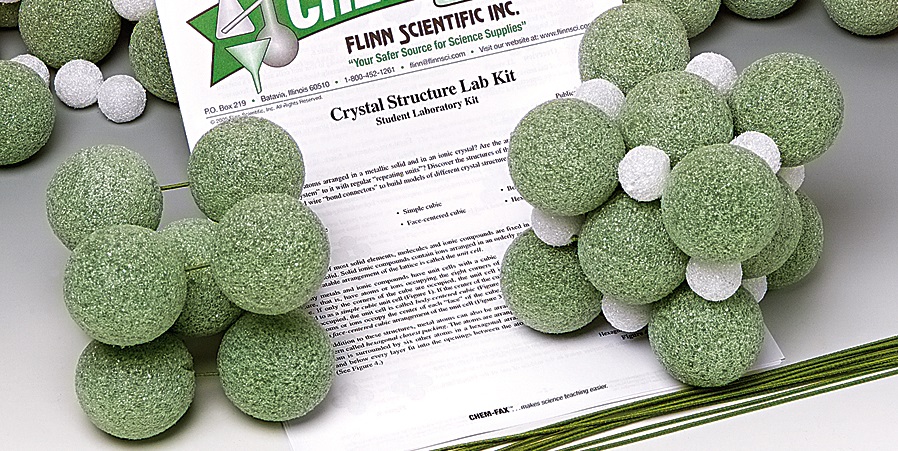
An essential aspect of ionic bonding is the formation of a crystal lattice, which is the regular, repeating three-dimensional arrangement of ions in an ionic compound. This structured pattern plays a crucial role in dictating the physical properties of the compound. The lattice arrangement ensures that there is a balance of attractive forces between oppositely charged ions, as well as repulsive forces when ions of the same charge approach each other.
Properties Influenced by the Crystal Lattice
The crystal lattice contributes to several distinctive properties of ionic compounds:
| Property | Explanation |
|---|---|
| High Melting and Boiling Points | The strong ionic bonds in the lattice require significant energy to break, resulting in high melting and boiling points. |
| Electrical Conductivity | In the molten state or when dissolved in water, ions are free to move, allowing the compound to conduct electricity. |
| Brittleness | If a stress is applied, layers of ions may shift, causing like-charged ions to align and repel, leading to fracturing. |
This table illustrates how the arrangement of ions into a crystal lattice is instrumental in determining the macroscopic properties of ionic compounds. The interplay of strong electrostatic forces within the lattice structure is a fundamental principle in the study and application of materials chemistry.
Comparing Ionic and Covalent Bonding
Distinctive Features Between Two Bonding Types
While the focus of this discussion is on ionic bonding, it is useful to distinguish it from covalent bonding for a deeper understanding of chemical mechanisms. In covalent bonds, electrons are shared between atoms rather than being transferred from one atom to another as in ionic bonding.
Ionic Bonding
- Involves the complete transfer of electrons between atoms.
- Predominantly occurs between metals and non-metals.
- Produces compounds with high melting and boiling points, and distinct crystal lattice structures.
Covalent Bonding
- Involves the sharing of electrons between atoms.
- Typically occurs between non-metal elements.
- Results in molecules that may have lower melting and boiling points compared to ionic compounds.
Recognizing these differences is critical when predicting the properties and behaviors of various compounds. Ionic bonding results in the formation of rigid crystal structures due to the alternation of positive and negative ions, whereas covalent bonding often results in more flexible molecular structures.
Real-World Applications of Ionic Compounds
Practical Uses and Significance
Ionic compounds are ubiquitous both in nature and in various industries. Their unique physical properties make them essential in numerous applications. For example, sodium chloride (table salt) is fundamental in food preservation and flavoring. In addition, numerous ionic compounds are used in the manufacturing of ceramics, glass, and even in pharmaceuticals.
Environmental and Biological Relevance
Beyond industrial applications, ionic compounds play significant roles in biological systems. The ionic balance across cell membranes is vital for processes such as nerve conduction and muscle contraction. Electrolytes, which include compounds like sodium chloride, potassium chloride, and calcium phosphate, are critical in maintaining cellular functions and overall homeostasis.
Step-by-Step Recap of the Process
A Comprehensive Review
To summarize, the process of forming ions and ionic bonds can be recapped in the following steps:
- Atoms seek a stable electron configuration by reaching a full valence shell, often aiming for eight electrons.
- Metals, especially those in Group I, lose one electron to form cations with a positive charge.
- Non-metals, notably those in Group VII, gain one electron to form anions with a negative charge.
- The resulting oppositely charged ions are attracted to each other due to electrostatic forces.
- This attraction draws the ions together to form a strong ionic bond, resulting in a structured crystal lattice with stable properties.
Each of these steps is governed by the principles of electron configuration, the octet rule, and electrostatic interactions. Together, they provide a clear framework for understanding how atoms transform into ions and how these ions subsequently interact to form a wide variety of ionic compounds.
Conclusion
In conclusion, the formation of ions via electron loss or gain is a fundamental chemical process driven by the quest for a stable, noble gas-like electron configuration as dictated by the octet rule. Metals, especially those in Group I, readily lose electrons to become positive cations, while non-metals in Group VII usually gain electrons to achieve a filled outer shell, resulting in negative anions. The subsequent attraction between these oppositely charged ions forms ionic bonds, leading to sturdy, crystalline compounds such as sodium chloride. Ionic compounds are characterized by distinct physical properties—including high melting and boiling points, electrical conductivity in their molten or dissolved state, and a robust lattice structure—that have significant practical and environmental applications.
Understanding ion formation and ionic bonding not only provides insight into fundamental chemical principles but also paves the way for appreciating advanced applications in materials science, biology, and industry. The interplay between atomic structure, energy transfer, and electrostatic forces governs the behavior of matter at the molecular level, thereby influencing everyday substances as well as sophisticated technological materials.
References
- Why do ions form from electron loss or gain - TutorChase
- Ions and Ionic Bonds - Save My Exams
- Ions - Losing and Gaining Electrons - LibreTexts
- Brainly Chemistry Discussion
- Group I, Group VII, and Group O Elements - Mini Chemistry
Recommended Searches
Last updated February 28, 2025