
iPhone 16e vs. iPhone 14: Which Apple Smartphone Reigns Supreme in 2025?
A deep dive into Apple's newer budget-friendly powerhouse against its established predecessor.
Choosing between Apple's iPhone 16e, released in early 2025, and the iPhone 14, a stalwart from 2022, involves weighing cutting-edge advancements against proven reliability. While they share a similar design ethos, key differences in performance, camera technology, and future-proofing features set them apart. This comprehensive comparison will help you determine which device best suits your needs.
Key Takeaways: iPhone 16e vs. iPhone 14
- Performance Leap: The iPhone 16e boasts the newer A18 chip and 8GB of RAM, offering significantly faster performance and enabling advanced Apple Intelligence features not available on the A15-powered iPhone 14 with 6GB RAM.
- Camera Philosophy Shift: The iPhone 16e features a single, high-resolution 48MP main camera, excelling in detail, while the iPhone 14 offers a dual-camera system with 12MP wide and ultrawide lenses, providing more photographic versatility.
- Modern Conveniences vs. Established Features: The iPhone 16e introduces the customizable Action Button and USB-C port but omits MagSafe. The iPhone 14 retains the traditional mute switch, Lightning port, and includes MagSafe wireless charging.
Design and Build: Familiar Forms, Notable Changes
At first glance, the iPhone 16e and iPhone 14 share a familial resemblance, both sporting a 6.1-inch form factor and aerospace-grade aluminum frames. However, the iPhone 16e, often seen as a spiritual successor to the iPhone SE line but with a modern iPhone 14-like body, introduces several key design modifications.
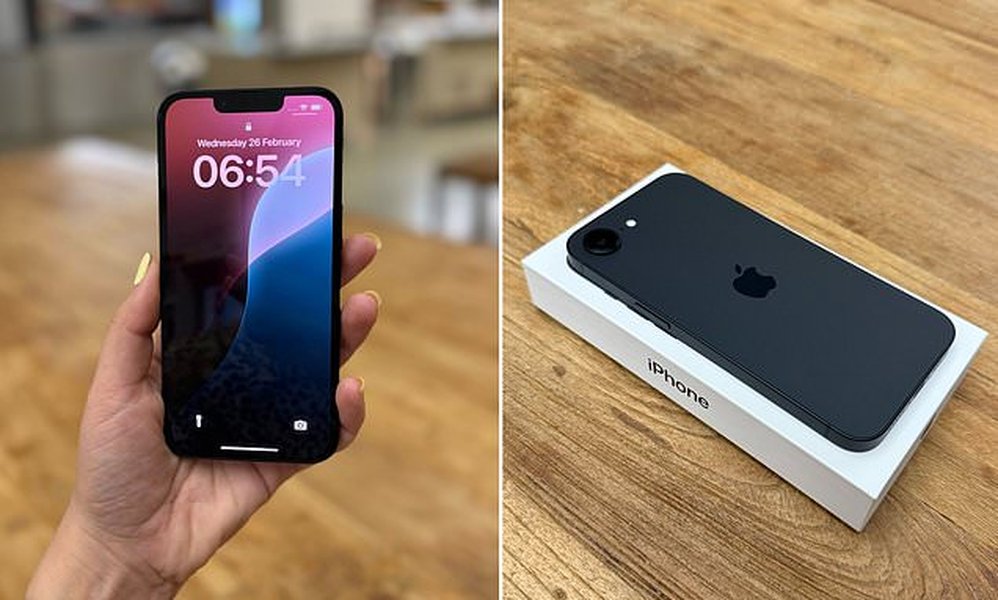
The iPhone 16e, showcasing its design which is reminiscent of the iPhone 14 but with subtle modernizations.
iPhone 16e: The Modern Iteration
The iPhone 16e weighs approximately 167 grams, making it comfortably light. Its body is a modified version of the iPhone 14's, but with a redesigned camera module to house a single lens. A significant change is the replacement of the traditional mute switch with the new customizable Action Button, previously seen on Pro models. Furthermore, in line with evolving standards and regulations, the iPhone 16e adopts a USB-C port. It features a Ceramic Shield front for durability and a glass back.
iPhone 14: The Classic Approach
The iPhone 14 retains the familiar dual-camera diagonal layout on its rear. It features the classic mute switch and the proprietary Lightning port for charging and data transfer. Apple equipped the iPhone 14 with Ceramic Shield on both the front and back glass for enhanced toughness. Both devices maintain an IP68 rating for dust and water resistance, ensuring they can withstand splashes and brief submersion.
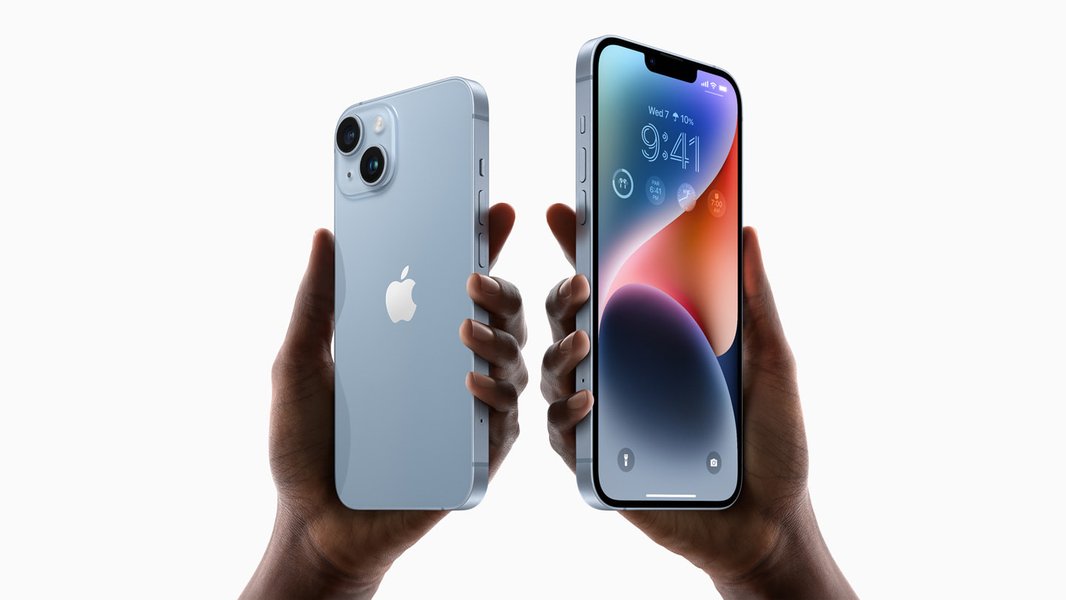
The Apple iPhone 14, highlighting its dual-camera system and established design language.
Display: A Tie in Visuals
When it comes to the display, both the iPhone 16e and iPhone 14 offer a remarkably similar viewing experience. Both devices are equipped with a 6.1-inch Super Retina XDR OLED panel.
Shared Specifications:
- Resolution: 1170 x 2532 pixels (or 2532 x 1170 pixels depending on orientation), resulting in a pixel density of approximately 460 ppi.
- Brightness: Around 800 nits typical max brightness, with higher peak brightness for HDR content.
- Refresh Rate: Standard 60Hz. Neither model features Apple's ProMotion technology for higher refresh rates, which remains an exclusive for Pro models.
This means that for everyday tasks, media consumption, and general use, the visual quality, color accuracy, and sharpness will be virtually indistinguishable between the two phones. Both provide vibrant colors and deep blacks characteristic of OLED technology.
Performance and Hardware: The Generational Divide
This is where the iPhone 16e firmly establishes its lead. Powered by newer silicon and more memory, it's built for more demanding tasks and future software innovations.
Processor and RAM
iPhone 16e: Powering the Future
The iPhone 16e is equipped with the A18 chip (the same generation expected in the standard iPhone 16 models) and 8GB of RAM. This combination not only delivers a significant boost in CPU and GPU performance over the iPhone 14 but is also crucial for enabling Apple's advanced on-device AI capabilities, marketed as Apple Intelligence. The A18 is designed for efficiency, contributing to better battery life and improved thermal management during intensive tasks like gaming.
iPhone 14: Still Capable, But Older Tech
The iPhone 14 uses the A15 Bionic chip (the version with a 5-core GPU, originally from the iPhone 13 Pro series) paired with 6GB of RAM. While still a very capable processor that handles everyday tasks and gaming smoothly, it is a generation behind the A18. Crucially, the A15 and 6GB RAM configuration does not meet Apple's minimum requirements for the full suite of Apple Intelligence features.
Connectivity and Modem
The iPhone 16e features Apple's in-house designed C1 modem, marking a shift away from Qualcomm modems for this model. While real-world performance comparisons will depend on network conditions, Apple's own modems aim for optimized integration. The iPhone 14 utilizes a Qualcomm Snapdragon modem (reportedly the X65 or X70, depending on the specific batch/region, though the X70 is often cited for the series).
The most user-facing connectivity difference is the port: USB-C on the iPhone 16e versus Lightning on the iPhone 14. USB-C offers broader compatibility with modern accessories and potentially faster data transfer speeds, depending on the USB specification implemented by Apple (typically USB 2.0 speeds on base iPhone models).
Camera Systems: Single High-Res vs. Dual-Lens Versatility
The camera philosophies of the iPhone 16e and iPhone 14 diverge significantly, offering different strengths.
iPhone 16e: The 48MP Fusion Main Camera
The iPhone 16e adopts a single 48-megapixel "Fusion" main camera. This high-resolution sensor allows for capturing incredibly detailed images, typically outputting 24MP photos by default through pixel binning for improved low-light performance. It also enables a high-quality 2x optical-equivalent zoom by cropping from the center of the 48MP sensor. This approach aims to provide two-camera functionality (wide and 2x telephoto) from a single physical lens. It supports advanced computational photography features, improved low-light performance over older 12MP sensors, and 4K Dolby Vision video recording. However, it lacks a dedicated ultrawide lens.
iPhone 14: Dual 12MP System with Ultrawide
The iPhone 14 features a more traditional dual-camera setup:
- A 12MP Main (Wide) camera with sensor-shift optical image stabilization.
- A 12MP Ultrawide camera, allowing for expansive shots and creative perspectives.
This video offers a review of specifications, directly comparing the iPhone 16e and iPhone 14, which can provide further visual context on their differences.
Battery Life and Charging: Extended Power and New Ports
Battery life sees a noticeable improvement in the iPhone 16e, complemented by a change in charging standards.
Endurance
The iPhone 16e is touted to have significantly better battery life, with some reports suggesting a battery capacity around 4005mAh, offering up to 26 hours of video playback. This is a considerable step up from the iPhone 14's battery (around 3279mAh), which provides approximately 20 hours of video playback under similar test conditions. The A18 chip's efficiency and potentially improved thermal design in the 16e contribute to this enhanced longevity, allowing for up to 6 more hours of usage in some daily tests.
Charging Methods
As mentioned, the iPhone 16e moves to USB-C for wired charging. Both phones support standard Qi wireless charging. However, a key difference is that the iPhone 14 supports MagSafe wireless charging (up to 15W) and the ecosystem of MagSafe accessories. The iPhone 16e, in a move likely to differentiate it from higher-tier models or as a cost-saving measure, omits MagSafe compatibility. This means iPhone 16e users will rely on standard Qi for wireless charging (typically up to 7.5W) or wired USB-C charging.
Software, Features, and Future-Proofing
Both devices run the latest version of iOS available at their respective launch times (with the iPhone 16e running a newer iteration out of the box, likely iOS 18 or later, and the iPhone 14 upgradable to it). However, the underlying hardware dictates access to certain features.
Apple Intelligence and Exclusive Features
The iPhone 16e's A18 chip and 8GB of RAM are key enablers for Apple Intelligence, Apple's suite of on-device AI features. This includes enhanced Siri capabilities, advanced text and image generation, and contextual awareness that the iPhone 14, with its A15 chip and 6GB RAM, does not support. The Action Button on the iPhone 16e offers customizable shortcuts to various functions, including launching apps, camera modes, or accessibility features, replacing the iPhone 14's single-function mute switch.
Both phones support features like Face ID for biometric authentication and satellite-based services like Emergency SOS and Roadside Assistance (though the newer hardware in the 16e might offer slight improvements in reliability or acquisition speed for these services).
Longevity
With a newer processor and more RAM, the iPhone 16e is inherently better future-proofed. It is expected to receive iOS updates for a longer period than the iPhone 14 and will be better equipped to handle more demanding apps and features in the years to come.
Comparative Analysis: iPhone 16e vs. iPhone 14
To visualize the strengths of each device across various categories, the following radar chart offers an opinionated comparison. Scores are on a scale where higher is generally better, reflecting the features discussed. For instance, "Camera Versatility" on the iPhone 14 scores higher due to its dedicated ultrawide lens, while "Main Camera Quality" on the 16e is higher due to its 48MP sensor.
This chart illustrates the iPhone 16e's lead in raw performance, main camera detail, battery, future-proofing, and port modernity. The iPhone 14 holds an edge in camera system versatility due to its ultrawide lens and offers established features like MagSafe and the dedicated mute switch.
At a Glance: Key Specification Differences
The following table provides a quick side-by-side comparison of the core specifications distinguishing the iPhone 16e from the iPhone 14:
| Feature | iPhone 16e | iPhone 14 |
|---|---|---|
| Release Date | Early 2025 (e.g., Feb/March) | September 2022 |
| Processor | A18 Bionic | A15 Bionic (5-core GPU) |
| RAM | 8GB | 6GB |
| Rear Camera | Single 48MP Fusion Main (with 2x optical-quality zoom) | Dual 12MP (Wide + Ultrawide) |
| Front Camera | 12MP TrueDepth with Autofocus | 12MP TrueDepth with Autofocus |
| Battery Life (Video Playback) | Up to 26 hours (approx. 4005mAh) | Up to 20 hours (approx. 3279mAh) |
| Charging Port | USB-C | Lightning |
| Wireless Charging | Qi wireless | MagSafe and Qi wireless |
| Special Button | Action Button (customizable) | Mute Switch |
| Apple Intelligence Support | Yes | No |
| Starting Price (at launch) | Approx. $599 | $799 (at launch, now lower/varies) |
Decision Mindmap: iPhone 16e vs. iPhone 14
This mindmap visually breaks down the core differentiators to aid in your decision-making process, highlighting what each phone brings to the table.
Key Considerations"] iPhone16e["iPhone 16e Strengths"] Perf16e["Superior Performance:
- A18 Chip
- 8GB RAM"] AICap16e["Apple Intelligence Support"] Cam16e["48MP Main Camera:
- High Resolution
- 2x Optical Quality Zoom"] Batt16e["Longer Battery Life"] Port16e["USB-C Port"] Button16e["Action Button"] Future16e["Better Future-Proofing"] iPhone14["iPhone 14 Strengths"] Cam14["Camera Versatility:
- Dedicated Ultrawide Lens"] MagSafe14["MagSafe Wireless Charging"] MuteSwitch14["Traditional Mute Switch"] Price14["Potentially Lower Current Price"] Proven14["Established & Proven Design"] SharedAspects["Shared Aspects (General)"] DisplayQuality["Excellent 6.1\" OLED Display"] BuildQuality["Premium Build (Aluminum, Glass)"] OS["Runs Latest iOS (with feature variations)"] FaceID["Face ID Security"] IP68["IP68 Water/Dust Resistance"] KeyTradeoffs["Key Trade-offs"] Tradeoff_Cam["16e: Detail vs. 14: Ultrawide"] Tradeoff_Features["16e: Action Button, AI, USB-C vs.
14: Mute Switch, MagSafe, Lightning"] Tradeoff_Wireless["16e: No MagSafe vs. 14: MagSafe"]
Pricing and Value: Which Offers More Bang for Your Buck?
The iPhone 16e launched at a competitive price point, typically around $599 for the base storage model, positioning it as a high-value successor that effectively replaces where the iPhone 14 might have sat in Apple's lineup. The iPhone 14, being an older model, can often be found at discounted prices, especially on the refurbished or second-hand market.
For users seeking the latest technology, significantly better performance, enhanced AI capabilities, superior battery life, and the convenience of USB-C, the iPhone 16e offers compelling value, even if it means forgoing a dedicated ultrawide lens and MagSafe. It is generally considered a "no-brainer" upgrade for those coming from an iPhone 14 or older, especially if those newer features are priorities.
However, if your budget is tighter, and you value the ultrawide camera and MagSafe ecosystem, a discounted iPhone 14 remains a solid and capable smartphone that will continue to serve well for general use.
Frequently Asked Questions (FAQ)
Is the iPhone 16e camera better than the iPhone 14?
It's different. The iPhone 16e has a single 48MP main camera that captures more detail and offers a high-quality 2x zoom. The iPhone 14 has a dual 12MP system with a main and an ultrawide lens, offering more versatility for wide shots. If you prioritize maximum detail from the main lens, the 16e is superior. If you need an ultrawide lens, the 14 has the advantage.
Does the iPhone 16e have MagSafe?
No, the iPhone 16e does not support MagSafe wireless charging or accessories. It supports standard Qi wireless charging. The iPhone 14 does feature MagSafe.
Is the performance difference noticeable between iPhone 16e and iPhone 14?
Yes, the iPhone 16e, with its A18 chip and 8GB of RAM, offers a significant performance improvement over the iPhone 14's A15 chip and 6GB of RAM. This will be noticeable in demanding apps, multitasking, gaming, and especially with AI-powered features exclusive to the 16e.
Should I upgrade from an iPhone 14 to an iPhone 16e?
For many users, the iPhone 16e represents a compelling upgrade from the iPhone 14. You get a faster processor, more RAM, significantly better battery life, a higher-resolution main camera, the Action Button, USB-C, and access to Apple Intelligence. If these features are important to you, the upgrade is likely worthwhile. However, if you heavily rely on the ultrawide camera or MagSafe, you'll need to weigh those losses.
What is the Action Button on the iPhone 16e?
The Action Button on the iPhone 16e replaces the traditional mute switch. It's a customizable button that users can program to perform various actions, such as opening the Camera, turning on the Flashlight, starting a Voice Memo, running a Shortcut, or toggling Focus modes, among other options.
Recommended Further Exploration
- What specific Apple Intelligence capabilities does the iPhone 16e offer?
- How can I customize the Action Button on the iPhone 16e for maximum productivity?
- What are the real-world benefits of the iPhone 16e's USB-C port compared to the iPhone 14's Lightning?
- Is the iPhone 14 still a good purchase for budget-conscious buyers in 2025?
References
Last updated May 15, 2025