
Beyond the Turtleneck: Unmasking the Collective Genius Behind the iPhone
Discover the surprising truth about who really invented the revolutionary device that changed the world.
Key Insights
- Collaborative Creation: The iPhone wasn't the brainchild of a single inventor, but the result of a dedicated team effort at Apple Inc., operating under the highly confidential "Project Purple".
- Steve Jobs' Visionary Role: While not the sole inventor in an engineering sense, Steve Jobs was the crucial visionary leader who championed the concept, drove the project forward, and masterfully introduced it to the world.
- Industry Revolution: Although not the first smartphone or the first device with a touchscreen, the iPhone's unique combination of multi-touch interface, elegant design, and integrated software ecosystem fundamentally revolutionized the mobile phone industry.
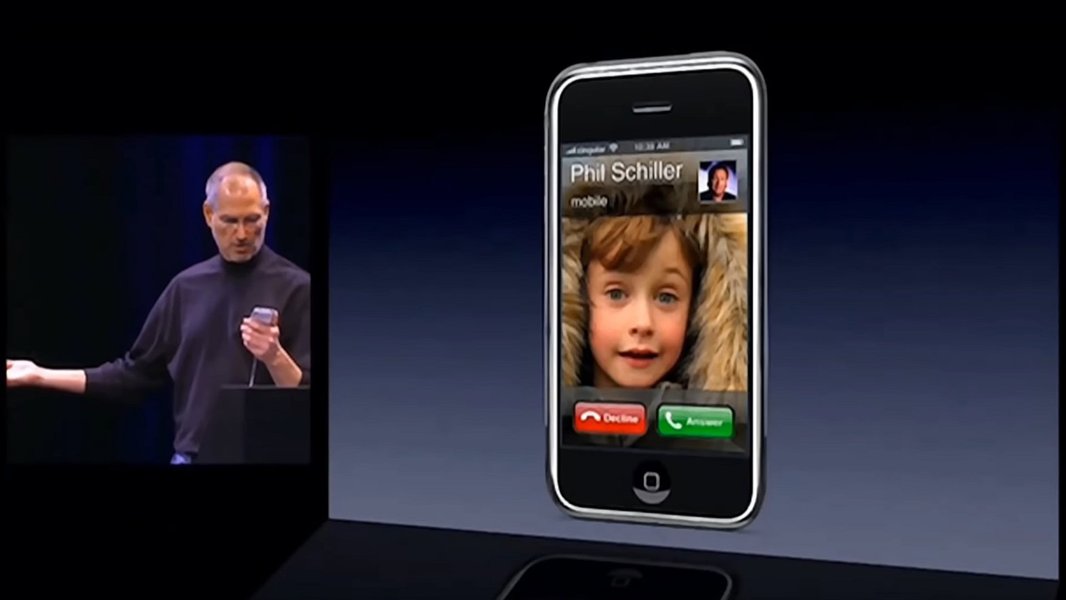
Steve Jobs unveils the revolutionary iPhone during his keynote address at Macworld 2007.
The Genesis of a Game Changer
The story of the iPhone's creation is often simplified, focusing heavily on Apple's charismatic co-founder, Steve Jobs. While his role was undeniably critical, the reality is far more complex and collaborative, involving years of research, design iterations, and the combined expertise of a talented team.
Steve Jobs' Visionary Leadership
Steve Jobs' contribution was less about hands-on engineering (colleagues noted he wasn't a coder or engineer) and more about defining the vision and maintaining an uncompromising standard for the product. Frustrated with the limitations of existing mobile phones, Jobs pushed Apple towards creating a device that seamlessly blended three products: a widescreen iPod with touch controls, a revolutionary mobile phone, and a breakthrough internet communications device. He initiated "Project Purple" around 2004, a top-secret initiative within Apple dedicated to bringing this vision to life. His leadership style, demanding excellence and pushing boundaries, was instrumental in navigating the project's challenges and ensuring the final product met his revolutionary expectations.
A Symphony of Collaboration: The Apple Team
Attributing the iPhone solely to Jobs overlooks the crucial contributions of a large, multi-disciplinary team. The development was a deeply collaborative process involving Apple's finest minds:
- Jonathan Ive: As Apple's Senior Vice President of Industrial Design, Ive and his team were responsible for the iPhone's iconic minimalist aesthetic, its physical form factor, and aspects of its user interface feel.
- Scott Forstall: Leading the software engineering team, Forstall was pivotal in the development of the underlying operating system (later known as iOS) and the groundbreaking software features that defined the user experience.
- Tony Fadell: Known for his significant role in creating the iPod, Fadell led hardware engineering efforts for the iPhone, integrating components and ensuring the device's physical functionality.
- Engineers like Imran Chaudhri and Ken Kocienda: These and many other engineers worked tirelessly on specific innovations, such as the multi-touch interface, the virtual keyboard, and numerous other software and hardware components.
This collective effort, shielded by intense secrecy, involved tackling immense technical hurdles and integrating numerous technologies, reflected in the over 200 patents associated with the original iPhone's design and functionality.
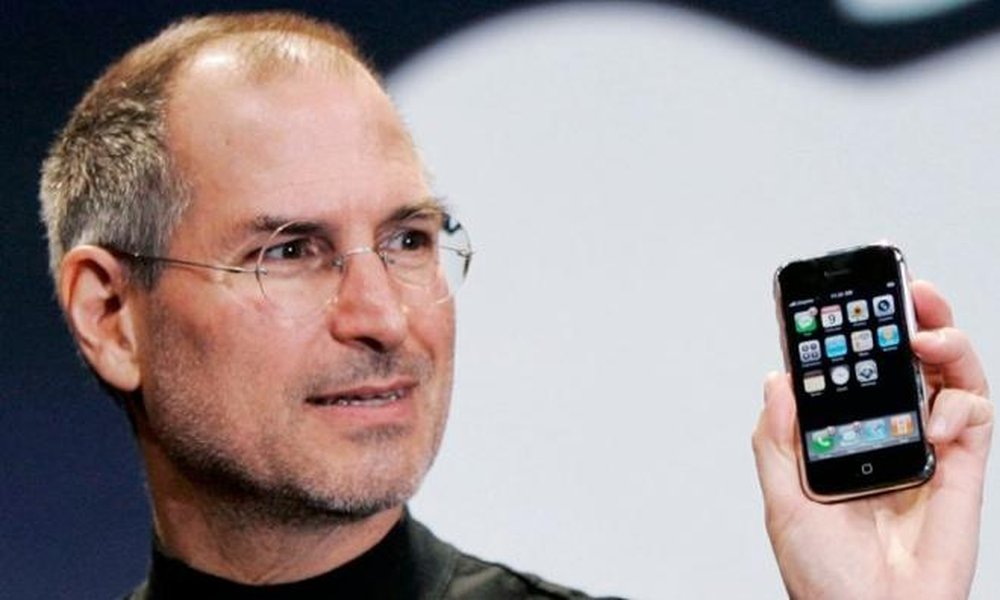
The original iPhone interface, a product of intense software and design collaboration.
Visualizing the iPhone's Creation
Understanding the iPhone's origin involves recognizing the interplay between visionary leadership, collaborative teamwork, key technological innovations, and the historical context. This mindmap illustrates the core elements and figures involved in bringing the iPhone to life.
(Visionary Leader, CEO)"] id1b["Project Purple (Team Effort)"] id1b1["Jonathan Ive (Design Lead)"] id1b2["Scott Forstall (Software Lead)"] id1b3["Tony Fadell (Hardware Lead)"] id1b4["Engineering Team
(Chaudhri, Kocienda, etc.)"] id2["Key Milestones"] id2a["Conception (~2004)"] id2b["Announcement (Jan 9, 2007)"] id2c["Market Release (June 29, 2007)"] id3["Core Innovations"] id3a["Multi-Touch Interface"] id3b["Integrated Device
(Phone, iPod, Internet)"] id3c["Software & User Experience"] id3d["App Store (Added 2008)"] id4["Technological Context"] id4a["Precursor Smartphones
(Nokia, Palm, etc.)"] id4b["Existing Touchscreen Tech
(E. A. Johnson - Pioneer)"] id5["Impact"] id5a["Mobile Industry Revolution"] id5b["Shift in User Interaction"] id5c["Platform for Apps"]
Unveiling and Revolutionizing
The Historic Announcement
On January 9, 2007, Steve Jobs took the stage at the Macworld Conference & Expo in San Francisco. In a presentation now considered legendary, he teased the audience before revealing that Apple was introducing not three separate products, but a single device that integrated them all: the iPhone. He famously described it as "a widescreen iPod with touch controls; a revolutionary mobile phone; and a breakthrough internet communications device." This announcement captivated the tech world and marked the beginning of a new era in personal technology. The device was officially released to the public in the United States on June 29, 2007, priced at $499 for the 4GB model and $599 for the 8GB model, initially available through AT&T.
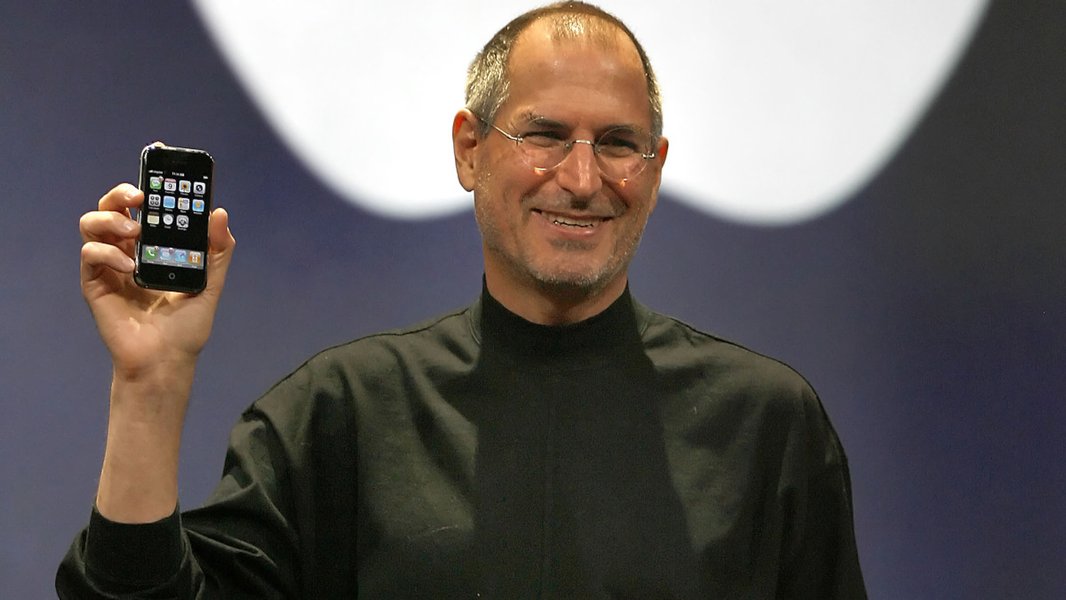
Jobs demonstrating the revolutionary multi-touch interface during the 2007 keynote.
What Made the Original iPhone Special?
While not the first smartphone, the iPhone distinguished itself significantly from predecessors:
- Multi-Touch Interface: Perhaps the most revolutionary feature was its capacitive multi-touch screen, allowing users to interact with the device using intuitive gestures like pinching to zoom and swiping to scroll, eliminating the need for styluses or physical keyboards common on other smartphones.
- User Experience (UX): Apple placed immense focus on a fluid, intuitive, and visually appealing user interface, making complex technology feel accessible and enjoyable to use.
- Full Web Browsing: It offered a desktop-class web browsing experience (Safari) that was far superior to the limited WAP browsers found on most contemporary mobile phones.
- Integration: The seamless integration of phone capabilities, music and video playback (iPod features), and internet access in one sleek device was unprecedented.
- Design: Jonathan Ive's industrial design resulted in a device that was aesthetically pleasing and felt premium compared to the often bulky and plastic-heavy smartphones of the time.
Interestingly, the very first iPhone shipped without the App Store. Steve Jobs initially favored web applications over native third-party apps, partly due to security concerns. However, immense demand led Apple to launch the App Store in 2008, a move that proved critical to the iPhone's long-term success and created a massive new software economy.
Comparative Impact: Original iPhone vs. Predecessors
The original iPhone didn't invent every feature it possessed, but its combination and execution set a new benchmark. This chart provides an opinionated comparison between the original iPhone (2007) and the typical capabilities of smartphones available just before its launch (Pre-2007) across several key areas, illustrating its disruptive impact.
This visualization highlights the iPhone's significant advancements in user interface design, multi-touch interaction, web browsing, and overall design aesthetics compared to its contemporaries, explaining its revolutionary impact despite not being the absolute first in every category.
Context and Evolution
Building on Foundations
It's crucial to place the iPhone within its historical context. Apple did not invent the smartphone concept. Devices like the Psion Organizer (1984), Nokia 9210 Communicator (2001), Palm Treo series (starting 2002), and various Windows Mobile devices (like the HTC Apache, 2005) existed beforehand, offering features like email, web browsing, and apps. Similarly, touchscreen technology predates Apple significantly. The first capacitive touch screen concepts were explored by E.A. Johnson at the Royal Radar Establishment in the UK during the 1960s. What Apple excelled at was integrating existing and emerging technologies (like advanced capacitive multi-touch) with innovative software and elegant industrial design to create a product that was far more intuitive, powerful, and desirable than anything that came before it.
The iPhone Legacy
The original iPhone laid the foundation for a dynasty of devices. Since 2007, Apple has released new models almost annually, introducing key features along the way:
- App Store (2008): Introduced with iPhone OS 2 (later iOS), enabling third-party apps.
- Video Recording: Added with the iPhone 3GS (2009).
- Retina Display: High-resolution screen introduced with iPhone 4 (2010).
- Siri: The voice-controlled AI assistant debuted with the iPhone 4S (2011).
- Larger Screens: Beginning significantly with the iPhone 6 and 6 Plus (2014).
- Water Resistance: Introduced with the iPhone 7 (2016).
- Face ID: Facial recognition debuted with the iPhone X (2017).
- Advanced Camera Systems: Continuous improvements across generations, including multi-lens systems.
- Recent Models (e.g., iPhone 16 series): Continue to iterate with features like enhanced AI capabilities (potentially branded as "Apple Intelligence") and hardware refinements such as the rumored "Camera Control" button.
The iPhone's influence extends far beyond hardware; it shaped mobile operating systems, app development, user interface design, and consumer expectations for personal technology, solidifying its place as one of the most influential inventions of the 21st century.
Key Figures in the iPhone's Creation
While a large team contributed, certain individuals played particularly significant roles in the invention and development of the original iPhone. This table summarizes some of the key players:
| Name | Role/Contribution | Affiliation |
|---|---|---|
| Steve Jobs | Co-founder, CEO, Visionary Leader, Project Driver | Apple Inc. |
| Jonathan Ive (Jony Ive) | Lead Designer (Senior VP of Industrial Design) | Apple Inc. |
| Scott Forstall | Lead Software Engineer (Senior VP of iOS Software) | Apple Inc. |
| Tony Fadell | Lead Hardware Engineer (Senior VP of iPod Division, involved in early iPhone hardware) | Apple Inc. |
| Imran Chaudhri | Engineer / Designer (Human Interface Design Team, Touch Interface) | Apple Inc. |
| Ken Kocienda | Principal Engineer (Software Keyboard, Autocorrect) | Apple Inc. |
| Apple Engineering & Design Teams | Collective development, integration, testing ("Project Purple") | Apple Inc. |
| Eric Arthur Johnson | Early Touchscreen Technology Pioneer (1960s) | Royal Radar Establishment (UK) |
Note: This list is not exhaustive; many others contributed significantly. Eric Johnson's work provided foundational technology but was not directly part of Apple's iPhone development.
Witness the Unveiling: Jobs Introduces the iPhone
To truly appreciate the impact of the iPhone's launch, watching Steve Jobs' masterful presentation is essential. This clip captures the moment he introduced the device at Macworld 2007, showcasing its revolutionary features and setting the stage for the smartphone era. His presentation style and the product itself combined to create a seminal moment in tech history.
This unveiling is often cited not just for the product's innovation, but also as a masterclass in presentation and marketing, encapsulating the excitement and ambition behind the iPhone project.
Frequently Asked Questions
Was Steve Jobs the sole inventor of the iPhone?
No, Steve Jobs was not the sole inventor. While he was the visionary leader who drove the project and made key decisions, the iPhone was created through the collaborative effort of a large team of designers, engineers, and programmers at Apple Inc. Key figures included Jonathan Ive, Scott Forstall, and Tony Fadell, among many others.
Was the iPhone the very first smartphone?
No, the iPhone was not the first smartphone. Devices offering mobile phone capabilities combined with PDA-like features (email, web, apps) existed before 2007, such as the Nokia Communicator series, Palm Treos, and BlackBerry devices. However, the iPhone revolutionized the market with its multi-touch interface, user experience, and integrated design, setting a new standard.
Did Apple invent touchscreen technology?
No, Apple did not invent touchscreen technology. The basic concepts and early forms of touchscreens date back to the 1960s (e.g., work by E.A. Johnson). Apple innovated significantly by implementing and refining capacitive multi-touch technology for a mass-market consumer device, making it intuitive and central to the user experience.
What was "Project Purple"?
"Project Purple" was the internal codename used at Apple for the highly confidential project focused on developing the first iPhone. It began around 2004 and involved a select group of hardware and software engineers tasked by Steve Jobs to create a revolutionary mobile device.
Recommended Reading
- Explore the major obstacles faced by the Apple team during the iPhone's creation.
- Discover how the original iPhone stacked up against competitors like BlackBerry and Nokia at launch.
- Learn more about the design philosophy and contributions of Apple's former Chief Design Officer.
- Trace the key features and changes introduced in each generation of the iPhone.
References
Last updated May 1, 2025