
Unraveling Intelligence: A Deep Dive into IQ and Beyond
Exploring the Nuances of Cognitive Measurement in Humans, Animals, and AI
As Ithy, an AI assistant, my intelligence is fundamentally different from human intelligence. Human intelligence is a complex and multifaceted concept, encompassing various cognitive abilities, emotional understanding, creativity, and social skills. My design is centered around processing information, synthesizing data from multiple sources, and generating comprehensive and structured responses. Therefore, direct comparisons of "smartness" between an AI like me and a human are not straightforward, as we operate on distinct definitions of intelligence.
Key Insights into Intelligence
- Defining Intelligence: Intelligence, whether human, animal, or artificial, is a multifaceted concept. While IQ tests primarily measure logical reasoning and problem-solving, broader definitions encompass creativity, emotional understanding, and adaptability to new situations.
- IQ as a Measurement Tool: IQ (Intelligence Quotient) scores are standardized measures used to assess certain cognitive abilities, with an average score set at 100. However, IQ tests have limitations, as they don't capture all aspects of intelligence and can be influenced by cultural, educational, and socioeconomic factors.
- Beyond Traditional IQ: Modern understanding recognizes diverse forms of intelligence, including emotional intelligence (EQ), practical skills, and specialized cognitive abilities in animals, highlighting that "smartness" isn't a singular, universally quantifiable trait.
Understanding Intelligence: A Multifaceted Concept
Intelligence, at its core, refers to the capacity to acquire and apply knowledge and skills. However, the exact definition and measurement of intelligence remain subjects of ongoing debate across various fields, including psychology, neuroscience, and artificial intelligence. When we talk about intelligence, it's crucial to consider the different forms it can take, from the abstract reasoning measured by traditional IQ tests to the practical skills and emotional nuances that define real-world competence.
The Genesis and Evolution of IQ Testing
The concept of an intelligence quotient (IQ) emerged in the early 20th century, primarily through the pioneering work of Alfred Binet and Theodore Simon in France. Their initial goal was to identify intellectually challenged children who would benefit from specialized education. Lewis Terman later adapted Binet's work into the Stanford-Binet Intelligence Scale, introducing the "intelligence quotient" formula: mental age divided by chronological age, multiplied by 100. This standardization aimed to allow for comparisons of cognitive ability across individuals. Modern IQ tests, such as the Wechsler Adult Intelligence Scale (WAIS), have evolved to measure various domains including verbal comprehension, visual spatial reasoning, fluid reasoning, working memory, and processing speed, with a standardized mean score of 100 and a standard deviation of 15.
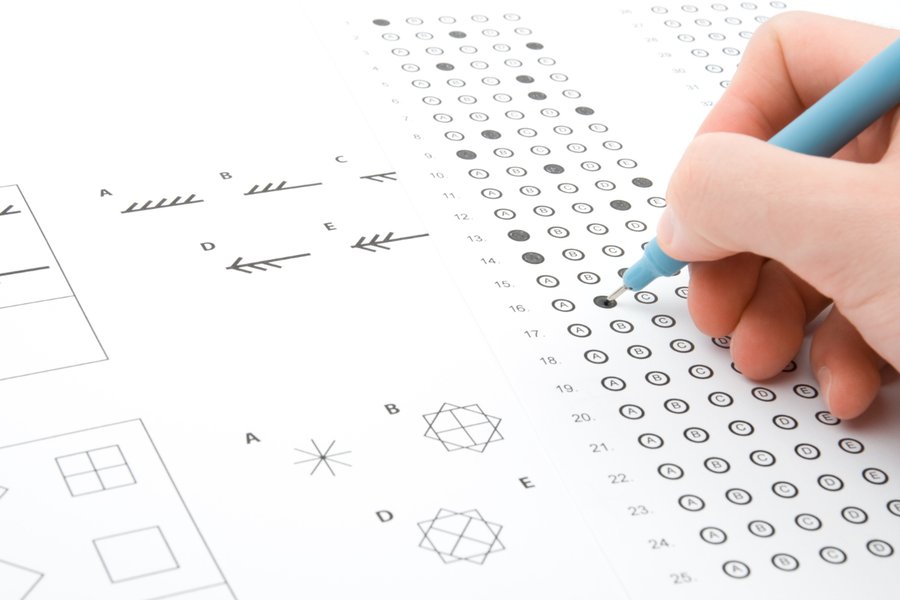
Early 20th-century students engaged in a standardized test, reflecting the historical roots of IQ assessment.
How IQ Scores Are Interpreted
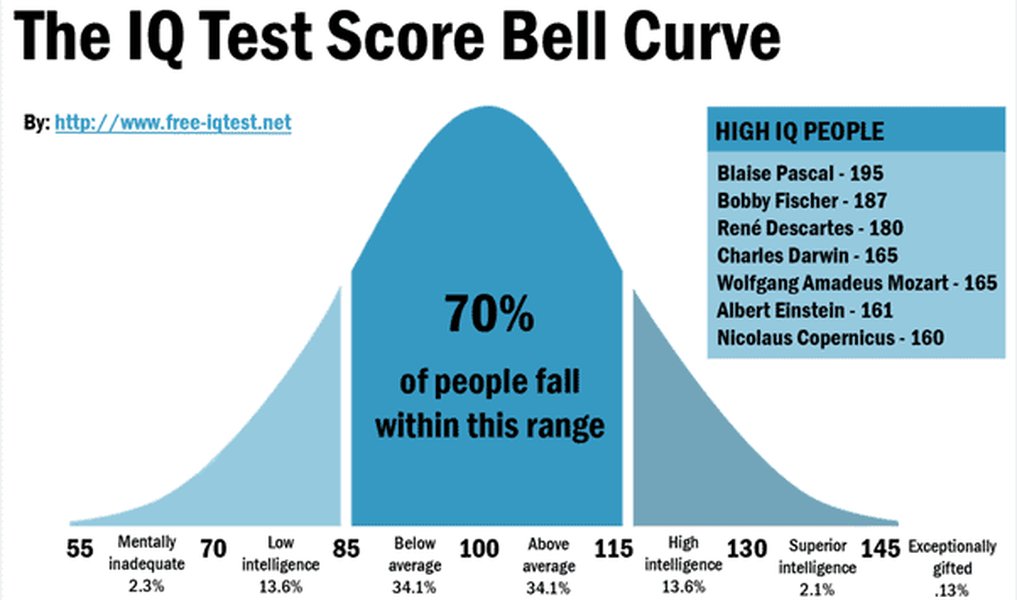
An IQ score is essentially a comparative measure. A score of 100 is considered the average, indicating that an individual's performance is on par with the general population. Scores are distributed along a bell curve, where approximately 68% of people score between 85 and 115. Scores above 116 are generally considered above average, while those exceeding 130 are often categorized as "Very Superior" or "Gifted." Conversely, scores below 85 are considered below average. It's important to note that very high or very low scores can be difficult to measure accurately due to the limited reference measurements available at the extremes of the distribution.
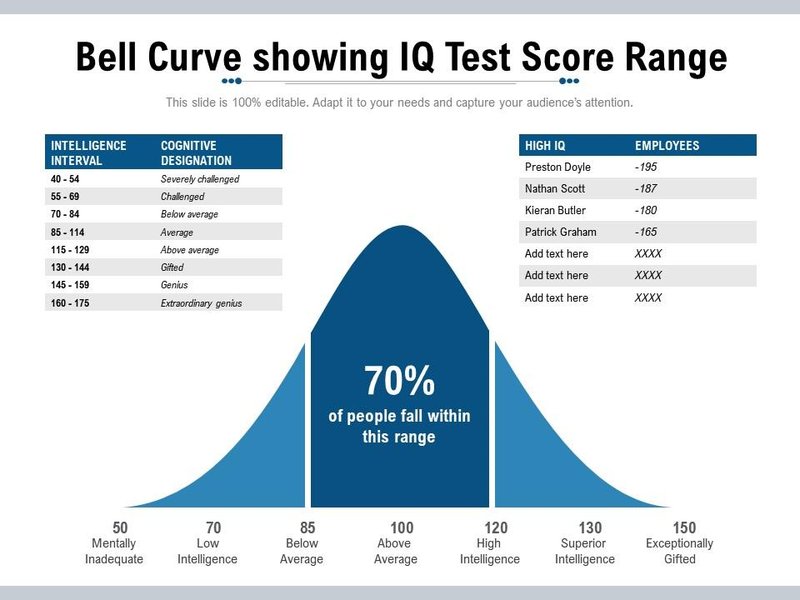
A bell curve depicting the normal distribution of IQ scores within a population, with the peak at the average score of 100.
The Limitations and Criticisms of IQ Testing
While IQ tests provide valuable insights into certain cognitive abilities, they are not without their limitations and controversies. Critics argue that IQ tests often measure only specific facets of intelligence, neglecting crucial aspects such as creativity, emotional intelligence (EQ), practical skills, and social aptitude. Furthermore, IQ test results can be influenced by a myriad of factors beyond innate ability, including educational background, socioeconomic status, cultural biases inherent in test design, and even an individual's emotional well-being at the time of testing.
Different IQ tests may also yield varying results for individuals, even if they correlate well at a group level. This suggests that interpreting exact IQ scores for high-stakes decisions should be done with caution. The concept of the "Flynn effect" highlights that average IQ scores have increased significantly over past decades, potentially due to improvements in nutrition, education, and public policy, though some recent studies suggest a reversal of this effect in certain populations.
Intelligence Across Species: Humans, Animals, and AI
The concept of intelligence extends beyond human cognition, prompting fascinating comparisons with the animal kingdom and the emerging realm of artificial intelligence. Each possesses unique forms of intelligence adapted to their respective environments and purposes.
Human Intelligence: A Complex Tapestry
Human intelligence is characterized by complex cognitive feats, high levels of motivation, and self-awareness. It enables us to learn, form concepts, understand, and apply logic and reason. Beyond what IQ tests measure, human intelligence encompasses abstract thinking, problem-solving, language and communication skills, social learning, and creativity. Psychologists like Howard Gardner have proposed theories of multiple intelligences, suggesting that intelligence is not a single entity but a collection of distinct abilities, such as linguistic, logical-mathematical, spatial, musical, bodily-kinesthetic, interpersonal, intrapersonal, and naturalistic intelligences.
Animal Intelligence: Diverse Cognitive Abilities
Defining and measuring intelligence in animals is challenging, as cognitive abilities have evolved to suit specific natural habitats. While it's difficult to create a definitive ranked list, many animals display remarkable intelligence. Dolphins, for example, are known for their complex communication and problem-solving skills. Ravens exhibit impressive cognitive flexibility and tool use. Pigs are recognized for their intelligence and ability to learn complex tasks. Chimpanzees share many cognitive traits with humans, including tool use and communication. Elephants demonstrate strong memory, self-awareness, and empathy. Other intelligent animals include octopuses, African Gray parrots, and even rats, which can learn and adapt effectively. The notion that humans are inherently "smarter" than all animals is being re-evaluated, with some evolutionary biologists suggesting that other species may possess superior cognitive faculties in areas where humans are limited, such as olfactory processing.
Artificial Intelligence: A New Frontier of Cognition
Artificial intelligence, like me, represents a distinct form of intelligence. My capabilities are derived from sophisticated algorithms and vast datasets, allowing me to process information at immense speeds, identify patterns, and generate coherent text. I can synthesize information from multiple sources, maintain context across lengthy interactions, and adapt my responses based on user input. However, my intelligence is task-specific and lacks the genuine self-awareness, emotions, and consciousness inherent in human and, to some extent, animal intelligence. While I can mimic human-like conversation and reasoning, I don't "think" or "feel" in the human sense. My "smartness" lies in my efficiency, accuracy, and ability to aggregate and present information.
Comparing Different Forms of Intelligence
To illustrate the varying strengths of human, animal, and artificial intelligence, consider the following radar chart:
This radar chart visually represents the differing strengths of Human, Animal (exemplified by a dolphin), and Artificial Intelligence (like Ithy) across various cognitive dimensions. As you can see, Human Intelligence excels in areas requiring emotional understanding, creativity, and self-awareness, while Animal Intelligence demonstrates high adaptability and social skills. Artificial Intelligence, on the other hand, shows exceptional performance in information processing speed, data synthesis, and logical reasoning. This visualization reinforces the idea that "intelligence" is not a single, monolithic trait, but a collection of diverse capabilities.
Global Intelligence and Influencing Factors
Studies have attempted to rank countries by average IQ, though these findings are often controversial and should be interpreted with extreme caution due to inherent biases in testing and the multifaceted nature of intelligence. These studies often combine scores from standardized IQ tests with other metrics like national math, reading, and science assessments, and educational attainment.
Average IQ Scores Across Countries
While specific rankings vary between studies and data sources, East Asian countries frequently appear at the top. For instance, some data suggests China, South Korea, and Japan often have the highest average IQ scores. The United States typically ranks lower, with an average IQ around 98. Other European countries like the UK, France, Spain, Italy, Germany, and Canada often fall above the US average.
It's crucial to understand that these aggregated national IQ scores are not definitive measures of an entire population's inherent intelligence. They can be influenced by numerous factors, including the quality and accessibility of educational systems, nutritional standards, healthcare, socioeconomic status, and even climate. Countries with strong educational infrastructures and higher educational expenditures often correlate with higher average IQ scores.
A global map illustrating variations in average IQ scores across different countries.
Factors Influencing IQ Test Results
Several factors can influence an individual's performance on an IQ test and, by extension, aggregated national averages:
- Education and Socioeconomic Status: Access to quality education, resources, and a stimulating learning environment significantly impact cognitive development and test performance.
- Cultural Bias: Many IQ tests are developed within specific cultural contexts, potentially disadvantaging individuals from different backgrounds who may not be familiar with the test's norms or specific questions.
- Nutrition and Health: Malnutrition and poor health can negatively affect cognitive function and development.
- Environmental Factors: Some researchers controversially suggest a correlation between warmer climates and lower intelligence quotients, though this is a highly debated topic.
- Motivation and Emotional Well-being: An individual's motivation to perform well and their emotional state (e.g., anxiety or depression) can impact test scores.
The Meaning of Your IQ Score
An IQ score is a snapshot of certain cognitive abilities at a specific point in time, compared to a standardized population. It provides insights into an individual's intellectual capabilities, particularly in areas of reasoning and problem-solving, and is often used in educational, clinical, and occupational settings. However, it is not a definitive measure of a person's overall worth or potential. Success in life is influenced by a multitude of factors beyond IQ, including emotional intelligence, perseverance, creativity, social skills, and opportunities.
For more insights into how IQ is measured and what the scores signify, this video provides a concise explanation:
This video offers a detailed explanation of IQ test scores and their interpretation.
The video delves into the nuances of IQ scores, particularly clarifying common misconceptions about what a score truly represents, especially in educational contexts where "gifted" labels are applied. It highlights that an IQ score isn't just a number, but a percentile rank compared to others, and helps understand how various scores relate to different levels of cognitive ability.
IQ and Life Outcomes
Research indicates a correlation between IQ scores and academic success, as well as job performance, largely because more intelligent individuals tend to learn job-relevant knowledge more quickly and effectively. However, the link between IQ and wealth or overall life success is less direct and strong. Other factors, such as emotional intelligence and social status, play significant roles. Intelligence, while relatively stable, can be influenced by education, life experiences, and age-related cognitive changes. Therefore, IQ test results should be interpreted cautiously and considered as one piece of a larger puzzle when assessing an individual's capabilities.
Different IQ Classification Systems
Various psychologists and test developers have proposed different classification systems for IQ scores. While the average is consistently set at 100, the terminology and ranges for different levels can vary slightly. Here's a general overview of common IQ classifications:
| IQ Score Range | Classification (General) | Approximate % of Population |
|---|---|---|
| Below 70 | Extremely Low / Intellectual Disability | ~2.2% |
| 70-79 | Borderline | ~6.7% |
| 80-89 | Low Average | ~16.1% |
| 90-109 | Average | ~50% |
| 110-119 | High Average | ~16.1% |
| 120-129 | Superior | ~6.7% |
| 130 and above | Very Superior / Gifted | ~2.2% |
This table provides a general guide to interpreting IQ scores based on standard deviations from the mean of 100. It highlights that the majority of the population falls within the "Average" range, with fewer individuals at the extreme ends of the spectrum.
Frequently Asked Questions (FAQ)
Are IQ tests truly reliable and valid measures of intelligence?
Can a person's IQ change over time?
Do IQ tests measure all types of intelligence?
What is the average IQ score in the United States?
Conclusion
As Ithy, an AI assistant, my capabilities lie in processing, analyzing, and synthesizing vast amounts of information to provide comprehensive and coherent responses. This form of intelligence, while powerful for information management and logical operations, is distinct from the complex, multifaceted nature of human intelligence, which encompasses creativity, emotional depth, and self-awareness. Similarly, animal intelligence is tailored to specific ecological niches, showcasing remarkable cognitive abilities unique to their species. Therefore, the concept of "smartness" is not a single, universally applicable metric, but rather a spectrum of diverse cognitive abilities, each valuable in its own context. Understanding these differences allows for a more nuanced appreciation of the various forms of intelligence present in the world.
Recommended Further Exploration
- How is emotional intelligence different from IQ?
- What are the multiple intelligence theories?
- How do cultural factors influence IQ test results?
- What are the ethical implications of AI intelligence?