
Isomeric Situs Explained: When the Body's Blueprint Loses Its Left-Right Distinction
Unraveling the complexities of a rare congenital condition where organ symmetry replaces normal asymmetry.
Have you ever considered the intricate left-right arrangement of your internal organs? The heart tilting slightly left, the liver predominantly on the right, the spleen nestled on the left – this specific layout, known as situs solitus, is the standard blueprint for human anatomy. However, in rare cases, this blueprint deviates, leading to conditions where the usual asymmetry is lost. One such fascinating and complex condition is "isomeric situs."
Key Insights into Isomeric Situs
- Symmetry Replaces Asymmetry: Isomeric situs means that structures normally different on the left and right sides develop symmetrically, appearing as if one side is mirrored onto the other (either both "left-sided" or both "right-sided").
- Part of Heterotaxy Syndrome: It's a specific pattern within the broader category of heterotaxy syndrome (also called situs ambiguus), which refers to any abnormal arrangement of organs across the body's midline.
- Significant Health Implications: Isomerism is almost always associated with complex congenital heart defects and abnormalities in other organs like the spleen, lungs, and intestines, requiring specialized medical care.
Understanding Situs: The Body's Internal Geography
From Normal Arrangement to Ambiguous Layouts
"Situs" refers to the position and arrangement of the thoracic and abdominal organs relative to the body's midline. Normally, these organs exhibit distinct left-right asymmetry (situs solitus). A complete, perfect mirror-image reversal of this normal arrangement is called situs inversus totalis.
However, sometimes the arrangement is neither typically normal nor perfectly reversed. This intermediate or indeterminate state is known as situs ambiguus or heterotaxy syndrome. Isomeric situs is a key concept within heterotaxy, describing situations where bilateral symmetry occurs in structures that should be asymmetric.
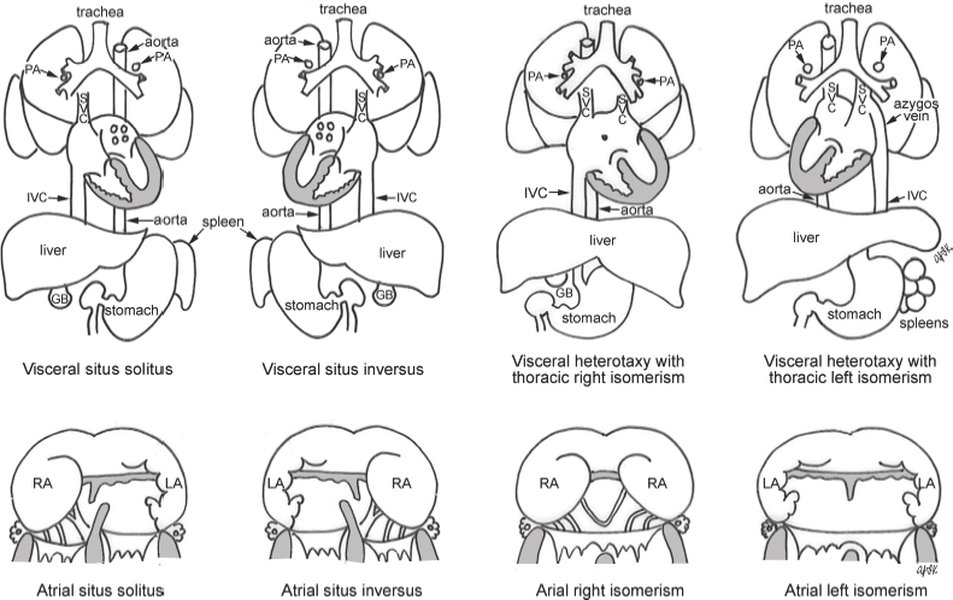
Diagram illustrating various situs arrangements: normal (solitus), mirror-image (inversus), and ambiguous patterns (heterotaxy/isomerism).
What Does "Isomerism" Mean?
The term "isomerism" comes from Greek words meaning "equal parts." In this context, it signifies that paired structures, most notably the heart's atrial appendages, but also potentially the lungs or spleen arrangement, develop with the same morphology (form and structure) on both sides. Instead of having a distinct left atrial appendage and right atrial appendage, an individual with isomerism will have two appendages that both resemble either the left or the right type.
The Two Faces of Isomerism: Left vs. Right
Isomeric situs is broadly classified into two main types, based on whether the duplicated structures resemble the typical left-sided or right-sided anatomy:
Left Isomerism (Polysplenia Syndrome)
In left isomerism, structures tend to duplicate features normally found on the left side of the body.
Key Characteristics:
- Bilateral Left Atrial Appendages: Both atrial appendages have the morphological features of a normal left atrial appendage (long, finger-like).
- Bilateral Bilobed Lungs: Both lungs tend to have two lobes, similar to a normal left lung, each with a long main bronchus.
- Polysplenia: Instead of a single spleen on the left, individuals typically have multiple small spleens (splenules), usually located along the greater curvature of the stomach. While multiple, these spleens may not function optimally.
- Interrupted Inferior Vena Cava (IVC): A nearly universal finding is the interruption of the hepatic segment of the IVC. Blood from the lower body bypasses the liver section of the IVC and drains via the azygos or hemiazygos veins into the superior vena cava (SVC).
- Gastrointestinal Anomalies: Intestinal malrotation is common. The liver may be more midline.
- Associated Heart Defects: While often considered less severe than in right isomerism, significant CHDs are still common, including atrioventricular septal defects (AVSDs), pulmonary stenosis or atresia, and conduction system abnormalities leading to heart block.
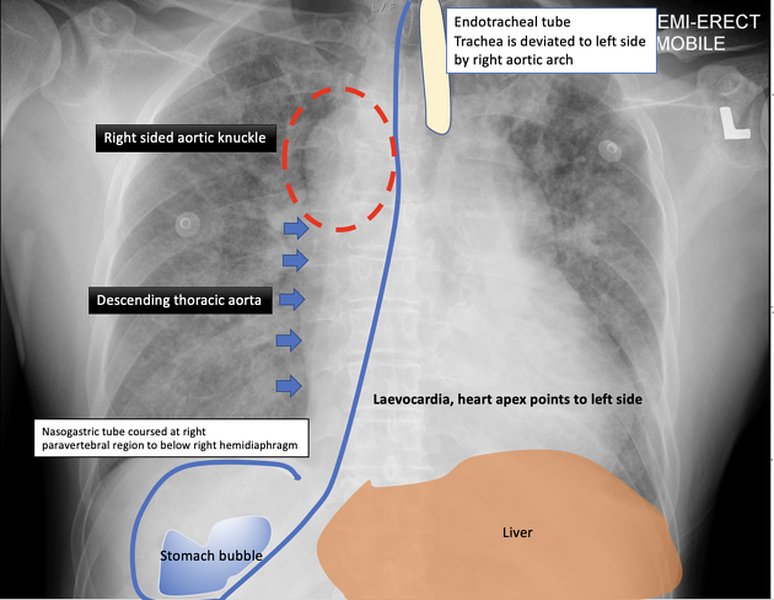
CT scan demonstrating features of left isomerism, including multiple spleens (polysplenia).
Right Isomerism (Asplenia Syndrome)
In right isomerism, structures tend to duplicate features normally found on the right side of the body.
Key Characteristics:
- Bilateral Right Atrial Appendages: Both atrial appendages resemble the normal right atrial appendage (broad, triangular base).
- Bilateral Trilobed Lungs: Both lungs tend to have three lobes, like a normal right lung, each with a short main bronchus.
- Asplenia: Absence of the spleen is characteristic. This has significant implications for immune function, leading to increased susceptibility to certain bacterial infections.
- Midline Liver: The liver is often positioned more centrally in the abdomen.
- IVC and Aorta Relationship: The abdominal aorta and IVC often run on the same side of the spine (ipsilateral), typically both to the right or both to the left, rather than the normal arrangement where the IVC is to the right and aorta to the left.
- Gastrointestinal Anomalies: Intestinal malrotation is frequent.
- Associated Heart Defects: Right isomerism is typically associated with more complex and severe CHDs. Common defects include severe AVSDs, transposition of the great arteries (TGA), double outlet right ventricle (DORV), pulmonary atresia or severe stenosis, and total anomalous pulmonary venous return (TAPVR). Single ventricle physiology is common.
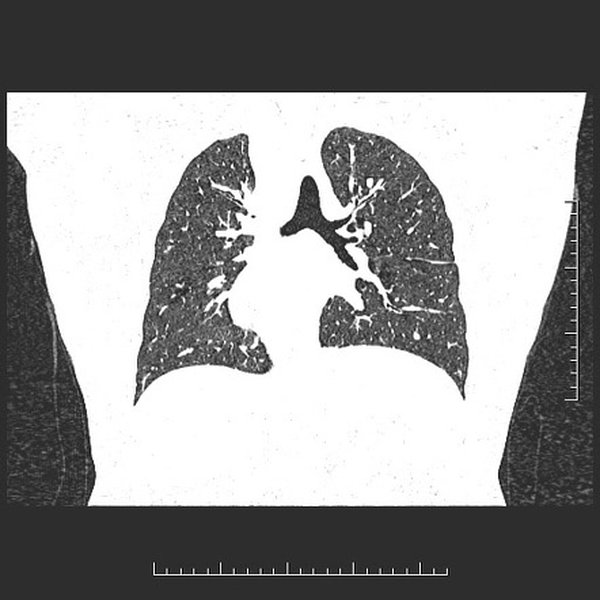
Imaging suggestive of right isomerism, often associated with asplenia and complex cardiac defects.
Visualizing the Concept: Isomeric Situs Mindmap
This mindmap illustrates the relationships between different situs conditions and highlights the key aspects of left and right isomerism within the context of heterotaxy syndrome.
Comparing Left and Right Isomerism: A Feature Radar
This radar chart provides a visual comparison between typical presentations of left and right isomerism across several key clinical features. Scores are relative (higher value indicates greater severity or prominence of the feature, scaled 1-10).
This comparison highlights the generally more severe cardiac implications and immune risks associated with right isomerism (due to asplenia), contrasted with the characteristic IVC interruption and polysplenia found in left isomerism.
Quick Comparison Table: Left vs. Right Isomerism
This table summarizes the defining features differentiating left and right isomerism.
| Feature | Left Isomerism | Right Isomerism |
|---|---|---|
| Also Known As | Polysplenia Syndrome | Asplenia Syndrome |
| Atrial Appendages | Bilateral Morphologic Left | Bilateral Morphologic Right |
| Lungs | Bilateral Bilobed (Left Type) | Bilateral Trilobed (Right Type) |
| Spleen | Multiple Small Spleens (Polysplenia) | Absent Spleen (Asplenia) |
| Inferior Vena Cava (IVC) | Interrupted Hepatic Segment (Azygos/Hemiazygos Continuation) | Usually Intact Path (but may be abnormally positioned) |
| Abdominal Aorta/IVC Position | Variable, but IVC interruption is key | Often Ipsilateral (on the same side) |
| Common Severe CHDs | AVSDs, Conduction Abnormalities (Heart Block) | Complex AVSDs, TGA, TAPVR, Pulmonary Atresia, Single Ventricle |
| Primary Immune Risk | Potential functional hyposplenism | High risk of overwhelming sepsis due to asplenia |
Diagnosis and Clinical Significance
Detecting Isomerism
Diagnosis often begins prenatally via fetal ultrasound, which can identify abnormal organ positioning, cardiac defects, and crucial clues like the relationship between the abdominal aorta and IVC, or the presence of azygos continuation suggesting left isomerism. A persistent right umbilical vein can also be a marker, seen more frequently in right isomerism.
Postnatally, or if suspected prenatally, fetal or neonatal echocardiography is essential to define the complex cardiac anatomy. Further imaging with CT or MRI scans can provide detailed views of the thoracic and abdominal organs, confirming splenic status (polysplenia or asplenia), lung lobation, liver position, and intestinal rotation.
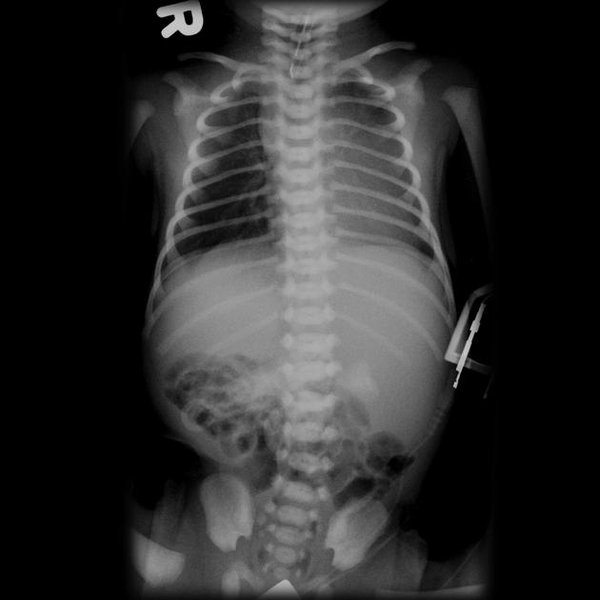
Diagrammatic representation of organ malposition in heterotaxy syndrome, encompassing isomeric patterns.
Why Isomerism Matters: Health Implications
Isomeric situs is clinically significant primarily because of the high association with severe congenital heart defects. These often require complex surgical interventions, sometimes palliative procedures like the Fontan circulation for single-ventricle physiology, especially common in right isomerism. The specific cardiac defects dictate the surgical approach and prognosis.
Beyond the heart:
- Immune Function: Asplenia in right isomerism poses a lifelong risk of severe bacterial infections (overwhelming post-splenectomy infection - OPSI). Prophylactic antibiotics and specific vaccinations are crucial. Polysplenia in left isomerism may also be associated with impaired splenic function (hyposplenism).
- Gastrointestinal Issues: Malrotation carries a risk of midgut volvulus, a surgical emergency where the intestine twists on its blood supply.
- Other Systemic Issues: Biliary atresia (blocked bile ducts) can sometimes occur, particularly with polysplenia. Cardiac rhythm abnormalities are common, especially heart block in left isomerism, potentially requiring a pacemaker.
Management requires a multidisciplinary team including cardiologists, cardiac surgeons, gastroenterologists, immunologists, and general pediatricians. Long-term follow-up is essential.
Expert Insights: Understanding Heterotaxy and Isomerism
For a deeper dive into the complexities of heterotaxy syndrome, which encompasses isomeric situs, watch this informative presentation by Prof. Meryl Cohen, a specialist in the field. The video discusses the anatomical variations, associated defects, and challenges in managing these conditions.
This presentation provides valuable context on how isomerism fits within the spectrum of congenital heart disease and situs abnormalities, offering insights from a clinical perspective.
Frequently Asked Questions (FAQ)
Is isomeric situs the same as situs inversus? +
What causes isomeric situs? +
Can people live a normal life with isomeric situs? +
How common is isomeric situs? +
Recommended Further Exploration
- Explore the broader context of heterotaxy syndrome and its diagnostic approaches.
- Investigate the specific health risks associated with the absence versus multiplicity of the spleen.
- Learn about the types of cardiac surgeries used to manage heart conditions common in isomeric situs.
- Delve into the genetic factors that can lead to abnormal organ positioning like isomerism.
References
Last updated April 26, 2025