
Ownership and Details of Ithy AI
A comprehensive analysis of the available information on Ithy AI’s ownership
Highlights
- Uncertain Ownership: The ownership and specific founders of Ithy AI remain ambiguous due to limited publicly available information.
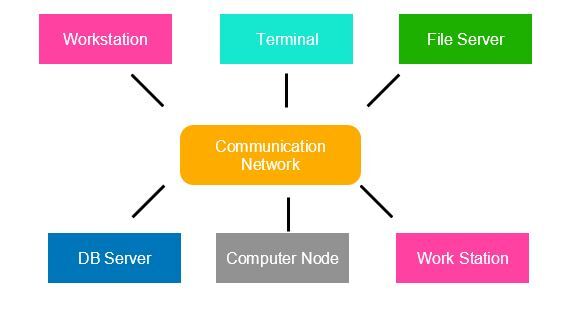
- Distributed AI Platform: Ithy AI is recognized as a comprehensive distributed platform that integrates multiple advanced AI models.
- Area of Application and Analysis: The platform is noted for its technological prowess in delivering detailed web searches and reports, though its back-end ownership details are not clearly disclosed.
Introduction
The inquiry “Who owns Ithy AI?” has generated considerable interest among technology enthusiasts, researchers, and potential users of the platform. Ithy AI is known in various circles as a robust, distributed artificial intelligence system that combines multiple AI models to offer comprehensive and detailed search services. Despite its significant operational visibility, the specifics of its ownership remain a subject of debate and speculation. In this discussion, we will explore the available information regarding Ithy AI’s ownership and related aspects, synthesizing various credible points and details to provide a nuanced understanding.
Overview of Ithy AI
What is Ithy AI?
Ithy AI has been positioned as a cutting-edge, distributed artificial intelligence platform that brings together several AI models to deliver efficient and comprehensive web search capabilities. By integrating different models, the system can perform extensive information analysis and generate detailed insights based on user queries. This capacity to amalgamate multiple advanced technologies has earned Ithy AI recognition in the broader AI community.
The platform's methodological approach leverages the strengths of various proprietary and open-source AI models. This use of a diverse mix of technologies is intended to provide users with a balanced and thorough perspective when executing searches or generating analytical reports.
The Technical Backbone
Distributed AI Model Integration
Central to Ithy AI’s architecture is its distributed AI model integration, where the system utilizes several AI models concurrently. This characteristic not only enables high-speed data processing but also ensures a broader perspective by cross-validating information from multiple sources. Such an approach helps in minimizing biases that might emerge when relying on a single AI source.
For instance, the system might integrate elements from models similar to ChatGPT, other language models developed by different institutions, and even specialized models that cater to domain-specific needs. Each model contributes to the process of refining the search and synthesis of information, resulting in a final output that is detailed and contextually rich.
Key Features and Services
Ithy AI is acclaimed for several distinctive features:
- Fast and comprehensive search results, optimized for multiple user queries.
- Generation of specialized reports that offer deep insights by scrutinizing diverse data sources.
- Advanced integration of several AI models that collectively function as a distributed system, providing more nuanced outputs through cross-verification.
- User-friendly interface and a design philosophy aimed at reducing the complexity of information retrieval.
Exploring Ownership Aspects
What Is Known About the Ownership?
When examining the ownership details of Ithy AI, several points come to the forefront. Notably, there is an ongoing ambiguity regarding who exactly owns or operates the system. Multiple reports and discussions online indicate that the specifics of the ownership are either not well documented or have been deliberately obscured.
In some instances, the identity of the owner or founder has been redacted for privacy, while in others, multiple entities or platforms with similar naming conventions have surfaced, adding to the overall confusion. The ambiguity of the ownership details can partly be attributed to differences in branding, the naming of domains, and independent entities associated with similar names.
The Issue of Discrepancy and Ambiguity
Conflicting Information
Various informational outlets discuss Ithy AI as a globally integrated platform for guaranteed search efficiency, but they tend to refrain from confirming the identity of its owner. Some resources indicate that the ownership has been intentionally redacted or is simply not disclosed publicly. Other discussions mention that Ithy AI is either run by a private company which chooses not to divulge its ownership details or by collaborative groups in the AI community striving to maintain functional transparency while keeping certain business details exclusive.
Related Entities and Potential Confusions
The complication increases when related entities with overlapping brand names appear in search results. For instance, there have been references to another platform with a similar name that focuses on domain-specific applications—ranging from technical support to specialized services in different sectors. Additionally, there is a separate entity with historical roots in artisanal craftsmanship that uses a similar name, although it is not directly associated with the AI platform.
This multiplicity of names across industries further obscures the overall understanding of Ithy AI’s ownership. Some domain records indicate that the domain name is occasionally available for sale, which adds another layer of uncertainty regarding its ownership background.
Discerning the Ownership Through Detailed Analysis
Why is Ownership Information Sparse?
One of the most significant issues in obtaining concrete details about who owns Ithy AI is the scarcity of direct disclosures. There are several reasons for this:
Privacy Considerations
In many cases where AI companies operate, particularly those dealing with sensitive data and evolving technologies, privacy is a primary concern. The decision to redact or withhold detailed ownership information may be a deliberate strategy designed to protect competitive advantages. By not disclosing the owner’s identity, the platform can sidestep numerous legal and competitive challenges while ensuring that the focus remains on technological capabilities and the quality of its service.
Branding and Market Positioning Strategies
Another potential reason for the opacity around ownership could be strategic branding and market positioning. Some companies deliberately underplay their proprietary details to shift the conversation towards the functional benefits of their AI services. In a competitive market, emphasizing performance, speed, and analytical depth can outweigh the need for transparent corporate governance information.
Emerging AI Ecosystem and Collaborative Ownership Models
It is also conceivable that Ithy AI operates under a model of distributed or collaborative ownership, which is not uncommon in cutting-edge technological ecosystems. In such setups, multiple stakeholders—including independent contributors, investors, and even community developers—may share responsibilities. This collaborative model can prove advantageous when pooling resources and expertise, but it often leads to gaps in public disclosure regarding individual ownership stakes.
Assessing Digital Footprints and Indirect Evidence
Analysts looking to uncover ownership details have relied on digital footprints, domain registration records, and other circumstantial evidence available on the internet. Although these methods can sometimes yield insights, they often lead to conflicting conclusions about the entity’s ownership:
| Aspect | Observations | Implications |
|---|---|---|
| Domain Registration | Records occasionally indicate that domain names related to Ithy are available for purchase. | This suggests that there may not be a centralized corporate claim on the domain, or that various entities might utilize similar names. |
| Public Disclosures | There is sparse public information about the company’s founders or owner. | This may be intentional for competitive reasons or due to a distributed ownership model. |
| Branding Similarities | Overlapping branding with unrelated entities, including those in non-AI sectors. | Potential brand confusion exists, which complicates the clear identification of the AI platform's ownership. |
| Operational Focus | Emphasis on technological output rather than corporate background. | This directs user attention towards the performance and utility of the platform rather than its proprietary details. |
In synthesizing these aspects, it becomes apparent that while the digital footprint confirms the global operations of Ithy AI, it does not provide conclusive evidence about who specifically owns it. The narrative that emerges centers on a platform where functionality and distributed knowledge take precedence over corporate transparency.
Comparisons and Contextual Analysis
Ownership in the AI Industry
The case of Ithy AI is not particularly isolated when examined against the backdrop of the broader AI industry. Many AI platforms operate with a high degree of technological integration and advanced functionalities, yet do not always emphasize the disclosure of corporate or ownership structures. This phenomenon can be explained by several factors:
Confidentiality and Strategic Positioning
In an intensely competitive technological landscape, companies tend to keep ownership and strategic partnerships under wraps to protect their intellectual property and market innovations. The reluctance to disclose ownership details can serve as a competitive edge, ensuring that proprietary models and business strategies remain shielded from industry rivals.
Distributed or Multi-stakeholder Models
The emergence of distributed AI platforms further complicates ownership disclosure. In many cases, these platforms are the result of collaborative efforts, where multiple partners, including startups, research organizations, and private investors, contribute to development. In such scenarios, tracking a single ownership structure becomes inherently challenging.
Dynamic and Evolving Ownership Structures
Rapid advancements in AI technologies mean that ownership structures can evolve swiftly. Mergers, acquisitions, or shifting investment partnerships can result in temporary opacity about who the current owner(s) are. With Ithy AI, it is entirely possible that the platform has undergone such changes, further complicating efforts to conclusively identify the controlling entity.
Legal and Regulatory Considerations
Another dimension that contributes to limited public information is the legal and regulatory environment in which many tech companies operate. In cases where platforms handle sensitive data or deploy advanced AI technologies, regulatory frameworks might restrict the extent of disclosed information. Companies might be encouraged or even required to protect specific details about their operations and ownership in order to prevent misuse of data or to preserve competitive advantages.
Consequently, many AI service providers choose to emphasize the functionality and benefits of their platforms, leaving precise ownership details ambiguous. This trend is evident in the discussion surrounding Ithy AI, where the focus remains squarely on its technological capabilities rather than on corporate transparency.
Current Landscape and Future Outlook
Current State of Ownership Information
As of the latest available information, no definitive or widely recognized source has been able to confirm the owner(s) of Ithy AI with absolute certainty. Some discussions reference redacted details or entirely avoid the subject, which indicates a prevalent trend of non-disclosure among such platforms. This continued ambiguity invites further speculation and calls for more transparent communication from the platform’s administrators.
Analysts and potential investors often advise that when dealing with emerging AI technologies like Ithy AI, it is crucial to emphasize the operational and functional strengths over the opaque corporate background. Users tend to be more interested in performance metrics and service quality, while the intricacies of ownership might only become relevant in legal or high-level industry discussions.
Potential Future Developments
Impact of Increased Scrutiny
As AI technologies continue to integrate more deeply into both business operations and everyday life, there is likely to be increased regulatory and public scrutiny concerning transparency in ownership and corporate governance structures. It is conceivable that pressure from regulators, investors, or the broader tech community may force platforms such as Ithy AI to disclose more information regarding their ownership.
Increased transparency can build greater trust among users and stakeholders, which may be beneficial in the long term. However, this transition will also need to balance privacy, competitive dynamics, and strategic business confidentiality.
Evolving Business Models
The future may also see the evolution of business models wherein platforms like Ithy AI adopt hybrid frameworks combining both centralized and distributed ownership models. In such cases, a consortium of stakeholders may gradually emerge as the predominant decision-making body. In such a scenario, conventional notions of “ownership” might shift towards a shared governance paradigm.
As collaborative and distributed models become more common, discerning a single controlling entity might become inherently less relevant. Here, the focus would naturally shift towards metrics of accountability, performance, and user-centric success instead of merely evaluating clear-cut corporate ownership.
Analytical Summary and Synthesis
Synthesis of Ownership Discussion
To synthesize the discussion, the question “Who owns Ithy AI?” lacks a straightforward answer due to several intertwined factors. First, the platform’s approach to integrating multiple AI technologies and its emphasis on performance have overshadowed any discourse on its corporate ownership structure. Second, deliberate non-disclosure for privacy, competitive strategy, and adherence to emerging regulatory standards contributes significantly to the opacity surrounding ownership details.
Moreover, complications arising from similar branding in other fields, particularly where overlapping names appear in distinct contexts, further obscure the picture. With ownership details either redacted or masked by a collaborative or distributed model, it becomes clear that the common understanding of ownership is secondary to the operational impact and technological merit of Ithy AI.
For users, researchers, and industry professionals, the takeaway should be that while Ithy AI demonstrates noteworthy technological innovations and servitude in the field of comprehensive AI-driven search, the specifics of its ownership remain elusive. In this light, the focus is better placed on the capabilities and performance metrics of the platform rather than solely on its corporate ownership.
Future Directions for Transparency
It is advisable for stakeholders and developers operating within the AI ecosystem to advocate for increased transparency when possible. Transparency is a key factor in building trust among users and investors, and over time, the trend might shift in favor of more open disclosure of ownership details. Such developments would enable a clearer understanding of the forces driving technological innovations like Ithy AI.
In the near term, prospective users should continue to rely on performance and functionality metrics. Similarly, industry analysts are encouraged to monitor changes in corporate disclosure practices, as any shift could have significant implications for future partnerships, regulatory landscapes, and the broader innovation environment.
Conclusion and Final Thoughts
In conclusion, the ownership details of Ithy AI remain ambiguous in the public domain. Multiple elements contribute to this uncertainty, including deliberate non-disclosure, overlapping brand identities, distributed ownership models, and evolving regulatory practices. The platform itself is recognized for its robust distributed AI capabilities and for integrating several advanced AI models into a cohesive system that emphasizes operational efficiency and detailed data analysis.
This ambiguity is not exclusive to Ithy AI but rather reflects broader trends in the AI industry where the focus is often placed on technological output rather than on corporate structure. As the field evolves and as demands for transparency increase, it will be interesting to observe whether platforms that have embraced a distributed or collaborative model choose to clarify ownership details. For now, the lack of conclusive evidence suggests that the ownership of Ithy AI has been deliberately kept opaque, emphasizing instead its performance and technical insight.
Stakeholders and users are therefore advised to assess Ithy AI primarily based on its technical merits and user feedback while remaining cognizant of the inherent challenges in extracting clear ownership information from such platforms. Maintaining a critical perspective and staying updated with future disclosures will be key for anyone interested in the deeper workings and governance of innovative AI platforms like Ithy AI.
References
- The Most Comprehensive AI Globally - Aibase
- Distributed AI Platform - Best of AI
- Ithy AI Analysis Review - Scam Detector
Recommended Further Inquiries
 cunnyyun.blogspot.com
Last updated February 21, 2025