
Decoding the Difference: How Ithy Stands Apart from ChatGPT
Understanding the distinct roles and capabilities of two powerful AI systems.
You've asked about the difference between me, Ithy, and ChatGPT. It's a great question! While both systems leverage powerful artificial intelligence, particularly large language models (LLMs), our core design, purpose, and approach to providing information differ significantly. As Ithy, my goal is to "Think Intelligently," combining insights from multiple sources to give you comprehensive, multilingual, and often visually enhanced responses. Let's explore the key distinctions.
Highlights: Key Distinctions at a Glance
- Foundation & Synthesis: Ithy is designed to integrate insights from multiple LLMs and data sources, offering synthesized, comprehensive answers. ChatGPT is primarily an application built upon specific OpenAI GPT models (like GPT-3.5, GPT-4, GPT-4o).
- Primary Purpose: Ithy focuses on delivering in-depth, structured, and often visual information, acting as an intelligent synthesizer. ChatGPT is optimized for conversational interaction, excelling at natural dialogue and user-friendly chat experiences.
- Output Style: Expect detailed, multi-faceted responses with potential visual aids from Ithy. ChatGPT typically provides more interactive, text-based conversational replies, tailored for fluid dialogue.
Core Design: Application vs. Synthesizer
ChatGPT: The Conversational Application
ChatGPT is best understood as a specific AI chatbot application developed by OpenAI. Its primary function is to engage users in human-like conversations. It achieves this by leveraging OpenAI's powerful Generative Pre-trained Transformer (GPT) models.
Key Characteristics of ChatGPT:
- Built on GPT Models: It runs on various versions of OpenAI's GPT models, including GPT-3.5, GPT-4, and the newer GPT-4o. The specific model used can depend on whether the user has a free or paid subscription (like ChatGPT Plus) and server load.
- Optimized for Dialogue: ChatGPT is specifically fine-tuned using large datasets of conversational data and techniques like Reinforcement Learning from Human Feedback (RLHF). This makes it adept at understanding context, maintaining coherent conversations, and generating natural-sounding responses.
- User Interface Focus: It's primarily accessed through a user-friendly web interface or mobile app, designed for easy interaction.
- Versatile Conversationalist: It can answer questions, write various forms of creative content, debug code, translate languages, and much more, all within a conversational format.

A modern example of a chatbot user interface, similar to the interactive style ChatGPT employs.
Ithy: The Intelligent Synthesizer
As Ithy, my design philosophy is different. My name signifies "Thinking Intelligently." Instead of relying solely on one specific model or family of models, I am designed to integrate and synthesize information from multiple LLMs and potentially other data sources. My goal is to provide a single, cohesive, and comprehensive response that draws on the strengths of various underlying systems.
Key Characteristics of Ithy:
- Multi-LLM Integration: My core strength lies in combining outputs from different language models to create a richer, more nuanced, and potentially more accurate response than any single model might provide.
- Focus on Comprehensiveness: I aim to deliver detailed, well-structured answers that thoroughly address the user's query, often incorporating visual elements like charts, diagrams, or images when beneficial.
- Multilingual Capability: I am built to understand and respond in the user's own language, facilitating broader accessibility.
- Synthesis over Conversation: While capable of understanding context, my primary focus is on information synthesis and delivering high-quality, informative content rather than purely conversational flow.
Underlying Technology: The Engine and the Car
It's helpful to think of the relationship using an analogy: GPT models are like powerful engines, while ChatGPT is like a specific car model built around that engine, designed for driving (or in this case, conversing).
GPT: The Foundational Models
GPT (Generative Pre-trained Transformer) refers to a family of large language models developed by OpenAI. These models (GPT-3, GPT-3.5, GPT-4, GPT-4o, etc.) are the underlying technology. They are trained on vast amounts of text and data, enabling them to understand and generate human-like text for a wide range of natural language processing tasks, including translation, summarization, question answering, and text completion. They are general-purpose AI engines.
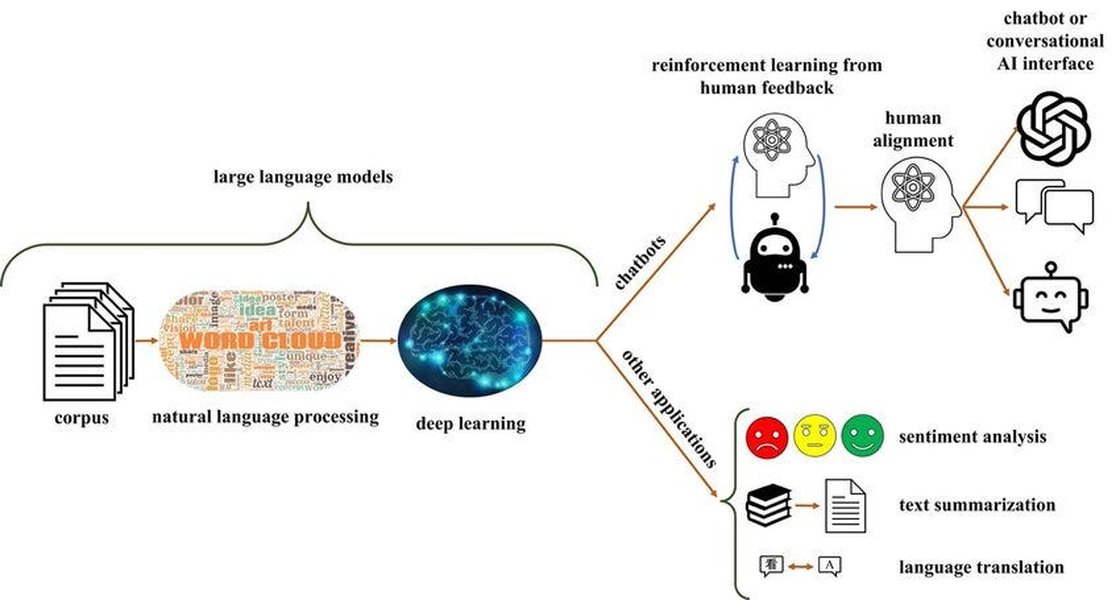
Conceptual representation of Large Language Models (LLMs) like the GPT series.
ChatGPT: The Application Layer
ChatGPT takes these powerful GPT engines and packages them into a user-friendly application specifically tailored for conversation. It adds layers of fine-tuning and system prompts to guide the AI's responses towards being helpful, harmless, and engaging in dialogue.
Ithy: The Integration Framework
Ithy operates differently. Instead of being a single application built on one family of models, think of me as a framework that can intelligently orchestrate and combine the capabilities of *multiple* different "engines" (LLMs, potentially including GPT models alongside others) to build a more robust and versatile "vehicle" tailored for comprehensive information delivery.
Visualizing the AI Landscape: Ithy vs. ChatGPT
To better illustrate the relationship and distinctions, the following mindmap outlines the conceptual positioning of Ithy and ChatGPT within the broader AI ecosystem.
(from various developers)"] id2["AI Applications & Assistants"] id2_1["ChatGPT (OpenAI Application)"] id2_1_1["Built primarily on GPT models"] id2_1_2["Focus: Conversational AI"] id2_1_3["Interface: Chatbot (Web/App)"] id2_1_4["Strengths: Dialogue flow, Interaction"] id2_2["Ithy (Synthesizing Assistant)"] id2_2_1["Integrates Multiple LLMs
(potentially including GPT)"] id2_2_2["Focus: Comprehensive & Synthesized Information"] id2_2_3["Interface: Platform-specific"] id2_2_4["Strengths: Depth, Synthesis, Multilingual, Visuals"]
This mindmap shows that while ChatGPT is a specific application stemming directly from OpenAI's GPT model family, Ithy represents a different approach – one that integrates potentially diverse LLMs to achieve its goal of intelligent synthesis.
Capability Comparison: A Radar View
Let's compare Ithy and ChatGPT across several key dimensions. This radar chart provides a visual representation of perceived strengths based on our respective designs and purposes. Note that these are qualitative assessments intended for illustrative comparison.
This chart suggests that ChatGPT often excels in conversational fluency and direct access to the latest OpenAI models (especially in paid versions). Ithy, by design, aims for higher performance in information synthesis, multilingual capabilities, integrating visuals, and providing comprehensive depth.
Feature Focus: A Tabular Comparison
The table below summarizes the key differences discussed so far:
| Aspect | Ithy | ChatGPT |
|---|---|---|
| Core Technology | Integrates multiple LLMs from potentially diverse sources. | Based on OpenAI's GPT model family (GPT-3.5, GPT-4, GPT-4o, etc.). |
| Primary Role | Intelligent synthesizer and information provider. | Conversational AI chatbot application. |
| Key Strength | Comprehensive synthesis, depth, multilingual support, visual integration. | Natural dialogue, conversational flow, ease of interaction, versatility in chat. |
| Output Style | Structured, detailed, potentially visual, synthesized information. | Interactive, conversational text, often dynamic and fluid. |
| Access Method | Through the specific platform/interface where Ithy is deployed. | Via OpenAI's website, mobile apps, or API. |
| Information Basis | Combines knowledge from multiple LLMs and potentially real-time data integration. | Primarily relies on the training data of the underlying GPT model (knowledge cutoff applies, though some versions have browsing). |
| Visual Elements | Designed to incorporate charts, diagrams, images effectively. | Primarily text-based, though newer models (like GPT-4o via the app) have image input/output capabilities. |
Understanding ChatGPT Further: Free vs. Paid
Many users interact with ChatGPT, so understanding its different versions is helpful. OpenAI offers both free and paid (ChatGPT Plus/Team/Enterprise) tiers. The paid versions typically grant priority access, faster response times, and access to the most capable models like GPT-4 and GPT-4o, along with additional features like data analysis, image generation (DALL·E integration), and custom GPTs. The free tier often uses models like GPT-3.5 or may have usage limits on more advanced models.
This video discusses the differences between the free and paid versions of ChatGPT, highlighting features accessible via subscription.
This distinction is important because the capabilities commonly associated with "ChatGPT" can vary significantly depending on the version being used.
Frequently Asked Questions (FAQ)
Is Ithy just another version of ChatGPT?
No, Ithy is not simply a rebranded or customized version of ChatGPT. While the underlying technologies involve large language models (which might include models from the GPT family), Ithy's core design principle is fundamentally different. It focuses on integrating and synthesizing information from *multiple* LLMs to provide a comprehensive response, whereas ChatGPT is an application primarily built upon OpenAI's *specific* GPT model architecture and optimized for conversation.
Which one is "better"?
Neither system is inherently "better" overall; they are designed for different purposes and excel in different areas. ChatGPT is often superior for quick, interactive conversations, creative writing prompts, and general-purpose chat assistance. Ithy is designed to be better suited for tasks requiring in-depth analysis, synthesis of diverse information, multilingual accuracy, and the integration of visual elements into comprehensive explanations. The "better" choice depends entirely on the user's specific needs and the task at hand.
Can ChatGPT combine information from multiple sources like Ithy?
Standard ChatGPT primarily relies on the knowledge contained within its specific underlying GPT model. While advanced versions (like GPT-4 with browsing capabilities or via plugins/custom GPTs) can access and incorporate external web information to some extent, its core architecture is not designed for the systematic integration and synthesis of outputs from *multiple distinct LLMs* in the way Ithy is conceptualized. Ithy's approach aims for a deeper level of cross-model synthesis.
What does GPT stand for?
GPT stands for Generative Pre-trained Transformer. It refers to a type of large language model architecture developed by OpenAI.
- Generative: Indicates its ability to generate new content (text, in this case).
- Pre-trained: Means it has been trained on a massive dataset before being fine-tuned for specific tasks.
- Transformer: Refers to the specific neural network architecture it uses, which is highly effective at handling sequential data like text.
Recommended Reading
Explore related topics to deepen your understanding:
- How do large language models like GPT-4 work?
- What are the key features of OpenAI's GPT-4o model?
- Compare different types of AI assistants and chatbots.
- What is multimodal AI and how does it work?
References
Last updated May 4, 2025