
Japan U20 vs South Korea U20: In-depth Analysis and Prediction
Detailed review of both teams and match forecast for Feb 20, 2025
Key Highlights
- Team Styles: Japan emphasizes technical possession and precise passing, while South Korea thrives on speed and counterattacks.
- Recent Performance: Both teams have exhibited strong forms in their respective AFC U20 Asian Cup journeys, albeit through different tactical approaches.
- Prediction Edge: A closely contested match is expected with South Korea U20 holding a slight attacking advantage potentially leading to a narrow win.
Introduction
The international football match scheduled for February 20, 2025, between Japan U20 and South Korea U20 is one of the eagerly anticipated fixtures in the AFC U20 Asian Cup. With each side boasting unique strengths and well-defined playing styles, this encounter promises an exciting display of youth talent, tactical innovation, and tactical battle. In this analysis, we explore the background, team dynamics, historical trends, and in-match variables to provide a comprehensive evaluation and eventual prediction for the match.
Team Analysis
Japan U20
Overview and Recent Form
Japan U20 has consistently demonstrated strong technical proficiency and disciplined gameplay. Their youth development system is widely recognized for its emphasis on ball control, intricate passing schemes, and tactical organization. In recent fixtures, Japan U20 has shown a balanced mix of effective possession-based strategies alongside a well-organized defense. Their record in the AFC U20 Asian Cup reveals a team capable of both maintaining ball control and exploiting fleeting opportunities when transitioning to attack.
Recent statistical outputs demonstrate that Japan U20 has maintained a strong unbeaten run in several consecutive tournament matches, with an impressive goal average of around 1.9 goals per game. While they demonstrate robust offensive initiatives, slight defensive vulnerabilities have been noted as they tend to concede an average of one goal per match. Navigating these defensive gaps is central to their strategy, with an emphasis on controlling midfield play to minimize opponents' counterattacking opportunities.
Tactical Approach
Japan U20 is known for a tactical approach that centers on systematic build-up play from the back. Their typical strategies include:
- Short, rapid exchanges in the midfield combined with precise, technically adept passes.
- The ability to switch the field effectively through rapid wing transitions that stretch their opponent's defense.
- Maintaining disciplined defensive lines to reduce spaces for opponents to exploit, while remaining alert for fast breaks.
This methodical and structured style of play has been instrumental in their consistent performances, although reliance on technical mastery sometimes necessitates patience which might be challenged by physically dominant teams.
South Korea U20
Overview and Recent Form
South Korea U20 is celebrated for its athleticism, quick transitions, and formidable counter-attacking play. The team has a pronounced focus on physical intensity and pace, attributes that have allowed them to consistently perform well in youth-level competitions. Their recent form in the tournament includes a series of victories and strong offensive displays where they have scored multiple goals, evidencing their preference for fast, dynamic play.
Statistically, South Korea averages around 1.6 goals per game while conceding slightly over one goal in their recent outings. Their strong emphasis on physical conditioning and rapid counterattacks enables them to catch opponents off-guard, making them a threat especially in games where pace is of the essence.
Tactical Approach
The South Korea U20 squad typically prefers to deploy tactics that exploit transitional phases in the game:
- Counter-Attacking Strategy: They are often willing to concede possession in favor of an efficient counterattack system, which is designed to punish opponents who commit too heavily to attacking play.
- High Press and Transition: Their high pressing tactics disrupt the rhythm of teams that favor a possession game, quickly capturing the ball and transitioning into offense with speed.
- Physical Dominance: South Korea's robust and athletic players are adept at winning duels and applying pressure on the ball, which is integral to their game plan when defending and attacking.
Head-to-Head and Historical Context
Previous Encounters
Historically, encounters between Japan and South Korea at both youth and senior levels have been highly competitive. The only recent recorded head-to-head at the youth level saw South Korea secure a narrow 1-0 victory, setting a psychological precedent for both teams. This past result, coupled with the tactical adjustments both teams are likely to employ in this match, suggests that history may continue to influence the competitive spirit of this contest.
Influence of Tournament Dynamics
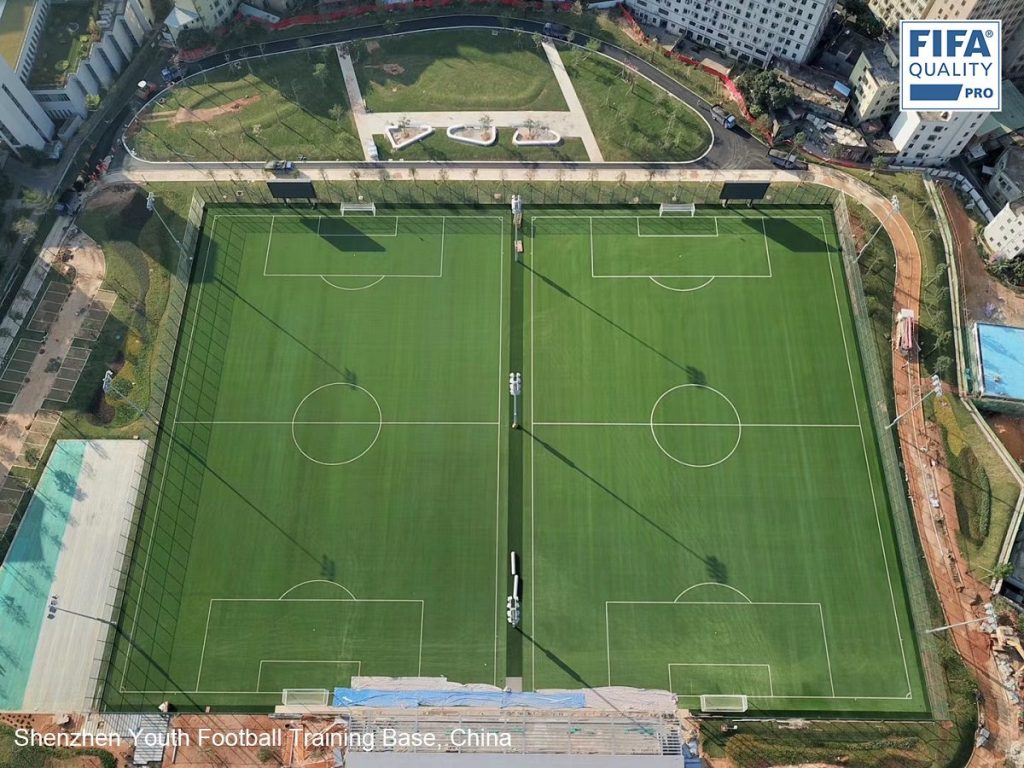
The match is part of the AFC U20 Asian Cup held at the Shenzhen Youth Football Training Base Pitch in Shenzhen, China. The tournament's competitive environment, along with the backdrop and conditions typical of a February fixture, contribute to the overall dynamics of the game. Factors such as weather conditions in February, pitch conditions, and the pressure of tournament standings can significantly impact the game plan of each team. For Japan, maintaining their technical style against the physical play of South Korea will be key. Meanwhile, South Korea’s ability to create rapid transitions may gain more traction if the playing surface facilitates quick, clean passes.
Match Prediction
Analyzing Key Factors
When predicting the outcome of such a tightly balanced match, several factors need to be considered:
- Player Form and Tactical Readiness: Both teams have demonstrated recent strong performances; however, the match may hinge on moments of individual brilliance from key emerging players. Evaluations of player form leading up to the fixture, including any unforeseen injuries or tactical adjustments, might influence the final outcome.
- Coaching Strategies: The ability of coaching staff to innovate and adapt during the match plays a crucial role. Japan’s insistence on maintaining possession against South Korea’s proactive counterattacks may force tactical battle lines that can become decisive in the latter stages of the game.
- Defensive and Offensive Balance: While Japan U20 exhibits a reliable offensive strategy based on controlled buildup play, their slightly porous defense may be vulnerable against South Korea’s high-tempo approach. Conversely, South Korea’s aggressive offense needs to be tempered with sufficient defensive discipline to avoid counter-predicaments.
Projected Match Scenario
Given the described attributes, the match is projected to be close and competitive. A key balance is likely to be maintained between Japan U20's methodical technical play and South Korea U20's dynamic physical presence. Evaluators lean towards a slight edge for South Korea U20, mainly due to their attacking pace and aptitude for disrupting set plays. Nevertheless, Japan’s cohesive unit might neutralize this advantage if they are able to command possession and minimize opportunities for quick counterattacks.
Final Score Prediction
Both heads-up comparisons and statistical performances suggest that the game could be decided by narrow margins. The following outcomes are plausible:
- A 1-1 draw, representing an evenly matched contest where both sides are able to counteract each other’s strategies.
- A 2-1 victory in favor of South Korea U20 if their counter-attacking efforts effectively disrupt Japan’s rhythm and capitalize on defensive lapses.
Taking into account South Korea’s recent trend of utilizing their speed and offensive capabilities coupled with their tactical adjustments observed in similar high-pressure fixtures, the prediction subtly favors a South Korea U20 victory. A plausible final score that encapsulates these dynamics is 2-1 in favor of South Korea U20, though the possibility of a stalemate remains strong given the balanced performances expected from Japan U20.
Comparative Analysis Table
The table below summarizes the key aspects of both teams to provide a side-by-side analysis:
| Aspect | Japan U20 | South Korea U20 |
|---|---|---|
| Playing Style | Possession-based, technical passing, tactical discipline | Fast-paced, athletic, counter-attacking, high press |
| Recent Form | Strong unbeaten run in key tournament matches, averaging 1.9 goals per game | Effective offensive display with consistent wins and quick transitions, averaging 1.6 goals per game |
| Defensive Strategy | Well-organized, though occasionally open to counterattacks | Tactical fouls and aggressive high pressing, but slight vulnerability if possession is retained |
| Historical Encounters | Competitive matches, with a legacy of technical superiority | Slight historical advantage with at least one head-to-head win (1-0) |
| Key Tactical Focus | Maintaining possession, switching play quickly to exploit small spaces | Utilizing pace, quick transitions, and counterattacking to exploit momentary defensive lapses |
Additional Considerations
External Conditions
Several extrinsic factors may also influence the match outcome:
- Venue and Weather: The match will be held at the Shenzhen Youth Football Training Base Pitch. February weather in Shenzhen may be cooler and slightly wet, affecting the ball's pace and overall match dynamics.
- Match Timing: Scheduled for early morning (07:00 UTC), differences in player energy levels might come into play. Fitness and resilience will be vital to cope with these conditions.
- Tournament Pressure: With both teams vying to maintain unbeaten records in the tournament, the stakes are high. The pressure to secure a win may lead to riskier tactical choices that could alter the match flow.
Influence of Coaching and Adaptability
Coaching strategies will be critical to managing in-game situations. Japan’s coaches are known for their emphasis on retaining ball control and imposing tactical discipline. In contrast, South Korea’s coaching approach is geared toward maximizing their physical attributes and implementing aggressive counterattacks. The ability of each coaching staff to adapt to changing circumstances during the game—especially in response to opposing tactical setups—can significantly influence which side gains the upper hand.
In high-stakes situations such as this, mid-game tactical tweaks, substitutions, and adjustments in formation could be the decisive factors. Both teams are expected to deploy strategies that mitigate risk while exploiting any emerging vulnerabilities in their opponent’s play.
Summary and Prediction
In synthesizing the available insights:
- Japan U20 is likely to rely on their acclaimed technical skills and short-passing game to control early phases of play. Their adherence to a disciplined defensive structure, however, might be challenged by quick, agile opponents.
- South Korea U20’s identity is built on rapid transitions, athletic prowess, and the ability to press high and continually create scoring opportunities. Their historical edge in previous encounters and consistent recent performance provide them with a slight advantage.
- The overall expectation leans towards a fiercely contested game with both teams capable of scoring. However, South Korea's dynamic counterattack combined with their robust fitness levels tips the scales marginally in their favor. A probable match outcome is a 2-1 victory for South Korea U20, though the possibility of a draw exists should Japan’s structured play counterbalance the physical tactics deployed by the opposition.
Conclusion
In conclusion, the analysis of the Japan U20 versus South Korea U20 match on February 20, 2025, reveals a fascinating tactical duel where two distinct philosophies of football will intersect. Japan U20's emphasis on technical finesse and ball retention will be tested against South Korea U20’s high-energy, counterattacking methods. Given the strengths and recent performances of both sides, the match is expected to be closely contested, ultimately favoring South Korea U20 due to their proficiency in transitioning rapidly from defense to attack and previous successful head-to-head experiences. A predicted 2-1 outcome in favor of South Korea U20 encapsulates both the tactical intricacies and the inherent unpredictability of youth-level international football.
As with all sporting events, unforeseen factors such as individual brilliance, tactical shifts during the game, and even weather conditions could sway the final result. Yet, the aggregate evaluation based on technical styles, recent tournament performances, and historical context provides a reliable forecast for this enthralling encounter.
References
- Japan U20 vs South Korea U20 Match on 20 Feb 2025 - Scores24 Live
- AFC U20 Asian Cup - Japan v Korea Republic Match Preview - AFC
- Japan U20 Vs South Korea U20 Match Preview - xScores
- Japan U20 vs South Korea U20 Prediction - BC Game Betting
- Japan U20 vs South Korea U20 Match Odds and Analysis - ODDSLOT
Recommended Searches
Last updated February 20, 2025