
Unlocking Japan's Maize Breeding Expertise: Key Researchers and Contacts
Discover leading Japanese professors advancing maize breeding through innovative genetics and agricultural science.
Highlights
- Key Contacts: Several Japanese professors at leading universities like Tohoku, Hokkaido, and Okayama are actively involved in plant breeding research that encompasses or is highly relevant to maize. Direct email addresses or clear contact pathways are available for prominent researchers.
- Multifaceted Research: Maize breeding research in Japan is diverse, covering areas such_as molecular breeding, genomewide selection, genetic diversity analysis, development of forage maize, and improvement of stress tolerance and yield.
- Prominent Institutions: Universities such as Tohoku University, Hokkaido University, Okayama University, Tottori University, and the University of Tokyo are at the forefront of plant science and agricultural research, providing a strong institutional backbone for maize breeding advancements.
Leading Researchers in Japanese Maize and Plant Breeding
Japan is home to numerous distinguished academics contributing significantly to plant science, including maize breeding. While many professors specialize in broader plant breeding and genetics, their expertise is often applied to crucial crops like maize. Below are some key individuals and their areas of focus.
Prof. Hiroyasu Kitashiba
Affiliation: Graduate School of Agricultural Science, Tohoku University
Research Interests:
Professor Kitashiba's work encompasses plant breeding and genetics. His research is vital for understanding the genetic mechanisms that can lead to improved crop varieties, including those applicable to maize.
Contact Information:
Email: hiroyasu.kitashiba.c7@tohoku.ac.jp
Prof. Hidetaka Nishida
Affiliation: Okayama University
Research Interests:
Specializing in plant breeding, Professor Nishida focuses on genetic diversity and agronomic traits in crop genetic resources. While his work prominently features crops like wheat, the principles and methodologies are broadly applicable to maize breeding programs, particularly in understanding and utilizing genetic variations.
Contact Information:
Email: hnishida@okayama-u.ac.jp
Prof. Yohei Koide
Affiliation: Laboratory of Plant Breeding, Faculty of Agriculture, Hokkaido University
Research Interests:
Professor Koide leads research focused on crop improvement by integrating genetics and mathematical modeling. His laboratory seeks innovative breeding directions, which can include maize, a significant crop in many agricultural systems. His work is pivotal for developing new, efficient breeding strategies.
Contact Information:
Email: ykoide@agr.hokudai.ac.jp. Further contact details can often be found on the Yohei Koide Lab Contact Page.
Prof. Matthias Wissuwa
Affiliation: University of Tokyo (Institute for Plant and Agricultural Sciences) / Japan International Research Center for Agricultural Sciences (JIRCAS)
Research Interests:
Professor Wissuwa's expertise lies in plant breeding, molecular genetics, and marker-assisted selection, with a particular focus on nutrient stress physiology. His research contributes to developing crops, potentially including maize, that are more resilient to challenging environmental conditions.
Contact Information:
Email: wissuwa@affrc.go.jp
Prof. Hisashi Tsujimoto & Dr. Amin E. Eltayeb
Affiliation: Arid Land Research Center, Laboratory of Molecular Breeding, Tottori University
Research Interests:
Professor Tsujimoto's majors include Breeding Science, and Dr. Eltayeb has expertise in molecular genetics. Their laboratory focuses on molecular breeding and has conducted research on maize. This work is particularly relevant for developing maize varieties adapted to arid or semi-arid conditions.
Contact Information:
Contact can typically be made through the Arid Land Research Center's official website or Tottori University's Department of Agriculture.
Prof. Kazuo N. Watanabe
Affiliation: Tsukuba Plant Innovation Research Center (Japan); Adjunct Professor, Cornell University (USA)
Research Interests:
Professor Watanabe is a distinguished figure in plant breeding and genetics with a strong background in maize research. His work often involves international collaborations and focuses on applying advanced genetic techniques to crop improvement.
Contact Information:
Contact is best sought through his institutional affiliations, such as the Tsukuba Plant Innovation Research Center or Cornell University.
Navigating Academic Contacts in Japan
When reaching out to professors in Japan, it's generally advisable to use official university channels. Many faculty members provide contact information through their laboratory or departmental websites. In Japanese academic culture, a formal and respectful approach is often preferred. Clearly state your purpose and provide a concise background of your interest or query. If a direct email is not listed, look for contact forms on university or lab pages, or consider reaching out to the relevant departmental administrative office for guidance.
The Landscape of Maize Breeding Research in Japan
Maize (Zea mays L.) breeding in Japan is an integral part of the nation's broader agricultural science strategy. Research efforts are multifaceted, focusing on enhancing yield, improving nutritional quality, developing varieties resistant to local pests and diseases, and adapting maize to Japan's diverse climatic conditions. Key areas include:
- Forage Maize: Significant research is dedicated to breeding high-yielding silage maize for animal feed, a critical component of Japan's livestock industry.
- Genomewide Selection (GWS): Japanese researchers are employing GWS methodologies to accelerate genetic gain in maize breeding programs, allowing for more efficient selection of superior lines.
- Genetic Diversity: Studies analyze the genetic diversity of maize inbred lines, including those adapted to Japanese environments, to identify valuable genes for breeding.
- Stress Tolerance: With changing climate patterns, there's an increasing focus on developing maize varieties tolerant to abiotic stresses like drought, heat, and nutrient deficiencies, as well as biotic stresses.
Institutions like Nagoya University's Department of Plant Production Sciences, the Tokyo University of Agriculture's Laboratory of Plant Breeding, and various laboratories within Kyoto University also contribute significantly to plant breeding research that can impact maize improvement.
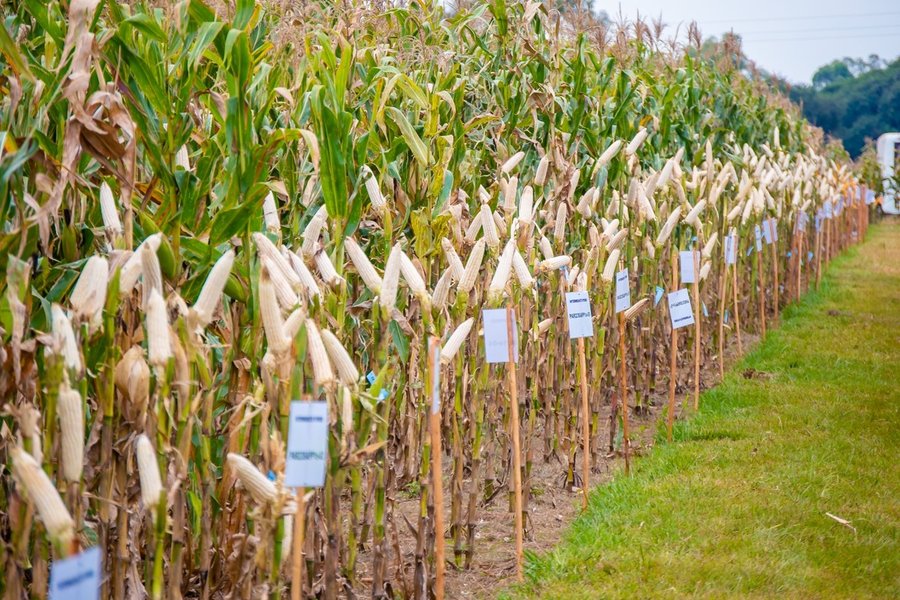
Field research and market intelligence play crucial roles in guiding maize breeding efforts globally, including in Japan.
Key Researchers and Institutions at a Glance
This table summarizes some of the key professors and institutions involved in plant breeding research relevant to maize in Japan.
| Professor/Researcher | Affiliation | Primary Research Focus | Contact Approach |
|---|---|---|---|
| Prof. Hiroyasu Kitashiba | Tohoku University | Plant breeding, Genetics | hiroyasu.kitashiba.c7@tohoku.ac.jp |
| Prof. Hidetaka Nishida | Okayama University | Plant breeding, Genetic diversity, Agronomic traits | hnishida@okayama-u.ac.jp |
| Prof. Yohei Koide | Hokkaido University | Crop improvement, Genetics, Mathematical modeling | ykoide@agr.hokudai.ac.jp / Lab website |
| Prof. Matthias Wissuwa | University of Tokyo / JIRCAS | Plant breeding, Molecular genetics, Nutrient stress physiology | wissuwa@affrc.go.jp |
| Prof. Hisashi Tsujimoto & Dr. Amin E. Eltayeb | Tottori University (Arid Land Research Center) | Molecular breeding, Breeding science, Arid land agriculture | Via Arid Land Research Center |
| Prof. Kazuo N. Watanabe | Tsukuba Plant Innovation Research Center / Cornell University | Plant breeding, Genetics, International collaboration | Via institutional affiliations |
| Department of Plant Production Sciences | Nagoya University | Breeding and molecular genetics of crop plants, including maize | Via department website |
Comparative Focus in Plant Breeding Research
The following chart illustrates speculative comparative research strengths across several key Japanese institutions involved in plant breeding. The scores (on a scale where higher values indicate greater emphasis, with a minimum axis value of 1 for clarity) reflect general tendencies based on available information and are intended to be illustrative rather than definitive data.
This radar chart visualizes how different Japanese universities and research centers might prioritize various aspects of plant breeding. For example, Tottori University's Arid Land Research Center shows a strong speculative focus on "Molecular Breeding" and "Stress Tolerance," aligning with its mission. Universities like Tohoku and Hokkaido appear to have broad strengths across genetics, breeding methodologies, and yield improvement. Such diverse expertise contributes to a robust national research ecosystem for crops like maize.
Mapping Maize Breeding Connections in Japan
The network of maize breeding research in Japan involves various universities, research institutions, and specific areas of study. This mindmap provides a simplified overview of these interconnections, highlighting key players and research themes.
Research Center"] id1_7_1["Prof. Kazuo N. Watanabe"] id2["Core Research Areas"] id2_1["Plant Genetics & Genomics"] id2_2["Molecular Breeding Techniques"] id2_3["Genomewide Selection (GWS)"] id2_4["Crop Improvement
(Yield, Quality, Maturity)"] id2_5["Stress Tolerance
(Abiotic & Biotic)"] id2_6["Forage Maize Development"] id2_7["Genetic Diversity Analysis"] id3["Contact & Collaboration"] id3_1["Direct Email (publicly available)"] id3_2["University Department Websites"] id3_3["Laboratory Specific Contact Pages"] id3_4["Academic Publications & Conferences"] id3_5["Japan Science and Technology Agency (JST)"] id3_6["Japanese Society of Breeding"]
This mindmap illustrates that maize breeding research in Japan is not isolated but forms part of a larger network. Key universities often host leading professors whose work falls into several core research themes, from fundamental genetics to applied crop improvement. Collaboration and information dissemination occur through various channels, including direct academic contacts, university platforms, and national scientific bodies, all contributing to the advancement of maize science.
Insights into Modern Maize Breeding
Understanding the principles of maize breeding and statistical genetics is fundamental to appreciating the work of these researchers. The following video, while featuring Dr. Rex Bernardo from the University of Minnesota, provides an excellent overview of the concepts and methodologies that are universally applied in modern maize breeding programs, including those in Japan.
The video discusses topics such as the genetic basis of traits, selection methods, and the use of statistical tools to predict breeding outcomes. These are core components of research undertaken by Japanese professors aiming to develop improved maize varieties. Modern techniques like genomewide selection, mentioned in Japanese research contexts, build upon these foundational principles to enhance the speed and precision of breeding efforts.

Visualizing the impact of genome-wide selection (GWS) on genetic improvement in maize. GWS is a key technology used in advanced breeding programs, including those in Japan, to accelerate the development of superior maize lines. Image source: Nature Genetics.
Frequently Asked Questions
Are there Japanese professors who *only* specialize in maize breeding?
While some researchers may have a strong focus on maize, many professors in Japan specialize in broader areas of plant breeding, genetics, or molecular biology. Their expertise is often applicable to a range of crops, including maize. Specific maize-only roles are less common than those encompassing general crop science with maize as a key research subject.
How current and reliable are the listed email addresses?
The email addresses and contact information provided are based on publicly available data as of May 10, 2025. However, academic positions and contact details can change. It is always recommended to verify contact information through the respective university's official website or the professor's laboratory page if possible.
What is the recommended way to initiate contact with these professors?
A professional and concise email is generally the best approach. Clearly state your name, affiliation (if any), and the purpose of your inquiry in the subject line and body of the email. Briefly explain your interest in their research and be specific about the information you are seeking. Referencing their specific publications or projects can demonstrate genuine interest. Always maintain a respectful tone and be mindful of potential language differences if you are not communicating in Japanese. Check university or laboratory websites for any specific guidelines on contacting faculty.
Why is maize research significant in Japan?
Maize is a globally important crop, and in Japan, it plays a role in food security, primarily as a key component of animal feed for the livestock industry. Research into maize breeding helps develop varieties better suited to Japan's specific agricultural environments and climatic challenges. This includes improving yield, nutritional value, disease resistance, and tolerance to stresses like lodging or specific weather patterns. Furthermore, advancements in maize genetics and breeding contribute to Japan's overall scientific leadership in agricultural sciences and can have implications for global food production.
Recommended Further Exploration
- What are the latest advancements in maize genomics in Japanese research institutions?
- How are Japanese universities contributing to sustainable maize agriculture?
- Explore the role of molecular markers in crop improvement programs in Japan.
- Discover research on abiotic stress tolerance in maize by Japanese scientists.
References
Last updated May 10, 2025