

Key Insights into Object-Oriented Programming (OOP) in Java
- OOP as a Paradigm: Object-Oriented Programming is a fundamental programming paradigm that structures software around "objects," combining data and behavior into single units, fostering modularity and reusability.
- Four Pillars of OOP: The core principles—Encapsulation, Inheritance, Polymorphism, and Abstraction—are essential for building scalable, maintainable, and efficient Java applications.
- Classes and Objects: At its heart, OOP in Java uses "classes" as blueprints and "objects" as instances of these blueprints, mirroring real-world entities for clearer code organization.
As a Java developer, a deep understanding of Object-Oriented Programming (OOP) is crucial, not only for interview success but also for writing clean, efficient, and maintainable code. OOP is a programming paradigm that revolutionizes how software is designed, shifting the focus from actions and logic to data and objects. This approach allows developers to model real-world entities within their code, making complex systems more manageable and intuitive.
Understanding Object-Oriented Programming (OOP)
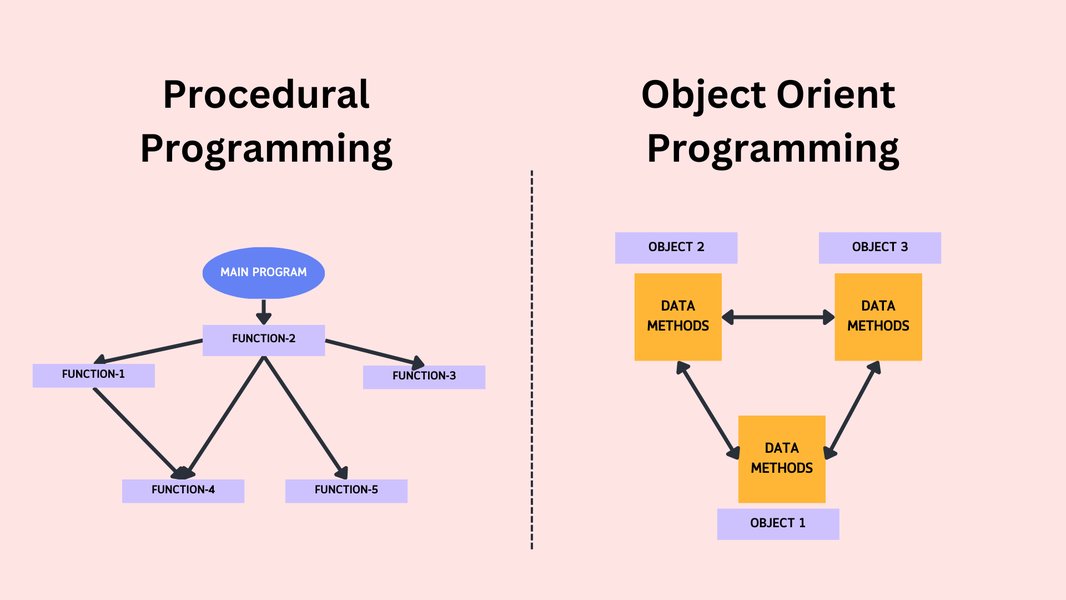
Object-Oriented Programming is a methodology that organizes software design around "objects." Unlike procedural programming, which focuses on a sequence of instructions, OOP encapsulates data (attributes) and methods (behaviors) within these objects. This bundling creates self-contained units that can interact with each other, leading to a more modular and organized codebase.
The Essence of Objects and Classes
At the heart of OOP are two fundamental concepts: classes and objects.
A class serves as a blueprint or template for creating objects. It defines the structure (data/fields) and behavior (methods) that objects of that class will possess. Think of a class like a cookie cutter: it dictates the shape and design of the cookies, but it's not a cookie itself.
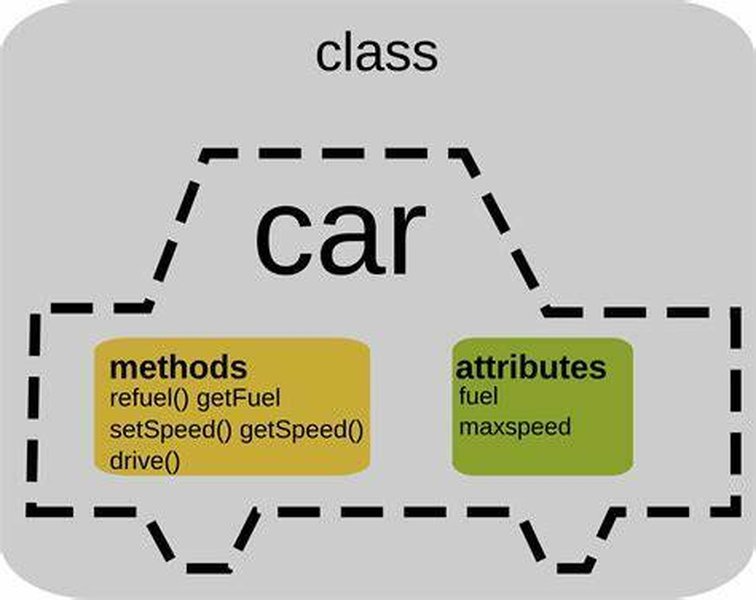
Illustration of a Class and its Objects in OOP.
An object, on the other hand, is an instance of a class. It's a concrete realization of the blueprint, with its own unique set of attribute values. Using the cookie cutter analogy, the cookies themselves are the objects—each one is distinct, but they all conform to the design defined by the cutter.
For example, if you have a class called "Car," specific objects like "MyVolvo" or "YourToyota" can be created from this class. Each of these car objects would have attributes like color, model, and year, and behaviors like accelerate or brake.
Why OOP Matters: Benefits and Advantages
The adoption of OOP brings several significant advantages to software development, which are highly valued in Java:
- Modularity: Programs are broken down into smaller, self-contained objects, making the code easier to understand, manage, and debug.
- Reusability: Classes and objects can be reused across different parts of an application or in entirely new projects, reducing development time and effort.
- Maintainability: Changes made to one object are less likely to affect other parts of the system, simplifying updates and bug fixes.
- Scalability: The modular nature of OOP makes it easier to extend and grow applications as new features or requirements emerge.
- Security and Data Integrity: Principles like encapsulation help protect data from unauthorized access or modification, enhancing the overall security of the application.
The Four Pillars of OOP
The strength and effectiveness of Object-Oriented Programming are built upon four fundamental principles, often referred to as the "four pillars." These pillars work together to provide a robust framework for designing and developing software.
1. Encapsulation: The Art of Data Hiding
Encapsulation is the principle of bundling data (attributes) and the methods (behaviors) that operate on that data into a single unit, typically a class. It also involves restricting direct access to some of an object's components, meaning that the internal state of an object is hidden from the outside world. Access to this internal state is managed through public methods, often referred to as "getters" and "setters."
Key Aspects of Encapsulation:
- Data Hiding: Protects an object's internal data from external misuse or accidental modification.
- Controlled Access: Ensures that data can only be accessed or modified through defined public methods, allowing the class to maintain control over its state.
- Improved Modularity: By enclosing details within the class, changes to the internal implementation do not affect external code that interacts with the class, as long as the public interface remains consistent.
Visualizing the concept of Encapsulation.
2. Inheritance: Code Reusability and Hierarchy
Inheritance is a mechanism that allows a new class (subclass or child class) to inherit properties (fields) and behaviors (methods) from an existing class (superclass or parent class). This principle promotes code reusability and establishes a hierarchical "is-a" relationship between classes.
Key Aspects of Inheritance:
- Code Reusability: Child classes can reuse methods and fields defined in their parent classes, reducing redundant code.
- Hierarchical Structure: Creates a clear relationship where a specialized class inherits from a more general class (e.g., a "Dog" is a "Animal").
- Polymorphic Behavior: Enables polymorphism, allowing a subclass object to be treated as an instance of its superclass.
For example, if you have a Vehicle class with methods like startEngine() and stopEngine(), a Car class can inherit from Vehicle, automatically gaining these functionalities without needing to redefine them. The Car class can then add its own specific attributes and methods, like openSunroof().
3. Polymorphism: Many Forms, One Interface
Polymorphism, meaning "many forms," is the ability of objects of different classes to be treated as instances of a common base class. This principle allows a single interface to represent different underlying forms or behaviors, making code more flexible and extensible.
Key Aspects of Polymorphism in Java:
- Method Overriding (Runtime Polymorphism): A subclass provides a specific implementation for a method that is already defined in its superclass. The decision of which method to call is made at runtime.
- Method Overloading (Compile-time Polymorphism): Multiple methods within the same class have the same name but different parameters (number, type, or order). The correct method is determined at compile time.
- Flexibility: Allows you to write generic code that can operate on objects of various types, as long as they share a common superclass or interface.
Consider an Animal class with a makeSound() method. A Dog class and a Cat class, both inheriting from Animal, can each provide their own implementation of makeSound() (e.g., "Bark" for Dog, "Meow" for Cat). Through polymorphism, you can call makeSound() on an Animal reference, and the correct specific method will be executed based on the actual object type.
4. Abstraction: Focusing on Essentials
Abstraction involves hiding complex implementation details and exposing only the essential features or functionalities of an object to the user. It allows developers to focus on "what" an object does rather than "how" it does it, simplifying the interaction with complex systems.
Key Aspects of Abstraction:
- Simplification: Reduces complexity by showing only relevant information and hiding unnecessary internal workings.
- Interface-based Interaction: Often achieved through abstract classes and interfaces in Java, which define a contract for behavior without providing full implementation.
- Improved Maintainability: Changes to internal implementation details do not impact external code that uses the abstract interface.
A common analogy for abstraction is driving a car: you interact with the steering wheel, accelerator, and brake pedals (the essential features) without needing to understand the intricate mechanics of the engine or transmission beneath the hood.
Beyond the Four Pillars: Related OOP Concepts
While the four pillars form the bedrock of OOP, other concepts further enhance the modeling capabilities and relationships between objects. These include Association, Aggregation, and Composition, which describe different types of relationships objects can have with each other.
- Association: Represents a general "uses a" or "has a" relationship between two independent classes. It's the weakest form of relationship.
- Aggregation: A specific type of association that represents a "has a" relationship where one class contains another, but the contained object can exist independently of the container (e.g., a "Department" has "Professors," but professors can exist without the department).
- Composition: A stronger form of aggregation where the contained object cannot exist independently of the container (e.g., a "House" has "Rooms"; if the house is destroyed, the rooms cease to exist as part of that house).
Visualizing OOP Concepts: A Mindmap Overview
To further solidify your understanding, here's a mindmap illustrating the interconnectedness of OOP concepts. This visual representation helps to grasp how each principle contributes to the overall structure and benefits of object-oriented design.
A comprehensive mindmap illustrating the core concepts and benefits of Object-Oriented Programming in Java.
Practical Application: An Example
To put these concepts into perspective, let's consider a simple example often used in Java interviews:
// Abstraction and Encapsulation: Animal class as an abstract blueprint
abstract class Animal {
    private String name; // Encapsulated data

    public Animal(String name) {
        this.name = name;
    }

    public String getName() { // Getter method for encapsulated data
        return name;
    }

    // Abstract method: common behavior, specific implementation delegated to subclasses
    public abstract void makeSound();
}

// Inheritance: Dog and Cat inherit from Animal
class Dog extends Animal {
    public Dog(String name) {
        super(name); // Call to superclass constructor
    }

    @Override // Polymorphism: Overriding makeSound method
    public void makeSound() {
        System.out.println(getName() + " barks!");
    }
}

class Cat extends Animal {
    public Cat(String name) {
        super(name);
    }

    @Override // Polymorphism: Overriding makeSound method
    public void makeSound() {
        System.out.println(getName() + " meows!");
    }
}

public class Zoo {
    public static void main(String[] args) {
        // Polymorphism in action: Treating Dog and Cat as Animal objects
        Animal myDog = new Dog("Buddy");
        Animal myCat = new Cat("Whiskers");

        myDog.makeSound(); // Calls Dog's makeSound
        myCat.makeSound(); // Calls Cat's makeSound

        // Demonstrating Encapsulation (indirect access to name)
        System.out.println("My dog's name is: " + myDog.getName());
    }
}
In this example:
- The
Animalclass is abstract, hiding the specific implementation ofmakeSound(). - The
nameattribute inAnimalis encapsulated, accessible only viagetName(). DogandCatclasses demonstrate inheritance fromAnimal.- The
makeSound()method exhibits polymorphism, with different behaviors inDogandCatdespite being called on anAnimaltype reference.
Deep Dive: Object-Oriented Programming in Java
This video provides an excellent visual and auditory explanation of Object-Oriented Programming concepts in Java, covering the core principles with practical examples. It's particularly useful for reinforcing the theoretical knowledge with actual code implementations.
Object Oriented Programming in Java - All-in-One Tutorial. This video by CalcurTech offers a comprehensive guide to OOP in Java, explaining concepts and their practical application.
The tutorial delves into how these principles are applied in Java, offering code snippets and explanations that bring the theoretical concepts to life. Understanding these practical applications is key for any Java developer, especially when preparing for technical interviews where you might be asked to demonstrate your knowledge through code examples.
Comparison: Procedural vs. Object-Oriented Programming
Understanding OOP is often clearer when contrasted with other programming paradigms, particularly procedural programming. Here's a quick comparison:
| Feature | Procedural Programming | Object-Oriented Programming (OOP) |
|---|---|---|
| Focus | Functions/Procedures and logic | Objects (data and behavior combined) |
| Data Handling | Data and functions are separate; data can be exposed globally. | Data is encapsulated within objects; access is controlled. |
| Structure | Top-down approach; large programs broken into functions. | Bottom-up approach; programs structured around real-world objects. |
| Modularity | Functions are modular, but data flow can be complex. | Objects are highly modular and self-contained. |
| Reusability | Functions can be reused, but less direct support for complex data structures. | High reusability through inheritance and class structures. |
| Maintainability | Changes can have ripple effects across the codebase. | Easier to maintain as changes are localized within objects. |
| Real-world Modeling | Less direct mapping to real-world entities. | Strong ability to model real-world concepts. |
This table highlights why OOP has become the dominant paradigm for developing complex, large-scale applications, especially in languages like Java, due to its emphasis on organization, reusability, and maintainability.
Frequently Asked Questions (FAQ)
What is the primary goal of OOP?
Are there more than four OOP principles?
Why is OOP particularly important for Java developers?
How does OOP promote code reusability?
Conclusion
Object-Oriented Programming is more than just a buzzword; it's a powerful methodology that shapes how modern software is built. By understanding and applying its four core pillars—Encapsulation, Inheritance, Polymorphism, and Abstraction—Java developers can write code that is not only functional but also modular, reusable, maintainable, and scalable. Mastering these concepts is a cornerstone for any aspiring or experienced Java professional, paving the way for successful interviews and impactful software development.
Recommended Further Queries
- How does method overriding and overloading work in Java polymorphism?
- Explain the difference between abstract classes and interfaces in Java.
- What are design patterns in object-oriented programming?
- Best practices for applying SOLID principles in Java OOP projects?