
Jet Grouting for Soil Improvement: In-Depth Analysis
Exploring Effectiveness, Challenges, and Best Practices in Soil Stabilization
Key Highlights
- Effectiveness Varies by Soil Condition: Case studies demonstrate that jet grouting can significantly improve soil strength and reduce permeability across diverse soil types.
- Challenges in Execution: Technical limitations, execution difficulties, and environmental impacts require careful planning and real-time monitoring.
- Best Practices and Objectives: A comprehensive approach to objectives includes assessing effectiveness in varied soils and addressing challenges through informed parameter selection and environmental management.
Introduction to Jet Grouting
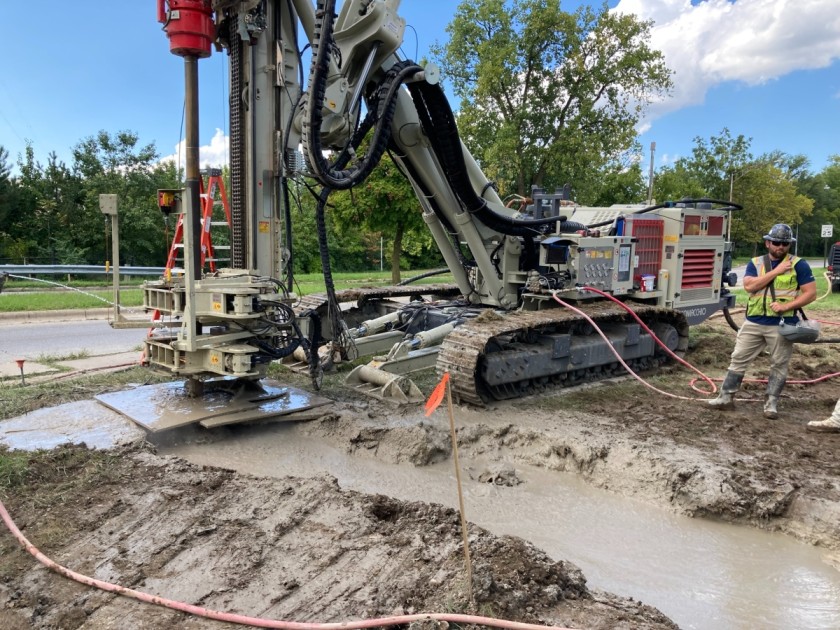
Jet grouting is a ground improvement technique that involves injecting a high-pressure stream of cementitious grout into the soil to form a hard, soil-cement mixture in situ. This method is widely practised in geotechnical engineering for its ability to increase the load-bearing capacity of soils, reduce permeability, and control settlement, especially in challenging soil conditions such as soft clays, sandy soils, and heterogeneous landscapes.
The process involves using specialized equipment to inject grout under high pressure, leading to the formation of stable columns or panels that reinforce and stabilize the soil. The technique is particularly valuable in urban construction projects, deep excavations, and infrastructure development where soil performance under varying load conditions is critical.
1.3 Objectives
Primary Objectives of the Investigation
Objective 1: Assessing Effectiveness
The first objective is to assess the effectiveness of jet grouting in different soil conditions based on case studies. This involves:
- Soil Strength Improvement: Evaluating how the injection of grout transforms the mechanical properties of soil, enhancing its capacity to bear loads, reduce settlement, and resist deformation.
- Permeability Reduction: Analyzing how jet grouting decreases the soil’s permeability, which is particularly beneficial in controlling groundwater flow and preventing seepage in foundation areas.
- Stability Enhancement: Studying various case studies to understand how jet grouting contributes to the overall stability of soil in different geotechnical scenarios by creating continuous columns or panels.
Objective 2: Identifying the Challenges
The second objective is aimed at identifying the challenges associated with jet grouting. These challenges are manifold and include technical limitations, execution difficulties, and environmental considerations:
-
Technical Limitations:
- Parameter Sensitivity: The performance of jet grouting is highly sensitive to the selection of parameters such as injection pressure, flow rate, rotation speed, and grout composition. Inaccurate calibration can lead to suboptimal grouted columns or even soil instabilities.
- Heterogeneous Soil Conditions: Variability in soil composition can cause irregular grout distribution, leading to inconsistent improvements in soil strength and permeability.
-
Execution Difficulties:
- Equipment and Site Challenges: The method requires specialized equipment that must be maneuvered in often limited or obstructed work areas. Access issues may impede proper equipment placement or signal complications during the grouting process.
- Real-Time Monitoring: It is essential to continuously monitor the grouting process to ensure uniform distribution and to adjust parameters dynamically. This requires skilled operators and advanced instrumentation.
-
Environmental Considerations:
- Noise and Vibration: The high-pressure injection process can produce significant noise and vibrations, which may affect nearby communities. Proper mitigation measures and scheduling are necessary to minimize disturbances.
- Groundwater Impact: Grout leakage into groundwater poses environmental risks, such as changes in its chemical composition or flow characteristics. Adequate planning and safeguards are necessary to address these impacts.
- Waste and Dust Management: The process can generate dust and waste materials that must be managed effectively to prevent environmental contamination.
Detailed Analysis of Effectiveness
Effectiveness in Different Soil Conditions
The assessment of jet grouting effectiveness is based on multiple case studies that evaluate performance in a variety of soil conditions. These studies consider aspects such as soil type, depth of grouting, and the specific grouting parameters used during the process. Here’s how jet grouting performs in several soil scenarios:
Soft and Cohesive Soils
In soft clays and cohesive soils, jet grouting has proven to be an effective method for increasing bearing capacity while significantly reducing soil settlement. For example, the use of Rapid-Jet systems in soft marine clays has demonstrated how effective the technique can be in stabilizing the soil for excavation projects. By injecting high-pressure grout, the previously malleable soil is transformed into stronger, more rigid columns that enhance overall foundation stability.
Granular and Heterogeneous Soils
The performance of jet grouting in granular soils is more variable. Case studies have noted that achieving a uniform soil-cement column is more challenging in these environments. Despite this, trial grouting has shown that with careful calibration of parameters—such as adjusting the grouting pressure or changing the flow rate—the method can effectively reduce permeability and add strength even in coarser soils.
Urban and Environmentally Sensitive Areas
Urban environments present a unique challenge for jet grouting due to space constraints and the need to minimize environmental disruption. Projects in such areas must focus on implementing noise mitigation techniques, dust suppression strategies, and precise quality control measures. The adaptability of jet grouting to reduce wall deformations and enhance stability in deep excavations is of critical importance in these settings.
Addressing the Challenges of Jet Grouting
Technical Limitations and Execution Issues
Technical Limitations
Effective jet grouting requires stringent control over key parameters. Research and field experience show that the behavior of the grout in the soil depends heavily on factors such as injection angle, pressure, and the intrinsic properties of the soil. Limitations include the difficulty in predicting grout flow paths in heterogeneous soils and ensuring consistency in grouted column dimensions.
To overcome these limitations, it is essential to perform full-scale site investigations and to use laboratory testing for parameter calibration. Innovations in real-time monitoring and feedback systems are also helping to minimize the inherent variability in field conditions.
Execution Difficulties
The operational challenges of jet grouting often center around the logistics of deploying and operating specialized equipment within constrained workspaces. Particularly in urban construction sites, physical obstructions and limited access can hamper the execution of the grouting process. As such, it is advantageous to develop detailed execution plans that include contingency measures.
Skilled personnel operating under real-time data monitoring systems are key to ensuring that the grout is evenly distributed and that the quality of the grouted soil can be verified during the process. Continuous training and technological upgrades in monitoring equipment play a vital role in addressing these difficulties.
Environmental Considerations
Environmental Controls
Another major challenge associated with jet grouting is the environmental impact of the process. The injection procedure itself can generate significant noise and vibrations, which may cause disturbances in surrounding residential or sensitive areas. Additionally, the potential for grout leakage into groundwater necessitates effective environmental controls.
Mitigation measures include the use of dust suppression systems, noise barriers, and careful management of waste products. Environmental monitoring during and after the jet grouting process ensures that any adverse impacts are quickly identified and addressed. Establishing strict compliance with local environmental regulations is also a priority to protect public health and maintain ecological balance.
Best Practices in Jet Grouting Implementation
Guidelines for Optimal Outcomes
In light of the effectiveness and challenges discussed, best practices for jet grouting include the following recommendations:
- Thorough Site Investigation: Conduct comprehensive soil analyses to determine soil type, condition, and variability before selecting grouting parameters. Detailed site investigations help in customizing the grouting process for maximum performance.
- Calibration Through Testing: Utilize laboratory and in-field trials to fine-tune the grouting parameters such as pressure, flow rate, and mixing ratios. This ensures that the grout injection is optimized for the specific conditions encountered.
- Real-Time Monitoring and Quality Control: Implement advanced monitoring systems to adjust parameters on the fly, ensuring that grout columns are formed uniformly and that any deviations are corrected promptly.
- Environmental Management Strategies: Incorporate noise reduction, dust suppression, and water quality protection practices into the work plan to reduce the environmental footprint of the project.
- Skilled Operations and Continuous Training: Ensure that the operators are well-trained in both the technical and safety aspects related to jet grouting. Regular training sessions and simulation drills can prepare teams for the operational challenges that may arise.
Summary Table: Jet Grouting Overview
| Aspect | Key Points | Considerations |
|---|---|---|
| Effectiveness |
|
|
| Technical Limitations |
|
|
| Execution Difficulties |
|
|
| Environmental Considerations |
|
|
References
- Review of Jet Grouting Practice around the World - ResearchGate
- Main Challenges and Risks of Applying Jet Grouting - LinkedIn
- Sustainability in Jet Grouting Practices - MDPI
- A Review of Jet Grouting Practice and Development - ResearchGate
- Compaction Grouting vs. Jet Grouting - Superior Grouting
Recommended Related Queries
Last updated March 20, 2025