
Jet Grouting Applications in Construction
Exploring the critical applications and citations in environmental isolation and structural stability
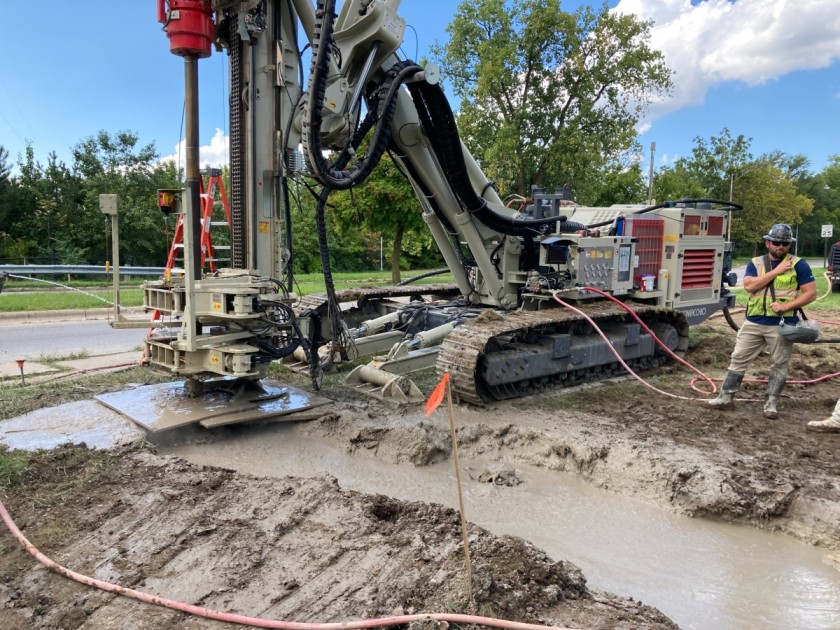
Key Highlights
- Environmental Isolation: Jet grouting creates impermeable cut-off walls to control groundwater and isolate contaminants.
- Structural Stability: It improves tunnel face stability and supports retaining structures in deep excavations.
- Versatility: Extensively used in constructing dams, retention structures, and various underground works.
Overview of Jet Grouting
Jet grouting is a ground improvement technique that involves injecting a high-velocity stream of cement grout into the soil under high pressure. This method mixes the soil with the grout to form soilcrete columns which serve as barriers or reinforcement for the ground. The primary goal is to increase the strength and reduce the permeability of the treated soil. Such characteristics are essential when the objectives include both reinforcing ground structures and preventing the migration of water or contaminants.
Recognized for its flexibility and effectiveness, jet grouting is widely implemented in various construction scenarios. Its ability to form a continuous and impermeable barrier makes it indispensable in projects requiring environmental protection and geotechnical stability. The engineering benefits of jet grouting extend to managing groundwater, mitigating seepage, and providing additional support during underground excavations.
Cut-off Walls and Environmental Isolation
Forming Impermeable Barriers
The technique of jet grouting is employed extensively to construct cut-off walls designed to control rising or lateral groundwater. In these applications, the process involves injecting grout under high pressure to create a solidified column, reducing the permeability of the surrounding soil. This barrier is crucial in preventing the migration of contaminants as it inhibits the flow of water and pollutant-laden media. Such impermeable barriers are critical components in environmental protection measures and are often used around contaminated sites or near sensitive water bodies.
Environmental isolation through jet grouting has been pivotal in projects where managing hydrostatic pressure is a design constraint. For instance, the construction of dams and retention structures frequently relies on jet grouting to minimize seepage and maintain structural integrity under varying water pressures. This aspect not only prevents contamination from spreading but also helps in maintaining safe and stable conditions for adjacent structures.
Citation 1: Jet grouting’s role in forming cut-off walls and reducing permeability is detailed in industry literature and technical studies. For example, research and case studies documented by Schnabel (available at Schnabel - Jet Grouting Applications) describe its utility in environmental isolation.
Citation 2: Further insights can be found in studies addressing the modelling of the permeability of jet-grouted cut-off walls which enhance our understanding of how these barriers function under different geotechnical conditions. Documentation available at NGM 2024 - Jet Grouted Cut-Off Wall Study provides empirically supported data.
Environmental Safeguards and Hydrostatic Pressure Management
In addition to forming physical barriers, another critical function of jet grouting in environmental applications is the management of hydrostatic pressure. By decreasing the flow of water through the treated soil, jet grouting assists in maintaining the stability of structures that are subject to fluctuating water levels. This capability is particularly valuable in dam construction and other water-retentive structures, where unexpected seepage or increased water pressure can compromise safety.
The reduced permeability not only prevents water intrusion but also minimizes the risk of contaminant migration, an essential factor when dealing with hazardous materials in the subsurface. This dual functionality of controlling both water flow and pollutant transport underscores the importance of jet grouting in environmental engineering.
Citation 3: A detailed comparison of various grouting techniques, including jet grouting for environmental barrier creation, is discussed on Superior Grouting’s website (Superior Grouting - Ground Improvement Guide).
Retaining Structures and Tunneling
Enhancing Structural Stability
Beyond environmental isolation, jet grouting is integral in enhancing the stability of constructions that encounter challenging geotechnical conditions. One of the most critical applications of the technique is in tunneling and underground construction projects. When tunneling, the soil face is often unstable and prone to erosion or collapse during excavation. Jet grouting helps to stabilize these tunnel faces, mitigating risks associated with soil movement.
In situations where underground excavations are required, such as in the construction of subway systems or utility corridors, jet grouting provides temporary and even long-term structural support. The process creates a reinforced soil column that can support overlying layers, thereby preventing unexpected collapses that may endanger workers and the integrity of adjacent structures. This application is specially valuable in deep excavations and in environments where the natural soil conditions do not offer adequate support.
Citation 4: The significant role of jet grouting in tunnel stability and preventing soil erosion is highlighted in numerous engineering studies and reports, such as the one available at Frontiers in Earth Science - Tunnel Stabilization.
Applications in Deep Excavations
Retaining structures in deep excavations are another area where jet grouting demonstrates its versatility. Excavation projects such as those required in city infrastructure developments often face the challenge of unstable soil that may lead to unexpected lateral movement or collapse. Jet grouting addresses this challenge by creating reinforced zones within the soil that act as both support and barrier systems.
In such projects, ensuring the temporary support of vertical or sloped soil is critical. The injection process transforms part of the soil mass into a more cement-like material, effectively bridging voids that could lead to instability. This not only prevents sudden collapses but also maintains the overall integrity of the excavation site throughout the construction period.
Citation 5: As documented on various technical resources, the utility of jet grouting in these environments is underscored by empirical data and analytical models provided by platforms such as MDPI (MDPI - Sustainable Development).
Detailed Applications Comparison
To further elucidate the multiple roles of jet grouting, the following table provides a comprehensive comparison of its applications in both environmental isolation and structural enhancement:
| Application Area | Description | Key Benefits | Example Projects / References |
|---|---|---|---|
| Cut-off Walls | Creation of impermeable barriers to control groundwater and isolate contaminants. | Reduces permeability, prevents contaminant migration, and aids in water management. | Schnabel, NGM 2024 |
| Tunneling | Stabilization of tunnel faces and prevention of soil erosion during excavation. | Improves safety, preserves excavation integrity, and provides structural stability. | Frontiers in Earth Science |
| Retaining Structures | Enhancement of deep excavation support by reinforcing soil. | Ensures temporary support and prevents collapse in vertical or sloped excavations. | Superior Grouting, MDPI |
Additional Considerations in Jet Grouting Projects
Design and Planning
When planning a jet grouting project, detailed geotechnical investigations are critical. Engineers must analyze soil composition, groundwater conditions, and load requirements to determine the optimum grouting parameters. Precise planning ensures that the jet grouting process forms effective barriers and reinforcement zones. Modern engineering practices often integrate field data with numerical modelling to predict the performance and durability of the grouted columns.
Such detailed design ensures that the grouted regions cope well with dynamic loads and hydrostatic pressures. Employing these techniques in a well-coordinated manner helps in reducing potential failures and enhances overall safety. The data-driven design approach is supported by various research studies and technical reports available in scientific journals.
Implementation Techniques
The implementation of jet grouting involves the use of specialized equipment to inject high-pressure grout mixtures into the soil. Operators need to maintain strict control over the injection pressures, flow rates, and nozzle traversals to achieve the desired mixing and cementation. The effectiveness of the process depends on the consistency of the grout and the adaptability of the jet grouting system to varying soil conditions.
Field applications often use multi-nozzle systems to expand the coverage area efficiently. The variability in soil conditions means that on-site adjustments can be necessary to attain a uniform grouted zone. This flexibility significantly contributes to the technique's effectiveness in both environmental isolation around contaminants and structural strengthening under dynamic loading.
Advanced monitoring techniques, such as real-time sensor-based adjustments, play a vital role in ensuring that the jet grouting process meets quality and performance standards. The integration of these modern methods is evidenced in recent engineering case studies and enhances the precision of the treatment.
References
- Schnabel - Jet Grouting Applications
- NGM 2024 - Jet Grouted Cut-Off Walls
- Superior Grouting - Ground Improvement Guide
- Frontiers in Earth Science - Tunnel Stabilization
- MDPI - Sustainable Development Insights
Recommended Related Queries
Last updated March 21, 2025