
RRL on Jet Grouting in Construction
Exploring Applications, Soil Effectiveness, and Related Challenges
Key Highlights
- Wide Applications: Jet grouting is used in foundation support, tunneling, groundwater control, slope stabilization, and excavation support.
- Soil Versatility: The technique is effective in a variety of soil types including clay, sand, silt, and mixed soils, each presenting unique challenges.
- Challenges & Limitations: High costs, environmental concerns, and operational complexities are critical aspects that affect its widespread use.
Introduction to Jet Grouting in Construction
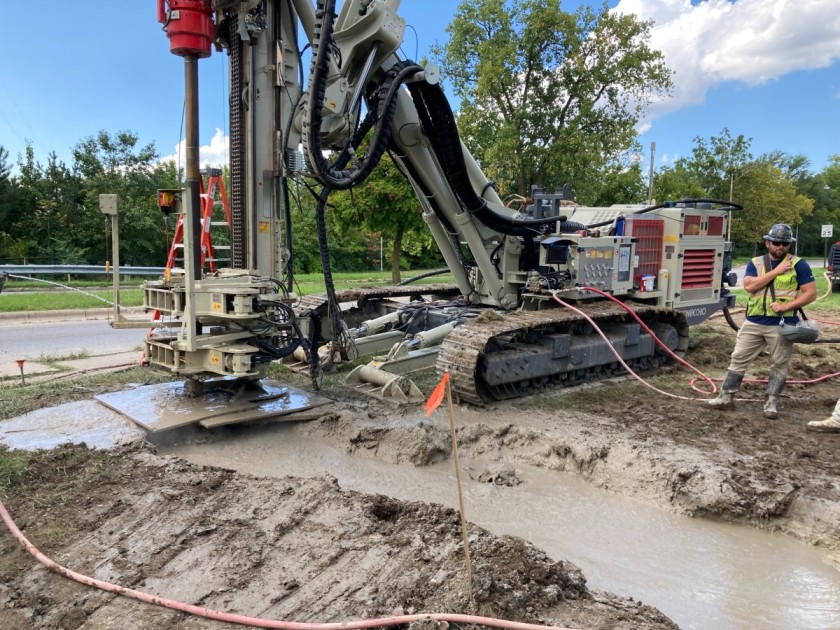
Jet grouting is a ground improvement technique that involves the high-pressure injection of a cement-based grout into the soil. This process creates soil-cement columns or panels which result in improved mechanical properties of the soil, such as enhanced bearing capacity and reduced permeability. As a result, jet grouting is highly regarded in geotechnical engineering due to its ability to effectively stabilize foundations, control groundwater, and support various excavation and tunneling projects.
The significance of jet grouting in construction has led to extensive research and literature reviews (RRL) that examine its application in diverse soil conditions and explore its challenges and limitations. This synthesis incorporates insights from multiple recent studies and technical reviews, highlighting both the advantages of jet grouting as well as areas in need of further improvement.
Applications of Jet Grouting in Construction
Foundation Stabilization
One of the primary applications of jet grouting is in the stabilization of foundations. When applied in areas characterized by weak or unpredictable soil conditions, jet grouting helps to create a stable base by reinforcing the soil with a mixture of grout and native soil. This method is often preferred over conventional techniques when dealing with soft clays or loose sandy soils, as it significantly increases the bearing capacity and reduces settlement risks. By creating a continuous column of improved soil, the method supports both new constructions and retrofitting projects where existing foundations are compromised.
Groundwater Control
Groundwater is a critical factor in many construction projects. Jet grouting is used to construct horizontal barriers that effectively control the flow of groundwater. This is especially beneficial in regions where excessive water may undermine soil stability or lead to unwanted seepage around foundations. Projects such as dam construction, environmental remediation, and subterranean infrastructure benefit from these strictly controlled water barriers.
Excavation and Slope Support
Excavations in urban environments or unstable terrains often require additional support to prevent collapse or unwanted shifting. The injection method of jet grouting aids in creating soil-cement structures that reinforce the soil surrounding excavation sites. Furthermore, in areas prone to erosion or where slopes are unstable, jet grouting provides a means to stabilize the slope by reducing the risk of landslides and erosion, thereby ensuring the safety of subsequent developments.
Tunneling and Underground Construction
Another significant application of jet grouting is in supporting tunneling operations and other underground constructions. Tunnels often penetrate different soil layers and face complex loading from the surrounding earth. Jet grouting helps to mitigate these risks by strengthening soil masses and reducing the likelihood of ground movement that may lead to tunnel collapses or other failures. It is particularly useful at shaft entrances and exits where ground instabilities are more prevalent.
Effectiveness of Jet Grouting in Different Soil Conditions
Cohesive Soils (Clay)
In cohesive soils such as clays, jet grouting is notably effective. The high-pressure injection allows the grout to mix thoroughly with the clay, leading to a substantial increase in shear strength and stiffness. Studies have demonstrated that the soil-cement columns produced in clay soils can result in significant improvements in foundation stability and overall load-bearing capacity. Despite the favorable outcomes, care must be taken as highly plastic or stiff clays may require adjustments in the grout mixture and injection parameters.
Granular Soils (Sand and Silt)
Granular soils, including sands and silts, present a different set of challenges. In these soil types, the mechanism of jet grouting revolves around the erosion of particles and subsequent mixing with grout to form a cohesive mass. The resultant structures exhibit improved compaction and increased density. However, the variability in granular soil properties can cause irregularities in the grout columns, which may demand more precise control of injection pressures and flow rates to ensure consistency and full penetration.
Mixed Soil Conditions
Many construction sites feature mixed soil conditions that blend both cohesive and granular properties. Jet grouting in such mixed soils is particularly versatile as it can adapt to various layers within the same project area. The technique can target specific problematic strata at depth while leaving more stable upper layers unaffected. This targeted approach minimizes potential disruption and allows for efficient reinforcement of the critical layers. Nevertheless, achieving uniform treatment can be challenging when soil properties change abruptly within short vertical intervals.
Comparison Table: Effectiveness Across Soil Types
| Soil Type | Effectiveness | Challenges |
|---|---|---|
| Cohesive Soils (Clays) | High improvement in shear strength and bearing capacity | Requires adjustment for highly plastic or stiff clays |
| Granular Soils (Sands, Silts) | Enhances compaction and density; good for barrier formation | Irregularities can occur due to particle variability |
| Mixed Soils | Versatile treatment; suitable for targeting problematic layers | Uniformity and consistency can be challenging |
Challenges and Limitations of Jet Grouting
High Operational and Material Costs
One of the most significant challenges identified in the literature is the high cost associated with jet grouting. Both equipment investments and material expenses such as specialized grout contribute to elevated project budgets. When compared with other soil improvement methods, the upfront capital required for jet grouting can be a limiting factor, particularly for extensive projects. Moreover, the operating costs increase with the complexity and duration of the injection process.
Environmental and Safety Concerns
Environmental concerns are critical when evaluating the feasibility of jet grouting. During the high-pressure injection process, the technique can generate significant noise, vibrations, and dust, affecting both the surrounding environment and the health and comfort of workers and nearby residents. Additionally, there is a potential risk of groundwater contamination if grout mixes with native water sources in an uncontrolled manner. These factors require that rigorous environmental assessments are conducted prior to implementation, especially in urban areas.
Operational Complexity and Quality Control
The success of jet grouting largely depends on the correct selection and control of injection parameters. These include grout composition, injection pressure, rotation speeds, flow rates, and lift rates. The complex interplay of these factors demands high levels of expertise and precise equipment calibration. Variations in soil properties can result in discontinuities or uneven grout distribution, thereby compromising the overall effectiveness. Thus, meticulous quality control is essential throughout the process to ensure that the soil-cement columns meet the desired performance criteria.
Limitations in Challenging Soil Conditions
While jet grouting has proven to be versatile across many soil conditions, its effectiveness diminishes in certain challenging scenarios. For instance, soils with significant organic content, large boulders, or extremely stiff materials may not be adequately treated using jet grouting alone. In such cases, alternative ground improvement techniques might be more suitable, or jet grouting must be combined with other reinforcing methods. Furthermore, highly heterogeneous soil conditions can lead to irregular grout column formations, requiring additional remedial measures to ensure uniform stability.
Recent Research Insights
A range of recent studies have validated and expanded on the above analyses, emphasizing both the technical capabilities and inherent challenges of jet grouting. For example, multiple peer-reviewed articles have documented the improvements in shear strength and stiffness achieved in clay soils by jet grouting. Similarly, other studies have demonstrated that in granular soils, the method creates a compacted soil-cement matrix that enhances bearing capacity.
Nonetheless, researchers continue to explore cost-efficient and environmentally friendly alternatives. Efforts are being directed toward optimizing grout mixtures and refining injection techniques to minimize material use while maximizing performance. Additionally, environmental monitoring during jet grouting operations is receiving increased attention to mitigate potential adverse impacts.
Interactive Comparison: Advantages vs. Limitations
Table: Key Considerations in Jet Grouting
| Aspect | Advantages | Limitations |
|---|---|---|
| Foundation Stabilization | Creates a stable base and reduces settlement | High cost per unit area; variable performance with soil heterogeneity |
| Groundwater Control | Effective in creating impermeable barriers | Environmental risks such as potential contamination |
| Soil Improvement | Improves shear strength and stiffness in cohesive soils | Difficulties in achieving uniform grout penetration in granular soils |
| Operational Complexity | High level of customization and targeted treatment | Requires specialized equipment and expert operators |
References
- Jet Grouting Guide: Benefits, Uses, Applications, and More! - Piers and Piles
-
Understanding Jet Grouting: Applications in Foundation and Soil Stabilization - EVG CPL
- Jet Grouting - Procedure, Applications and Advantages for Soil Stability - The Constructor
- Jet Grouting: Versatile Ground Stabilization Technique - Schnabel
- Jet Grouting: Technique and Applications - Metax Equipment
Recommended Queries
Last updated March 21, 2025