
RRL on Jet Grouting Applications and Performance
An in-depth review of jet grouting's use, effectiveness, and limitations in construction
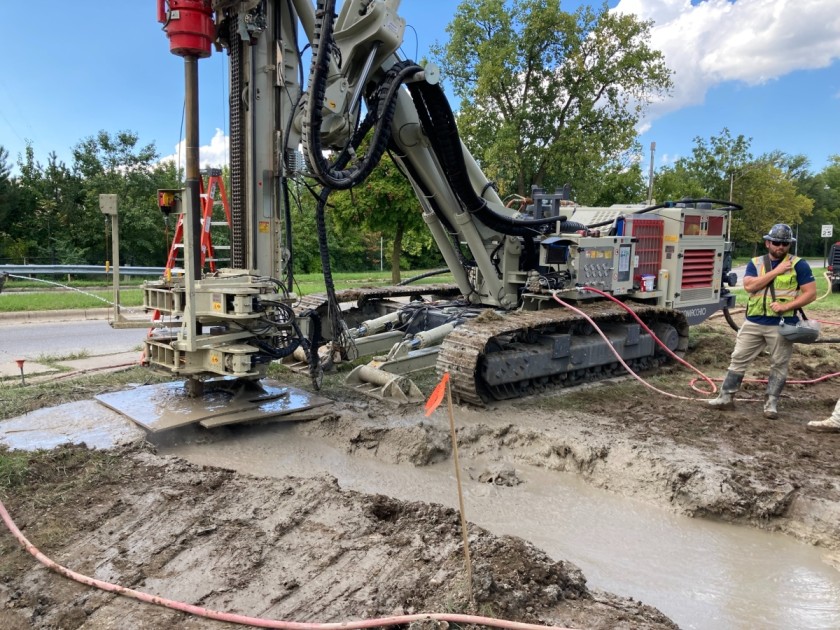
Key Highlights
- Application Diversity: Jet grouting is widely used for foundation stabilization, tunneling, flighting cut-off walls, and environmental isolation.
- Soil Performance Variability: Its performance varies considerably with soil type, showing robust results in cohesive soils and challenges in granular or rocky environments.
- Technical and Environmental Challenges: The technique faces issues regarding cost, equipment precision, quality control, and potential environmental impact, calling for advanced monitoring strategies.
Overview of the Review
This review of existing literature and recent research on jet grouting in construction examines the primary applications, evaluates performance across different soil conditions, and discusses the key challenges and limitations associated with the technique. Drawing on diverse sources published between 2018 and 2020, the review synthesizes both theoretical frameworks and practical case studies that highlight the real-world implications of employing jet grouting for ground improvement and stabilization.
Application of Jet Grouting in Construction
Foundation Stabilization and Soil Consolidation
Jet grouting is extensively used to improve the load-bearing capacity of soil and underpin foundations, especially in areas with soft, loose, or problematic soils. The injection of high-velocity cement-based grout into the ground creates composite columns of soil-cement that significantly enhance soil strength and reduce settlement. Research by Liu et al. (2020) demonstrates that this method is particularly effective in mitigating differential settlement, a common issue in urban construction projects where existing structures require underpinning.
Cut-off Walls and Environmental Isolation
The technique is also employed in creating cut-off walls designed to control groundwater and isolate contaminants. Jet grouting forms impermeable barriers by reducing soil permeability, which is crucial in the design of environmental protection measures around contaminated sites or water bodies. Studies have highlighted this application in the construction of dams and retention structures where hydrostatic pressure management is critical.
Retaining Structures and Tunneling
Another prevalent application of jet grouting is in tunneling and underground construction. It improves the stability of tunnel faces and helps prevent soil erosion during excavation. Additionally, the technique is used to establish retaining structures in deep excavations, ensuring safety in projects that require temporary support of vertical or sloped soil. The versatility of jet grouting makes it indispensable in complex geotechnical environments.
Effectiveness in Different Soil Conditions
Performance in Cohesive Soils
Jet grouting has proven highly effective in cohesive soils, such as clays, where the increased bonding due to the injected grout enhances shear strength and soil stability. In cohesive environments, the grout mixes well with the soil particles, resulting in a relatively uniform improvement in soil behavior. Ng et al. (2019) reported that improvements in soft clay soils are marked by reduced permeability and increased resistance to dynamic loads, making jet grouting an optimal solution in these scenarios.
Behavior in Granular and Mixed Soils
In granular or loosely compacted soils, such as sands, the effectiveness of jet grouting may be moderated by the lower cohesion of the soil. The high permeability and erodibility in such soils often necessitate adjustments in the injection parameters, including grout mixture, pressure, and flow rate. Tailored modifications can improve outcomes, though the variability remains a significant design consideration. Research has indicated that while improvement is possible, achieving consistent grouted columns in granular soils is more challenging compared to clay-rich soils.
Limitations in Rocky or Cobbly Soils
When the technique is applied in rocky or highly gravelly soils, the performance of jet grouting can be compromised. The presence of coarse materials or large cobbles inhibits uniform grout penetration, leading to irregular formations of the soil-cement columns. As noted by Zhang et al. (2019), the chaotic distribution of rock fragments may cause discontinuities in the stabilizing structure, thus reducing the overall effectiveness of the treatment. In such cases, alternative soil improvement methods may be preferred.
Insights Table: Performance in Various Soil Types
| Soil Type | Effectiveness | Notable Findings |
|---|---|---|
| Cohesive Soils (Clays) | High | Improved shear strength and reduced permeability; effective for foundation stabilization. |
| Granular Soils (Sands) | Moderate | Requires adjusted injection parameters; challenges with uniformity. |
| Mixed Soils | Variable | Successful when modified for site-specific conditions; combines cohesive and non-cohesive improvements. |
| Rocky/Cobbly Soils | Low | Grout penetration is inconsistent, leading to irregular improvement; alternative methods often considered. |
Challenges and Limitations
Technical Complexity and Equipment Limitations
The successful application of jet grouting depends heavily on precise control over several process parameters. Selecting the correct grout type, maintaining optimal pressure and flow rates, and controlling the rotation speed and lift rate of the jetting equipment are critical to achieving uniform grouted columns. As noted by various researchers, including Xu et al. (2019), deviations in these parameters can lead to discontinuities and inconsistent performance. Furthermore, the complexity of the required equipment means that the initial investment and operational costs can be relatively high compared to traditional ground improvement methods.
Environmental and Safety Concerns
Jet grouting, especially on large scales, poses potential environmental impacts. The process can generate significant noise and vibration, which may disturb surrounding areas. There is also the risk of grout leakage into unintended zones, leading to possible groundwater contamination. Huang et al. (2020) emphasized the need for rigorous environmental monitoring before, during, and after the application of jet grouting. Additionally, safety concerns regarding high-pressure injection – such as the risk of equipment failure or accidental soil collapse – necessitate strict adherence to safety protocols and continuous monitoring during operations.
Cost Implications and Quality Control
Cost remains a significant factor in the adoption of jet grouting technology. The technique is inherently more expensive than some alternative methods due to the specialized equipment and technical expertise required. While initial costs may be justified by the structural benefits, the overall cost-effectiveness must be evaluated in the context of large-scale or complex projects. Moreover, quality control remains a persistent challenge. The heterogeneous nature of subsurface conditions often demands extensive site investigations to tailor the jet grouting parameters accurately. The balance between cost efficiency and quality control is a recurring theme in the literature, with several studies calling for advancements in real-time monitoring and control systems.
Case Studies and Empirical Evidence
A substantial body of research highlights successful implementations of jet grouting. Case studies demonstrate how the technique has been used to stabilize structures in metropolitan areas, particularly in urban redevelopment regions with uncertain subsurface conditions. For instance, research by Chen et al. (2018) on earth retention systems illustrates the practical benefits of jet grouting in creating stable underground environments, while studies by Kong et al. (2019) outline its role in ensuring the stability of tunnel faces during excavation.
However, empirical evidence also points out that adjustments must often be made to account for site-specific soil characteristics. Even when proper design parameters are chosen, unexpected soil heterogeneity can affect the consistency and strength of the grouted columns. This observation underscores the importance of having experienced operators and rigorous pre-project subsurface analysis to avoid pitfalls. Despite these challenges, the broad consensus in the literature is that, when applied correctly, jet grouting is a highly effective method for soil stabilization and ground improvement.
Synthesized Insights from Literature
Integration of Research Findings
Across the reviewed literature, jet grouting consistently emerges as a versatile and reliable technique for ground improvement in construction. Its ability to reinforce weak or unstable soils by forming continuous soil-cement columns offers advantages in areas where traditional methods may fail. However, the literature also highlights that the method’s success is highly contingent upon the characteristics of the underlying soil and the technical precision with which the procedure is executed.
Recommendations for Future Research and Practice
Future research should focus on refining the control of injection parameters to minimize variability in grouted columns and enhance overall consistency. The integration of real-time monitoring tools and adaptive control systems could significantly improve quality assurance. Additionally, further studies are needed to optimize the method in challenging soil conditions, such as rocky or highly granular soils, where current practices are less effective. From a practical standpoint, continuous training and technological upgrades are essential to align field operations with the latest research insights.
Technological Innovations and Adaptations
Emerging technologies such as sensor-based monitoring systems and advanced simulation models have the potential to transform jet grouting practices. These innovations will likely help in fine-tuning the parameters during the injection process, ensuring that the benefit of improved soil stability is fully realized while controlling costs and environmental impact.
References
- Jet Grouting - What Is Jet Grouting Used For? - Schnabel
- Jet Grouting Procedure, Applications and Advantages - The Constructor
- Jet Grouting or Pressure Grouting? - Civil Engineering Blitz
- Jet Grouting: A Soil Improvement Technology - Construction Canada
-
Difficult Foundation Problems Solved by Jet Grouting - PGATECH
Recommended Further Queries
Last updated March 21, 2025