
Jet Grouting for Soil Improvement
Exploring Effectiveness, Challenges, and Best Practices with Detailed Objectives
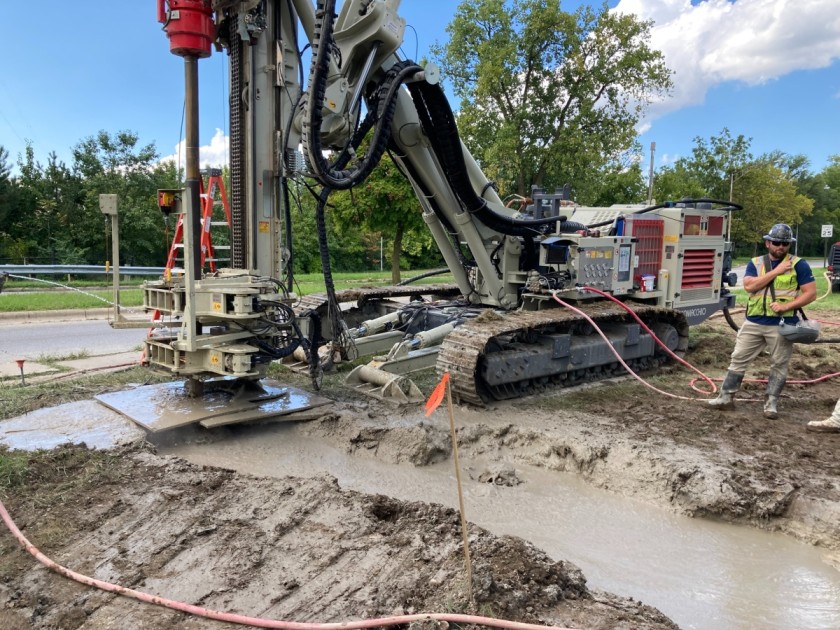
Key Highlights
- Comprehensive Evaluation: Analysis across various soil types and conditions.
- Robust Process Assessment: In-depth look at potential challenges and mitigation strategies.
- Guided Best Practices: Detailed objectives and proven methods for effective implementation.
Introduction to Jet Grouting for Soil Improvement
Jet grouting is a sophisticated ground improvement technique designed to enhance the mechanical and hydraulic properties of soils. As construction projects increasingly demand reliable foundations and controlled settlement, jet grouting provides a method to inject high-pressure jets of cementitious grout into the ground. This creates solidified soil columns, panels, or blocks, effectively increasing the load-bearing capacity and stability of the treated ground.
The method is especially valued for its versatility. It can be adapted to a range of soil types—including sands, silts, clays, and even gravelly conditions (with some limitations on extremely non-cohesive soils)—by altering process parameters such as grout type, injection pressures, and nozzle configurations. In addition to enhancing soil strength and reducing settlement, jet grouting is also used to control groundwater flow, making it an invaluable tool in geotechnical engineering.
Investigating Effectiveness, Challenges, and Best Practices
Effectiveness of Jet Grouting
Evaluating the effectiveness of jet grouting involves a systematic analysis across several dimensions:
1. Soil Type Versatility
Jet grouting has been proven effective in improving soil strength and reducing settlement in a variety of soil conditions. Whether applied in sandy soils where high permeability is a concern or in clayey soils where settlement may jeopardize structural integrity, the technique has demonstrated broad applicability. Detailed site investigations help determine how variations in soil properties—like granulometry, cohesion, and erodibility—affect the treatment's overall performance.
2. Enhanced Bearing Capacity and Reduced Settlement
One of the primary benefits of jet grouting is the enhancement of bearing capacity. By forming soilcrete columns within the soil mass, the ground is better able to distribute structural loads. This is particularly important in urban settings and areas with problematic or pre-existing weak strata. Equally significant is the technique's capacity to reduce differential settlement, which can be further optimized through calibrated injection practices and pre-construction testing.
3. Groundwater Control
The controlled injection of grout establishes barriers that help manage groundwater seepage, providing a dual benefit of mechanical stabilization and hydraulic control. This characteristic lowers the risk of water-induced erosion and structural failure, which is critical in regions prone to high water tables.
Challenges Associated with Jet Grouting
While jet grouting is a powerful tool in geotechnical engineering, its application is not without challenges. The primary issues can be summarized as follows:
1. Parameter Selection and Calibration
The success of jet grouting largely depends on selecting and calibrating appropriate parameters for the injection process. These include the injection pressure, flow rate, rotation speed, and lift rate. Improper settings can lead to inconsistent column formation, higher grout consumption, and even procedural failures. Pre-construction test fields are essential to fine-tune these parameters, ensuring that the technique is adapted to the specific geological context.
2. Equipment and Operational Complexity
Jet grouting systems are highly specialized and require experienced personnel to operate. The complexity of modern grouting rigs, which can be single, double, or even triple fluid systems, demands meticulous attention to operational protocols. There may also be safety risks, including the potential for high-pressure fluid injection hazards and associated physical risks to personnel, which necessitate robust safety policies and protective measures.
3. Soil Condition Limitations
Although jet grouting is adaptable, its effectiveness can be limited by soil conditions. Highly gravelly or cobbly soils may present challenges, as the grout can channel through the heterogeneous materials, leading to suboptimal solidification. Similarly, soils with high plasticity or those that are highly erodible require careful planning to avoid complications during the grouting process.
4. Environmental and Economic Considerations
Economic factors such as high initial costs, the need for extensive pre-project simulations, and control of grout wastage can impact the overall project viability. Additionally, the environmental impact—though normally minimal—should be monitored, especially in sensitive areas. Sustainable practices, such as selecting environmentally friendly grout materials and optimizing process parameters to reduce waste, can mitigate some of these challenges.
Best Practices for Jet Grouting
Implementing jet grouting successfully depends on adhering to a set of best practices that have been refined over years of research and field applications. These practices are designed to ensure consistent quality, safety, and sustainability.
1. Comprehensive Pre-Project Planning
Prior to the initiation of jet grouting operations, comprehensive site investigations and laboratory testing are imperative. These studies help determine soil properties, such as density, permeability, and compressibility, establishing a scientific basis upon which the grouting parameters can be optimized. This planning stage includes the design of test fields that model the intended application, ensuring pre-emptive calibration of injection parameters.
2. Rigorous Quality Control and Real-Time Monitoring
The implementation of strict quality control measures is essential to verify that the improved soil elements meet design specifications. Introducing real-time monitoring systems during the injection process allows engineers to adjust parameters dynamically, ensuring that the flow rate, pressure, and grout mix conform to predefined standards. Data acquisition systems that provide continuous feedback enhance the reliability and repeatability of the process.
3. Equipment Optimization and Operator Training
Selecting the appropriate grouting equipment is crucial. Based on the project requirements, the decision may be made between single, double, or triple fluid systems, each offering varying degrees of complexity and control. Equally important is investing in the training and capacity building of operators. Skilled personnel can make critical real-time decisions that drastically improve the performance and safety of jet grouting operations.
4. Sustainable and Environmentally Considerate Practices
Sustainability in jet grouting concerns not only the selection of eco-friendly materials but also the optimization of the process to minimize environmental impact. This could involve reducing grout waste through improved parameter control, as well as practices that minimize disruption to existing ecosystems. Implementing these best practices can significantly lower the environmental footprint of grouting projects in urban and rural settings alike.
5. Safety Protocols and Risk Management
Safety remains a cornerstone of any jet grouting project. Comprehensive risk assessments aimed at identifying potential hazards—ranging from equipment malfunctions to personnel injury—must be established and reviewed. Safety protocols should include emergency shut-off systems, equipment safeguards, and thorough training on handling high-pressure systems. Regular safety audits and adherence to standard operating procedures help mitigate these risks.
Incorporating Additional Objectives
Besides the core considerations already discussed, several additional objectives are crucial for a holistic approach to jet grouting in soil improvement:
Expanded Project Objectives
A. Enhance Mechanical and Hydraulic Properties
The primary objective remains to enhance the mechanical strength and hydraulic performance of the soil. By injecting high-pressure grout, jet grouting aims at consolidating the ground, limiting water infiltration, and reducing permeability. This results in a treated zone that is both more robust under load and less susceptible to groundwater-induced instability.
B. Comprehensive Soil Type Analysis
Given the variability in soil behavior, a key objective is to conduct a comprehensive analysis of how different soil types respond to jet grouting. This involves:
- Performing controlled experiments and field trials in sandy, silty, and clayey conditions.
- Determining the optimal grout mix and injection parameters for each soil classification.
- Developing predictive models to forecast the performance of jet grouting based on soil properties.
C. Improved Load Distribution and Structural Support
An additional objective is to improve load distribution within the soil mass so that foundations, retaining walls, and underground structures benefit from a more uniform stress distribution. This is achieved through the formation of continuous or interconnected soilcrete columns that provide a robust support framework.
D. Minimize Environmental Impact and Optimize Sustainability
Environmental sustainability is increasingly important in modern construction practices. Objectives include developing and deploying grout materials that minimize negative environmental impacts, reducing the carbon footprint of the operation, and ensuring processes are in compliance with both local and international environmental standards.
E. Cost-Effectiveness and Operational Efficiency
A further significant objective is to deliver a cost-effective solution that provides high-performance soil improvements without necessitating expensive or invasive procedures. This requires:
- Optimizing the parameters to reduce grout wastage and lower material costs.
- Streamlining the process to minimize the time required on site, thereby reducing labor and equipment overheads.
- Implementing real-time adjustments to avoid overdesign and unnecessary expenditures.
F. Data-Driven Decision Making
Integrating advanced monitoring and data analytics into the jet grouting process enables a better understanding of in-situ behavior and performance improvements. The objective here is to gather real-time data, refine the predictive models, and adjust operational parameters to maximize efficacy and safety.
Comparative Analysis Table
| Aspect | Key Points | Objectives/Considerations |
|---|---|---|
| Effectiveness |
|
|
| Challenges |
|
|
| Best Practices |
|
|
| Additional Objectives |
|
|
Extended Discussion on Best Practice Objectives
The optimized implementation of jet grouting is not solely dependent on traditional engineering design. Integrating advanced data acquisition and real-time analysis is transforming how practitioners approach soil improvement. Emerging technologies enable continuous monitoring of the grouting process and allow for dynamic adjustments. In this context, embracing a data-driven strategy is an additional objective that promises enhanced process control and efficiency.
In particular, modern sensors and imaging techniques are capable of capturing detailed information about grout dispersion and column formation inside the soil. With this data, engineers can perform in-depth assessments of the technical performance, enabling iterative improvements to both the project design and execution protocols. Ultimately, the integration of these technologies underpins a safe, sustainable, and cost-efficient process.
Furthermore, economic considerations form an integral part of the project objectives. By minimizing wastage, reducing the need for extensive site rework, and decreasing overall project time, jet grouting provides significant cost savings over traditional foundation improvement methods. When these practices are aligned with sustainable environmental measures—especially in regions where ecological impact is a major concern—the overall outcome represents a model of modern, responsible engineering design.
Summary of Objectives and Future Exploration
To summarize, the integrated strategy for jet grouting in soil improvement addresses the following key objectives:
- Enhance Mechanical and Hydraulic Properties: Improve load-bearing capacity and control groundwater through solidified soilcrete formations.
- Comprehensive Soil Analysis: Undertake thorough investigations to tailor the grouting process to different soil types.
- Improve Structural Support: Distribute loads uniformly to safeguard structures against uneven settlement.
- Environmental Sustainability: Optimize the process to be eco-friendly by minimizing wastage and reducing environmental footprints.
- Operational Efficiency: Achieve cost-effective implementations by integrating advanced monitoring and adaptive control systems.
- Data-Driven Improvements: Utilize real-time data to make informed adjustments, validating theoretical designs with field data.
These objectives are essential for ensuring that jet grouting not only provides a technical solution for soil stabilization but also addresses practical concerns such as cost, safety, and environmental compatibility. As the technology advances, continuous research and international collaboration promise further enhancements in the technique, making it an increasingly reliable tool in geotechnical engineering.
References
- What Main Challenges & Risks Applying Jet Grouting - LinkedIn
- Compaction Grouting vs Jet Grouting - Superior Grouting
- Jet Grouting: High-Pressure Ground Improvement - EVGCPL
-
Jet Grouting Research Article - ScienceDirect
- Jet Grouting Services - Pacific Foundation
Recommended Related Queries
Last updated March 20, 2025