
Jet Grouting for Soil Improvement
Investigating Effectiveness, Challenges, and Best Practices
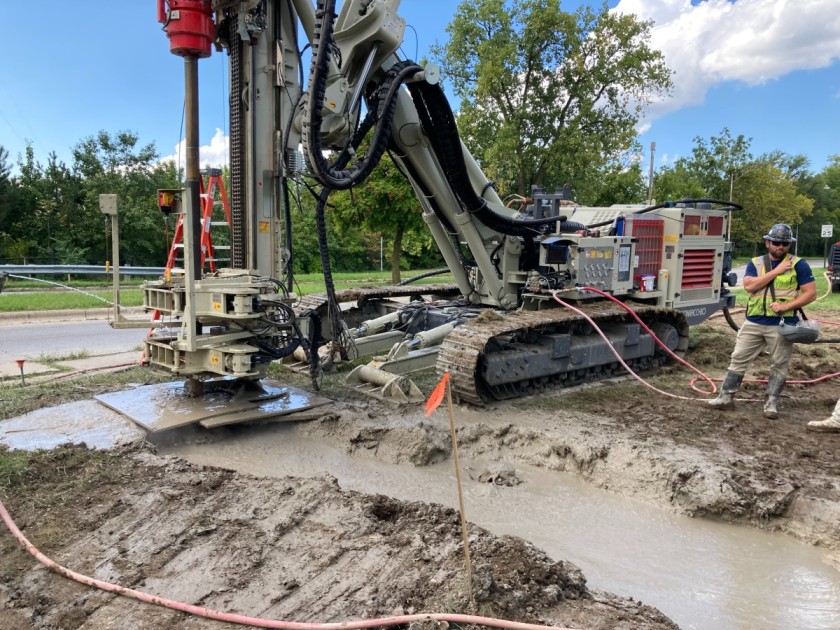
Highlights
- Comprehensive Overview: Detailed background, theoretical framework, and practical considerations of jet grouting.
- Practical Guidelines: Best practices, challenges, and significance for improved soil stability and construction.
- Structured Analysis: Clear sections covering formatting, conceptual framework, and scope with evidence-backed insights.
Chapter 1: INTRODUCTION
Foundation for Understanding Jet Grouting in Geotechnical Engineering
Jet grouting is a versatile soil improvement technique that involves injecting high-pressure jets of cementitious grout into existing soil. This dynamic process not only stabilizes the ground but also enhances its load-bearing capacity, making it vital for modern construction projects and geotechnical applications. In this introduction chapter, we provide a comprehensive outline divided into several sections that collectively establish a solid foundation for investigating both the effectiveness and challenges of jet grouting while suggesting best practices.
1.1 Background of the Study
The onset of jet grouting dates back to the 1960s with its origins in Japan; since then, the technique has evolved significantly through advances in technology and engineering methodologies. At its core, jet grouting utilizes high-pressure fluid jets to mix in-situ soil with injected grout, forming a soil-cement composite often referred to as "soilcrete." This composite is instrumental in addressing various geotechnical challenges—such as reducing settlement, controlling groundwater seepage, and improving the stability of foundations—by effectively transforming weak soil into a more robust, load-bearing structure.
The development of jet grouting is driven by the need to improve soil performance in construction sites with challenging ground conditions where conventional methods are either ineffective or uneconomical. Multiple studies and field applications have underscored its viability in both urban and rural settings, making it a pivotal solution in geotechnical engineering projects worldwide.
1.2 Fonts
For academic and technical documents, a consistent and professional font style is critical. The recommended font selection for this study includes:
- Main Body Text: Times New Roman, size 12
- Headings: Arial, with variable sizes (e.g., 18 points for primary headings and 14 points for subheadings)
This selection is widely recognized for its readability and formality, ensuring that the content is accessible while maintaining the highest standards of scholarly presentation.
1.3 Paragraphs and Line Spacing
Effective document formatting is paramount in ensuring clarity and readability. The text should be composed of logically constructed paragraphs, each beginning with a clear topic sentence, followed by supporting evidence or discussion, and ending with a concluding remark that links to the overall argument.
Line Spacing Guidelines:
Use a line spacing of 1.5 to double spacing for digital documents. This practice not only enhances reading comfort but also facilitates ease of editing and review. Consistency in spacing and paragraph formatting contributes to the overall professionalism of the document.
1.3.1 Section Numbering
To create a logical flow and organization within the document, section numbering is crucial. The structure should include:
- Major sections numbered as 1, 2, 3, etc.
- Subsections as 1.1, 1.2, and further nested divisions as 1.3.1, and so on.
This sequential numbering makes it easier for readers to navigate through the content and reference specific parts during discussions or further research.
1.3.2 Lists
Lists are a vital tool in presenting complex ideas in a condensed and comprehensible manner. They should be used appropriately to detail methodologies, challenges, or theoretical points.
- Numbered Lists: Ideal for instructions and sequential steps, such as procedures and process flows.
- Bulleted Lists: Best for enumerating characteristics, features, or advantages, where strict ordering is not mandatory.
The consistent use of lists enhances structure and clarity, ensuring that key points are highlighted effectively throughout the document.
1.4 Theoretical / Conceptual Framework
Foundations of Jet Grouting Methodology
The theoretical framework for jet grouting is firmly rooted in the principles of fluid mechanics and soil mechanics. At the intersection of these disciplines is the understanding of how high-pressure jets influence soil behavior. The primary objective is to blend in-situ soil with a cementitious grout, thereby transforming the soil into a stronger, composite material known as soilcrete.
The engineering mechanics underlying jet grouting involve several key concepts:
- Fluid Dynamics: Governs the behavior of the high-pressure jets and determines the effective penetration and mixing of grout into the soil matrix.
- Soil Erosion and Mixing: The high-velocity injection causes localized erosion of soil particles, which then mix with the grout to form a uniformly distributed composite material.
- Material Properties: The final strength and durability of the soilcrete depend on the properties of both the soil and the grout. Parameters such as grout composition, injection pressure, and soil characteristics are critical in achieving the desired outcome.
Fundamentally, the jet grouting method offers a flexible solution adaptable to various conditions, including confined spaces and soils of variable composition. This adaptability makes it an essential tool in geotechnical engineering for addressing multiple challenges where conventional methods may fail.
1.5 Significance of the Study
Practical Implications and Engineering Advancements
The significance of investigating jet grouting lies in its potential to revolutionize ground improvement practices. This technique provides numerous practical advantages:
- Enhanced Load-Bearing Capacity: By improving the strength of in-situ soil, jet grouting reduces the risk of foundation failure, thus ensuring safer structural support.
- Settlement Control: The improved composite material reduces differential settlement, which can otherwise lead to cracks and structural damage.
- Reduced Groundwater Ingress: The impermeable nature of the hardened grout-soil matrix can significantly reduce groundwater seepage, which is critical in maintaining excavation stability and preserving structural integrity.
- Versatility and Efficiency: Jet grouting can be performed in confined spaces and under challenging site conditions, allowing for the simultaneous support of excavation and foundation work. This not only economizes time but also reduces overall project costs.
Through this comprehensive study, engineering professionals will gain insights into optimizing jet grouting parameters to achieve the best possible outcomes for diverse soil conditions and project requirements.
1.6 Scope and Limitations
Defining the Boundaries and Constraints
This study focuses on an in-depth analysis of jet grouting as a soil improvement technique by reviewing existing literature, case studies, and theoretical models. The key areas of focus include:
- Effectiveness: Analysis of the performance of jet grouting in enhancing soil characteristics such as bearing capacity and stiffness.
- Challenges: Identification of potential difficulties encountered during application, including the selection of appropriate grout mixtures, injection parameters, and the variability of soil conditions.
- Best Practices: Recommendations on optimizing process parameters and tailoring techniques to site-specific needs for enhanced reliability and efficiency.
However, this study is subject to certain limitations. It is primarily a review-based analysis, drawing on published literature and documented case studies without the inclusion of new field experiments. Additionally, site-specific variables which may affect the jet grouting process are diverse and can influence the generalizability of the findings. The variability in soil composition and environmental conditions may also impose inherent constraints on the uniform application of the technique.
1.7 Definition of Terms
Key Terminologies and Concepts
Clarity in terminology is essential to ensure all stakeholders have a common understanding of the concepts discussed. The following terms are defined for the purpose of this study:
- Jet Grouting: A ground improvement technique that utilizes high-pressure jets of cementitious grout to erode, mix, and stabilize soil, forming a composite material known as soilcrete.
- Soilcrete: The resulting composite material created by the mixing of soil and grout during the jet grouting process, characterized by enhanced strength and durability.
- Grout: A fluid mixture, typically composed of cement, water, and various additives, used in jet grouting to bind soil particles together and create a hardened composite structure.
- Load-Bearing Capacity: The ability of the improved soil or composite material to support structural loads without experiencing significant deformation or failure.
- Ground Improvement: Techniques employed to enhance the mechanical properties of soil, aiming to increase stability, reduce settlement, or control seepage.
- Injection Parameters: Variables such as injection pressure, flow rate, rotation speed, and grout composition, which are critical in determining the success of the jet grouting process.
Comprehensive Jet Grouting Parameters
Overview Table
The table below summarizes essential parameters related to jet grouting along with their effects:
| Parameter | Description | Influence on Process |
|---|---|---|
| Grout Composition | Cement, water, and additives tailored for soil type | Determines strength and durability of soilcrete |
| Injection Pressure | High-pressure jet stream used during mixing | Affects penetration depth and mixing efficiency |
| Flow Rate | Volume of grout delivered per unit time | Impacts consistency and the quality of the composite |
| Rotation Speed | Mechanism to induce mixing through rotary motion | Aids uniform distribution of grout within the soil |
| Lifting Speed | Rate at which the injection probe is elevated | Impacts the overall geometry and continuity of the grout column |
References
- Compaction Grouting vs Jet Grouting - Superior Grouting
- Jet Grouting for Soil Improvement - Schnabel Foundation Company
- Effective Jet-Grouting Application for Improving the State of Structures - MDPI
- Jet Grouting Practice: an Overview - ResearchGate
- Jet Grouting Technique and Strength Properties - IOPscience
Recommended Queries for Further Exploration
Last updated March 20, 2025